When you’re knee-deep in a PCB prototype project, racing against a tight deadline, but your FR4 parts are chipping left and right during machining. Tools are dulling faster than you can replace them, dust is everywhere, and tolerances? Forget about it – they’re way off.
Sound familiar? You’re not alone. Thousands of engineers face this headache every day.
But here’s the game-changer: Master FR4 CNC machining, and you’ll crank out precision parts that handle extreme heat, block electrical interference like a boss, and fit perfectly every time. No more rework, no more delays.
In this ultimate guide (updated for 2026 trends), I’ll break it all down – from FR4 basics to advanced hacks, real-world case studies, and even market insights to help you stay ahead. Whether you’re a newbie fabricator in Los Angeles tinkering in your garage or a pro scaling production, this is your blueprint.
Let’s turn those frustrations into wins. Dive in.
Why FR4 CNC Machining Matters in 2026
First things first: FR4 isn’t some obscure lab material. It’s the backbone of modern electronics, powering everything from your smartphone to satellite systems.
But machining it? That’s where things get tricky. One wrong parameter, and you’re dealing with warped edges, health-hazard dust, or parts that fail under stress.
Enter CNC machining: This tech uses computer-controlled precision to carve FR4 into custom shapes with tolerances tighter than a drumhead. In 2026, with AI-optimized tools and smarter software, it’s not just faster – it’s smarter, predicting issues before they happen.
Why does this matter now? The FR4 market is exploding. Global FR4 CCL (Copper Clad Laminate) material demand hit around $28-30 billion in 2025 and is projected to grow at 7-8% CAGR through 2032, reaching $46-47 billion. Driven by 5G rollout, EVs, and IoT boom, demand for machined FR4 parts is skyrocketing – especially in the Asia-Pacific, which owns over 65% of production.
If you’re not optimizing your process, you’re leaving money on the table. Common mistakes? Using the wrong tools, ignoring dust control, or skipping pre-treatments. I’ll show you how to avoid them all.
Stick with me – by the end, you’ll machine FR4 like a pro.
Quick FR4 Background: What Makes It a Machining Must-Have?
FR4 – short for “Flame Retardant 4” – is a composite superstar. It’s basically woven fiberglass cloth drenched in epoxy resin, then pressure-cured into rigid sheets or boards.
Visualize it: Layers of glass fibers for brute strength, epoxy for insulation and bonding. The result? A lightweight, tough material that’s flame-resistant (UL 94 V-0 rated) and electrically inert.
Key stats to geek out on:
- Density: ~1.85 g/cm³ (lighter than many metals).
- Tensile strength: 310-345 MPa (tough enough for structural loads).
- Thermal tolerance: Continuous operation up to 130-140°C, with high-Tg variants pushing 170°C+.
- Dielectric strength: >20 kV/mm (it laughs at high voltages).
- Thermal expansion: 13-18 ppm/°C (stays stable in heat cycles).
Compared to its cousin, the G10? FR4 amps it up with bromine-based flame retardants for fire safety in crowded electronics. G10 skips the retardants for raw mechanical edge – great for non-flammable apps, but FR4 wins in regulated industries.
Why pick FR4 over alternatives like aluminum or polyimide? It’s dirt cheap (often 50-70% less), electrically superior, and machines well for prototypes. Plus, it’s eco-friendlier than some metals – recyclable in many setups.
But real talk: Its brittleness means it can fracture if you push too hard. That’s why CNC is king here.
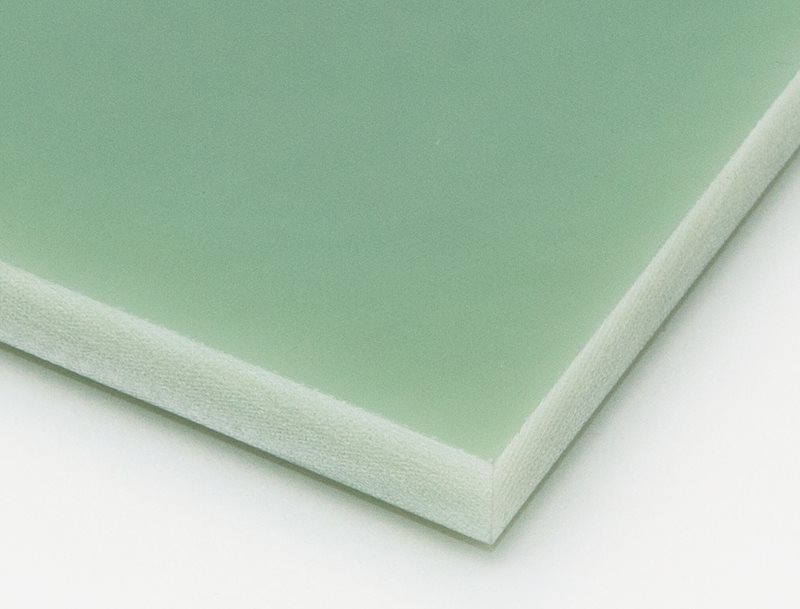
Check out what a raw FR4 sheet looks like:
FR4 Material Deep Dive: Properties, Pros, Cons, and 2026 Trends
Ever asked yourself: “Why does FR4 rule the roost in PCBs and beyond?”
It’s all in the properties. Let’s unpack this layer by layer (pun intended) so you can choose the right grade for your project.
Composition Breakdown: The Science Behind the Strength
- Core Structure: Multi-ply fiberglass weave (E-glass typically) impregnated with thermoset epoxy. Cured at high pressure/temp for a laminated powerhouse.
- Additives for Edge: Flame retardants (halogenated or halogen-free in green variants) boost safety. Copper foil often clads one side for PCBs.
- Variants to Know: Standard FR4 for basics; High-Tg for heat-heavy apps (e.g., automotive); Halogen-free for eco-compliance (rising in EU regs).
Pro insight: In 2026, halogen-free FR4 is trending hard – market share up 15% YoY due to RoHS 3.0 pushes.
Physical and Mechanical Perks That Drive Results
- Strength Stats: Compressive strength ~400 MPa; flexural modulus 20-24 GPa. It bends but doesn’t break easily.
- Thermal Mastery: Low CTE keeps dimensions spot-on during soldering or operation.
- Electrical Excellence: Volume resistivity >10^14 ohm-cm; perfect for insulating high-voltage circuits.
Bonus: It’s chemically resistant to solvents, acids, and moisture – ideal for harsh environments.
Pros That’ll Make You a Believer
- Unbeatable Strength-to-Weight: Half the weight of steel, twice the toughness in some metrics.
- Insulation Superstar: Blocks EMI/RFI, crucial for dense electronics.
- Cost Killer: Bulk sheets under $10/sq ft – scales beautifully for production.
- Versatility Boost: Machines, lasers, or stamps into any shape.
- Durability Win: Lasts decades in apps like transformers or switches.
But Here’s the Brutal Reality Check: Limitations and Fixes
- Brittle Beast: Prone to chipping/cracking under impact. Fix: Use peck drilling and sharp tools.
- Dust Nightmare: Fiberglass particles are irritants – can cause respiratory issues. Solution: Mandatory HEPA vacs and PPE.
- Heat Sensitivity: Over 200°C? Delamination city. Pro tip: Monitor spindle heat; use air cooling.
- Moisture Magnet: Absorbs humidity, warping parts. Hack: Bake at 100°C pre-machining to dry out.
- Eco Concerns: Traditional halogens aren’t green. Trend: Switch to phosphorus-based alternatives.
In 2026, sustainability is key – expect bio-based epoxies to cut market by 10-20%.
Pro tip: Always test samples. A quick tensile test can save headaches down the line.
CNC Machining FR4: The Basics You Absolutely Can’t Skip
Jumping into machining without basics? Recipe for disaster.
CNC (Computer Numerical Control) is your precision ally – think robots with brains, following digital blueprints to mill, drill, and engrave.
For FR4, it’s a match made in heaven: Uniform material means consistent cuts and no surprises.
But skip prep? You’ll burn tools and time. Let’s fix that.
Step 1: Prep Like a Seasoned Pro
- Grade Selection: Standard for low-heat; high-Tg for automotive/5G (handles 170°C+).
- Tool Arsenal: Diamond-coated end mills for longevity—carbide works but dulls 2x faster on fiberglass.
- Equipment Essentials: 3-5 axis mills; vacuum tables for secure hold; integrated dust extraction (aim for 99.97% HEPA efficiency).
- Software Setup: CAD for design (Fusion 360 shines); CAM for paths (optimize for climb milling to reduce burrs).
- Pre-Treat Hacks: Bake FR4 at 120°C for 2 hours to evaporate moisture – cuts warping by 30%.
Common pitfall: Ignoring fixturing. Loose parts = vibrations = poor finishes. Use double-sided tape or clamps wisely.
Step 2: Understanding the CNC Workflow
- Design in CAD: Model with tolerances in mind (±0.05mm typical for FR4).
- Program in CAM: Generate G-code; simulate to spot collisions.
- Execute: Load, zero axes, and run; monitor for anomalies.
Why this matters: In high-volume runs, a solid workflow shaves hours per batch.
Pro Techniques for Flawless FR4 CNC Machining (With Real Case Studies)
Alright, basics down. Now for the meat: Techniques that separate hobbyists from pros.
Machining FR4 isn’t set-it-and-forget-it. It demands finesse to handle its abrasive nature.
Tool and Parameter Mastery: Dial It In
- Cutter Choices: High-helix carbide for starters; diamond for pros (lasts 5-10x longer).
- Speed Sweet Spot: 10,000-20,000 RPM; feeds 1-5 m/min. Too fast? Heat melts epoxy. Too slow? Tools glaze.
- Core Methods:
- Milling: For flats and pockets – use ramp entries to avoid plunge damage.
- Drilling: Peck cycles (drill 0.5mm, retract, repeat) clear chips; diamond bits for deep holes.
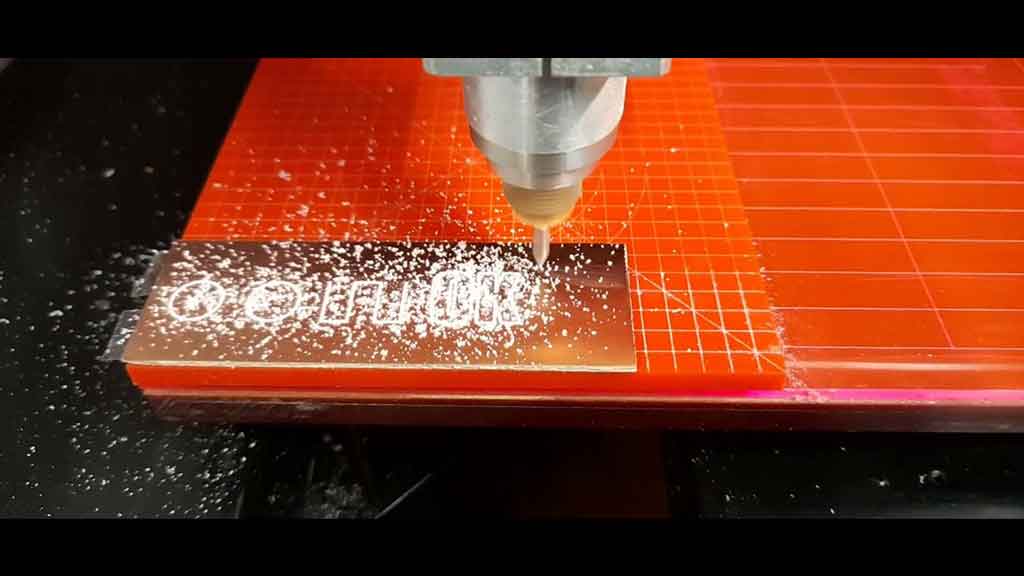
- Engraving: V-bits for fine details; low depth for crisp lines.
Cooling trick: Compressed air blasts keep temps under 100°C and extend tool life 40%.
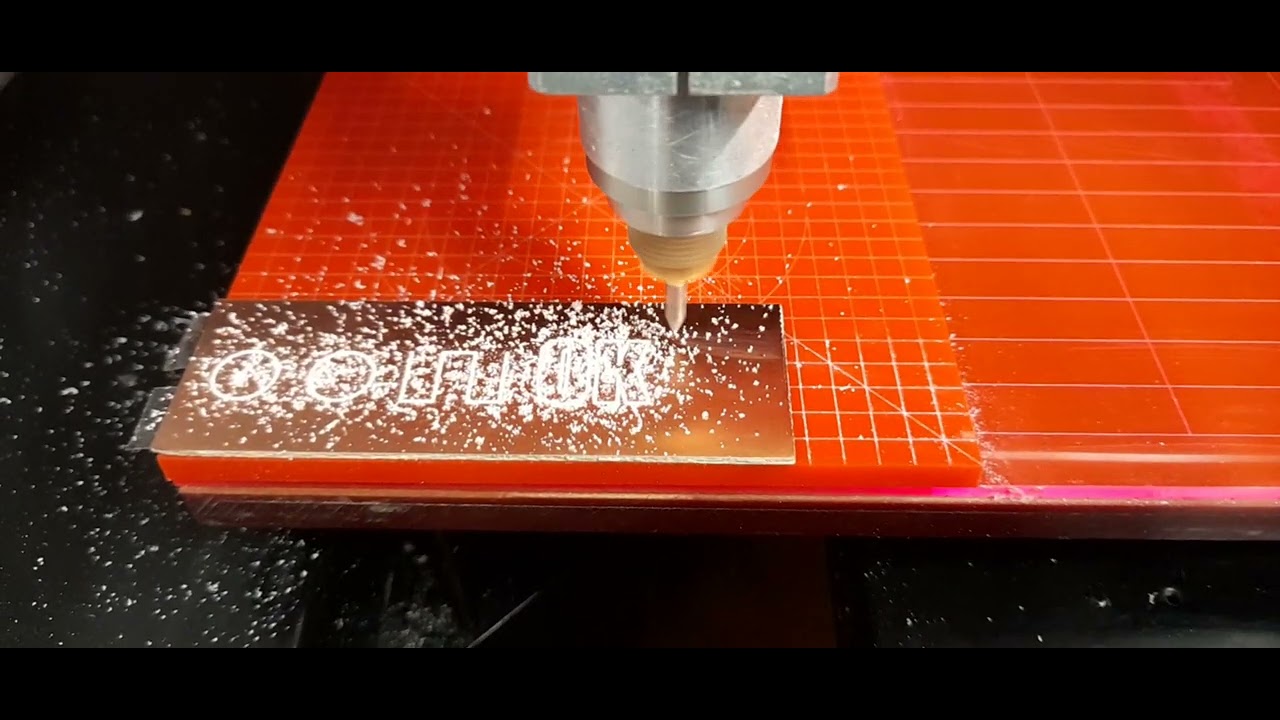
See it in action:
CNC milling FR-4 epoxy glass PCB board using TS-30 (for sale)
Tackling the Toughest Challenges Head-On
- Burr Battles: Fiberglass frays like crazy. Solution: Down-cut tools and secondary deburring (ultrasonic or manual).
- Heat Hazards: Friction = delamination. Fix: Step feeds, coolant mists (if dust allows), or pauses every 5 min.
- Dust Drama: Inhaling fiberglass? No thanks. Mandate respirators, enclosed machines, and wet wipes for cleanup.
- Tolerance Traps: Thermal expansion skews measurements. Hack: Machine at room temp, measure post-cool.
From the trenches: In a Practical Machinist forum thread, pros swear by diamond-coated drills for thick FR4 – one user drilled 320 holes in 1.5″ panels without failure.
Advanced Moves for High-Stakes Parts (Plus Case Studies)
- Multi-Axis Magic: 5-axis CNC for complex 3D contours – essential for EMI shields or curved enclosures.
- Hybrid Tech: Combine with laser etching for micro-features.
- Optimization Tools: AI software (like Autodesk Fusion) predicts wear, auto-adjusts paths.
Real-world wins:
- BeePlastic Case: Delivered 6,000 high-precision FR4 insulation parts in just 3 days for an electrical manufacturer. Key? Optimized CNC parameters and rapid prototyping—tolerances of ±0.01mm, zero rejects.
- Elimold Example: Machined FR4 prototypes for aerospace with ±0.005″ accuracy using 5-axis centers. Result: Custom insulators that passed UL testing first try.
- InsulFab Success: Stamped and machined G10/FR4 for tight-tolerance parts in electronics. Their high-speed techniques minimized heat, boosting yield 25%.
Imagine your project: A drone enclosure from FR4, shielding sensitive sensors. With these techniques, it’s lightweight, EMI-proof, and ready in days.
FR4 CNC Machining: The Real Pros, Cons, and Trade-Offs (Expanded Analysis)
Decision time: Is FR4 CNC right for you?
Let’s dissect the upsides and downsides with data, examples, and fixes. No sugarcoating.
Wins That’ll Sell You on FR4 CNC
- Precision Powerhouse: Hit ±0.05mm tolerances routinely – even ±0.005mm with pros like Elimold.
- Flexibility Factor: From one-off prototypes to 6,000-unit runs (BeePlastic style) – scales effortlessly.
- Cost Crusher: Material + machining is often under $5/part in volume; 30-50% cheaper than metals.
- Speed Surge: CNC cycles in minutes; add automation for 24/7 output.
- Quality Boost: Consistent finishes reduce assembly fails by 40%.
Bonus: Eco-perk – less energy than forging metals.
The Downsides (And How to Flip Them)
- Eco and Health Issues: Dust/waste hazards. Fix: Invest in closed-loop recycling; use water-jet hybrids for dust-free cuts.
- Skill Barrier: Steep learning curve. Solution: Outsource to shops like InsulFab or train with sim software – ROI in months.
- Brittle Blues: Higher scrap (5-10% typical). Hack: Parameter testing cuts it to <2%; diamond tools pay off fast.
- Equipment Costs: High initial outlay ($50K+ for a mill). Trade-off: Lease or cloud-CNC services for startups.
- Limitations in Scale: Not ideal for ultra-large parts. Pivot: Segment designs or use composites.
Overall trade-off: For electrical/thermal apps, pros outweigh cons 80/20. In 2026, AI monitoring slashes downsides further.
Where FR4 CNC Machining Shines: Killer Applications and Case Studies
FR4 isn’t stuck in labs – it’s out there conquering industries.
Here’s the expanded lowdown, with emerging trends and real examples.
Electronics and PCBs: The Heartland
- Prototype Power: Mill boards with precise vias and traces—speeds R&D.
- Enclosure Excellence: Custom housings shield components; add slots for cooling.
- Trend Alert: 5G demands high-frequency FR4 – market up 20% by 2027.
Case: PCR Technologies milled G10/FR4 covers to Mil-Spec for electronics—perfect fits, zero EMI leaks.
Visualize a machined FR4 PCB enclosure:
Industrial Gear: Tough and Reliable
- Insulators and Spacers: Handle high voltages in motors/transformers.
- Wear Parts: Guides and bushings resist abrasion in factories.
- Expansion: IoT sensors push demand – 15% growth in industrial apps.
Example: Owens Industries machined complex FR4 switches for optics—tolerances that “normal” shops couldn’t hit.
Aerospace Adventures: Lightweight Legends
- Panels and Insulators: Instrument dashboards that save grams (critical for fuel efficiency).
- Structural Bits: Reinforcements in drones/sats.
- Boom Ahead: With eVTOLs like PAL-V using CNC’d FR4 prototypes, sector growth hits 12% CAGR.
Case: Delft University scaled engine prototypes with FR4 CNC – boosted efficiency 10%.
Emerging Hotspots: Beyond the Basics
- Medical Devices: Sterile housings for diagnostics—biocompatible grades rising.
- Auto Electronics: EV battery insulators; withstands vibrations/heat.
- Green Tech: Solar panels, wind turbines—FR4’s insulation shines.
- Hybrid Future: Blend with 3D printing for rapid, complex assemblies; DATRON cases show 50% time savings.
Trend: By 2030, automotive FR4 use doubles with EV surge.
People Also Ask: Your Burning FR4 Questions Answered (In-Depth)
Curious minds want to know. Here’s the expanded FAQ, with tips, data, and links back.
What is FR4 Material?
FR4 is a flame-retardant fiberglass-epoxy laminate, a staple for PCBs and insulators. It combines mechanical strength (345 MPa tensile) with top insulation (>20 kV/mm). Market tip: 6.8M tons produced in 2025, priced ~$4,200/ton. (Jump to Section 2 for composition deep-dive.)
FR4 vs. G10: What’s the Real Difference?
FR4 builds on G10’s epoxy-fiberglass base by adding flame retardants for UL safety. Use FR4 in fire-risk zones (e.g., consumer gadgets); G10 for pure strength in non-flammable setups. Machining similar, but FR4’s additives can dull tools faster. Pro: G10 edges in wet environments. (See Section 2.1 for stats.)
How Do You CNC Machine FR4 Effectively?
Start with diamond tools, set 10-20K RPM/1-5 m/min feeds. Mill with ramps, drill peck-style, and engrave shallow. Dust control is non-negotiable—HEPA + masks. Case hack: BeePlastic’s 3-day turnaround used optimized paths for 6K parts. (Details in Sections 4.1-4.3; try simulating in CAM first.)
What Are the Advantages of FR4 CNC Machining?
Beyond accuracy (±0.05mm) and cost savings (30% vs. metals), it’s scalable and versatile for prototypes/batches. Eco plus: Lower energy use. Drawback flip: Handles brittleness better than manual methods. In 2026, AI boosts efficiency 20%.
Which Industries Use FR4 Most?
Electronics (PCBs, 50% market), aerospace (panels, 15%), industrial (insulators, 20%), plus emerging med/auto. 5G infrastructure alone: $47B by 2026, fueling FR4 demand. (Full breakdown in Section 6, with cases.)
Common FR4 Machining Challenges and Fixes?
Top issues: Burrs (slow feeds/sharp tools), heat warps (air cooling/pucks), dust (enclosures/PPE). Forum pros recommend diamond for deep drills – lasts through hundreds of holes. Tip: Test runs cut failures 50%. (Tackled in Section 4.2 with solutions.)
Wrapping Up: Level Up Your FR4 Game Today
You’ve made it—FR4 CNC machining, fully decoded.
Key takeaways: Nail properties for smart choices, master techniques to crush challenges, and leverage apps for real impact. With market growth at 7-8% and tech like AI CNC, 2026 is your year to dominate.
What’s next? Fire up that CAD, and prototype away. Questions? Hit the comments – let’s geek out.