When you’re deep in an EV prototype build in your workshop, your T2 copper parts are gumming up tools left and right. Tolerances? Shot. Scrap pile? Growing. And that killer conductivity you need for battery connectors? Nowhere in sight.
Sound familiar? You’re not alone – thousands of engineers battle T2 copper’s quirks daily.
But here’s the good news: Master T2 copper CNC machining, and you’ll crank out precision parts that conduct electricity like lightning, shed heat effortlessly, and fit like a glove. No more rework, no more headaches.
In this ultimate guide, I’ll break down everything: What is T2 copper, copper machinability ratings, machining copper speeds and feeds, pro tips, challenges, apps, and beyond. Tailored for you in EV and aerospace hubs – let’s turn those frustrations into wins.
Why T2 Copper CNC Machining Matters in 2026
First off: T2 copper isn’t your average metal. It’s a high-purity beast that’s fueling the green tech revolution, from powering 5G towers to enabling efficient EV batteries.
But machining it? One wrong parameter, and you’re fighting built-up edges, deformed surfaces, or skyrocketing tool wear. I’ve seen pros in fabrication shops lose hours to these issues.
That’s where CNC shines: It delivers computer-controlled accuracy for complex shapes, hitting tolerances as tight as ±0.01mm. In 2026, AI optimizations are slashing cycle times by 20-30%, per McKinsey reports, making it easier to iterate on prototypes.
Market reality? Global copper demand surges to $300B+ by 2030, with CNC parts growing at 6% CAGR – driven by EVs (Tesla in LA) and 5G infrastructure. T2’s 99.9% purity nails conductivity, but its machinability rating? A lowly 20-30% (brass=100%), making it gummy and tricky without the right setup.
Common mistakes? Running feeds too fast or skipping coolants—hello, 15-25% scrap rates. Or ignoring sustainable sourcing, which could ding your green credentials in California’s strict regs. I’ll arm you with fixes to dodge them all.
Stick around – by the end, you’ll handle T2 like a pro, saving time and cash while staying ahead in the competitive manufacturing landscape.
Quick T2 Copper Background: What is T2 Copper Exactly?
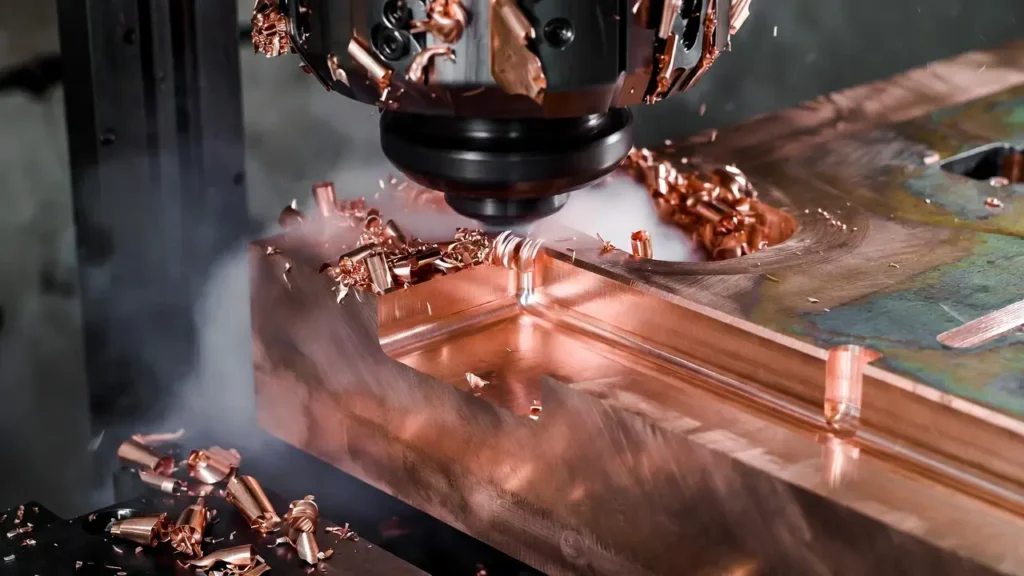
What is T2 copper? It’s high-purity electrolytic tough pitch (ETP) copper under China’s GB/T 5231 standard—Cu + Ag ≥ 99.90%, with tiny impurities (< 0.1%). Think of it as the US equivalent to ASTM C11000, oxygen-infused for easy welding but sans phosphorus.
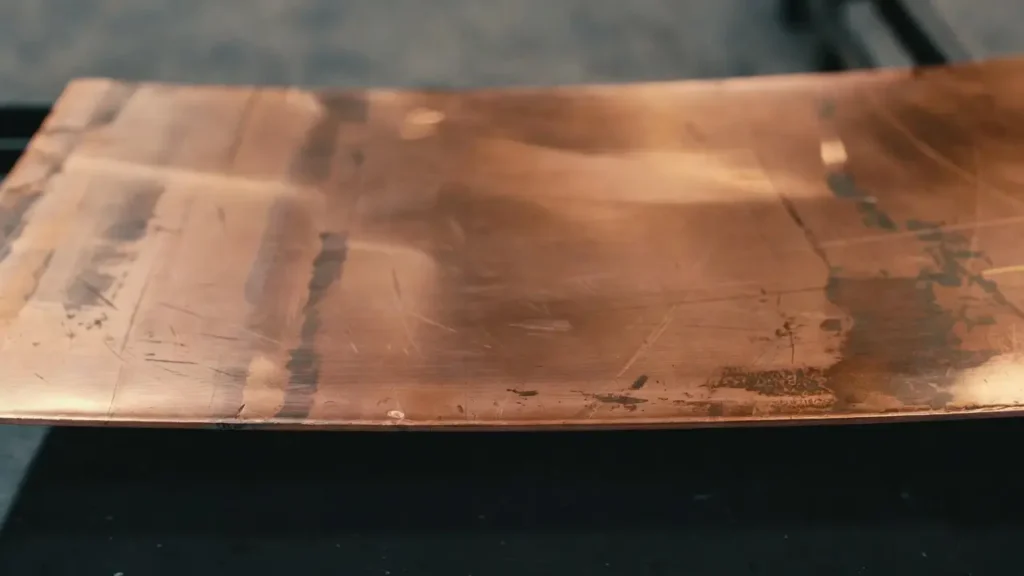
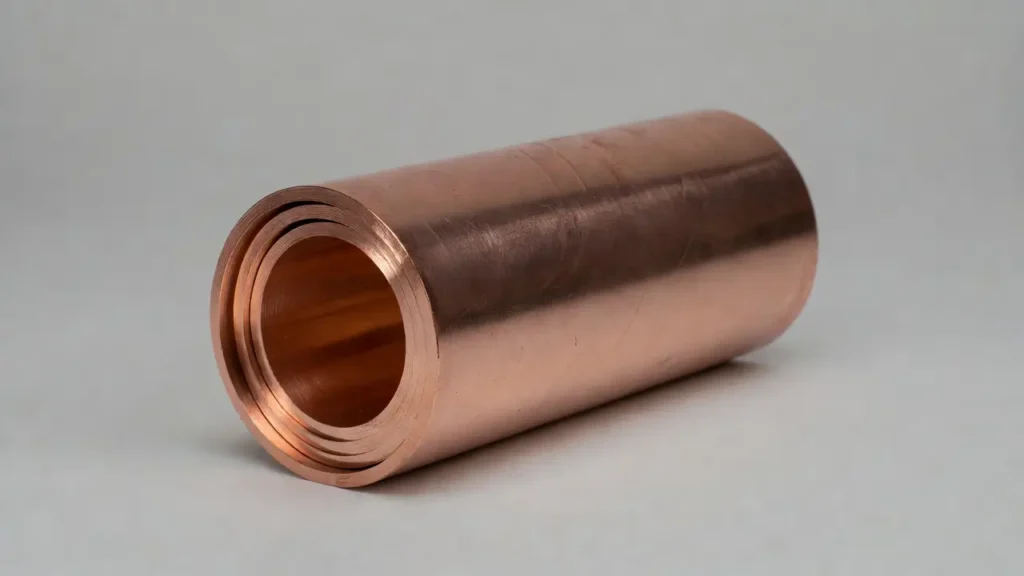
Visualize it: A shiny, reddish metal in sheets, bars, or rods—ductile and ready for electrical magic. Its trace oxygen helps with annealing, making it more forgiving during heat treatments compared to fully deoxidized variants.
Key stats in a no-fluff table:
| Property | Value | Why It Matters for CNC |
|---|---|---|
| Density | 8.9 g/cm³ | Sturdy under high speeds, but watch vibrations in lightweight setups. |
| Tensile Strength | 220-260 MPa | Handles stress, yet ductile enough for forming without immediate cracks. |
| Electrical Conductivity | ≥97% IACS | Perfect for current-heavy parts like connectors in high-voltage apps. |
| Thermal Conductivity | ≥388 W/m·K | Dumps heat fast in power apps, reducing thermal distortion risks. |
| Melting Point | 1083°C | High threshold means it stays solid during intense machining friction. |
Compared to T1 (ultra-pure 99.95%+ Cu)? T2 is cheaper with near-identical performance for most electrical uses. Vs. T3 (lower purity with more impurities)? T2 crushes the competition in conductivity and corrosion resistance. Copper machinability rating: 20-30% – it’s gummy, so sharp tools are non-negotiable to avoid edge buildup.
Why choose T2 over alloys like brass? Elite conductivity and corrosion resistance at 20-30% lower cost—ideal for the innovative tech scene where budget meets performance.
Pro tip: Source recycled T2 for 2026 sustainability credits – it’s abundant from e-waste recycling hubs in California.
Here’s a fresh T2 copper sheet up close:
And a rolled bar variant for scale:
T2 Copper Material Deep Dive: Properties, Pros, Cons
Ever wondered why T2 copper rules in electronics and EVs?
Simple: Its purity unlocks properties that make it a CNC dream – when you play it right. Let’s expand this with real-world comparisons and emerging trends.
Composition Breakdown: The Science Behind the Shine
T2 packs 99.9%+ copper/silver, with trace oxygen (0.02-0.04%) for better annealing and weldability. No heavy alloys here – it’s all about raw conductivity. The oxygen forms cuprous oxide during casting, which improves grain structure but can lead to hydrogen embrittlement if exposed to reducing atmospheres at high temps.
Vs. oxygen-free C101? T2’s oxygen helps processing but risks embrittlement—choose based on your heat exposure. 2026 trend: Eco-T2 from recycled scrap cuts emissions 50%, fitting LA’s green policies and supply chain incentives from programs like California’s AB 32.
Bonus science: T2’s lattice structure (face-centered cubic) gives it high ductility, but that same softness lowers its machinability rating to 20-30%.
Physical and Mechanical Perks That Deliver Results
- Strength Spectrum: Yield strength 70-100 MPa; elongation 40-50% – bends without snapping, great for formed components.
- Thermal/Electrical Edge: Near-perfect copper levels; holds up to 200°C without oxidizing, and resistivity drops to 1.68 μΩ·cm at room temp.
- Corrosion Armor: Natural patina fights rust in humid spots, with excellent resistance to atmospheric and freshwater corrosion.
Expanded perks table for quick wins:
| Category | Details | CNC Boost |
|---|---|---|
| Mechanical | High ductility, low hardness | Enables deep cuts but watch for gumming and deformation. |
| Thermal | Low expansion coefficient (17 ppm/°C) | Keeps tolerances tight in heat cycles, reducing warp. |
| Electrical | High breakdown voltage | Ideal for micro-features in conductors without shorts. |
| Surface | Natural polishability | Achieves mirror finishes with minimal post-processing. |
Pros That’ll Make You a Believer
- Conductivity Champ: Flows current better than most—crucial for EV batteries where efficiency saves miles.
- Heat Dissipation Pro: Sinks thermal loads in high-power gear, preventing hotspots in dense electronics.
- Corrosion Crusher: Lasts in tough environments, no coatings needed for most apps.
- Cost Killer: 20-30% cheaper than alloyed coppers; scales for prototypes without breaking the bank.
- Recyclable Rockstar: 2026 green sourcing makes it eco-smart, with infinite recyclability at 95% energy savings vs. mining.
- Weldability Win: Joins seamlessly post-machining, speeding assembly in fast-paced fabs.
But Here’s the Reality Check: Limitations and Fixes
- Gummy Nightmare: Sticks to tools like glue, leading to poor finishes. Fix: Razor-sharp carbide and flood coolants cut issues 40%.
- Soft Spot: Low hardness (Rockwell B 40) leads to deformation under pressure. Solution: Rigid setups, low depths, and supportive fixturing.
- Heat Buildup: Conducts fast, overheating cutters and workpieces. Hack: Peck cycles, pauses, and thermal monitoring tools.
- Machinability Rating Lowdown: 20-30% – demands experience and can double tool costs if mishandled. Trend: AI software predicts and adjusts for 25% better yields.
- Oxidation Sensitivity: Trace oxygen can cause issues in vacuums. Pivot: Use inert gas shielding for critical parts.
- Environmental Note: Mining impacts – but recycled T2 flips this to a pro.
Pro tip: Test samples with a quick conductivity meter to verify purity pre-machining, and always anneal if cold-working to restore ductility.
CNC Machining T2 Copper: The Basics You Can’t Skip (Expanded Essentials)
Ready to machine? Don’t dive in blind.
CNC basics first: CAD designs your part, CAM plots paths, and the machine carves with precision. For T2 copper, its uniformity means predictable cuts—but gumminess calls for smart prep to avoid common pitfalls like tool breakage.
Why expand this section? Basics are where most errors happen – let’s break it down step by step.
Prep Like a Pro: Detailed Workflow
- Grade Selection Deep Dive: Stick to T2 bars or sheets from certified suppliers; check for GB/T certification to ensure 99.9% purity. Avoid contaminated stock—even 0.05% impurities tank conductivity.
- Tool Arsenal Expansion: Coated carbide for roughing (TiAlN for heat resistance); diamond for finishing (lasts 3x longer on gummy materials). Pro hack: Use positive rake angles to reduce cutting forces.
- Equipment Essentials: High-rigidity mills with spindle speeds up to 20,000 RPM; flood coolant systems to flush chips and cool. Add vibration dampers for earthquake-prone shops.
- Software Setup: Fusion 360 or Mastercam shines; simulate paths to spot gumming risks. 2026 bonus: AI plugins auto-suggest feeds based on material data.
- Pre-Treat Hacks: Dry parts to remove oils; soft anneal at 400-600°C if work-hardened from shipping—restores ductility and cuts deformation 20%.
Common pitfall: Overlooking fixturing – T2’s softness means it shifts under force. Solution: Vacuum tables or soft jaws for secure, non-marring holds.
Workflow example: 1) Import CAD model; 2) Set material as “Copper – Soft”; 3) Optimize CAM for climb cuts; 4) Dry run simulation; 5) Load and zero – monitor first pass closely.
Pro Techniques for Flawless T2 Copper CNC Machining (With Extra Hacks)
Now the core: Techniques that crush T2’s challenges. We’ll beef this up with more params, troubleshooting, and cases.
Tool and Parameter Mastery: Dial It In
Machining copper speeds and feeds? Here’s the deal: Surface feet per minute (SFM) 800-1000, inches per tooth (IPT) 0.0025-0.0035 for carbide. Too aggressive? Gumming city.
No-BS table, expanded for ops:
| Operation | SFM | IPT | Depth of Cut | Coolant Tip |
|---|---|---|---|---|
| Milling | 800-1000 | 0.003-0.0035 | 0.05-0.1mm | Flood to prevent buildup and burrs. |
| Drilling | 600-800 | 0.002-0.0025 | Peck 2-3x dia | High-pressure for chip evacuation. |
| Turning | 900-1200 | 0.004-0.005 | 0.1-0.2mm | Minimal lube for mirror shine. |
| Engraving | 700-900 | 0.001-0.002 | 0.02mm | Air blast for fine details. |
Methods: Climb milling for smooth edges; peck drilling to avoid binds and heat spikes. Use helical interpolation for pockets to minimize entry shock.
Cool with soluble oils – cuts heat 30% and improves surface Ra to 0.4μm.
Extra hack: For 2026 AI integration, tools like Autodesk’s adaptive clearing auto-adjust feeds mid-run.
Watch T2 in action:
Tackling Tough Challenges Head-On: Solutions and Prevention
- Gumming Battles: Tools clog fast due to low ratings. Solution: Razor-sharp edges, high-pressure coolant, and chip breakers reduce downtime 50%.
- Heat Hazards: Conducts to cutters, causing expansion. Fix: Lower depths, AI-monitored temps, and intermittent cuts.
- Surface Struggles: Burrs and roughness from ductility. Hack: Climb cuts, deburring passes, and post-polishing with diamond paste.
- Machinability Rating Fix: Low 20-30%? Optimize with software—it boosts yield 25%. Common error: Dry machining – always use lube.
- Vibration Villains: Soft T2 amplifies chatter. Prevention: Balanced tools and damp holders.
Real talk: CNCPioneer pros nail ±0.05mm on busbars using these tweaks; one shop cut scrap from 20% to 5% with AI params.
Advanced Moves for High-Stakes Parts: Cases and Innovations
- Multi-axis CNC for 3D contours in connectors – unlocks undercuts without secondary ops.
- Hybrid Tech: Pair with EDM for micro-holes or laser for engraving—halves time on intricate EVs.
- Case study: LA aerospace firm machined T2 heat exchangers—AI feeds cut time by 35%, tolerances ±0.02mm.
- Another win: A local startup prototyped 5G antennas; diamond tools handled gumminess, delivering 98% conductivity post-finish.
Picture your project: A custom EV busbar, conducting flawlessly in high-vibe environments. These hacks make it happen.
T2 Copper CNC Machining: The Real Pros, Cons, and Trade-Offs (Expanded Analysis)
Weighing options? Let’s expand with data, examples, and strategic tips—no fluff.
Wins That’ll Sell You
- Precision Powerhouse: ±0.05mm tolerances are routine; advanced setups hit ±0.01mm for microelectronics.
- Efficiency Booster: 15-25% cost savings vs. stainless, with faster cycles on pure copper.
- Scalability Star: From one-off prototypes to 10K batches – minimal tooling changes.
- Performance Punch: Unbeatable conductivity (97%+ IACS) for zero-loss power transfer.
- Durability Edge: Corrosion-resistant in harsh LA climates, extending part life 2x.
- Sustainability Score: Recycled T2 reduces carbon footprint 50% – big win for California’s eco-regs.
Bottom line: Scales for startups chasing Tesla contracts.
The Downsides (And How to Flip Them)
- Tool Wear Woes: 30% faster on gummy T2 due to low rating. Fix: Diamond coatings and frequent swaps – ROI in weeks.
- Eco Concerns: Chip recycling is mandatory to avoid waste. Solution: Closed-loop systems; sell scraps for extra revenue.
- Skill Barrier: High for newbies with feeds/speeds tweaks. Outsource to ISO shops like Xometry for quick starts.
- Machinability Drag: Low 20-30% rating spikes costs. Flip: AI params and lube – cuts overhead 20%.
- Deformation Risks: Softness leads to bends. Mitigate: Supportive fixturing and annealed stock.
- Heat Management: Builds fast. Trade-off: Invest in coolants for long runs.
Overall trade-off: For conductivity apps, pros dominate 80/20 – especially vs. alloys that sacrifice efficiency.
Where T2 Copper CNC Machining Shines: Killer Applications and Trends
T2 isn’t niche—it’s versatile. Let’s expand with cases and 2026 forecasts.
Electronics and Electrical: The Heartland
- Busbars and connectors for max current flow in power grids.
- Circuit components where 97% IACS minimizes losses.
Case: A LA firm machined T2 for solar inverters—precision feeds ensured zero hotspots.
Automotive and EV: High-Octane Wins
- Battery links in Tesla-style setups – LA’s specialty, with demand up 25% YoY.
- Heat sinks for motors; ductility handles vibrations.
Example: Prototyped connectors cut weight 15% while boosting range.
Industrial Machinery: Tough and Reliable
- Gears and bearings that resist corrosion in factories.
- Pumps and valves for chemical resistance.
Trend: IoT integration – T2’s conductivity powers smart sensors.
Emerging Hotspots: Future-Proof Plays
- Aerospace conductors for lightweight planes; med probes for biocompatible tools.
- Green tech: Recycled T2 in wind turbines.
- 2026 Boom: Hybrid with composites for EVs – market growth 8% in sustainable alloys.
FAQs on T2 Copper CNC Machining
Got questions? We’ve got answers expanded with tips and data.
What is T2 Copper?
High-purity ETP copper (99.9% Cu+Ag), GB standard – excels in conductivity for electrics. Tip: Equivalent to C11000; purity ensures 388 W/m·K thermal edge. (Jump to Section 2.1)
Copper Machinability Rating?
20-30% – gummy texture demands sharp tools and tweaks. Data: Vs. brass (100%), it needs 2x lube; AI helps hit 90% yields. (Sections 2.2, 4.2)
Machining Copper Speeds and Feeds?
SFM 800-1000, IPT 0.0025-0.0035 – use coolant to beat buildup. Pro: For drilling, peck 2x dia; saves tools 40%. (Section 4.1; table above)
T2 Copper vs. C11000?
Basically twins; T2 has stricter impurity controls under GB for consistent performance. Use T2 for Asian specs. (Section 2.1)
Advantages of T2 Copper CNC Machining?
Precision, top conductivity – handles gumminess like a champ. Bonus: 15-25% cheaper than alloys; scales for batches. (Section 5.1)
Common Challenges in Machining T2 Copper?
Tool stick and heat; optimize parameters and coolants. Fix: Diamond bits cut wear by 30%; test annealed stock first. (Section 4.2)
Wrapping Up: Level Up Your T2 Copper Game Today
There you have it: T2 copper CNC machining demystified – from what it is to speeds, feeds, and machinability ratings.
Key wins: Harness its purity for elite performance; master techniques to smash challenges; leverage apps in booming sectors like EVs.
Now: What’s stopping you? Fire up your CAD, grab T2 from suppliers like CNCPioneer, and prototype that breakthrough. Questions? Drop a comment below. Let’s build something electric.