
Robotics Machining Parts
Robot Arm & Joint Components
CNCPioneer manufactures CNC robot parts in China for robot arm links, joint bearings, harmonic drive elements, torque sensor bodies, end-effectors and AMR drive components. AS9100D and IATF 16949 quality systems, 78+ Swiss CNC lathes and 66+ MAZAK mill-turn centers support OEM and robotics-integrator programs.
What Are
Robotics Machining Parts?
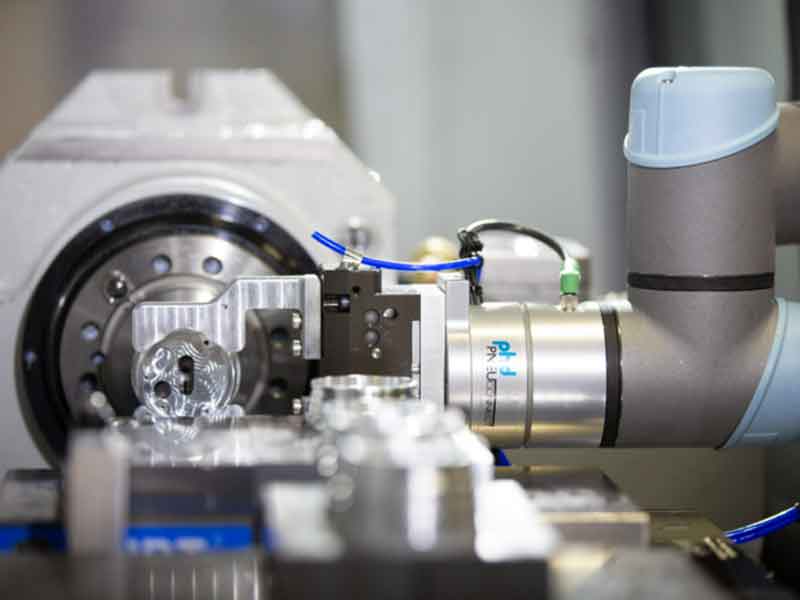
Robotics machining parts are precision mechanical, structural, electromechanical and sensor components for robot joints, arms, end-effectors and mobile platforms. CNCPioneer machines harmonic drive elements, joint bearing seats, robot arm links, torque sensor bodies, encoder mounts, gripper parts and AMR drive components through Swiss CNC, mill-turn, 5-axis milling, boring and controlled finishing.
Robot performance is traceable to the machined features that carry load, transmit motion or locate sensors. Wave-generator journal roundness affects positioning repeatability, torque-sensor beam geometry affects force measurement and encoder bores affect AMR odometry. The machining program therefore links tolerances, material, surface treatment and inspection to the robot function they support.
-
Swiss CNC Precision for Robot-Critical Parts The most dimensionally demanding robotics machining parts — harmonic drive wave generator shafts (bearing journal roundness ±0.002mm), joint bearing inner race seats (diameter ±0.002mm), encoder mounting surfaces (runout ≤ 0.003mm), and miniature mechanism pivot pins — require Swiss CNC lathe guide bushing support. CNCPioneer's 78+ Swiss CNC lathes produce these critical robotics machining parts at ±0.001mm roundness (high-precision) using PCD boring bar tooling with 100% roundness tester verification at 0.0001mm resolution.
-
OEM and Volume Robot Parts Programs Drawing-controlled production supports robot component distributors, assembly contractors and OEMs with blanket-order scheduling, dedicated capacity planning, FAIR or PPAP documentation, engineering change management and long-term supply support.
-
Rapid CNC machining for robotic prototype parts — 5–7 days First article aluminum robotics machining parts in 5–7 business days, 17-4PH stainless steel robot parts in 7–10 business days, and titanium robot precision machining parts in 7–12 business days — supporting the rapid iteration timelines that robot development programs require. Multi-component robot joint assembly prototype sets in 10–14 business days. Emergency 24-hour aluminum expedite from material in stock.
-
Traceable inspection for robot-critical features Roundness, concentricity, bearing seats, torque-sensor geometry, mass and surface treatment are linked to CMM, roundness-tester, air-gauge and material records according to the robot program requirements.

Why CNCPioneer for
Robotics Machining Parts?
CNCPioneer combines Swiss CNC precision for robot-critical parts, AS9100D and IATF 16949 quality systems, rapid prototype support, mechanism-level inspection and coordinated OEM production for robot arms, joints, harmonic drives, torque sensors and end-effectors.
PCD Boring + Swiss CNC — ±0.001mm Roundness
CNCPioneer achieves harmonic drive wave generator bearing journal roundness ±0.001mm (high-precision) through four controlled process elements: PCD boring bar tools (HV 7,000+ — zero edge wear across production quantities); Swiss CNC guide bushing fixturing immediately adjacent to the cutting zone preventing deflection; thermal stabilization before roundness measurement; and 100% Mitutoyo roundness tester verification at 0.0001mm resolution producing traceable roundness records in every robot parts inspection documentation package.
Dual AS9100D + IATF 16949 — Broadest Robot OEM Coverage
Dual certification qualifies CNCPioneer as an OEM CNC machining robot part supplier for the broadest range of robot OEM customers — AS9100D with FAIR per AS9102 for aerospace robot, surgical robot, and space robot programs; IATF 16949 with PPAP Level 3 for CNC machining for robotics automotive industry supply chains at FANUC, KUKA, ABB, and Yaskawa Motoman OEM level. No other China CNC machining robot part factory offers this dual certification coverage from a single supply relationship.
OEM and Production Robot Parts Programs
Drawing-controlled production supports robot component distributors, assembly contractors and OEMs with blanket-order scheduling, production capacity planning, engineering change management, 100% CCD sorting or SPC monitoring where specified, and inspection records matched to the part risk.
Prototype-to-Production in Single Supply Relationship
The same China CNC machining robot part factory that delivers 5-piece rapid CNC machining for robotic prototype parts in 5–7 days also delivers 500,000-piece annual production wholesale robot machining parts under the same quality system — eliminating the supplier transition costs and quality re-qualification delays when Silicon Valley robot companies change CNC machining robot part suppliers between development phases: prototype → engineering model → commercial launch → market scale-up.
Silicon Valley Robotics Parts Machining Service
CNCPioneer supports robotics startups, advanced robotics companies and system integrators with drawing review, prototype machining, international shipment coordination and production documentation for aluminum, stainless, titanium and polymer robot parts.
Documented Robot Parts Quality
Harmonic-drive journals, joint bearing seats, torque-sensor beams and robot arm interfaces are measured against the drawing with roundness, CMM, air-gauge, material and surface-treatment records. FAIR per AS9102 or PPAP Level 3 can be prepared for qualified aerospace, medical and automotive robot programs.
CNC Machining Robot Parts
— Complete Product Range
CNCPioneer manufactures robot joint drive parts, robot arm links, end-effector and tool-changer parts, AMR drive components, surgical and exoskeleton parts, sensor mounts and other drawing-controlled robotics components.

Robot Joint Drive Parts
Harmonic drive wave generator robot precision machining parts (bearing journal ±0.003mm standard / ±0.002mm high-precision; roundness ±0.002mm / ±0.001mm; shaft concentricity ±0.003mm; Ra 0.4μm / Ra 0.2μm; 17-4PH H900 or Ti-6Al-4V; 100% roundness tester verification). Thin-wall flexspline cup CNC machining robot parts (wall thickness ±0.02mm; cylindricity ±0.003mm; minimum wall 0.4mm; 17-4PH H900 or Inconel 718). Circular spline ring gear robot parts (pitch diameter ±0.005mm; housing bore ±0.003mm). Joint bearing housing CNC machining robotic parts (main bearing bore ±0.003mm, roundness ±0.002mm; input-to-output concentricity ±0.003mm; 30–50% mass reduction pocket geometry; 7075-T6 or Ti-6Al-4V). Joint torque sensor body parts (elastic beam ±0.010mm; beam symmetry ±0.005mm; 17-4PH H900). Motor mounting and encoder bracket robot parts (concentricity ±0.005mm; encoder runout ≤0.003mm).

Robot Arm Structural Parts
Upper arm and forearm link end fitting CNC machining robotic parts (CFRP tube insertion bore ±0.05mm; joint attachment bore ±0.005mm; bolt pattern ±0.02mm; flange face flatness 0.005mm; Ti-6Al-4V for CFRP-interface robot arm structural parts — CTE compatibility 8.6 vs. 0–2 ppm/°C; 7075-T6 for all-metal robot arms). Shoulder, elbow, and wrist intermediate link parts (proximal-to-distal joint angular accuracy ±0.05° governing robot kinematic accuracy; wall thickness 1.5–3.0mm; pocket mass minimization). Robot base and slewing bearing mount parts (mounting bolt pattern ±0.02mm; slewing race seat ±0.003mm; floor interface flatness 0.005mm). Lightweight cobot arm panel parts (wall 1.5–2.0mm; 40–50% mass removal; Ra 0.8μm aesthetic surface; ISO/TS 15066 inertia compliance). Wholesale robot precision machining parts — standard arm end fitting series in Ø25/30/38/50mm tube OD configurations.

End-Effector & Tool Changer Parts
Robot gripper jaw and finger CNC machining robot parts (jaw contact surface ±0.05mm; guide bore ±0.005mm; actuator interface ±0.05mm; 6061-T6 standard; 316L for food/washdown; PEEK for ESD-sensitive electronics assembly). ATC master plate and tool plate CNC machining for robotic parts (cone seat ±0.003mm for TCP repeatability ≤0.010mm across tool change cycles; pneumatic pass-through ±0.005mm; electrical contact geometry ±0.02mm). Welding torch and dispensing tool mounting parts (tool axis angular accuracy ±0.05° for TCP calibration; cable guide routing ±0.3mm; crash protection geometry). Vacuum suction cup array mounting plates (array position ±0.2mm; vacuum port thread ±0.005mm; weight-optimized pocket geometry). ISO 9283 standard tool flange hardware: Series 31.5, 50, and 63 bolt circle ±0.02mm; flange face runout ≤0.01mm.

AMR & Mobile Robot Drive Parts
Differential drive wheel hub CNC machining robot parts (encoder disc bore ±0.003mm for odometry resolution compliance; drive motor interface ±0.005mm; hub mass balance ≤0.1g·mm; 6061-T6 with hard anodize). Mecanum and omnidirectional wheel hub parts (roller mounting bore array ±0.05° angular position; center bore ±0.005mm; 7075-T6 for minimum AMR drive weight). Robot chassis and frame structural plate parts (suspension mount ±0.1mm; sensor pocket ±0.05mm; wall 2.0–3.0mm minimum). Lidar, depth camera, and ultrasonic sensor mounting CNC machining robotic parts (position ±0.05mm; angular ±0.05° for obstacle detection field coverage; black anodize for machine vision compatibility). Wholesale robot machining parts — standard differential drive wheel hub series and Mecanum wheel hub sets for commercial AMR platform integration programs.

Surgical, Medical & Exoskeleton Robot Parts
Surgical robot instrument housing CNC machining robot parts (shaft OD ±0.003mm for trocar cannula; internal cable channel ±0.005mm; Ra 0.2μm electropolished for biocompatibility; 316L stainless or Ti Grade 23 ELI ISO 10993 biocompatible). Surgical robot wrist mechanism parts on Swiss CNC lathes (miniature pivot bore ±0.002mm; cable pulley ±0.02°; wall 0.3–0.8mm achievable). Orthopedic surgery robot cutting guide parts (bone reference flatness 0.005mm; cutting slot ±0.05mm). Exoskeleton joint mechanism body components (Ti Grade 23 ELI biocompatible human-contact surfaces; joint pivot bearing ±0.003mm; Ra 0.4μm for fatigue crack resistance; mass target ±5g). ISO 13485 compatible quality documentation with FAIR per AS9102 for all medical robotics programs. 100% roundness tester verification for all bearing components.

Agricultural, Defense & Space Robot Parts
Agricultural harvesting robot gripper and cutting mechanism parts (cutting blade mount ±0.05mm; 316L stainless chemical environment compatibility). Drone and UAV robot structural parts (7075-T6 frame fittings; wall 1.0–2.0mm; motor mount perpendicularity 0.010mm/30mm). Field robot drive system parts in 316L stainless for soil and fertilizer chemical resistance. Defense EOD and military UGV robot structural parts (AS9100D + FAIR; MIL-spec surface treatment; IP67 sealing geometry). Space robot arm joint housing components (ASTM E595 outgassing TML ≤1.0%; –180°C to +150°C orbital thermal stability; FAIR per AS9102; MoS₂ solid film lubrication for vacuum bearing surfaces). Invar 36 robot calibration reference components (CTE 1.3 ppm/°C thermally stable fixtures). Vespel SP-3 space robot dry bearing cage components (self-lubricating vacuum-compatible).
Industries & Applications
CNCPioneer supports robot OEMs, robotics system integrators, robot assembly contractors, AMR builders, surgical and medical robotics teams, defense and space robotics developers, agricultural robot producers and research programs.

Industrial Automation & Manufacturing
CNC machining robot parts for six-axis articulated industrial robots, SCARA robots, delta robots, and cartesian gantry systems in automotive assembly, electronics manufacturing, metal fabrication, food processing, and pharmaceutical manufacturing. IATF 16949 certified CNC machining for robotics automotive industry robot parts for automotive welding and assembly robot supply chains serving FANUC, KUKA, ABB, and Yaskawa Motoman OEM programs.
Collaborative Robotics
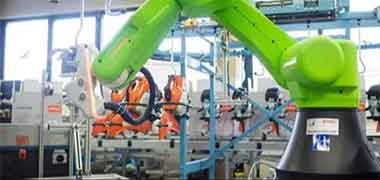
Robot machining parts for collaborative robot manufacturers include joint housings, torque-sensor elements, lightweight arm structures and tool-flange hardware for 6-DOF and 7-DOF cobot product lines. Programs can include drawing-controlled production, inspection records and coordinated releases for qualified OEMs.
Warehouse & Logistics Automation
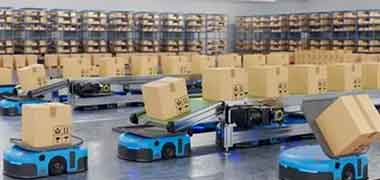
Wholesale robot machining parts for autonomous mobile robot (AMR) and automated guided vehicle (AGV) manufacturers — wheel hub components, differential drive elements, chassis structural hardware, and navigation sensor mounting parts for warehouse fulfillment and logistics robot platforms. AMR/AGV drive system robot parts: 10,000–1,000,000 units annually from CNCPioneer's wholesale robot precision machining parts factory.

Silicon Valley Robotics Ecosystem
Rapid CNC machining for robotic prototype parts serving the robotics parts machining Silicon Valley ecosystem — delivery drone robot structural components, autonomous vehicle robot parts, humanoid robot joint, and next-generation robot arm structural elements for Bay Area robot development programs. 5–7 business day first article delivery plus 3–5 business day Shenzhen-to-Bay-Area express shipping. Engineering-first 24-hour DFM review for Silicon Valley robot development iteration cycles.

Medical & Surgical Robotics
Precision CNC machining robot parts for surgical robot instrument housing bodies, orthopedic robot cutting guide elements, rehabilitation exoskeleton joint components, and diagnostic imaging robot structural hardware in biocompatible titanium and 316L stainless steel with electropolished Ra ≤ 0.4μm surfaces and ISO 13485 compatible quality documentation. Full FAIR per AS9102 for all medical robotics programs.

Defense, Space & Agricultural Robotics
AS9100D certified CNC machining robot parts for EOD robot structural components, military UGV joint hardware, and defense autonomous system robot parts with MIL-specification surface treatments. Space robot arm hardware with ASTM E595 outgassing compliance (TML ≤ 1.0%). Agricultural robot parts in 316L stainless steel and PEEK for chemical-resistant field service durability in pesticide and fertilizer spray environments.
China CNC Machining Robot Part
Factory Capabilities
The process links material verification, Swiss CNC, MAZAK mill-turn, 5-axis machining, thermal control, surface treatment, roundness testing, CMM and air-gauge inspection from prototype through production.
Swiss CNC — Critical Robotics Machining Parts
78+ Swiss CNC lathes (Star SR-32J, Citizen A20/A16, Tsugami B206, Nomura series) · Ø0.5–Ø32mm robot parts diameter range · Up to 9-axis simultaneous for complex robot parts geometry · Guide bushing support for L/D up to 20:1 — essential for slender robot shaft and pivot pin parts · Positional accuracy ±0.002mm; repeatability ±0.001mm · Harmonic drive wave generator bearing journal ±0.002mm standard / ±0.001mm high-precision; encoder mounting runout ≤0.003mm · Flexspline thin-wall 0.4mm minimum; wall thickness ±0.02mm · Production capacity: 10,000–500,000 robot joint drive parts per year
MAZAK Mill-Turn — Complex Robot Body Parts
66+ MAZAK mill-turn centers for complex robot joint housing and arm structural parts · Ø10–Ø300mm robot parts range; face Ø550mm maximum · 5-axis simultaneous for complex pocket geometry, multi-directional bore arrays, compound-angle features in single setups · Positional accuracy ±0.003mm · Single-setup machining preserving critical geometric relationships between robot part features — joint bore-to-face perpendicularity, bearing concentricity, bolt pattern position relative to bore axis · Robot arm structural plate machining to 600mm length
Measurement Equipment — Robotics Parts Verification
Mitutoyo CMM (±0.001mm) — full dimensional verification on all robotics machining parts · Mitutoyo roundness tester (0.0001mm resolution) — 100% bearing journal roundness verification for all harmonic drive robot parts · Air gauges — high-speed bore diameter monitoring in robot precision machining parts production · Thread gauge sets — all robot parts thread form verification · Profilometer — Ra surface finish measurement on robot bearing and sealing surfaces · SII XRF analyzer — material composition verification on every material lot · Precision balance (±0.1g) — mass compliance for weight-specified robot parts
Wholesale Robot Machining Parts Programs
Robot parts catalog programs include harmonic-drive wave generator shafts, joint bearing housings, ISO 9283 tool-flange hardware, robot arm end fittings, differential and Mecanum wheel hubs, and standard cobot arm links. Part numbers, minimum quantities and release schedules are reviewed against the drawing, inspection scope and annual demand.
OEM CNC Machining Robot Part Programs
Full OEM CNC machining robot part manufacturer relationship from DFM review through production supply · Drawing-controlled production with engineering change management · Long-term supply agreements with committed pricing and lead times · Dedicated production capacity for OEM robot parts programs · FAIR per AS9102 for aerospace/medical robot OEM programs · PPAP Level 3 for automotive robot OEM programs · ISO 13485 compatible documentation for medical robot OEM programs · Inventory stocking for just-in-time robot assembly line supply · Emergency expedite programs for OEM robot production line continuity · Single-piece prototype through 500,000-piece annual production in one supply relationship
Robotics Parts Machining Silicon Valley Service
Dedicated support for Bay Area robotics startups and advanced robotics companies includes rapid prototype review, aluminum, stainless and titanium machining, international shipment coordination, emergency expedite assessment and 24-hour DFM with robot-performance-traceable tolerance analysis.
Robot Precision Machining Parts
— Materials
Material selection balances strength-to-weight, fatigue, wear, lubrication, thermal stability, biocompatibility and vacuum needs. 17-4PH, 7075-T6, titanium, 316L, engineering polymers and other grades are matched to the joint, arm, sensor or end-effector function.
7075-T6
Specific strength 179 MPa·cm³/g · Density 2.80 g/cm³ · Highest-strength aluminum alloy · Dominant robot arm structural CNC machining robot parts where specific strength maximizes structural efficiency per gram — robot arm links, joint casings, drive housings, motor mounts, and cobot joint housing components. 30–50% mass reduction through pocket geometry at equivalent stiffness. Wholesale robot precision machining parts in standard arm end fitting series and joint casing sets.
6061-T6
Excellent machinability · Anodizable · Density 2.70 g/cm³ · Robot chassis structural plates, sensor mounting hardware, AMR chassis structural components, gripper body components, and robot end-effector structural parts. Standard material for robot prototype programs — first article 6061-T6 robotics machining parts in 5–7 business days. Wholesale robot machining parts — standard AMR wheel hub and chassis plate configurations in 6061-T6 with hard anodize.
2024-T351
High fatigue strength · Density 2.78 g/cm³ · High-cycle robot mechanism components and rotating robot parts subject to millions of load cycles across robot operational lifetime — robot joint cam follower elements, link hinge mechanism components, and fatigue-governed structural elements. Rapid CNC machining for robotic prototype parts in 5–7 business days; standard production robotics machining parts in 3–4 weeks.
Ti-6Al-4V Grade 5
Specific strength 199 MPa·cm³/g · Non-magnetic · CTE 8.6 ppm/°C (CFRP-compatible) · AMS 4928 · Premium robot precision machining parts structural material for surgical robot instruments, space robot arm fittings, exoskeleton joint structural elements, and CFRP-interface robot arm structural parts where titanium's CTE prevents thermal fatigue at bonded robot structural interfaces across outdoor temperature cycling. Biocompatible for human-contact robot applications.
Ti Grade 23 ELI
Superior fracture toughness · ISO 10993 biocompatible · Surgical robot instrument housing CNC machining robot parts, exoskeleton joint components with direct human-contact surfaces, and implantable-adjacent medical robot structural elements where Ti Grade 23 ELI provides biocompatibility in addition to specific strength. Enables surgical robot joint compactness within instrument shaft diameter constraints that steel harmonic drive components at equivalent strength cannot achieve.
Magnesium AZ91D
Density 1.81 g/cm³ · Lowest-density structural metal · Ultra-lightweight robotics machining parts where minimum density is the paramount design criterion — robot arm links where every gram reduction extends cobot ISO/TS 15066 safe speed envelope, exoskeleton structural panels where mass directly impacts human metabolic cost, and drone robot body structural elements requiring the minimum possible airframe mass. Hard anodize surface treatment mandatory for corrosion protection in outdoor robot operating environments.
17-4PH H900
Yield strength 1,310 MPa · Dominant robot joint drive parts material · AMS 5643 · Non-magnetic · Hardness 388–444 HBW governs harmonic drive component fatigue life. Critical manufacturing advantage: soft-state machining (H1150-M annealed) achieves ±0.002mm bearing journal roundness before H900 aging produces 1,310 MPa yield strength with minimal dimensional distortion. CNCPioneer's wholesale robot precision machining parts include standard harmonic drive wave generator series in 17-4PH H900 for CSF/CSD/SHD drives.
316L
Non-magnetic · Biocompatible · Corrosion resistant · Surgical robot instrument housing CNC machining robot parts, food handling robot gripper jaw components (FDA food contact compliant), washdown cobot structural elements in pharmaceutical and food manufacturing environments. Electropolished Ra ≤ 0.4μm for surgical robot regulatory clearance and autoclave sterilization compatibility. Agricultural robot parts in permanent pesticide and fertilizer spray contact environments where corrosion resistance is primary material requirement.
Inconel 718
High fatigue strength at elevated temperature · Age-hardenable · AMS 5663 · High-payload industrial robot harmonic drive flexspline CNC machining robot parts where 17-4PH H900 fatigue strength is insufficient at the same wall thickness, and space robot joint flexspline applications requiring high fatigue life across orbital thermal cycling. CNCPioneer's Swiss CNC lathes achieve flexspline thin-wall 0.4mm minimum in Inconel 718 with wall thickness ±0.02mm. 10–14 business day prototype delivery.
PEEK
Chemical resistant · Biocompatible · Low density (1.32 g/cm³) · MRI-compatible (non-metallic) · Medical robot and food robot gripper CNC machining for robotic parts, ESD-safe electronics assembly robot gripper components, MRI-guided surgical robot structural elements where metallic components create imaging artifacts, and electrically isolating robot structural components in high-voltage robot applications. PEEK robot precision machining parts in 5–7 day prototype delivery.
Beryllium Copper C17200 AT
Highest strength copper · Non-sparking · Non-magnetic · Robot electrical connector contact CNC machining robot parts and precision spring robot components requiring non-sparking compliance. Gold plating MIL-G-45204 applied over Beryllium Copper C17200 AT for stable low contact resistance across robot joint slip ring and cable connector service lifetimes. Hard gold for robot connector OEM CNC machining robot part programs requiring contact resistance stability across millions of connection cycles.
Invar 36 & Vespel SP-3
Invar 36 (CTE 1.3 ppm/°C): Robot calibration reference fixtures, thermally stable robot structural elements where dimensional change across operating temperature range introduces systematic positioning error — robot base calibration fixtures, laser tracker target nest bases, and robot accuracy verification reference structures for precision assembly robot applications. Vespel SP-3 (MoS₂-polyimide): Self-lubricating, vacuum-compatible — space robot dry bearing cage components for orbital robot joint applications requiring vacuum-compatible lubrication without periodic re-lubrication access.
Surface Treatments for CNC
Machining Robotic Parts
CNC machining robotic parts surface treatment selection is governed by wear resistance at robot assembly contact interfaces, biocompatibility and sterilization compatibility for medical robot parts, corrosion resistance for food processing and outdoor robot service environments, EMC shielding conductivity for robot controller housing and servo drive enclosure parts, vacuum compatibility for space robot bearing surfaces, and low-reflectance for machine vision robot applications.
Hard Anodize — MIL-A-8625 Type III (Robot Structural Parts)
Standard surface treatment for aluminum CNC machining robot parts — HV 400+ hardness for wear resistance at robot assembly contact interfaces including robot arm joint attachment surfaces, motor mount contact faces, and AMR chassis wear points. Custom color anodize for cobot safety color coding (yellow/orange safety zones on cobot body panels) and brand identification. Black anodize for machine vision guided robot applications preventing specular reflections corrupting robot vision system object detection accuracy. ASTM E595 outgassing compliant for space robot parts. Type II clear for general corrosion protection where thinner coating minimizes dimensional impact on precision robot part features.
Chemical Film — MIL-DTL-5541 (Robot EMC Shielding)
Alodine chromate conversion coating for aluminum CNC machining robotic parts requiring electrical conductivity for robot EMC shielding and structure bonding. Class 3 for minimum-resistance EMC bonding at robot controller housing and servo drive enclosure mating interfaces. Class 1A for maximum corrosion protection on agricultural robot and outdoor service robot structural aluminum CNC machining robot parts. Zero dimensional impact on precision robotics machining parts features — suitable for robot parts where hard anodize dimensional buildup would compromise bearing or sealing fits.
Passivation — ASTM A967 (Surgical & Food Robot Parts)
Essential for all stainless steel CNC machining robot parts — surgical robot instrument housing bodies, food handling robot gripper jaw components, and washdown cobot structural parts. Removes free iron from machined surfaces, enhances chromium oxide passive layer for autoclave sterilization compatibility and food contact safety compliance. Standard on all 316L and 17-4PH stainless steel robot precision machining parts programs. Critical for surgical robot instrument parts requiring FDA 510(k) and CE marking regulatory clearance.
Electroless Nickel & Gold Plating (Robot Connector Parts)
Electroless nickel plating for robot wear-surface CNC machining robot parts requiring wear resistance at repeated contact interfaces — robot quick-release latch mechanisms, robot electrical connector housings, and robot drive system wear contact surfaces beyond aluminum's inherent surface hardness. Hard gold plating per MIL-G-45204 for robot electrical connector contact CNC machining robot parts requiring stable low contact resistance across joint slip ring service lifetimes and cable connector mating cycles. XRF gold thickness verification on every production lot of robot connector OEM CNC machining robot part programs.
Electropolishing (Surgical Robot & Medical Robot Parts)
Electropolishing for surgical robot and medical robot stainless steel CNC machining for robotic parts requiring Ra ≤ 0.4μm surface finish for biocompatibility, sterilization cycle resistance, and particle-free surfaces in cleanroom robot assembly environments. Electropolishing removes surface asperities and machining stress layers from stainless steel robot instrument components. Applied to all 316L stainless precision robot precision machining parts surgical instrument programs requiring FDA and CE marking documentation.
MoS₂ Solid Film Lubrication (Space Robot Parts)
MoS₂ solid film lubrication for space robot and vacuum robot CNC machining robotic parts bearing and gear contact surfaces — enabling space robot joint bearing life targets across orbital mission durations without re-lubrication access. MoS₂ provides low friction coefficient in vacuum without liquid lubricant outgassing risk from precision robot parts surfaces. PTFE coating applied to robot mechanism sliding surfaces, robot pneumatic gripper bore surfaces, and robot cable drag chain guide components requiring low-friction actuation without liquid lubrication in cleanroom robot assembly environments.
All CNC machining robotic parts surface treatments — hard anodize MIL-A-8625 Type III, chemical film MIL-DTL-5541, passivation ASTM A967, electropolishing, MoS₂ solid film lubrication, electroless nickel, and gold plating MIL-G-45204 — are selected per robot application environment, biocompatibility, and regulatory requirements. Surface treatment certifications are included in every CNC machining robot parts shipment documentation package for both prototype and wholesale robot machining parts programs. Surface treatment recommendation is included in CNCPioneer's 24-hour CNC machining robot parts DFM review service.
Quality Assurance for CNC
Machining Robot Parts
Quality assurance covers drawing review, material verification, first article inspection, in-process control, roundness and CMM measurement, cleanliness, mass and shipment documentation for robot-critical components.
Contract & Drawing Review
Engineering review of CNC machining robot parts drawing requirements, applicable ISO 9283, AS9100D, IATF 16949, ISO 13485 (medical robot), and customer robot OEM specifications, material robotic application compliance, surface treatment callouts, and FAIR or PPAP requirements before CNC machining for robotics parts order acceptance. Custom CNC machining parts for robot programs and OEM CNC machining robot part programs receive complete DFM review identifying machining feasibility issues and tolerance relaxation options.
Material Incoming Inspection
SII XRF composition verification confirms alloy grade compliance for every robotics machining parts material lot. 17-4PH H900 hardness verification (388–444 HBW per AMS 5643) — H900 hardness directly governs harmonic drive component fatigue life and is the most critical material property verification in CNC machining robot parts incoming inspection. Full lot traceability from mill certificate through finished robot precision machining parts shipment. Counterfeit material prevention for all OEM CNC machining robot part programs.
First Article Inspection (FAIR) per AS9102
FAIR per AS9102 for aerospace and medical robot programs. PPAP Level 3 with Cpk ≥ 1.67, MSA Gage R&R for bearing air gauge and roundness tester measurement systems, FMEA, and control plan for CNC machining for robotics automotive industry programs and high-volume wholesale robot precision machining parts programs. Complete CMM dimensional verification with balloon drawing, roundness tester records, material certifications, surface treatment certifications, and mass measurement results. Customer approval required before production quantity release.
In-Process Statistical Control
100% CCD automatic sorting for critical robot joint bearing bore diameters. Real-time harmonic drive bearing journal monitoring by air gauge at defined production intervals. SPC Cpk ≥ 1.33 for all flight-critical robot parts dimensions; Cpk ≥ 1.67 for IATF 16949 special characteristics on automotive robot parts. 100% roundness tester verification on all harmonic drive wave generator and joint bearing seat CNC machining robot parts. Mandatory inspection sign-off at precision bore finish operations.
Final Inspection & Cleanliness Verification
Mitutoyo CMM (±0.001mm) full dimensional report. Roundness tester measurement for all harmonic drive and bearing components at 0.0001mm resolution. Surface roughness measurement on robot bearing and sealing surfaces. Thread gauge verification for all CNC machining robot parts threaded features. Mass measurement on precision balance (±0.1g) for all mass-specified robot precision machining parts. Visual inspection under magnification for burrs on robot joint assembly interfaces.
Shipment Documentation
Certificate of Conformance, CMM dimensional report, roundness tester records, material certifications, surface treatment certifications, mass records, FAIR per AS9102 or PPAP Level 3 package, and program documentation with every CNC machining robot parts shipment. Wholesale robot machining parts programs: CoC and CMM sampling inspection per program. Records retained 10 years industrial robot; 20 years aerospace/medical robot.
AS9100D & IATF 16949 Quality System for
Robot Precision Machining Parts
CNCPioneer holds AS9100D certification for aerospace robot and medical robotics programs and IATF 16949 certification for CNC machining for robotics automotive industry robot part supply — providing the independently audited quality framework demanded by robot OEMs, wholesale robot machining parts distributors, and Silicon Valley robotics parts machining programs globally.
FAIR per AS9102 & PPAP Level 3 (OEM Robot Parts)
FAIR per AS9102 for every new aerospace and medical OEM CNC machining robot part program — AS9102 balloon drawing format with all drawing dimensions ballooned, measured, and recorded, with roundness tester records, material certifications, surface treatment certifications, and mass measurement. PPAP Level 3 for CNC machining for robotics automotive industry and high-volume wholesale robot precision machining parts programs — Cpk ≥ 1.67, MSA Gage R&R, FMEA, control plan. Customer approval required before production release.
- FAIR per AS9102 for aerospace/medical robot OEM P/Ns
- PPAP Level 3 for automotive/wholesale robot parts
- Records: 10 years industrial; 20 years aerospace/medical
17-4PH H900 Hardness Verification (AMS 5643)
SII XRF PMI composition verification on every CNC machining robot parts material lot confirms alloy grade compliance. Hardness testing on every 17-4PH H900 robot joint component lot — H900 hardness 388–444 HBW per AMS 5643 directly governs harmonic drive wave generator and circular spline fatigue life, the defining property that determines robot joint service life under rated cyclic loading. Full traceability from mill certificate heat number through finished robot precision machining parts. Counterfeit material prevention for all OEM CNC machining robot part and wholesale robot precision machining parts factory programs.
- XRF PMI on every material lot
- 17-4PH H900: 388–444 HBW per AMS 5643
- Full traceability mill cert → shipped robot parts
100% Roundness Tester Verification (0.0001mm)
100% roundness tester measurement at 0.0001mm resolution on all harmonic drive wave generator and joint bearing seat CNC machining robot parts — providing traceable roundness records that CMM alone cannot deliver. Wave generator roundness ±0.001mm (high-precision) documented in every robot component inspection record, supporting the robot OEM's ISO 9283 positioning repeatability specification with quantitative dimensional evidence from CNCPioneer's China CNC machining robot part factory production. Wholesale robot precision machining parts factory applies the same 100% roundness tester protocol as OEM programs.
- 0.0001mm resolution Mitutoyo roundness tester
- Wave generator roundness: ±0.001mm high-precision
- 100% verification — prototype, OEM, AND wholesale robot parts
Cpk ≥ 1.67 / Wholesale Robot Parts Quality Parity
SPC Cpk ≥ 1.67 on IATF 16949 special characteristics (harmonic drive bearing bore diameter, roundness, concentricity) for CNC machining for robotics automotive industry programs. Cpk ≥ 1.33 for all other critical CNC machining robot parts dimensions. 100% CCD automatic sorting for critical robot joint bearing bore diameters across all production tiers — prototype, OEM, and wholesale robot machining parts programs. Dedicated process travelers with mandatory inspection sign-off at precision bore finish operations.
- Cpk ≥ 1.67 on IATF automotive robot parts special characteristics
- 100% CCD sorting on all robot joint bearing bores
- Same quality system: prototype = OEM = wholesale robot parts
CNC Machining Robot Parts FAQ
Common questions from robot OEMs and engineering teams comparing harmonic-drive machining, robot arm links, joint bearings, torque sensors, prototype timing, inspection records and production support.
CNCPioneer supports a robotics OEM program with 24-hour DFM, prototype machining, drawing-controlled production, material and surface-treatment review, roundness and CMM records, FAIR or PPAP documentation, engineering change management and coordinated releases from development through production.
Prototype and custom robot-part orders are reviewed from the drawing and required inspection scope. Standard catalog configurations, blanket orders and OEM programs are scheduled according to part complexity, annual quantity, treatment and documentation requirements, with production capacity and release timing confirmed during DFM.
OEM CNC machining robot part programs and wholesale robot machining parts programs differ in three primary dimensions. First, engineering relationship — OEM programs include active engineering partnership with DFM review, design iteration support, tolerance stack-up analysis, and joint development of production-ready robot part specifications; wholesale programs supply drawing-specified robot parts to customer-defined specifications without engineering iteration. Second, documentation scope — OEM programs typically include FAIR per AS9102 or PPAP Level 3 supporting robot product regulatory clearance; wholesale robot cnc machining parts programs include Certificate of Conformance and CMM sampling inspection. Third, supply continuity structure — OEM programs include long-term supply agreements with committed pricing, lead times, and engineering change management; wholesale programs operate on purchase order basis. Robot OEMs requiring consistent documentation and supply chain management typically establish OEM programs.
CNCPioneer achieves ±0.002mm bearing journal roundness on harmonic drive wave generator robot precision machining parts through four controlled manufacturing process elements. First, PCD boring bar finishing — PCD tools (HV 7,000+) prevent the cutting edge wear that progressively degrades roundness on carbide-tooled robot parts across production quantities. Second, Swiss CNC lathe guide bushing fixturing — the guide bushing supports the wave generator shaft immediately adjacent to the cutting zone, preventing the deflection under cutting forces that produces out-of-round machining on unsupported conventional CNC lathes. Third, thermal stabilization — wave generator robot parts are allowed to equilibrate to room temperature before roundness measurement, preventing measurement error from thermal expansion non-uniformity. Fourth, 100% roundness tester verification at 0.0001mm resolution.
CNCPioneer's rapid CNC machining for robotic prototype parts lead times: aluminum 6061-T6 or 7075-T6 robot parts without surface treatment — 5–7 business days; aluminum with hard anodize — 7–10 business days; aluminum with chemical film (Alodine) — 6–8 business days; stainless steel 17-4PH or 316L robot parts — 7–10 business days; titanium Ti-6Al-4V robot parts — 7–12 business days; Inconel 718 robot parts — 10–14 business days. FAIR documentation per AS9102 adds 2–3 business days. For robotics parts machining Silicon Valley programs requiring fastest possible delivery, CNCPioneer's emergency expedite program delivers aluminum robot parts from material-in-stock in 24 hours machining plus 3–5 business days international express to Bay Area — total 4–7 business days door-to-door for true emergency rapid CNC machining for robotic prototype parts requirements.
Quality verification can include harmonic-drive journal roundness, joint bearing housing concentricity, torque-sensor beam geometry, CMM reports, roundness-tester records, material certificates, surface-treatment certifications, Cpk data and on-site factory qualification evidence under the AS9100D and IATF 16949 systems.
Get a Quote for CNC Machining Robot Parts
Upload your robot part drawing, CAD model or BOM for a 24-hour DFM and quote review. We will assess harmonic-drive journal roundness, joint bearing seats, robot arm link geometry, torque-sensor features, material, surface treatment, mass targets and the prototype-to-production path.