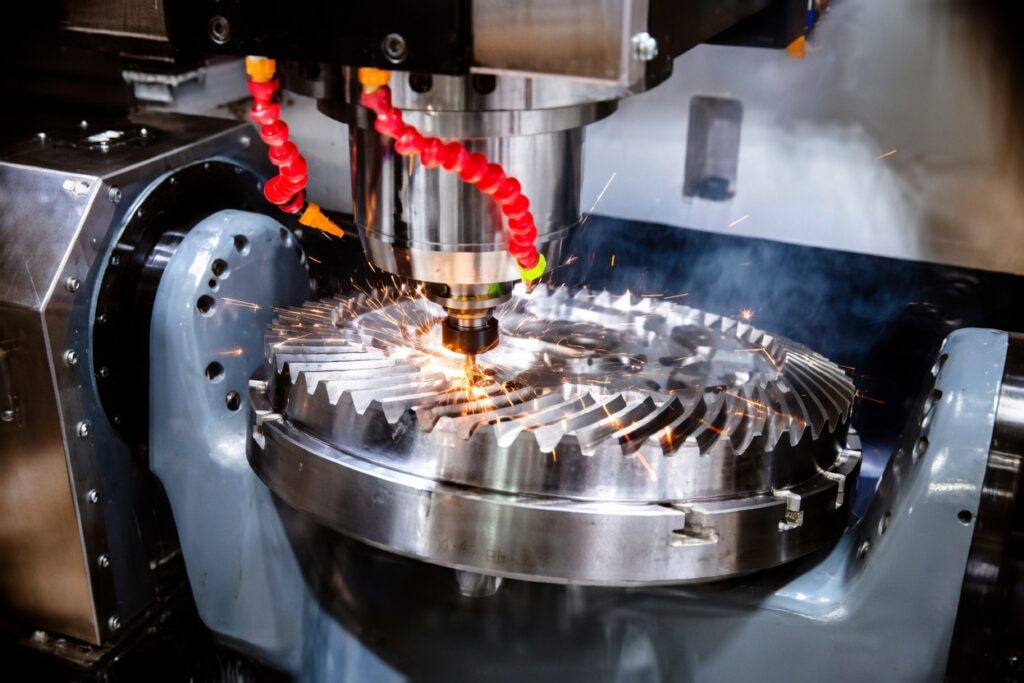
Computer Numerical Control (CNC) is a manufacturing process in which pre-programmed computer software dictates the movement of factory tools and machinery. This technology allows for the precise control of complex machinery such as lathes, mills, grinders, routers, and plasma cutters, enabling the production of intricate parts with high accuracy and repeatability. Unlike manual machining, CNC automates the process, reducing human error and increasing efficiency in industries ranging from aerospace to consumer electronics. This guide explores the fundamentals of CNC, its workings, applications, advantages, and future trends, drawing on established engineering principles and academic insights.
What Does CNC Mean?
CNC stands for Computer Numerical Control, a system that uses computers to control machine tools via numerical data inputs. The term originated from Numerical Control (NC), which was developed in the late 1940s by John T. Parsons and Frank Stulen at the Massachusetts Institute of Technology (MIT) for the U.S. Air Force. NC systems initially relied on punched tape to store commands, but with the advent of computers in the 1970s, these evolved into CNC, allowing for more flexible programming and real-time adjustments.
At its essence, CNC involves converting design specifications into a series of coded instructions that guide the machine’s movements. This code, often in G-code format, specifies parameters like tool speed, feed rate, and coordinates. Modern CNC systems integrate with CAD (Computer-Aided Design) and CAM (Computer-Aided Manufacturing) software, streamlining the transition from digital model to physical product. The precision of CNC is measured in tolerances as fine as 0.001 inches, making it indispensable for high-stakes manufacturing.
What Is the Importance of CNC?
CNC technology is crucial in modern manufacturing due to its ability to enhance productivity, quality, and innovation. It enables mass production of consistent parts, which is vital for industries like automotive and aerospace where reliability is paramount. By automating repetitive tasks, CNC reduces labor costs and minimizes workplace injuries associated with manual operation.
Furthermore, CNC supports rapid prototyping, allowing engineers to iterate designs quickly and bring products to market faster. In a global economy driven by customization, CNC facilitates small-batch production without sacrificing efficiency. Academic studies emphasize its role in advancing sustainable manufacturing by optimizing material usage and reducing waste. Overall, CNC’s importance lies in its contribution to economic growth, technological advancement, and precision engineering.
How Does CNC Work?
CNC operates through a closed-loop system where a computer interprets programmed instructions and sends signals to motors that drive the machine’s axes. The process begins with designing a part in CAD software, which generates a 3D model. This model is then processed in CAM software to create toolpaths—sequences of movements that the machine will follow.
The core language of CNC is G-code, which includes commands like G00 for rapid positioning, G01 for linear interpolation, and M03 for spindle activation. Sensors provide feedback to the controller, ensuring accuracy by correcting any deviations. For example, in a 3-axis CNC mill, the X-axis controls left-right movement, Y-axis front-back, and Z-axis up-down.
Advanced CNC systems incorporate servo motors for precise control and CNC controllers like Fanuc or Siemens for handling complex operations. The workflow involves setup (fixturing the workpiece), programming, simulation to detect errors, and execution. Post-processing may include deburring or inspection using coordinate measuring machines (CMM).
What Are the Types of CNC Machines?
CNC machines vary based on their function and axis configuration. Here are the primary types:
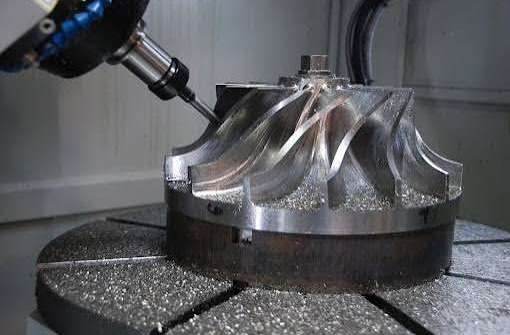
- CNC Mills: These use rotating cutters to remove material from a fixed workpiece. 3-axis mills handle basic shapes, while 5-axis versions manage complex geometries like impellers.
- CNC Lathes: Rotate the workpiece against a stationary tool for cylindrical parts. They excel in turning operations and can include live tooling for milling.
- CNC Routers: Similar to mills but optimized for softer materials like wood or plastic, often used in signage and furniture.
- CNC Plasma Cutters: Use a plasma torch to cut metal sheets, ideal for fabrication.
- CNC Grinders: For precision finishing, achieving surface finishes down to Ra 0.1 microns.
- Multitasking Machines: Combine milling and turning in one setup, reducing handling time.
Each type is selected based on material, complexity, and production volume.
What Are the Applications of CNC?
CNC’s versatility spans multiple sectors:
- Aerospace: Producing turbine blades and structural components with tight tolerances.
- Automotive: Manufacturing engine blocks, gears, and prototypes.
- Medical: Fabricating implants and surgical tools from biocompatible alloys.
- Electronics: Creating PCB enclosures and heat sinks.
- Consumer Goods: From jewelry to sports equipment.
- Renewable Energy: Machining wind turbine parts and solar frames.
In research, CNC is used for custom lab equipment, demonstrating its adaptability.
What Is G-Code in CNC?
G-code is the standard programming language for CNC machines, consisting of lines of code that control motion and functions. For instance:
- G00 X10 Y20: Rapid move to coordinates (10,20).
- G01 Z-5 F100: Linear cut to Z=-5 at 100 units/min feed rate.
M-codes handle auxiliary tasks, like M05 for spindle stop. G-code is generated via CAM software and can be manually edited for optimization.
How Does CNC Relate to CAD/CAM?
CAD designs the part digitally, while CAM translates it into machine code. Integration ensures seamless workflow, with features like toolpath simulation preventing collisions. This synergy reduces errors and enhances design flexibility.
How To Program a CNC Machine?
Programming involves these steps:
- Design the Part: Use CAD to create a model.
- Select Tools and Materials: Based on requirements.
- Generate Toolpaths: In CAM software.
- Simulate: Verify for issues.
- Post-Process: Convert to machine-specific code.
- Upload and Run: On the CNC controller.
Training in software like Mastercam is essential.
What Is the Formula for CNC Feed Rate?
Feed rate (F) is calculated as: F=N×C×T F = N \times C \times T F=N×C×T Where:
- N = Spindle speed (RPM)
- C = Chip load per tooth
- T = Number of teeth
This ensures optimal cutting without tool wear.
Can CNC Machines Operate Beyond Basic 3-Axis?
Yes, 4-axis and 5-axis machines allow for rotational movements, enabling undercuts and complex contours. 6-axis or more are used in robotics-integrated systems.
What Is an Example of CNC in Action?
Consider machining an aluminum aerospace bracket: CAD models the design, CAM generates G-code, and a 5-axis mill produces it with ±0.005 mm accuracy.
Does CNC Have High Precision?
Absolutely, with tolerances down to 0.0001 inches in advanced setups, surpassing manual methods.
What Are the Factors That May Affect CNC Accuracy?
Several factors influence precision:
- Machine Calibration: Regular alignment prevents drift.
- Tool Wear: Dull tools cause inaccuracies.
- Material Properties: Thermal expansion in metals.
- Vibration: From unbalanced spindles.
- Software Errors: Bugs in G-code.
- Environmental Conditions: Temperature and humidity.
Mitigation involves predictive maintenance and quality checks.
What Are the Advantages of CNC?
- Precision and Repeatability: Consistent parts production.
- Efficiency: 24/7 operation with minimal supervision.
- Flexibility: Easy reprogramming for new designs.
- Cost Savings: Reduced waste and labor.
- Safety: Operators away from cutting zones.
- Scalability: From prototypes to mass production.
What Are the Disadvantages of CNC?
- High Initial Costs: Machines and software are expensive.
- Skill Requirements: Need for trained programmers.
- Maintenance: Downtime for repairs.
- Limited for One-Offs: Setup time not economical for singles.
- Power Dependency: Vulnerable to outages.
- Complexity: Debugging code errors.
What Is the Difference Between CNC and NC?
NC uses fixed punched tapes, while CNC employs editable computer programs, offering greater flexibility and integration with modern tech.
What Is the Difference Between CNC and 3D Printing?
CNC is subtractive (removes material), whereas 3D printing is additive (builds layers). CNC suits metals; 3D excels in plastics for complex internals.
What Are the Future Trends in CNC?
Emerging trends include:
- Industry 4.0 Integration: IoT for real-time monitoring.
- AI Optimization: Machine learning for adaptive toolpaths.
- Hybrid Systems: Combining with additive manufacturing.
- Sustainability: Energy-efficient designs and recycled materials.
- Cobots: Collaborative robots for human-assisted operations.
These advancements promise smarter, greener manufacturing.
Summary
In summary, CNC technology revolutionized manufacturing by providing unparalleled precision, efficiency, and versatility. From its origins in NC systems to integration with AI and IoT, CNC continues to evolve, supporting diverse applications across industries. While it offers significant advantages like repeatability and cost savings, challenges such as high setup costs must be managed. For those in engineering or production, understanding CNC is key to leveraging its full potential. If you’re exploring CNC for your projects, consider consulting experts or academic resources for tailored advice.
Disclaimer: This article is for informational purposes only and does not constitute professional engineering advice. Always verify with certified sources for specific applications.