When engineers need materials that can handle extreme conditions—whether scorching heat, aggressive chemicals, seawater, or the need for maximum strength with minimal weight—they often turn to two standout performers: Inconel and titanium.
Both belong to the elite class of high-performance alloys, yet they excel in different arenas. Inconel (a family of nickel-chromium superalloys) dominates where temperatures soar and corrosion is brutal. Titanium (most commonly as alloys like Ti-6Al-4V) shines when every gram counts and biocompatibility or marine exposure is critical.
Pro-tip: While both offer impressive corrosion resistance and durability, the “right” choice almost always comes down to operating temperature, weight constraints, and the specific corrosive environment. Read on to learn more about each material and practical tips for selecting one for your next demanding project.
Introduction to High-Performance Alloys
Ordinary metals like carbon steel or aluminum fail quickly under extreme heat, acidic attack, or when weight savings are non-negotiable. That’s where superalloys and lightweight reactive metals step in.
Inconel is the trade name for a family of austenitic nickel-chromium superalloys developed for sustained performance in high-temperature, high-stress, and highly corrosive settings.
Key to its strength: solid-solution strengthening from chromium, molybdenum, and other elements, plus precipitation hardening in grades like 718.
Titanium, a lightweight transition metal, gains its engineering prowess through alloying (especially with aluminum and vanadium). Its naturally forming passive oxide layer (TiO₂) provides outstanding corrosion resistance in many environments, while its low density (~4.5 g/cm³ vs steel’s ~7.8–8.5 g/cm³) delivers exceptional specific strength.
Both are expensive and challenging to process—but they enable designs that would be impossible with conventional materials.
Inconel—Extreme-Temperature and Corrosion-Resistant Superalloy
Inconel alloys are the go-to choice when components must survive prolonged exposure to temperatures that would melt or severely weaken most metals.
Key Characteristics
- Outstanding high-temperature strength and creep resistance (many grades retain useful properties above 700–1,000 °C / 1,300–1,800 °F)
- Excellent resistance to oxidation, carburization, and nitriding at elevated temperatures
- Superior performance in aggressive chemical environments (acids, chlorides, sour gas/H₂S)
- Good fatigue resistance and toughness even after long-term thermal exposure
- Age-hardenable grades (e.g., 718) achieve very high strength levels
Common Grades
- Inconel 600 — General high-temperature corrosion resistance
- Inconel 625 — Exceptional resistance to pitting, crevice corrosion, and acids (widely used in marine and chemical processing)
- Inconel 718 — High-strength, precipitation-hardenable; aerospace workhorse up to ~700 °C
Typical Applications
- Aerospace: turbine blades, combustors, exhaust systems, thrust reversers
- Oil & gas: downhole tubing, valves, wellhead components in sour service
- Chemical processing: reactors, heat exchangers, piping for hot acids
- Power generation: gas turbine hot sections, nuclear reactor components
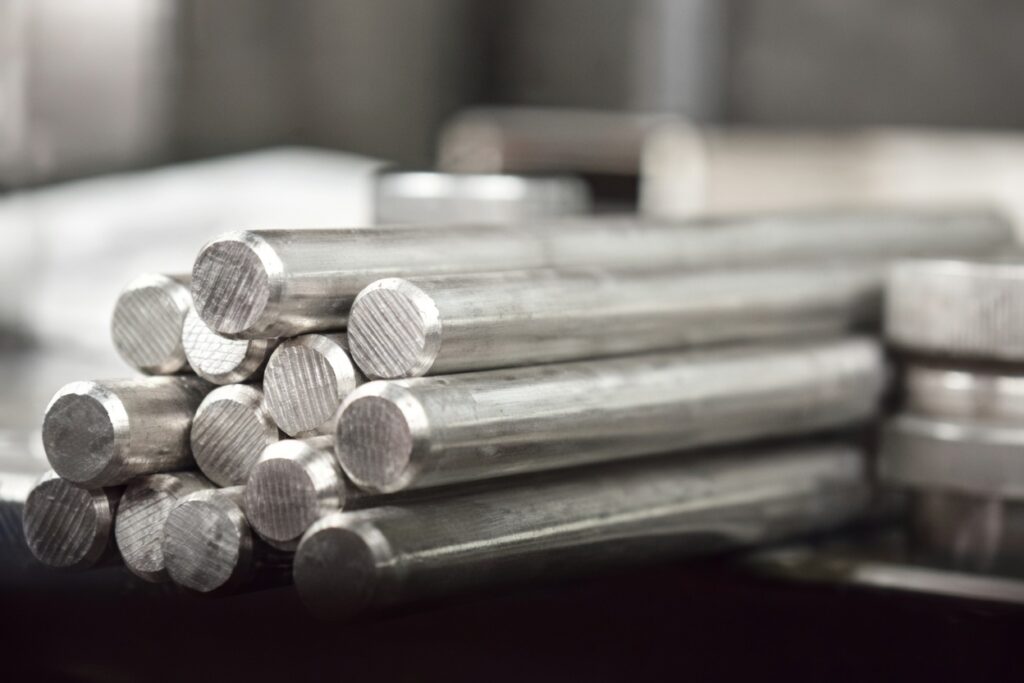
Titanium – Lightweight Champion with Broad Corrosion Resistance
Titanium alloys offer one of the highest strength-to-weight ratios of any structural metal, combined with excellent corrosion resistance in neutral-to-acidic chlorides and biological environments.
Key Characteristics
- Density roughly half that of steel or nickel alloys (~4.43–4.51 g/cm³)
- Exceptional specific strength (strength per unit density)
- Outstanding corrosion resistance in seawater, body fluids, and many reducing acids (thanks to stable TiO₂ passive film)
- Good biocompatibility (non-toxic, non-allergenic in most cases)
- Moderate high-temperature performance (most alloys limited to ~400–600 °C long-term)
Common Grades
- Grade 2 (Commercially Pure) — Maximum corrosion resistance, lower strength
- Grade 5 (Ti-6Al-4V) — Alpha-beta alloy; balances strength, toughness, and weldability; the aerospace and medical standard
- Grade 23 (Ti-6Al-4V ELI) — Extra-low interstitials for enhanced ductility and fracture toughness (common in implants)
Typical Applications
- Aerospace: airframes, landing gear, fasteners, engine mounts
- Medical: hip/knee implants, dental screws, surgical instruments
- Marine/offshore: propeller shafts, hull fittings, desalination plants
- Automotive/sports: racing valves, connecting rods, bicycle frames, golf clubs
- Consumer goods: eyeglass frames, watches, high-end jewelry
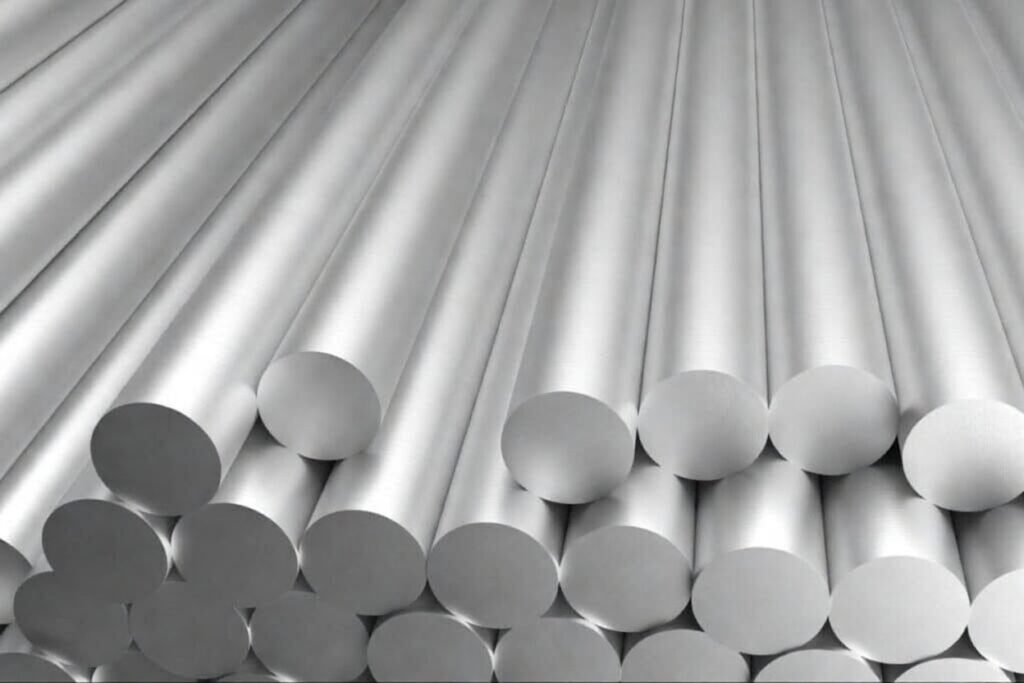
Inconel vs Titanium Quick Comparison
For many projects, the two materials are not direct substitutes—but when they overlap, the differences are stark.
- Temperature capability — Inconel wins decisively above ~500–600 °C; titanium softens and creeps significantly.
- Weight — Titanium wins by a large margin; roughly 45–50% lighter for equivalent volume.
- Corrosion — Inconel superior in hot acids, oxidizing atmospheres, and sour gas; titanium better in neutral chlorides, seawater, and biological fluids.
- Cost—Inconel is typically more expensive (especially high-end grades like 625/718) due to nickel content and complex processing; titanium is also costly but often lower per kg than premium Inconel.
- Machinability — Both are difficult; Inconel work-hardens rapidly, and titanium generates heat and can gall.
- Weldability — Both require inert-gas protection; titanium is extremely reactive with oxygen/nitrogen at welding temperatures.
Composition of Inconel vs Titanium (Typical Values)
| Alloy / Grade | Primary Base | Ni (%) | Cr (%) | Mo (%) | Al (%) | V (%) | Ti (%) | Fe (%) | Other Key Additions |
|---|---|---|---|---|---|---|---|---|---|
| Inconel 625 | Nickel | ≥58 | 20–23 | 8–10 | ≤0.4 | — | ≤0.4 | ≤5 | Nb 3–4% |
| Inconel 718 | Nickel | 50–55 | 17–21 | 2.8–3.3 | 0.2–0.8 | — | 0.65–1.15 | Balance | Nb 4.75–5.5% |
| Ti-6Al-4V (Grade 5) | Titanium | — | — | — | 5.5–6.75 | 3.5–4.5 | Balance | ≤0.3 | — |
| CP Ti Grade 2 | Titanium | — | — | — | — | — | Balance | ≤0.3 | O ≤0.25% |
Mechanical Properties of Inconel vs Titanium (Typical Room-Temp Values)
| Alloy / Grade | Density (g/cm³) | Ultimate Tensile Strength (MPa) | Yield Strength (MPa) | Elongation (%) | Max Service Temp (approx. continuous) |
|---|---|---|---|---|---|
| Inconel 625 | ~8.44 | 930 | 517 | ~45 | ~980 °C |
| Inconel 718 (aged) | ~8.19 | 1,240–1,400 | 1,035–1,170 | ~12–25 | ~700 °C |
| Ti-6Al-4V (Grade 5) | ~4.43 | 950–1,000 | 880–920 | 10–15 | ~400–500 °C |
| CP Ti Grade 2 | ~4.51 | 345–450 | 275–410 | ~20–30 | ~300–400 °C |
Sourcing Simplified – Start Your Next Project Today
Whether you need Inconel for a turbine component that sees 900 °C or titanium for a lightweight airframe bracket, selecting the right high-performance metal early avoids costly redesigns later.
Both materials demand careful consideration of processing (machining, forging, heat treatment, welding) and supply chain reliability—lead times and costs can fluctuate with raw material prices.
If you’re designing or prototyping parts that require these advanced alloys, platforms offering instant quoting, design-for-manufacturability feedback, and access to vetted suppliers can streamline the process dramatically.