If you’re designing, sourcing, or manufacturing medical devices—such as implants, surgical tools, or diagnostic equipment—medical swiss machining offers the precision needed for small, critical parts that directly impact patient safety and device performance.
This optimized guide provides clear, actionable insights based on industry expertise, helping you evaluate medical swiss machining for your projects. We’ll cover how it works, real applications, materials, advantages, challenges, and steps to get started—focusing on practical tips to reduce risks and improve outcomes.
How Medical Swiss Machining Works
Medical Swiss machining uses specialized CNC Swiss-type lathes to produce tiny, high-precision parts from bar stock.
The key feature: a guide bushing supports the material right at the cutting zone, preventing deflection on slender workpieces. Combined with multi-axis control and live tooling, it completes complex operations—like threading, milling, and drilling—in one setup.
Typical tolerances: ±0.0001 to ±0.0005 inches, with surface finishes down to Ra 4-16 microinches.
Practical example: Machining a titanium bone screw with internal threads and a polished head—all in a single automated run.
Common Applications and Examples
Medical Swiss machining is ideal for small, intricate components in:
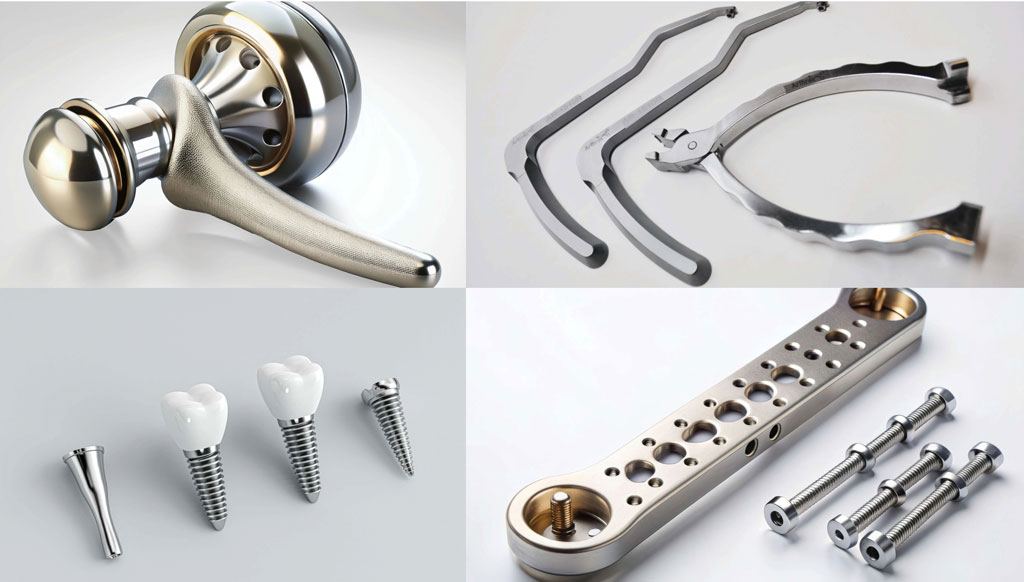
- Orthopedic Implants → Bone screws, spinal fixation rods, hip stems—ensuring strong osseointegration.
- Cardiovascular Devices → Stents, guidewires, heart valve frames—flexible yet durable.
- Surgical Instruments → Needles, trocars, endoscopic tools—sharp and ergonomic for minimally invasive procedures.
- Dental and Ophthalmic → Drill guides, intraocular lens components—miniature precision for delicate surgeries.
- Diagnostic Tools → Catheter tips, biopsy devices—smooth surfaces for patient comfort.
Real-world insight: Nitinol guidewires for vascular procedures rely on Swiss machining for superelastic properties and burr-free edges to navigate vessels safely.
Materials That Deliver Results
Select materials for biocompatibility (ISO 10993 tested), strength, and machinability:
| Material | Key Benefits | Typical Uses | Practical Tip |
|---|---|---|---|
| Titanium (e.g., Grade 5) | Lightweight, corrosion-resistant, osseointegrates well | Implants, screws, prosthetics | Carbide tools + coolant for best results |
| Stainless Steel (316L/17-4 PH) | Durable, sterilizable | Instruments, needles | Electropolish post-machining for smoothness |
| Nitinol | Shape memory, superelastic | Stents, guidewires | Control heat to preserve properties |
| Cobalt-Chrome | Wear-resistant, high hardness | Joint replacements | Diamond tools for hard surfaces |
| PEEK/Polymers | Radiolucent, lightweight | Spacers, insulators | High speeds for clean edges |
Tip: Start with titanium for load-bearing implants—it’s the most common for long-term biocompatibility.
Proven Advantages for Medical Projects
From industry experience:
- Patient Safety → Burr-free, smooth parts reduce infection risks.
- Faster Development → One-setup production shortens prototypes by weeks.
- Cost Efficiency → Less waste on expensive materials; scalable for volumes.
- Regulatory Support → Traceable processes aid FDA/ISO 13485 compliance.
- Miniaturization → Enables advanced minimally invasive devices.
Insight: Shops often achieve 20-40% faster turnaround on complex implants compared to conventional machining.
Challenges and How to Address Them
- Strict Regulations → FDA validation. Fix: Partner with ISO 13485-certified shops offering cleanroom finishing.
- Delicate Materials → Nitinol work-hardens easily. Fix: Optimized parameters and in-process monitoring.
- Tight Tolerances → Risk of scrap. Fix: Early DFM reviews—many shops provide them free.
- Post-Processing Needs → Passivation or coating. Fix: Integrated services for one-stop compliance.
Step-by-Step: Starting Your Medical Swiss Machining Project
- Define Specs → Tolerances, material, biocompatibility tests, volume.
- Choose a Partner → Prioritize medical experience and certifications.
- Submit Designs → Get DFM feedback to refine for manufacturability.
- Prototype → Small runs to validate fit and function.
- Test Biocompatibility → ISO 10993 protocols.
- Scale Up → Automated bar feeding for production.
- Finish and Validate → Cleaning, passivation, final inspections.
This approach minimizes revisions and accelerates time-to-market.
Final Thoughts
Medical swiss machining enables the creation of safe, innovative devices—from life-saving implants to precision surgical tools—by delivering unmatched accuracy and efficiency.
Focus on experienced partners, suitable materials, and collaborative design to achieve compliant, high-quality results that improve patient outcomes.
Facing a challenge with a medical component? Share your specs or concerns below—I’ll suggest practical solutions based on common scenarios.