The oil and gas industry operates in some of the harshest environments on Earth—deep underwater, in extreme temperatures, and under immense pressures. Reliable equipment is not just a convenience; it’s a necessity for safety, efficiency, and profitability. At the heart of this reliability lies oil and gas machining, a specialized field that produces critical components capable of withstanding these demanding conditions.
Oil and gas CNC machining has revolutionized how the industry manufactures parts, enabling unprecedented precision, repeatability, and complexity. From upstream exploration to downstream refining, precision machining for oil & gas ensures that valves seal perfectly, pumps operate without failure, and downhole tools perform flawlessly miles underground. This guide explores every aspect of machining for the oil and gas industry, drawing on real-world capabilities and expertise to provide actionable insights for engineers, procurement specialists, and industry professionals.
What is Oil and Gas Machining
Oil and gas machining refers to the specialized manufacturing processes used to create components for exploration, drilling, extraction, transportation, and refining of hydrocarbons. These processes predominantly involve oil and gas CNC machining, where computer-controlled tools remove material with extraordinary accuracy.
The industry demands parts that endure corrosive saltwater, abrasive fracking fluids, temperatures from -50°C to over 200°C, and pressures exceeding 20,000 psi. Even minor imperfections can lead to catastrophic failures, environmental disasters, or massive financial losses. This is why precision machining for oil & gas has become indispensable.
Modern machining shops serving the sector offer capabilities ranging from small, intricate connectors to massive valve bodies weighing tens of thousands of pounds. Companies combine multi-axis CNC centers, large-bore lathes, and advanced metrology to deliver parts that meet exacting specifications.
Why Precision Matters in the Oil and Gas Industry
In oil and gas operations, there’s no room for error. A valve that leaks under high pressure can cause blowouts. A downhole tool that fails can halt production for weeks. Oil and gas precision machining addresses these risks by achieving tolerances as tight as ±0.0001 inches (2.5 microns) and surface finishes that minimize wear and friction.
Precision directly impacts:
- Safety — Properly machined sealing surfaces prevent leaks and explosions.
- Reliability — Consistent dimensions ensure components fit perfectly in assemblies.
- Efficiency — Tighter tolerances reduce energy loss in pumps and valves.
- Longevity — Superior surface finishes and material integrity extend service life.
- Cost — Fewer failures mean less downtime and maintenance.
Key Components in Oil & Gas Machining
Machining for the oil and gas industry produces a wide array of critical parts. Here are some of the most common:
Valves and Valve Components
Valves control flow and pressure throughout the system. Machined parts include bodies, bonnets, stems, seats, balls, gates, and plugs. These often require complex internal geometries and perfect sealing surfaces.
Flanges and Connectors
Used to join piping sections, flanges must withstand immense forces while maintaining seal integrity. Common types include weld neck, blind, and slip-on flanges.
Downhole Tools
These operate deep underground and include drill bits, stabilizers, mud motors, fishing tools, and completion equipment.
Pump and Compressor Components
Fluid ends, plungers, housings, impellers, and shafts for fracking pumps and compressors handling abrasive, high-pressure fluids.
Manifolds and Flow Control
Fracturing manifolds, choke bodies, and blocks that distribute high-pressure fluids.
Blowout Preventers (BOPs)
Critical safety equipment with rams, seals, and hydraulic actuators.
Subsea Components
Connectors, hubs, and trees designed for deepwater pressures and corrosion.
Other Common Parts
- Bushings and bearings
- Actuators and hydraulic cylinders
- Threaded seals and nuts
- Wear pads and centralizers
- Gearboxes and transmission parts
Materials for Oil and Gas Precision Machining
Material selection is crucial in oil and gas industry CNC machining. Parts must resist corrosion, erosion, hydrogen sulfide cracking, and extreme temperatures. Common materials include:
Super Alloys
- Inconel 718 and 625 → Excellent strength and corrosion resistance at high temperatures.
- Inconel 800 → For heat and oxidation resistance.
- Hastelloy C-276 → Superior resistance to pitting and crevice corrosion.
- Monel → For seawater and hydrofluoric acid environments.
Stainless and Duplex Steels
- Duplex 2205 → High strength and excellent chloride stress corrosion cracking resistance.
- 13CR and 17-4 PH → Martensitic stainless steel for valves and downhole tools.
- 316/316L Stainless → General corrosion resistance.
Titanium Alloys
Lightweight with outstanding corrosion resistance, especially in subsea applications.
Other Metals
- Bronze and brass for non-sparking applications.
- Carbon steels (e.g., 4330, 4340) for structural components.
- Aluminum for lightweight housings.
Engineering Plastics
- PTFE (Teflon), PEEK, Nylon → For seals, bushings, and wear components where metal-to-metal contact must be avoided.
Machining Processes and Technologies
Oil and gas CNC machining employs a variety of processes:
CNC Turning
Essential for shafts, flanges, and cylindrical components. Large oil-country lathes handle parts up to 240 inches long and 96 inches in diameter.
CNC Milling
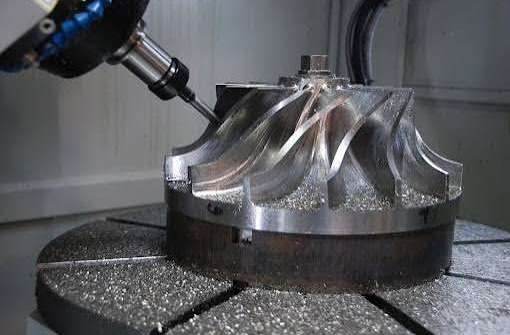
3-axis to 5-axis centers for complex geometries. 5-axis simultaneous machining reduces setups and improves accuracy. Read the guide about 5 axis cnc machining manufacturers in china to know 5-axis cnc machining service
Multitasking Machines
Turn-mill centers combine turning and milling in one setup, ideal for valve bodies and pump housings.
Electrical Discharge Machining (EDM)
Wire and sinker EDM for hard materials and intricate features.
Deep Hole Drilling and Boring
For long fluid passages in manifolds and tools.
Grinding and Honing
Achieve mirror-like surface finishes on sealing surfaces.
Additive Manufacturing Integration
Some shops combine subtractive and additive processes for complex internal cooling channels or lightweight structures.
Large part machining often requires cranes, heavy-duty beds, and specialized fixturing.
Challenges in Oil and Gas Industry CNC Machining
The sector presents unique difficulties:
- Exotic Materials — Super alloys are difficult to machine, requiring rigid machines and specialized tooling.
- Large Components — Parts weighing 45,000+ pounds need massive equipment and careful thermal management.
- Tight Tolerances — Maintaining micron-level accuracy on large parts is technically demanding.
- Harsh Service Conditions — Parts must perform after machining without distortion.
- Supply Chain Pressures—Boom-bust cycles demand rapid scaling.
- Regulatory Compliance — NACE MR0175 for sour service, API specifications, and traceability requirements.
Leading shops overcome these with temperature-controlled facilities, advanced CAM software, and extensive material knowledge.
Benefits of Advanced Oil and Gas Machining
Investing in high-quality oil & gas machining delivers significant returns:
- Reduced Downtime — Reliable parts mean fewer failures and repairs.
- Enhanced Safety — Precision sealing prevents leaks and blowouts.
- Lower Total Cost — Longer-lasting components reduce replacement frequency.
- Improved Performance — Better surface finishes reduce friction and wear.
- Faster Time-to-Market — Rapid prototyping and flexible production.
- Sustainability — Optimized designs use less material and energy.
Quality Standards and Certifications
Reputable oil and gas machining providers maintain:
- ISO 9001:2015
- API Q1 and relevant API licenses
- NACE MR0175 compliance
- ITAR registration
- In-house NDT (ultrasonic, magnetic particle, dye penetrant)
Full material traceability and detailed inspection reports are standard.
Future Trends in Oil & Gas Machining
The industry evolves rapidly:
- Digital Twins and Simulation — Predict machining outcomes before cutting.
- Automation and Lights-Out Machining — Increase throughput.
- Hybrid Manufacturing — Combine CNC with additive for new designs.
- Sustainable Practices — Recycling chips and reducing energy consumption.
- Localization — Building domestic capabilities in key regions.
Conclusion
Oil and gas machining is far more than metal removal—it’s the foundation of safe, efficient energy production. Through oil and gas CNC machining and precision machining for oil & gas, manufacturers deliver components that perform under the most extreme conditions imaginable.
Whether you’re sourcing valves for a new fracking operation, downhole tools for deepwater exploration, or replacement parts for aging infrastructure, partnering with experienced machining specialists ensures success. The combination of advanced technology, material expertise, and rigorous quality control continues to push the boundaries of what’s possible in this vital industry.

Ryan Wang
Ryan Wang is the CNC Machining Expert at Cncpioneer, with over 15 years of hands-on experience as a CNC programmer, process engineer, senior machinist, and precision manufacturing specialist. He has helped companies in aerospace, automotive, medical, and electronics sectors achieve micron-level tolerances and scale from prototypes to high-volume production. Ryan is also an experienced instructor in advanced CNC techniques, particularly five-axis machining and challenging materials.