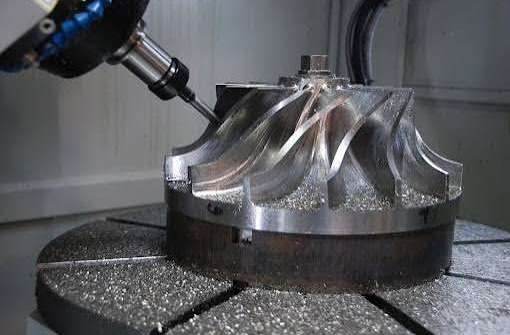
Copper CNC machining is a high-precision CNC machining process that is performed on machines specifically designed for producing copper parts.
So, how do you get precise and reliable copper machining parts?
Let’s look at all the details required for a CNC machining project, from the properties of different copper alloys to different machining types, applications, and surface finishes.
Why Copper for CNC Machining?
Copper has many mechanical properties, including high thermal and electrical conductivity, that make it often used in CNC machining.
High Thermal Conductivity
Copper has a high thermal conductivity, with pure copper having a thermal conductivity of approximately 390~401 W/(m·K). This means that copper can absorb and transfer heat more quickly, thus facilitating heat exchange more effectively and improving cooling or heat dissipation.
High Electrical Conductivity
In a copper atom, the outermost 4s energy zone (or conduction band) is only half filled, so many electrons are able to carry electric current.
Copper Materials for CNC Machining
Pure copper has very good properties, but adding other metals makes it useful in more applications.
Here are some of the most common copper alloys for CNC machining.
C11000 (Electrolytic Tough Pitch Copper)
| Tensile Strength | Elongation at Break | Hardness | Density | Maximum Temp |
| 210–250 MPa | 40–50% | 40–50 HB | 8.89–8.94 g/cm³ | ≈200 °C |
C10100 (Oxygen-Free Electronic Copper)
| Tensile Strength | Elongation at Break | Hardness | Density | Maximum Temp |
| 220–250 MPa | 45–55% | 40–50 HV | 8.89–8.94 g/cm³ | ≈200 °C |
C14500 (Tellurium Copper)
| Tensile Strength | Elongation at Break | Hardness | Density | Maximum Temp |
| 220–260 MPa | 35–50% | 40–65 HV | 8.94 g/cm³ | ≈200 °C |
C36000 (Free-Cutting Brass)
| Tensile Strength | Elongation at Break | Hardness | Density | Maximum Temp |
| 300–340 MPa | 50–53% | 50–70 HB | 8.49–8.50 g/cm³ | ≈120–200 °C |
C93200
| Tensile Strength | Elongation at Break | Hardness | Density | Maximum Temp |
| 240–260 MPa | 15–20% | 65–75 HB | 8.91–8.93 g/cm³ | ≈260 °C |
Applications of Copper in CNC Machining
Because of its electrical and thermal conductivity, copper is widely used in CNC machining in various industries, such as automotive, electric vehicles (EVs), aerospace, defense, medical, telecommunications, and mechanical.
Types of CNC Machining for Copper
There are many ways to make copper parts, including special methods like EDM (electrical discharge machining), laser cutting, and chemical etching.
However, when parts need high precision, very tight tolerances, and a smooth, good surface finish, CNC machining is usually the best and most cost-effective option.
The most common CNC machining types for copper are listed below, with details on advantages, disadvantages, and applications.
| Method | Advantages | Disadvantages | Applications |
| CNC Milling | Complex shapes, versatile | Slower, high tool wear | Aerospace, molds, medical |
| CNC Turning | Fast, smooth cylinders | Rotation symmetry only | Shafts, bolts, pistons |
| CNC Drilling | Accurate holes, fast | Hole-only, deep hard | Engine blocks, flanges |
| CNC Tapping | Fast threads, consistent | Tap break risk, pre-drill | Threaded holes, brackets |
| Electrical Discharge Machining (EDM) | Hard materials, fine detail | Very slow, conductive only | Molds, dies, micro parts |
| Laser Cutting | High precision, fast speed | Thickness limit, fumes | Sheet metal, tubes, signs |
| Chemical Etching | Burr-free, stress-free | Slow for thick, chemicals | Electronics, meshes, shims |
Surface Finish for CNC Machined Copper
Copper’s vulnerability to atmospheric corrosion and oxidation is a key consideration in precision machining. Without proper protection, tarnish buildup can interfere with surface conductivity and soldering reliability. Consequently, selecting the right protective coating is vital for the longevity of copper CNC parts.
From our production experience, the following processes represent the most reliable finishing options currently available for copper:
Nickel Plating (The All-Rounder)
- Standard Electrolytic: The most cost-effective way to prevent tarnish and add wear resistance.
- Electroless Nickel (ENP): Our top recommendation for complex parts. It deposits a perfectly uniform layer even in deep holes and internal threads, providing superior hardness ($40-50\text{ HRC}$ as plated).
Chrome Plating (The Hard Finish)
- Functional (Hard) Chrome: Ideal for high-friction environments. We typically apply a nickel undercoat first to ensure the chrome never peels or flakes.
- Decorative Chrome: Provides that iconic “mirror-like” shine while keeping the copper underneath safe from corrosion.
Tin Plating (The Electrical Standard)
The go-to for busbars and connectors. It offers:
- Excellent Solderability: Crucial for PCB components.
- Non-Toxicity: Safe for food-grade applications.
- Low Contact Resistance: Maintains high conductivity at connection points.
Precious Metals (Mission Critical)
- Silver: Offers the absolute highest electrical and thermal conductivity. Essential for high-frequency (RF) components.
- Gold: The ultimate “set-and-forget” finish. It will never oxidize, making it mandatory for aerospace sensors and medical implants where failure is not an option.
Q&A
How to choose the right copper grade?
Max conductivity → C10100/C11000 pure copper; Best machinability → C14500 tellurium or C36000 brass; Wear resistance → Bronze, like C93200. Match function, cost, and difficulty.
Best tools and parameters for copper machining?
Carbide 2-3 flute end mills, high positive rake (15°–25°); HSS is possible. High speed (150–300 m/min), moderate-low feed, sharp tools + coolant.
How to select appropriate feed rate?
Low to medium feed (0.05–0.15 mm/tooth) and constant chip load; avoid high feed to prevent sticking/burrs. High RPM + moderate feed is best.
Why is pure copper so difficult to machine?
High ductility → long stringy chips, tool adhesion, heavy burrs; high thermal conductivity → heat builds at edge; softness → deformation, poor finish, fast tool wear.
How to choose coolant/lubrication?
Flood coolant or preferred mist, water-based synthetic; air blast or minimal oil mist also OK. Avoid dry cutting to prevent sticking/overheating.
How to handle clamping, deformation, thin-wall parts?
Multi-point soft supports, FEA-optimized fixtures, even/low clamping force, light cuts, multiple passes, stock allowance, and vacuum/magnetic or padded fixtures to minimize local distortion.
Conclusion
From its material properties to its processing techniques, copper is a common metal in CNC machining service. If you need copper products by CNC machining in your project, we can help you.
Our engineers have in-depth knowledge of the characteristics of various copper materials in CNC machining. We can help you select the appropriate copper material based on your requirements.
Please tell us your copper parts machining needs. We specialize in CNC precision machining of copper parts and are happy to provide you with high-quality solutions to help your project progress smoothly

Ryan Wang
Ryan Wang is the CNC Machining Expert at Cncpioneer, with over 15 years of hands-on experience as a CNC programmer, process engineer, senior machinist, and precision manufacturing specialist. He has helped companies in aerospace, automotive, medical, and electronics sectors achieve micron-level tolerances and scale from prototypes to high-volume production. Ryan is also an experienced instructor in advanced CNC techniques, particularly five-axis machining and challenging materials.