In today’s automotive world, precision, speed, and innovation drive success. CNC automotive technology—short for Computer Numerical Control machining—has become a game-changer for producing high-quality automotive CNC machining parts. From engine components to lightweight EV structures, CNC delivers unmatched accuracy and efficiency.
This guide explains what CNC automotive really means, its major benefits, common applications, the step-by-step process, top machines, challenges, and the future outlook. Whether you’re an engineer, supplier, or manufacturer or beyond, understanding CNC helps you stay competitive.
What Is CNC Automotive Machining?
CNC machining uses computer-controlled tools to cut, drill, mill, or turn raw materials into precise parts. In the automotive industry, it creates components from metals like aluminum, steel, titanium, and even advanced plastics or composites.
Unlike traditional methods (casting or manual machining), CNC follows exact digital instructions from CAD/CAM software. This results in consistent, repeatable results—even for complex shapes.
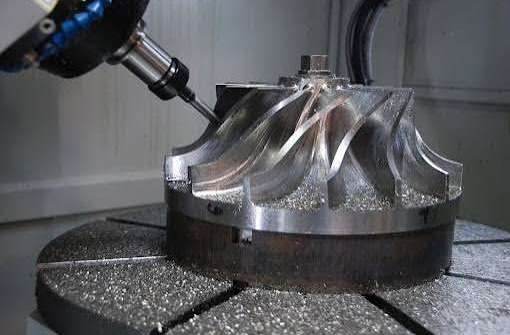
Modern setups often use 3-axis, 4-axis, or 5-axis machines. 5-axis CNC allows the tool or workpiece to rotate on multiple angles, perfect for intricate automotive designs without repositioning.
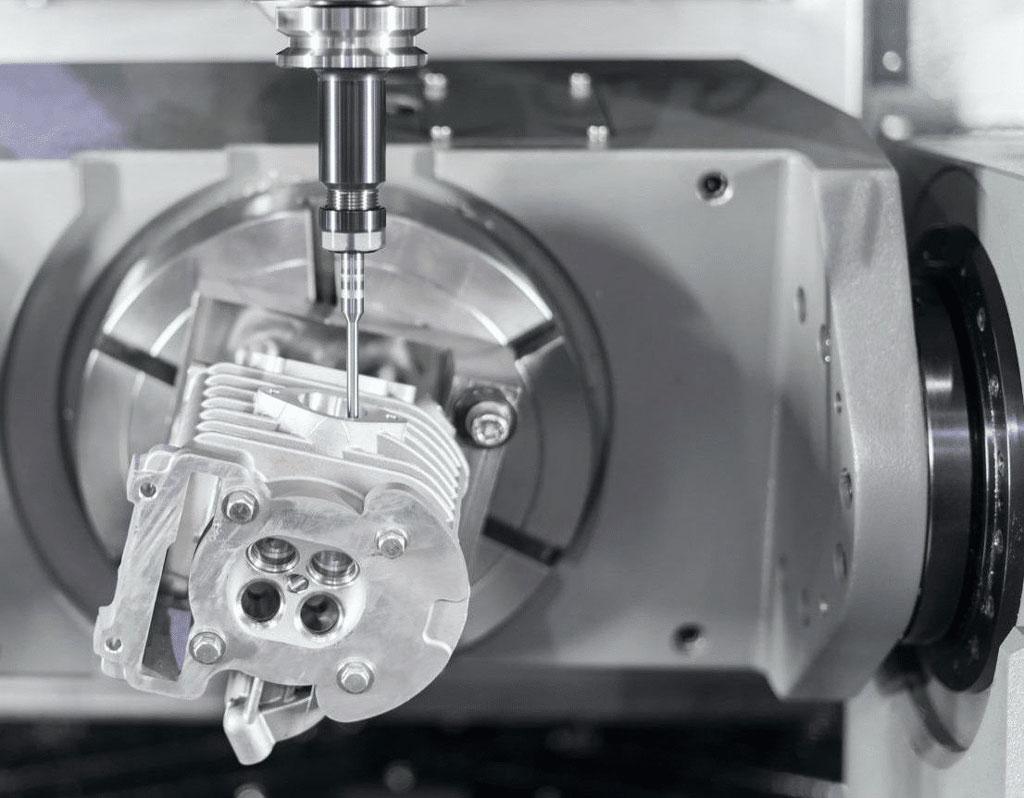
These photos show advanced 5-axis CNC in action, machining complex shapes from multiple directions—ideal for automotive prototypes and production parts.
Major Advantages of CNC in the Automotive Industry
CNC technology offers clear, powerful benefits that make it essential for modern auto manufacturing:
- Extreme Precision Achieves tolerances as tight as ±0.005 mm (or better). This eliminates fit issues, reduces noise/vibration, and improves safety in critical parts like brakes or steering.
- Faster Production Automated processes cut lead times from weeks to days. Once programmed, machines run 24/7 with minimal human intervention.
- Wide Material Compatibility Works with lightweight aluminum (great for EVs), strong stainless steel, durable titanium, and heat-resistant alloys.
- Cost Savings No expensive molds needed for prototypes or small runs. High-volume production becomes economical with automation.
- Design Freedom Supports complex geometries, undercuts, and lightweighting—key for electric vehicles, autonomous tech, and performance cars.
- Superior Surface Finish Parts often require little post-processing, saving time and money.
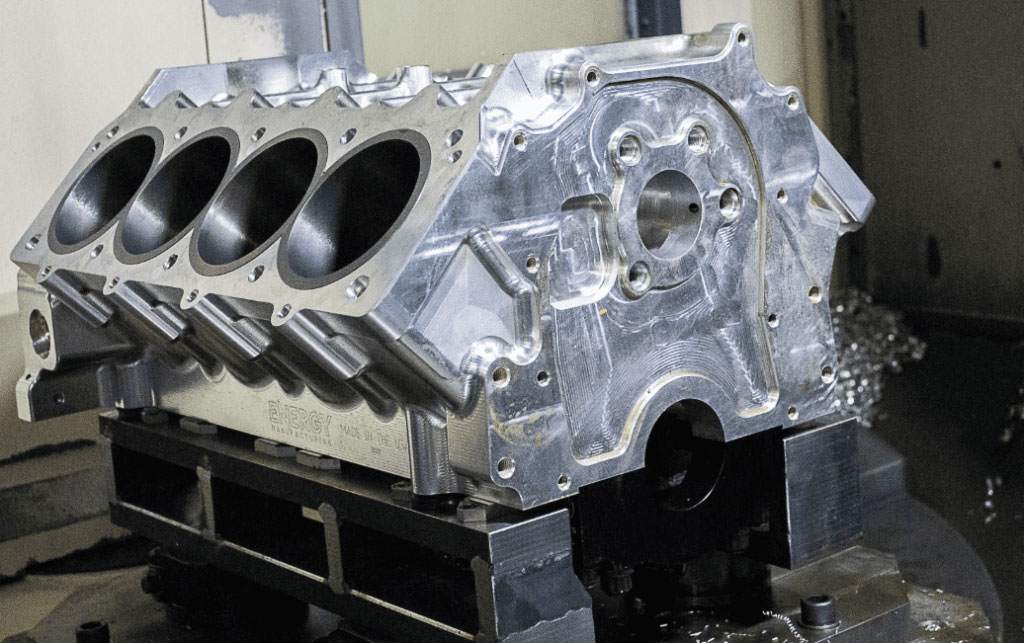
These examples highlight precision-machined engine blocks—strong, lightweight, and perfectly finished.
Common Automotive Parts Made with CNC
CNC automotive parts appear throughout vehicles:
- Engine & Powertrain Cylinder heads, blocks, pistons, crankshafts, valve covers, and fuel rails.
- Suspension & Chassis Control arms, brackets, mounts, knuckles, and lightweight frames.
- Transmission & Drivetrain Gears, housings, shafts, and differentials.
- EV & Battery Components Battery trays, motor housings, inverter casings, and cooling channels.
- Braking & steering caliper brackets, rotors (machined features), and steering components.
- Interior/Exterior custom trim, emblems, shift knobs, and prototype parts.
For racing or custom builds, CNC creates billet parts that outperform cast versions in strength and weight.
Step-by-Step CNC Automotive Manufacturing Process
- Design Phase Engineers create 3D models using software like SolidWorks, CATIA, or Fusion 360.
- CAM Programming Convert designs to toolpaths (G-code) with Mastercam, Fusion 360, or similar.
- Material Preparation Select and secure raw stock (bar, plate, or billet) on the machine.
- Machining: Rough cuts remove bulk material → semi-finish → final precision passes. Multi-axis handles complex features.
- Finish deburring edges, anodize aluminum, powder coat, or apply heat treatment.
- Inspection: Use CMM (Coordinate Measuring Machines), gauges, and surface testers to verify specs.
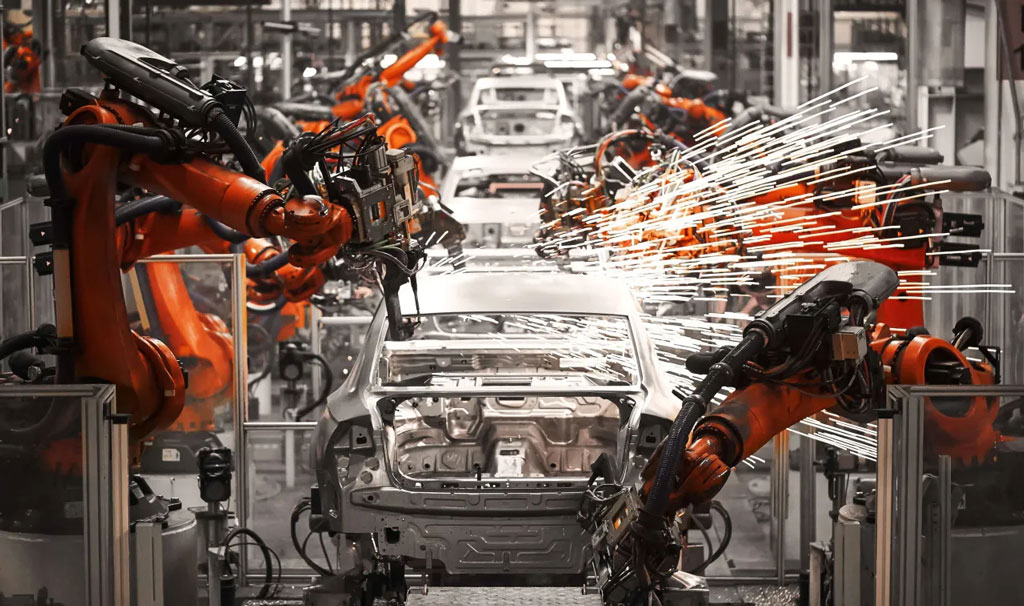
These factory scenes show robotic CNC lines producing car bodies and frames efficiently.
Top CNC Machines for Automotive Work (2026 Trends)
Popular brands trusted by automotive suppliers:
- DMG MORI — Excellent 5-axis for complex EV parts.
- Haas — Affordable, reliable for shops and mid-volume.
- Mazak — High-speed, precise production machines.
- Okuma — Strong turning/milling for drivetrain.
- Makino — Ultra-high accuracy for premium tolerances.
Future trends include AI monitoring, predictive maintenance, robotic loading, and hybrid (additive + subtractive) systems.
Challenges and the Future of CNC Automotive
Challenges:
- Skilled programmer shortage
- Rising material/energy costs
- Supply chain disruptions
Future outlook:
- Industry 4.0 integration (smart factories)
- Sustainable machining (recycled aluminum, energy-efficient tools)
- Growth in EV/autonomous vehicle parts
- Lights-out production (24/7 unmanned runs)
CNC will remain central as cars become lighter, smarter, and more electric.
FAQs
What does CNC stand for in automotive?
Computer Numerical Control—software-driven automated machining.
Why use CNC instead of casting for auto parts?
Better precision, no mold costs for prototypes, faster changes, and superior finish for critical components.
Best materials for automotive CNC?
Aluminum 6061/7075 (lightweight), stainless 304/316 (corrosion-resistant), titanium (high-strength), PEEK plastics.
How much does CNC automotive machining cost?
Prototypes: $100–$2,000+. Production runs drop with volume. Depends on complexity, material, and tolerances.
Is CNC good for electric vehicle parts?
Yes—battery enclosures, motor mounts, and thermal parts benefit from lightweight precision.
Can CNC handle high-volume auto production?
Yes—with automation, multi-pallet systems, and robotics, it scales to millions of parts per year.
If you need automotive CNC machining services, custom CNC automotive parts, prototypes, or full production in the Los Angeles area, contact a trusted shop for a fast quote. Precision and innovation define the future—let’s build it together.