In today’s manufacturing world, picking the right method is key to success. CNC machining vs injection molding is a top question for many. CNC machining cuts away material from a block to shape parts. Injection molding melts material and injects it into a mold to form parts quickly.
This guide is for manufacturing engineers, product designers, startup owners, and mechanical engineering students. It helps you decide based on real needs.
We’ll cover basics, pros/cons, costs, precision, materials, volumes, and examples. You’ll learn when to use each or combine them.
What is CNC Machining? Simple Breakdown
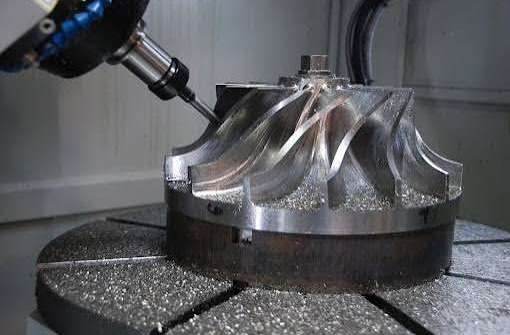
CNC machining uses computers to control tools that cut parts from solid blocks. It’s subtractive: you start with more material and remove what’s not needed.
How It Works Step by Step
- Design a 3D model in software like SolidWorks.
- Convert to G-code for the machine.
- Load material (metal, plastic) into the CNC machine.
- Tools like mills or lathes cut along 3-5 axes for complex shapes.
Tolerances can be as tight as ±0.001 inches. It’s great for precise work.
Key Advantages
- High Precision: Best for tight fits, like in aerospace.
- Flexible Materials: Metals (aluminum, steel), plastics (ABS, nylon), composites.
- Quick for Small Runs: No molds mean fast changes.
- Good Finishes: Smooth surfaces often without extra steps.
Main Disadvantages
- Costly for Big Volumes: Each part takes time, raising per-unit costs.
- Waste: Scrap from cutting, though recyclable.
- Slower Speed: Not ideal for mass production.
CNC suits prototypes and custom parts. Industry data shows it’s best for under 1,000 units.
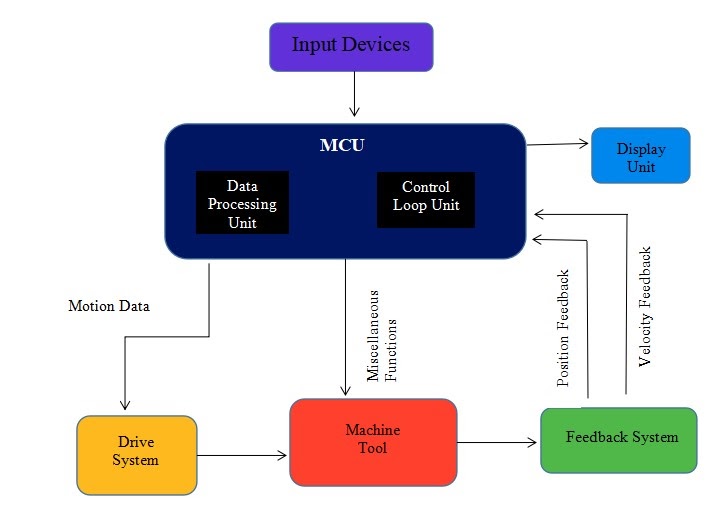
Another view of the CNC system flow:
What is Injection Molding? Easy Overview
Injection molding injects molten material into a mold to create parts. It’s formative: material fills the shape and cools.
Step-by-Step Process
- Design and make a mold (often using CNC).
- Heat pellets in a barrel to melt them.
- Inject into the mold under pressure.
- Cool, eject, and repeat.
Cycle times: 10-30 seconds per part.
Key Advantages
- Low Cost for High Volumes: Molds last for thousands of cycles.
- Fast Production: Great for big batches.
- Smooth Finishes: Strong parts with details like threads.
- Complex Shapes: Handles undercuts easily.
Main Disadvantages
- High Startup Costs: Molds cost $1,000-$100,000+.
- Material Limits: Mostly plastics; metals need special setups.
- Hard to Change Designs: New molds for tweaks.
- Tolerances: ±0.005 inches, less precise than CNC.
Best for mass production, like consumer goods.
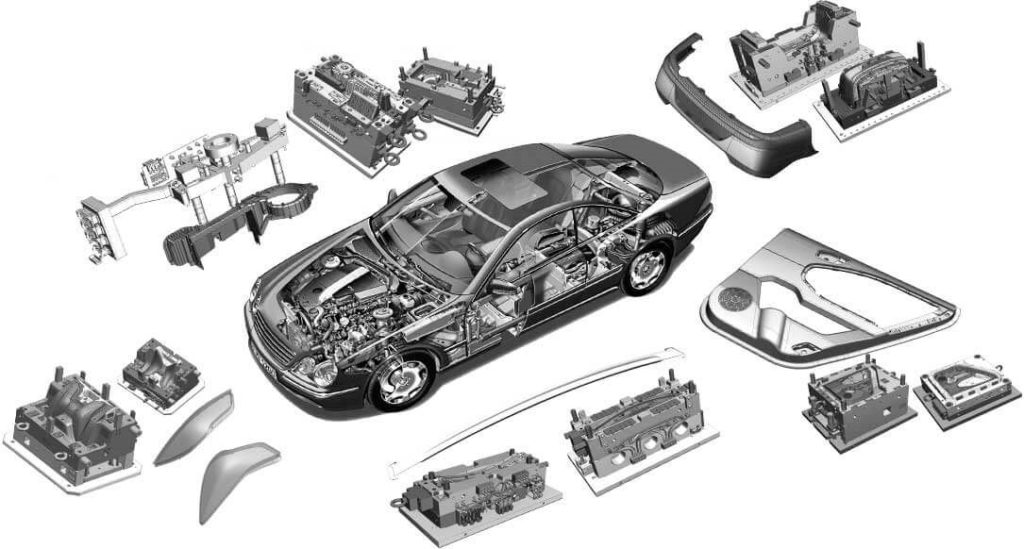
Check this image of automotive parts from injection molding:
Head-to-Head Comparison: Major Factors
Let’s compare cnc machining vs injection molding on key points. Use this to pick the right one.
Cost Breakdown: Where Money Matters Most
Costs depend on volume. CNC has low setup but high per-part cost for big runs. Injection molding has high tooling but low per-part cost at scale.
- Upfront Costs: CNC: Minimal (no mold). Injection: $2,000-$100,000 for molds.
- Per-Part Costs: CNC: $10-100 for small runs. Injection: $0.50-5 for large.
- Break-Even: Around 500-1,000 parts; injection wins after that.
Example: For 100 parts, CNC might cost $5,000 total. For 10,000, injection drops to $50,000 post-mold.
| Factor | CNC Machining | Injection Molding |
|---|---|---|
| Upfront Cost | Low | High ($1,500-$100,000) |
| Per-Part Cost | High for large volumes | Low for large volumes |
| Best Volume | 1-1,000 | 1,000+ |
| Total for 100 Parts | ~$5,000 | ~$10,000 (incl. mold) |
| Total for 10,000 Parts | ~$500,000 | ~$50,000 |
Precision and Quality: How Accurate?
CNC: ±0.001-0.005 inches, great for medical tools. Injection: ±0.005-0.010, but warping possible.
Materials: What Can You Use?
CNC: Wide range—metals, plastics, wood. Injection: Mostly thermoplastics like ABS, polycarbonate.
For metal injection molding vs cnc, CNC handles metals better directly.
Volume and Speed: Scale Up or Down?
CNC: Best for low-medium days for setup. Injection: High volumes; seconds per part, but weeks for molds.
Other Important Points
- Flexibility: CNC easy to tweak; injection locked in.
- Waste: CNC has more scrap; injection is efficient.
- Finishes: Both good, but CNC often needs less work.
Data from searches shows cost is a big concern (30 monthly for “cnc vs injection molding cost”).
Real-World Examples: See It in Action
Examples make choices clear. Here’s how industries use them.
Automotive Industry Case
CNC for custom brackets: A startup CNC machined aluminum engine parts for testing. Quick changes saved time.
Injection for housings: Companies mold ABS covers for electronics, producing thousands daily at low cost.
Injection-molded auto components:
Medical Device Hybrid Case
A manufacturer used CNC for precise prototypes (200 units) and then switched to injection for 10,000+ housings. Saved 40% on costs.
Pump Manufacturer Story
In Turkey, a company swapped wood patterns ($4,500, 18 days) for CNC foam ($420, 14 hours). Now produces 8,000 castings monthly.
Hybrid Approaches: Best of Both Worlds
Combine them! Use CNC to make molds for injection. This cuts mold costs and time. For example, CNC prototypes lead to injection production.
Advantages:
- Test with CNC, scale with injection.
- Hybrid saves 20-40% on costs for mid-volumes.
Environmental Impact: Going Green
CNC: More waste, but recyclable. Injection: Less waste, but energy-intensive heating.
Tips:
- Use sustainable materials like recycled plastics.
- Optimize designs to reduce scrap.
Industry shift: CNC with eco-materials cuts impact by 30%.
Future Trends: What’s Next?
AI in CNC for smarter cuts. 3D-printed molds for faster injection setup. Hybrid tech grows for flexible manufacturing.
When to Choose Each: Quick Guide
- Choose CNC: Prototypes, custom, low volumes (<1,000), diverse materials.
- Choose Injection: Mass production (>1,000), uniform plastics, and low per-part cost.
- Hybrid: Start with CNC, move to injection.
FAQs: Common Questions Answered
What’s the main difference between CNC machining and injection molding?
CNC removes material for precision; injection fills molds for speed.
How does cnc vs injection molding cost compare for small batches?
CNC is cheaper under 1,000 due to no tooling.
Can CNC be used for plastics like injection molding?
Yes, for custom/low volume, injection is better for mass production.
What about metal injection molding vs cnc?
CNC is direct for metals, and MIM is for complex at scale.
Is injection moulding vs cnc better for prototypes?
CNC, for flexibility and low cost.
How long does it take to change designs in cnc vs injected mold?
CNC: Instant via software; mold: Weeks for new tool.
Common applications for injection mold vs cnc?
Injection: Toys, bottles; CNC: Tools, aerospace.
Environmental pros/cons?
CNC: More waste; injection: Energy use, but efficient.
Future trends?
AI optimization, hybrid methods.
Hybrid example?
CNC mold making for injection speed processes.
Tolerances comparison?
CNC tighter (±0.001″); injection (±0.005″).
Material limits?
CNC wider injection plastic-focused.
Wrapping Up: Make Your Choice
CNC machining vs injection molding depends on volume, cost, and needs. For custom, go CNC. For scale, injection. Hybrids offer flexibility. Contact us for a free quote on CNC or injection services.