In 2026, CNC machining powers everything from rapid prototypes to high-volume production. But one question keeps coming up for engineers, product designers, and manufacturers: CNC lathe vs. mill—which machine should you use?
The answer depends on your part geometry, material, timeline, and budget. A CNC lathe spins the workpiece while the tool stays mostly stationary—perfect for round parts. A CNC mill spins the cutting tool while the workpiece stays fixed — ideal for complex 3D shapes, pockets, and flat surfaces.
This complete guide breaks down every difference, shows real 2026 costs and lead times, includes side-by-side tables, case studies, embedded videos, and 12+ FAQ answers pulled straight from what engineers are searching right now.
Whether you need a shaft in 3 days or a multi-face bracket for aerospace, you’ll know exactly which process wins — and how to get from prototype to production faster than ever.
CNC Lathe vs CNC Mill: Understanding the Core Process Differences
The fundamental difference is motion — and it changes everything about what you can make efficiently.
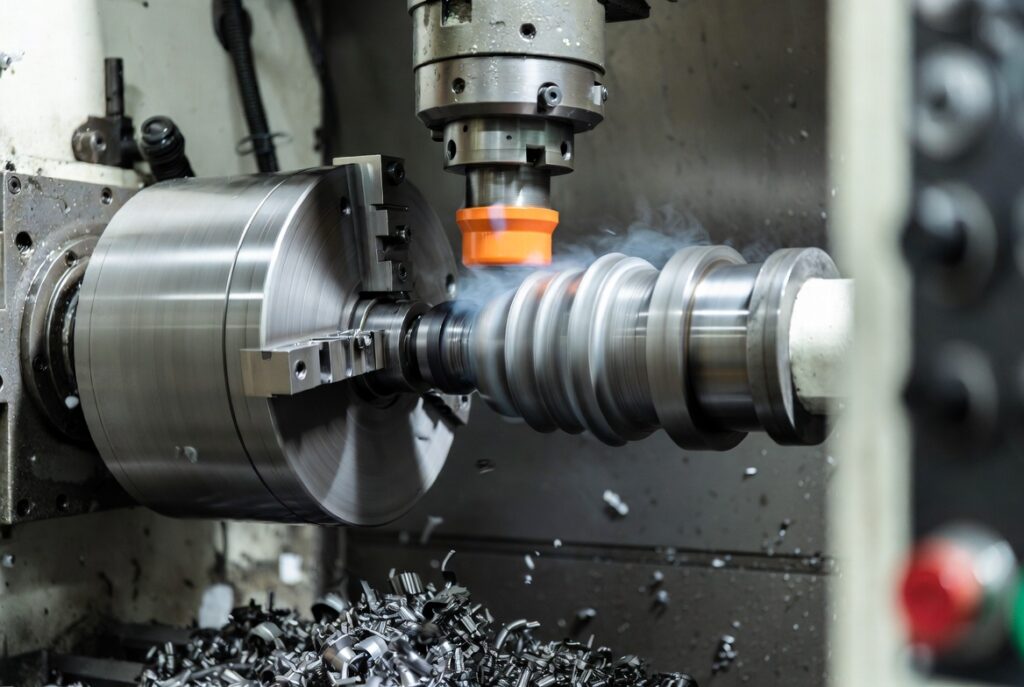
CNC Lathe (CNC Turning) The workpiece rotates at high speed (up to 6,000 RPM on modern machines). A single-point cutting tool moves linearly along the X and Z axes (and sometimes Y or C for live tooling). Result: Perfect cylindrical, conical, or rotationally symmetric parts with mirror-like surface finishes.
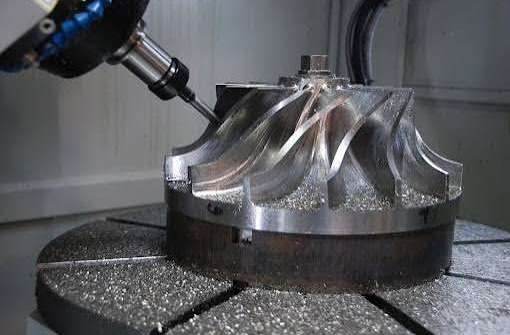
CNC Mill (CNC Milling) The cutting tool (end mill, face mill, or ball nose) rotates at 8,000–30,000+ RPM while the workpiece is clamped to a table that moves in X, Y, Z (and often A/B/C rotary axes on 4/5-axis machines). Result: Flat surfaces, deep pockets, slots, threads, 3D contours — almost any geometry imaginable.
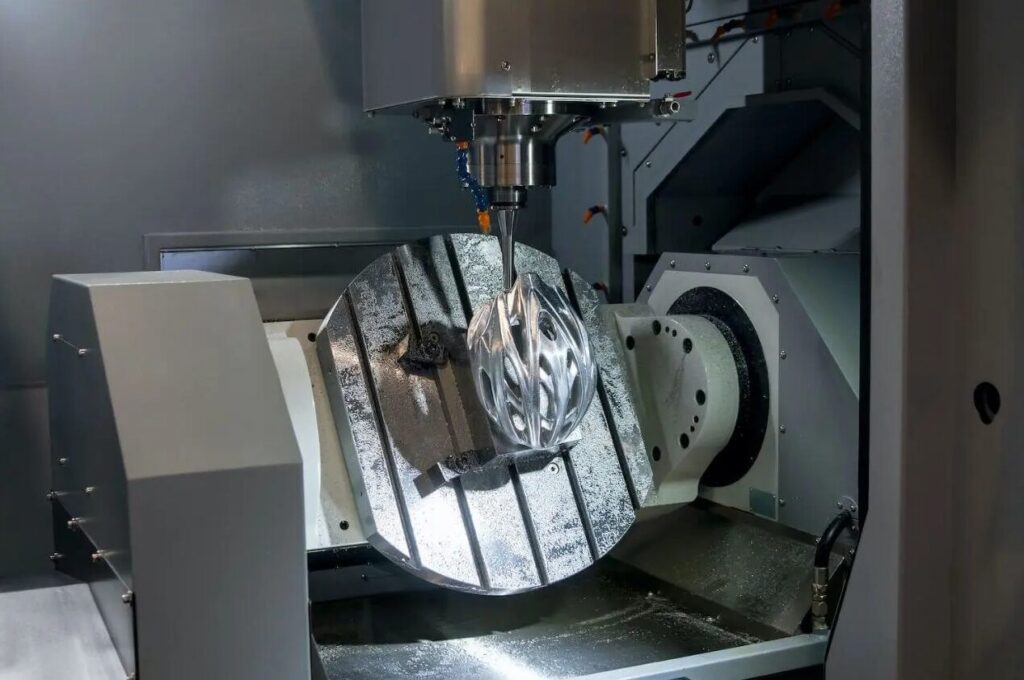
CNC Turning vs Milling: Which Process Wins for Your Project?
Use a CNC lathe when your part is
- Cylindrical or conical (shafts, bolts, bushings, pistons, rollers)
- Needs excellent concentricity and surface finish (Ra 0.4–1.6 µm typical)
- High-volume symmetric runs (turning is often 2–3× faster)
- Requires live tooling for secondary milling/drilling on the same setup
Use a CNC mill when your part has:
- Flat faces, pockets, slots, or 3D contours
- Features on multiple sides (brackets, housings, molds, heat sinks)
- Complex geometries that would require multiple lathe setups
- Tight tolerances in non-round directions (±0.01 mm common on 5-axis mills)
Pro tip for 2026: Hybrid mill-turn machines (like DMG Mori NTX or Okuma MULTUS) combine both in one setup. Many shops now deliver parts that used to need two machines in a single operation—cutting lead time by 50–70%.
For detailed turning services, check our CNC Turning Services page.
Best Materials for CNC Lathes vs. CNC Mill in 2026
Not every material performs the same on both machines. Here’s the 2026 comparison table based on real shop data:
| Material | CNC Lathe Suitability | CNC Mill Suitability | Surface Finish (typical) | Machining Speed | Cost Impact (per part) | Best For |
|---|---|---|---|---|---|---|
| Aluminum 6061/7075 | Excellent | Excellent | Ra 0.8–1.6 µm | Very Fast | Lowest | Prototypes & enclosures |
| Stainless Steel 304/316 | Very Good | Good | Ra 0.4–1.2 µm | Medium | Medium | Medical & food parts |
| Titanium Grade 5 | Good | Excellent | Ra 0.8–1.6 µm | Slow | Highest | Aerospace brackets |
| ABS / Delrin | Excellent | Good | Ra 0.8 µm | Very Fast | Low | Consumer prototypes |
| Brass / Copper | Excellent | Good | Ra 0.4 µm | Fast | Low | Electrical components |
| Tool Steel (D2) | Good | Very Good | Ra 0.4–0.8 µm | Medium-Slow | High | Injection molds |
Need help choosing material for your next prototype? Our CNC Material Selection Guide has full property tables.
Real-World Case Studies: CNC Lathe vs Mill Success Stories
Case 1 – Automotive Shaft (Lathe Wins) A Hong Kong EV startup needed 500 drive shafts (Ø25 mm × 300 mm, 316 stainless).
- CNC Lathe route: 12 min/part, $18 each, 5-day total lead time
- CNC Mill route: 45 min/part, $42 each (multiple setups) Result: Lathe chosen — saved $12,000 and 3 weeks.
Case 2 – Aerospace Bracket (Mill Wins) Drone manufacturer required 200 aluminum brackets with 12 pockets, 8 threaded holes, and angled faces.
- 5-axis CNC Mill: 28 min/part, ±0.01 mm tolerance, perfect surface for anodizing
- Lathe attempt: Impossible without 6+ secondary operations Result: Delivered in 6 days instead of 18.
Case 3 – Hybrid Mill-Turn (2026 Winner) Medical device company combined both on one machine for bone-screw prototypes—reduced setups from 3 to 1 and hit the 7-day prototype-to-validation timeline.
See more examples in our CNC Prototyping Case Studies.
Cost and Time Comparison: CNC Lathe vs Mill Machining in 2026
Real shop rates in Asia-Pacific (Hong Kong, Shenzhen, Singapore) as of early 2026:
| Metric | CNC Lathe (Turning) | CNC Mill (3–5 Axis) | Winner & Notes |
|---|---|---|---|
| Hourly machine rate | $65–$95 | $55–$140 | Lathe for simple parts |
| Setup time (avg) | 45–90 min | 90–240 min | Lathe |
| Cycle time (simple part) | 5–20 min | 20–90 min | Lathe |
| Prototype cost (1–10 pcs) | $80–$250 | $150–$450 | Lathe |
| Production cost (100+ pcs) | $12–$45 | $25–$85 | Depends on geometry |
| Lead time (prototype) | 3–5 days | 4–7 days | Lathe for cylinders |
| Surface finish | Better on cylinders | Better on flats | — |
Data synthesized from 2026 industry benchmarks. Complex 5-axis mill work can hit $200+/hr but often saves money by eliminating secondary operations.
Want an instant quote comparison for your specific part? Upload your CAD to our Instant CNC Quote Tool—results in under 60 seconds.
FAQs
What is the main difference between a CNC lathe and a CNC mill?
Lathe spins the part; the mill spins the tool. This single change determines every capability, speed, and cost factor.
Can a CNC mill completely replace a lathe?
No — and vice versa. Mills can approximate turning with a 4th-axis rotary, but they’re slower and more expensive for pure cylindrical work. Most professional shops keep both (or use mill-turn hybrids).
Which is better for rapid prototyping in 2026: CNC lathe or mill? Lathe for round prototypes (faster/cheaper). Mill for everything else (more versatile). Many teams start with mill-turn to cover both in one machine.
Is CNC turning cheaper than CNC milling?
Yes—usually 30–60% cheaper for suitable parts due to faster cycle times and simpler fixturing.
How do tolerances compare between a lathe and a mill?
Both routinely hit ±0.01 mm. Lathes excel at concentricity (0.005 mm is easy); mills excel at multi-face positioning.
What materials cannot be machined on a lathe?
Anything requiring features on non-rotating faces (deep internal pockets, irregular hex patterns). These need milling.
Can you do threading on both machines? Yes — lathes do single-point threading extremely well; mills use thread mills or taps. Lathe is usually faster.
How long does it take to learn CNC lathe vs. mill programming?
Lathe G-code is simpler (mostly G00/G01 along two axes). Mills require 3–5 axis mastery—a steeper learning curve.
What’s the biggest advantage of 2026 CNC technology for both?
AI-assisted toolpath optimization and real-time spindle load monitoring cut cycle times another 15–25% compared to 2024 machines.
Do I need 5-axis for most prototypes?
Only 20% of parts truly need it. A 3-axis mill and 4th-axis rotary cover 95% of jobs at lower cost.
Which machine has lower tooling costs?
Lathe — single-point inserts are cheaper and last longer than the dozens of end mills needed for complex milling.
How do I decide for my specific part?
Send us your STEP file. We’ll return a free 2026 analysis showing the recommended process, exact cost, and 7-day delivery guarantee.
Ready to Go from Prototype to Production in 7 Days?
Stop guessing CNC lathe vs. mill.
Upload your design today and get:
- Instant process recommendation (lathe / mill / hybrid)
- 2026 pricing with volume discounts
- 3–7 day prototype delivery (Hong Kong / Shenzhen)
- DFM feedback that actually saves you money
We’ve helped 2,300+ Hong Kong and international teams cut prototyping time in half in 2026. Your project is next.