In the precision manufacturing landscape of 2026, CNC machining (Computer Numerical Control) has become the standard for most production needs, while manual machining remains essential in niche, low-volume, or repair scenarios. With advancements in AI-assisted CAM, hybrid manufacturing, and smart factories blurring the lines between the two, the core differences remain clear.
This guide compares definitions, pros/cons, costs, precision, applications, and future trends to help engineers, buyers, and manufacturers decide: Which method is best for your parts?
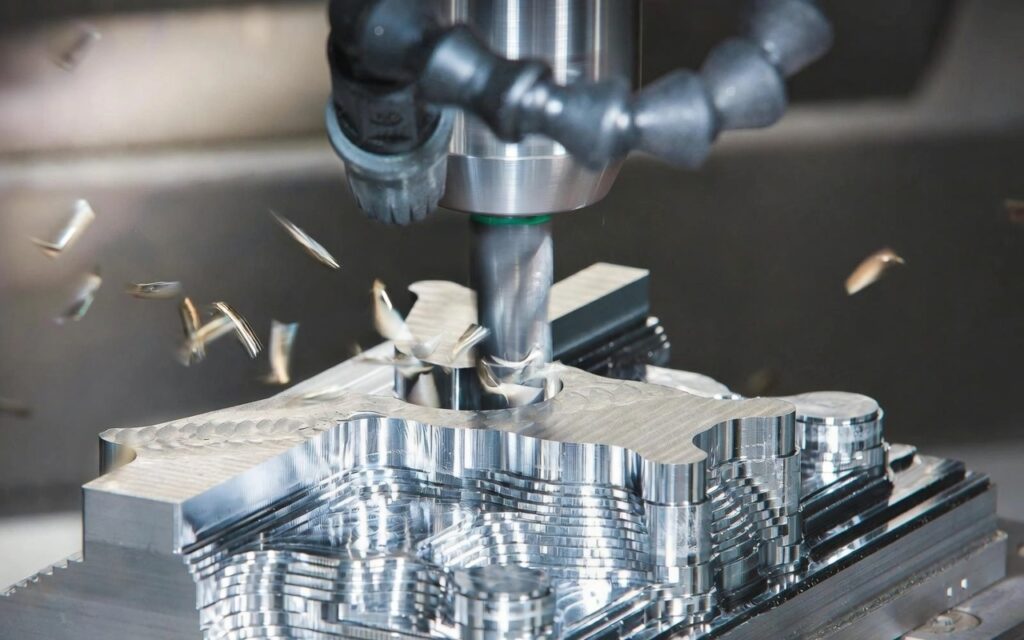
What Is CNC Machining?
CNC machining uses computer-programmed software (G-code) to control machine tools for processes like milling, turning, drilling, and grinding. Modern CNC machines often feature 3–5+ axes and handle complex geometries in materials such as titanium, engineering plastics, and composites.
Designs start in CAD, toolpaths are optimized in CAM software, and the machine can run unattended (lights-out manufacturing) for maximum efficiency.
What Is Manual Machining?
Manual machining relies on skilled operators using traditional machines (e.g., manual lathes, mills, grinders). The machinist adjusts speeds, feeds, and depths in real time via handwheels, dials, and measuring tools, relying on experience and feel.
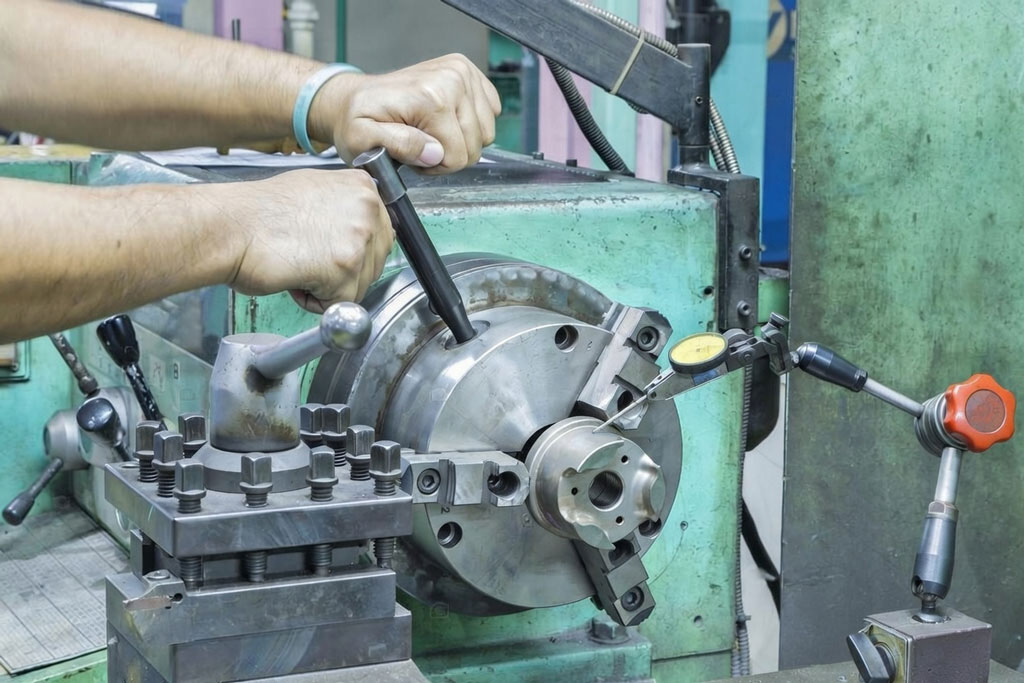
(Image: Operator manually turning a part on a traditional lathe, adjusting by hand)
CNC Machining vs Manual Machining: 2026 Head-to-Head Comparison
| Aspect | CNC Machining | Manual Machining | 2026 Winner |
|---|---|---|---|
| Precision & Tolerance | ±0.001 mm (down to ±0.005 mm routine) | ±0.01–0.05 mm (skill-dependent) | CNC |
| Repeatability | Near-perfect across thousands of parts | Varies with operator fatigue/skill | CNC |
| Production Speed (Medium/High Volume) | Extremely fast, 24/7 lights-out possible | Slow cycle times per part | CNC |
| Speed for 1–5 Parts | Programming + setup overhead; slower for simple jobs | Often faster for quick one-offs | Manual (sometimes) |
| Complex Geometries | Handles 5-axis, deep cavities, undercuts | Limited to basic shapes | CNC |
| Labor Cost | Lower long-term (1 operator runs multiple machines) | High (full-time skilled machinist required) | CNC |
| Initial Investment | High (machine + software) | Lower (basic or used machines) | Manual |
| Setup/Programming Time | Longer initially (AI tools shortening it rapidly) | Almost instant | Manual (simple parts) |
| Material Waste | Lower (optimized toolpaths) | Higher (human error) | CNC |
| Safety | High (enclosed + auto-stop features) | Lower (chips, manual risks) | CNC |
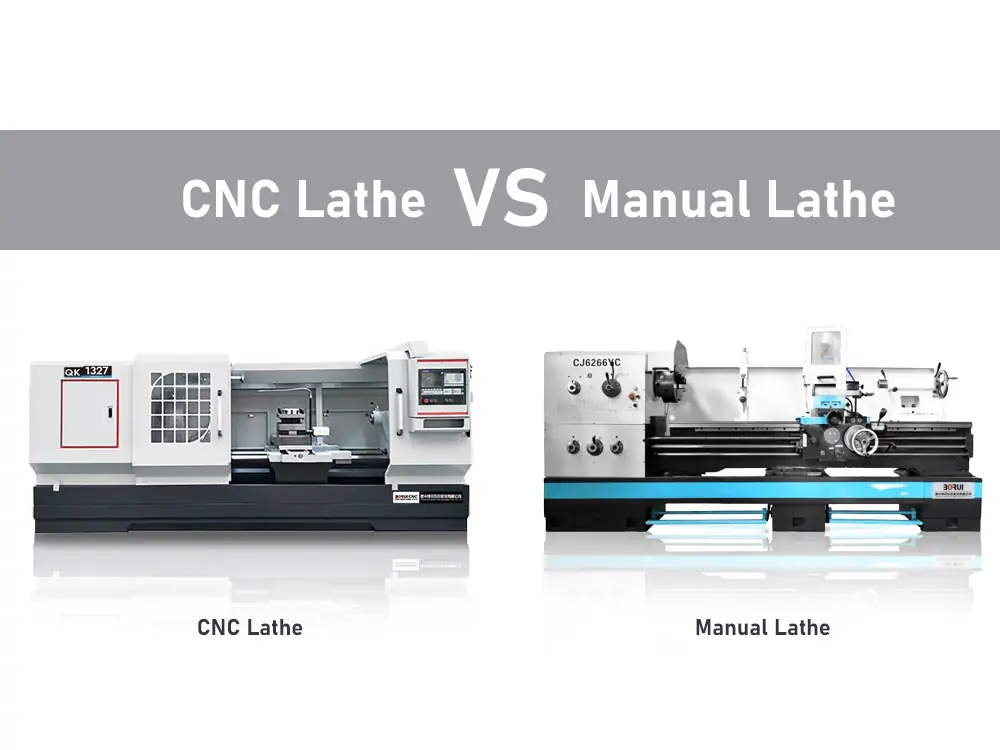
(Image: Side-by-side comparison of a CNC lathe and a manual lathe – clear visual difference in controls and automation)
Key Advantages of CNC Machining (Why It Dominates in 2026)
- Superior Precision & Consistency — Critical for aerospace, medical, and automotive parts requiring tight tolerances (±0.005 mm) with perfect repeatability.
- Scalability for Production — Ideal for 50–10,000+ parts; unattended overnight runs cut costs dramatically.
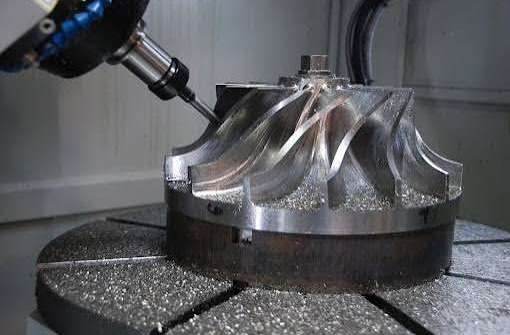
- Complex Part Capability — 5-axis machining enables features impossible or uneconomical manually.
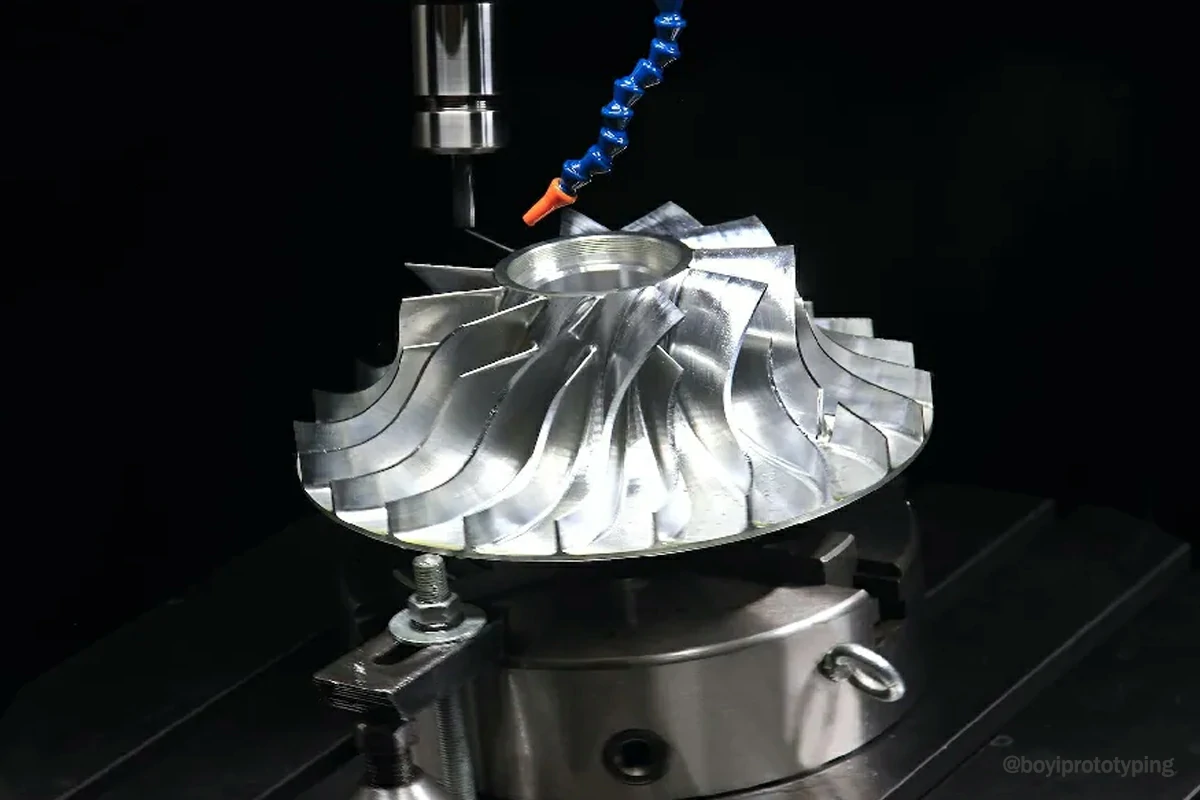
(Image: 5-axis CNC milling a detailed impeller/turbine part in real time)
- AI & Automation Boost — In 2026, AI-powered CAM software reduces programming time by 50%+, predicts tool wear, and optimizes paths.
- Lower Long-Term Costs — Despite higher upfront investment, per-part costs drop sharply with volume.
- Traceability & Compliance — Full parameter logging supports ISO, AS9100, and other certifications.
When Manual Machining Still Wins (Why It Hasn’t Disappeared)
- Ultra-low volume (1–5 pieces) where programming time exceeds machining time.
- Quick prototypes or on-the-fly adjustments (e.g., fitting during the process).
- Repair/modification of existing parts.
- Simple features (facing, basic turning, drilling).
- Education, toolrooms, hobby shops, or budget-constrained artistic work.
2026 Cost Comparison: Real-World Insights
- Prototypes (1–10 pcs): Manual often cheaper/faster for basic parts; CNC wins on complex designs due to less scrap.
- Medium Volume (50–500 pcs): CNC saves 40–70% per part (labor + consistency).
- High Volume: CNC dominates completely (automation + material efficiency).
Fictiv’s instant quoting platform delivers real CNC pricing—even low quantities are often more competitive than expected thanks to our global network.
Typical Application Recommendations
Choose CNC for:
- Aerospace brackets & turbine blades
- Medical implants & housings
- Automotive precision components & molds
- Consumer electronics structural parts
Choose Manual for
- Emergency repairs & modifications
- Custom jigs & fixtures
- Artistic/decorative metalwork
2026–Future Trends: The Hybrid & Intelligent Era
The binary divide is fading in 2026:
- Hybrid Manufacturing: Additive (3D printing near-net shapes) + subtractive (CNC finishing) reduces waste and enables complex internal features.
- AI-Driven Programming: Automatic toolpath generation and collision avoidance cut setup from hours to minutes.
- Smart Machines: Real-time monitoring, predictive maintenance, and adaptive control make CNC viable for smaller runs.
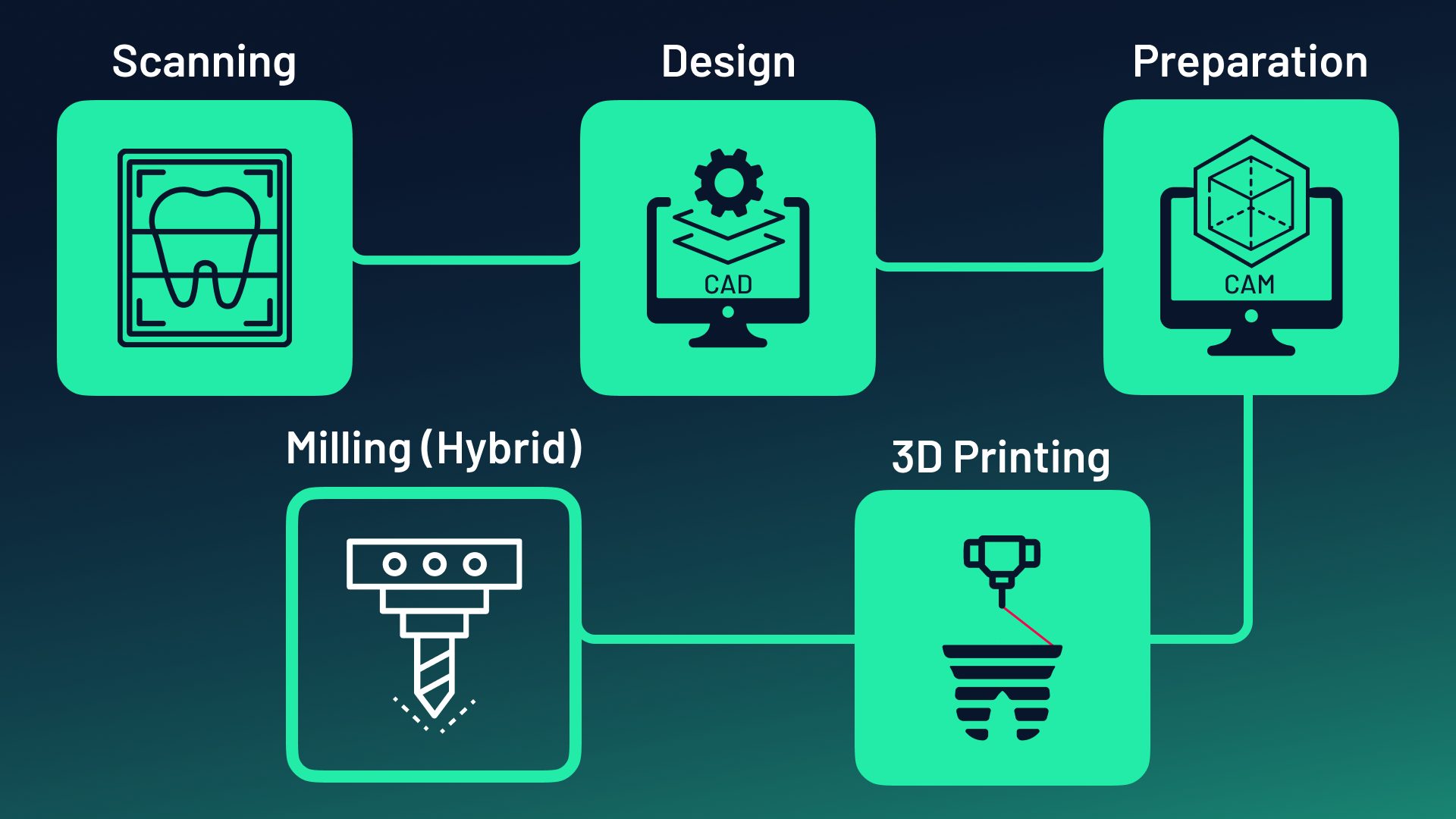
(Image: Hybrid manufacturing workflow diagram – combining 3D printing, CAD/CAM, and CNC milling for efficient production)
Conclusion: CNC Is the Better Choice for Most Needs in 2026
For precision, consistency, scalability, and complexity in modern manufacturing, CNC machining outperforms manual machining in 2026. Manual machining endures as a valuable complementary skill for prototypes, repairs, and ultra-low-volume work.
Need high-precision CNC parts fast? Fictiv connects you to a global network of top shops with instant quotes, DFM feedback, and lead times as short as 24 hours.
Upload your 3D file today and experience the future of machining!