In 2026, engineers and product designers face constant pressure to balance precision, cost, speed, and scalability. CNC machining and sheet metal fabrication remain two of the most widely used metal manufacturing processes—yet they serve very different purposes.
CNC machining excels at creating complex, high-precision parts from solid blocks, making it ideal for prototypes, intricate geometries, and low-to-medium volumes. Sheet metal fabrication shines for thin, flat, bent, or assembled structures like enclosures, brackets, and chassis, offering excellent scalability for higher volumes.
This updated 2026 guide breaks down each process, provides a head-to-head comparison (with real numbers), explores hybrid workflows that are gaining traction, and helps you decide on—or combine—the right approach for your next project.
What is CNC Machining?
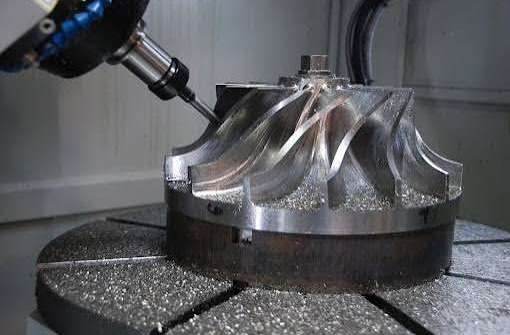
CNC machining is a subtractive process that uses computer-controlled tools to remove material from a solid block (metal, plastic, composites, etc.) until the final part emerges. Common subtypes include 5-axis milling for complex shapes.
Typical applications: Aerospace brackets, medical implants, optical mounts, engine components, and custom prototypes.
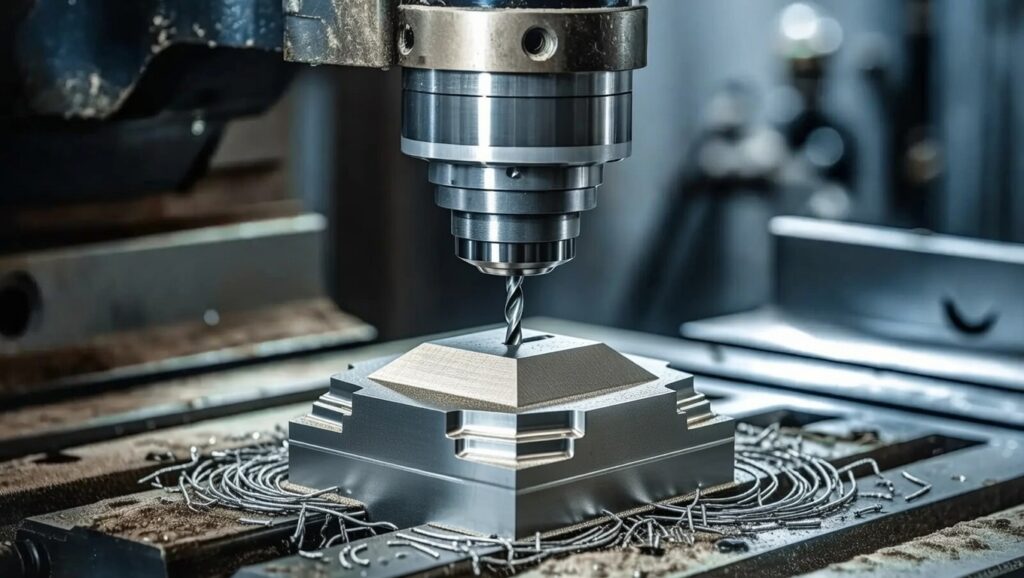
Advantages of CNC Machining
- Exceptional precision: Standard tolerances ±0.025–0.05 mm; high-end ±0.005 mm or better.
- Broad material compatibility: Metals, plastics, composites, titanium, Inconel.
- Excellent for complex 3D geometries and fine details.
- Fast for prototypes and low-volume (1–500 pcs).
- Superior surface finish and strength from solid stock.
Limitations of CNC Machining
- Higher material waste (chips).
- Cost rises sharply with complexity and volume.
- Limited part size (machine envelope typically ≤ 3 × 2 × 1 m).
- Slower for high-volume production.
What is Sheet Metal Fabrication?
Sheet metal fabrication transforms flat metal sheets (usually 0.5–10 mm thick) into parts through cutting, forming, and joining—without massive material removal.
Key operations: Laser cutting, bending, stamping, welding.
Modern advancements: High-speed fiber lasers, automated bending cells, and AI-optimized nesting.
Typical applications: Electronics enclosures, server racks, EV battery trays, HVAC ducts, and automotive panels.
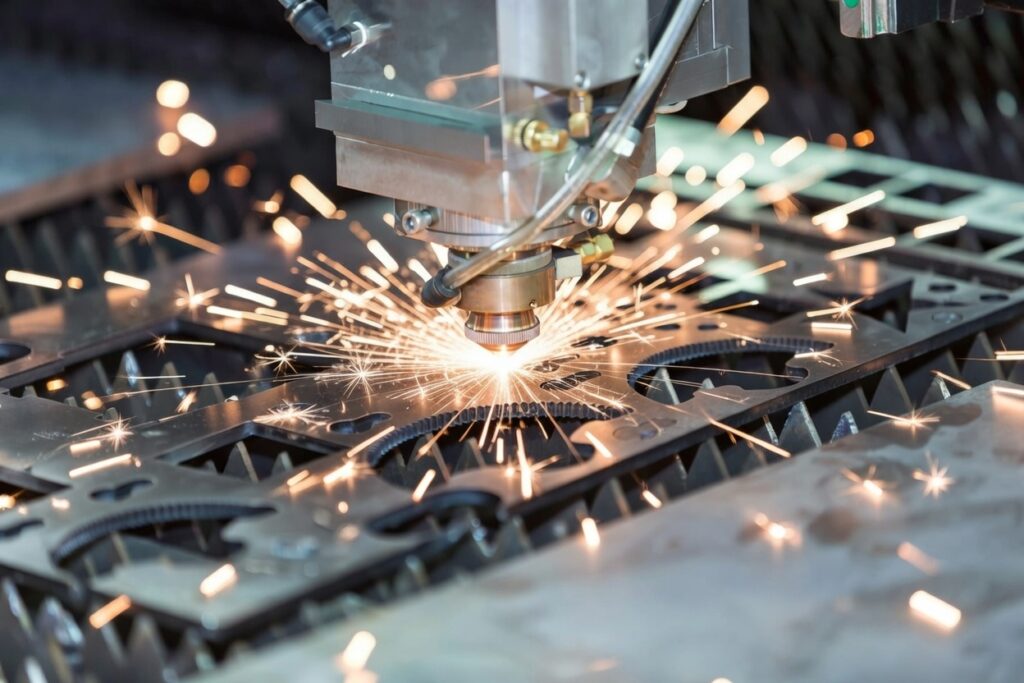
Advantages of Sheet Metal Fabrication
- Cost-effective for thin/large parts and mid-to-high volumes (100–10,000+ pcs).
- Scalable via automation and production lines.
- Low material waste with nesting software.
- Capable of very large assemblies via joining.
- Fast iteration for simple geometries.
Limitations of Sheet Metal Fabrication
- Limited to thinner materials (typically ≤10 mm).
- Tolerances are looser: ±0.1–0.5 mm standard; ±0.05 mm is possible but costly.
- Geometries mostly 2D/2.5D (flat + bends).
- Welds/joints can be weak points if not designed properly.
CNC Machining vs Sheet Metal Fabrication: Head-to-Head Comparison (2026 Data)
| Feature | CNC Machining | Sheet Metal Fabrication | Best For |
|---|---|---|---|
| Process Type | Subtractive (remove from solid block) | Deformative + joining (from sheet) | — |
| Material Thickness | Any (blocks, thick plates) | Thin sheets (0.5–10 mm typical) | Sheet for thin/large; CNC for thick |
| Materials | Metals, plastics, composites, wood | Primarily metals (steel, aluminum, stainless) | CNC (broader) |
| Precision / Tolerance | ±0.005–0.05 mm (down to microns on high-end) | ±0.1–0.5 mm typical (±0.05 mm possible) | CNC |
| Complexity / Geometries | Excellent 3D, undercuts, cavities | Best for flat, bent, folded, enclosures | CNC for intricate; Sheet for boxes |
| Part Size | Limited by machine (~3×2×1 m max) | Very large via welding/assembly | Sheet for large structures |
| Production Volume | Ideal 1–500 pcs; scales poorly | Scales well 100–10,000+ pcs | Sheet for mid-high volume |
| Cost per Part (low vol) | Higher (setup + waste) | Lower for simple parts | Sheet metal |
| Cost per Part (high vol) | Remains high | Drops significantly | Sheet metal |
| Lead Time (prototype) | 5–12 days typical | 7–15 days (faster with automation) | CNC often faster for 1-offs |
| Waste | High (chips) | Low (optimized nesting) | Sheet metal |
| Strength / Durability | Excellent (solid stock) | Good (welds potential weak points) | CNC slightly |
Hybrid Approaches: The Best of Both Worlds in 2026
Many projects now combine processes: Start with sheet metal (laser cut + bend base enclosure) → finish critical features (threads, precise holes, surfaces) with CNC machining.
Benefits: Sheet metal cost/scalability + CNC precision where needed. Trend: Automated hybrid cells and AI design tools make this seamless.
Real-World Application Examples
CNC Machining Only: Precision turbine blade prototype (complex curves, tight tolerances ±0.01 mm).
Sheet Metal Fabrication Only: Server cabinet or EV battery tray (large, bent panels, cost-effective at 500+ units).
Hybrid: Industrial control box — laser-cut/bent sheet body + CNC-machined flanges.
How to Select the Right Process in 2026
- Geometry first: Intricate 3D or solid features → CNC. Flat/bent/thin-walled → Sheet metal.
- Volume: Prototypes/low-volume (<100) → CNC. Mid-high (>200) → Sheet metal.
- Tolerance needs: ±0.05 mm or tighter → CNC.
- Budget & timeline: Fast 1-offs? CNC. Scaling? Sheet metal.
- Consider hybrid if your design has both simple sheet areas and precise machined details.
Unsure? Upload your CAD to Geomiq for free DFM feedback and instant pricing across both processes.
Frequently Asked Questions (FAQs)
Can you CNC machine sheet metal parts?
Yes, but it’s inefficient for large flat areas—better to fabricate the base and CNC only critical features.
Which is cheaper for 100-piece enclosures?
Usually sheet metal fabrication.
What tolerances can I realistically expect?
CNC: ±0.005–0.05 mm. Sheet metal: ±0.1–0.5 mm.
Is sheet metal strong enough for structural parts?
Yes — especially with proper design.
Are there 2026 trends changing this comparison?
Yes — faster lasers, AI nesting, and hybrid machines blur the lines.
Conclusion
In 2026, there’s no universal “better” process—only the right one (or combination) for your design goals.
Choose CNC machining for high precision, complex geometries, and low-to-medium volumes. Choose sheet metal fabrication for cost-effective scalability, thin/large parts, and higher volumes. Many projects now use hybrid for the best of both worlds.
Ready to move forward? Upload your files today for expert feedback, material recommendations, and instant quotes on CNC machining, sheet metal fabrication—or both.