Sheet metal laser cutting delivers unmatched accuracy, speed, and clean results for manufacturers needing high-quality parts without secondary finishing. Modern fiber laser systems excel at producing dross-free edges, tight tolerances, and complex geometries on a wide range of metals.
Whether you’re fabricating signage, brackets, enclosures, or precision components, a properly configured laser cutter provides cost-effective, time-efficient processing that reduces waste and boosts throughput.
our systems emphasize advanced controls like programmable assist gas, precise pierce settings, and automatic focusing to handle everything from thin sheets to thicker plates with exceptional consistency.
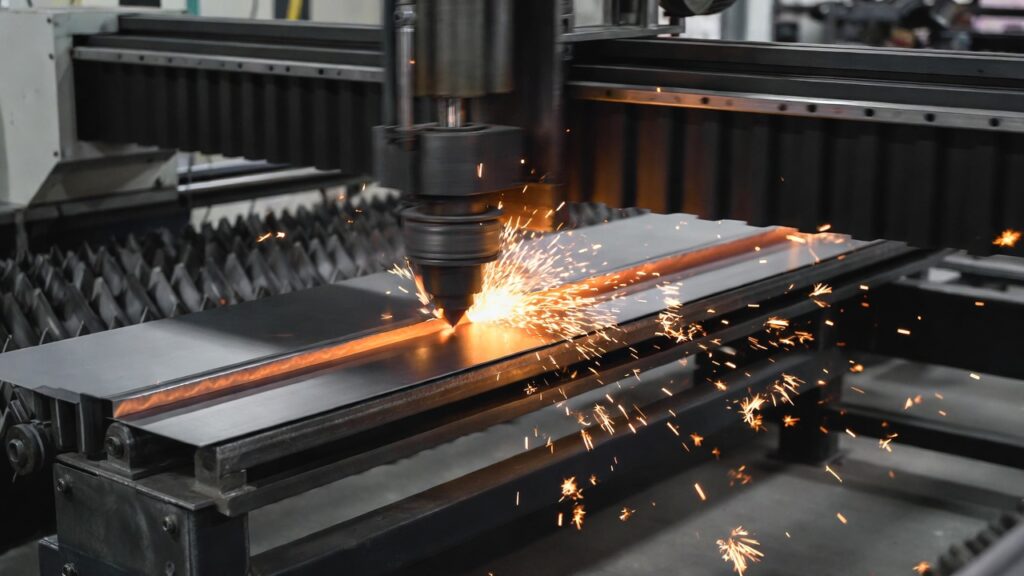
a fiber laser cutting machine in action on sheet metal, showing sparks and clean cut
How Laser Cutting Works for Sheet Metal
A focused laser beam (most commonly fiber at 1-6 kW or higher) melts or vaporizes the metal while high-pressure assist gas ejects molten material from the kerf. This creates narrow cuts (typically 0.1-0.3 mm) with minimal heat-affected zone and burr-free edges.
Key technologies include the following:
- Automatic Focusing Height Follower — Uses capacitance sensing to maintain optimal focal distance across uneven sheets.
- Programmable Air / Gas Control — Adjust nitrogen, oxygen, or compressed air pressure and type for oxide-free cuts or faster mild steel processing.
- Pierce Control — Fine-tune pierce delay, power ramp-up, and modulation frequency (up to 50,000 Hz) to prevent slag and ensure clean starts.
- Protective Lenses — Specialized optics (F-Lens for fiber) prolong life when cutting reflective or thick metals.
These features eliminate common issues like dross, burning, or distortion, delivering parts ready for immediate use or welding.
Advantages of Precision Metal Laser Cutting
Laser cutting stands out for:
- Extremely tight tolerances (±0.05 mm or better)
- Clean, dross-free edges that often skip deburring
- High speed on thin to mid-thickness materials
- Minimal material waste through advanced nesting
- No tooling changes for design variations
- Ability to cut intricate patterns, small holes, and detailed contours
These benefits make laser cutting ideal for prototypes, short runs, and high-volume production alike.
Materials You Can Cut with Confidence
Mild Steel / Carbon Steel
Fiber lasers excel here, offering fast cuts and good edge quality. With oxygen assist, speeds increase dramatically.
- Thickness: Up to 1/2″ (12.7 mm) or more with higher power
- Common Uses: Brackets, frames, machinery parts, automotive components
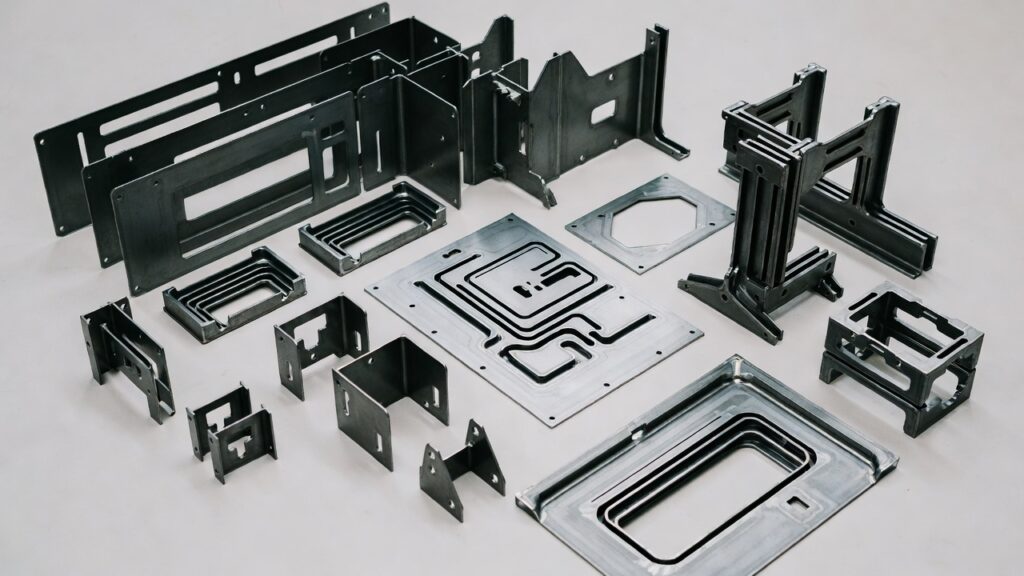
laser-cut mild steel parts like brackets or panels
Stainless Steel
Nitrogen assist produces bright, oxide-free edges perfect for visible or sanitary applications.
- Thickness: Up to 1/2″ (12.7 mm) typical
- Common Uses: Enclosures, food equipment, architectural panels, medical devices
[Image of stainless steel cut letters or decorative elements]
Aluminum
Fiber lasers handle reflective aluminum efficiently, delivering clean cuts without back-reflection issues.
- Thickness: Up to 1/2″ (12.7 mm)
- Common Uses: Aerospace parts, signage, heat sinks, EV battery trays
Copper & Brass
Shorter-wavelength fiber lasers overcome high reflectivity for reliable processing.
- Thickness: Up to 1/4″ (6 mm) commonly
- Common Uses: Electrical components, decorative items, heat exchangers
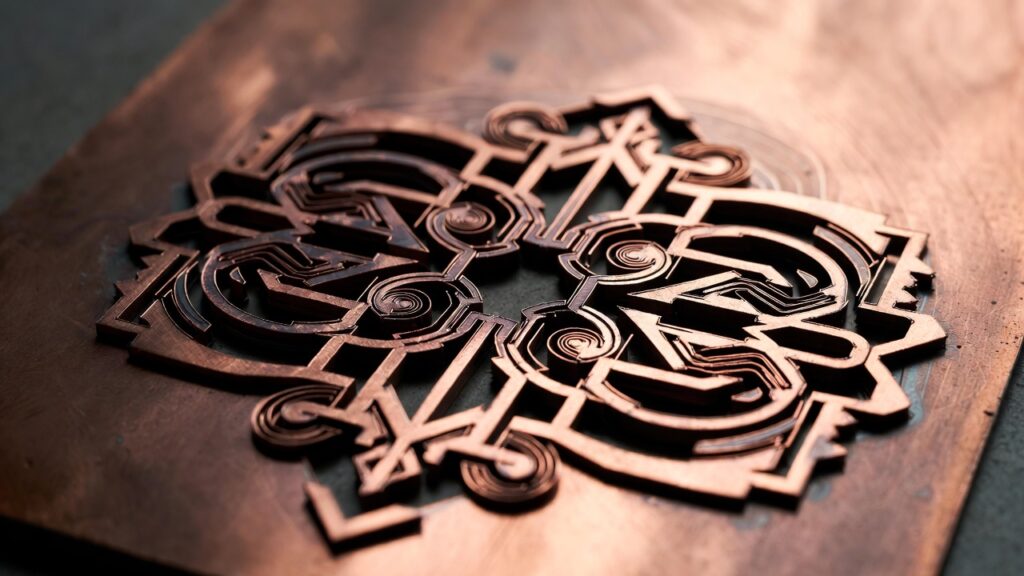
copper or brass laser-cut intricate designs
Other metals like titanium, galvanized steel, and alloys are also routinely processed with optimized settings.
Advanced Features for Superior Results
Modern systems include:
- Fine Power & Speed Adjustments — Software sliders for real-time optimization
- Modulation Frequency Control — 500–50,000 Hz to minimize dross on corners and details
- Advanced Nesting Software — Maximizes sheet yield and reduces scrap
These ensure high yield, consistent quality, and lower operating costs.
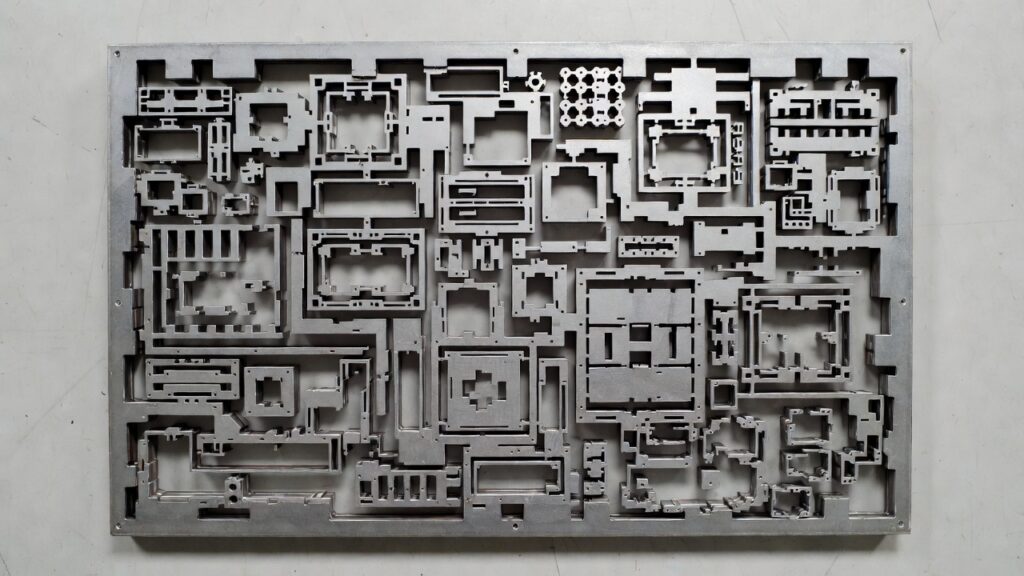
laser-cut complex sheet metal parts nested on a plate
Applications Across Industries
From automotive brackets and aerospace components to architectural screens, HVAC panels, and custom signage—laser-cut sheet metal parts appear everywhere precision and aesthetics matter.
Frequently Asked Questions
Can a CO₂ laser cut metal effectively?
Yes — with the proper metal cutting package, protective optics, and assist gas setup, CO2 lasers cut mild steel reliably up to certain thicknesses, though fiber lasers dominate for most metals today.
What is the maximum thickness you can cut?
It depends on power and material. Fiber lasers commonly cut mild steel up to 1/2″–1″, stainless/aluminum up to 1/2″, and thinner for copper/brass. Higher kW models push these limits further.
How clean are the edges? With proper settings (nitrogen for stainless/aluminum and optimized pierce), edges are dross-free and often require no deburring—a major time and cost saver.
Does laser cutting cause distortion on thin sheets?
Minimal with good parameter control and automatic height following. Heat-affected zone is small compared to plasma or oxy-fuel.
What assist gas should I use?
Oxygen for the fastest mild steel cuts, nitrogen for oxide-free stainless steel, aluminum, etc., and compressed air for economical mild steel.
How do reflective metals like copper affect cutting?
Fiber lasers (1.06 μm wavelength) absorb far better than CO2, reducing reflection risks and enabling reliable cuts.
What maintenance is required for fiber lasers?
Low—fewer moving parts than CO₂; optics last longer with protective lenses; typical lifespan exceeds 100,000 hours before significant degradation.
Can I cut small holes and intricate details?
Yes—pierce control and high modulation frequency ensure clean small features without burning or slag.
Is laser cutting cost-effective for prototypes?
Absolutely — no tooling costs, fast setup from CAD files, and quick turnaround make it ideal for one-offs and low volumes.
How accurate is laser cutting?
Tolerances of ±0.05–0.1 mm are standard, with kerf widths under 0.3 mm for precise nesting and fit.
What file formats work best?
DXF, DWG, AI, and most vector formats import seamlessly into modern CNC laser software.
Do I need special training?
Basic operator training is straightforward; advanced nesting and parameter optimization may benefit from manufacturer support.
Ready to see precision sheet metal laser cutting in action for your projects?
REQUEST A DEMO today or REQUEST A QUOTE to discuss your specific materials, thicknesses, and production needs. Contact us to get started — let’s optimize your fabrication process.