Laser marking is a permanent, non-contact marking process that uses a focused laser beam to modify the surface of materials, creating high-contrast, durable identifiers such as serial numbers, barcodes, QR codes, logos, dates, and traceability data.
This technology delivers unmatched precision, speed, and reliability for direct part marking (DPM) across demanding industries. It outperforms traditional methods like inkjet printing, labels, or dot peen by eliminating consumables, reducing maintenance, and ensuring marks withstand harsh environments—abrasion, chemicals, heat, sterilization, and postprocessing treatments.
Laserax-style optimization emphasizes practical benefits, process reliability, speed leadership, and complete industrial solutions for traceability and compliance.
What Is Laser Marking & How Does It Work?
Laser marking applies concentrated light energy to alter material surfaces through thermal or photochemical effects—no inks, no solvents, no physical contact.
The laser beam is generated, collimated, and focused to a tiny spot (often 20–70 µm), then steered rapidly via galvo mirrors across the part. Software controls parameters like power, pulse frequency, scan speed, and hatch strategy to achieve the desired mark type.
Key physical interactions include the following:
- Annealing — Controlled heating creates oxide layers for dark or colored marks (no material removal).
- Ablation — Vaporizes thin surface layers or coatings for high-contrast exposure.
- Engraving — Removes deeper material for recessed, tactile marks.
- Etching / Foaming — Melts or gasifies plastics for raised or contrasting textures.
The result: crisp, permanent codes readable by vision systems even after painting, powder coating, e-coating, or passivation.
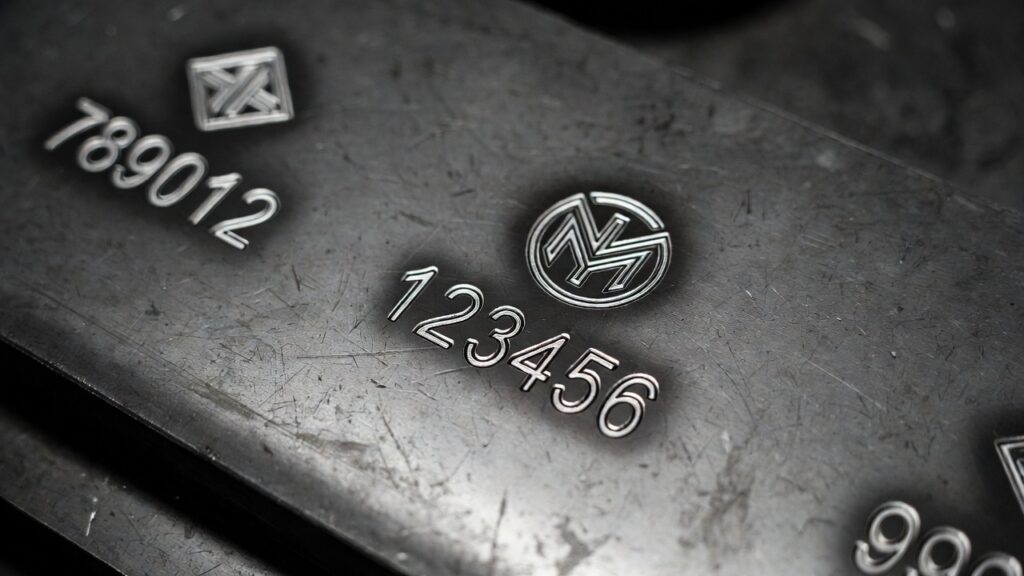
fiber laser marked samples on metal parts – high-contrast serial numbers and logos
The Main Laser Marking Processes
Different processes suit specific materials and requirements:
- Annealing Ideal for stainless steel, titanium, and chrome-plated parts. Produces smooth, corrosion-resistant black, blue, or rainbow colors via oxide formation. Perfect for medical devices and food-grade applications.
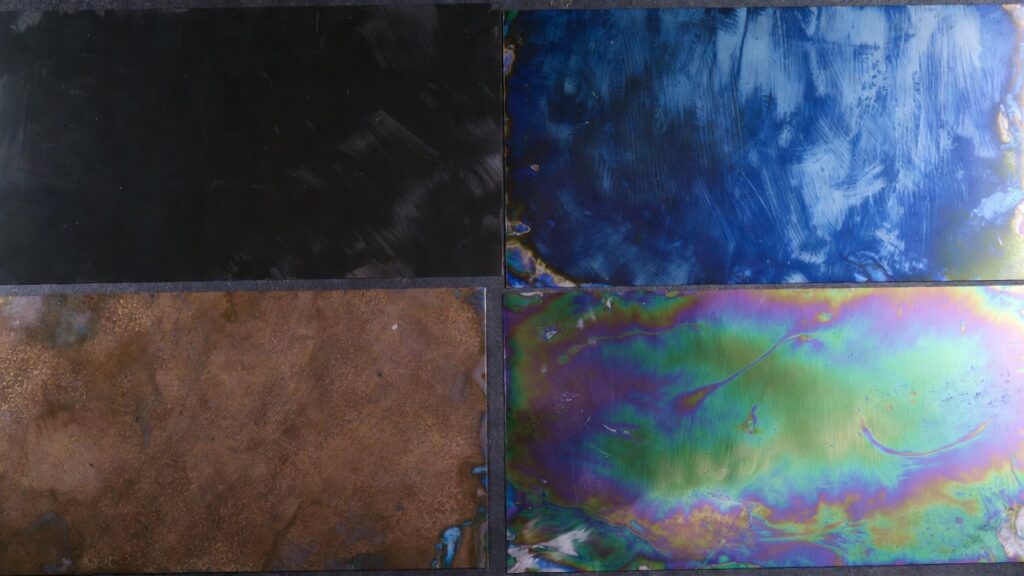
Color annealing examples on stainless steel showing black, blue, brown, and multi-color marks
- Ablation / Coating Removal Removes paint, anodized, or oxide layers to reveal contrasting base material. Fast and widely used for automotive parts and coated metals.
- Deep Engraving Removes significant material depth for durable, tactile marks on tools, dies, and heavy-duty components.
- Surface Etching / Foaming Common on plastics—creates raised foam or carbonized contrast with minimal heat input.
- Color Change: Molecular restructuring in select plastics and ceramics for vivid, non-ablative marks.
Laser Sources: Matching Technology to Material
- Fiber Lasers (1064 nm) — Industry standard for metals. High efficiency, excellent beam quality, >100,000-hour lifespan. MOPA versions enable color marking on stainless steel and superior results on reflective surfaces like aluminum and copper.
- CO₂ Lasers (10.6 µm)—Best for organics: wood, leather, acrylic, glass, paper, some plastics. Strong absorption in non-metals.
- UV Lasers (355 nm)—a “cold” process with photochemical ablation. Minimal heat-affected zone—ideal for sensitive plastics, glass, silicon, medical tubing, and pharmaceuticals.
Hybrid and ultrafast (picosecond/femtosecond) systems are emerging for ultra-precise or heat-sensitive marking.
Materials That Can Be Laser Marked
Metals: stainless steel, aluminum, titanium, brass, copper, tool steel, gold/silver Plastics: ABS, PEEK, polycarbonate, nylon, PVC Organics: wood, leather, rubber Others: glass, ceramics, anodized aluminum, painted/powder-coated surfaces
Industrial Applications & Traceability Benefits
Laser marking supports strict regulations (FDA UDI, AS9100, and IATF 16949) and full supply-chain visibility.
- Automotive — Engine blocks, EV battery components, brackets, VINs, QR codes for part tracking
- Aerospace — Critical fasteners, turbine parts, lightweight alloys
- Medical Devices — Implants, surgical instruments, syringes—annealed marks preserve biocompatibility
- Electronics — PCBs, semiconductors, housings, tiny 2D codes
- Tools & Industrial—Drills, molds, dies—deep, wear-resistant marks
- Consumer & Luxury — Jewelry personalization, watches, premium packaging
Why Choose Laser Marking? Key Advantages
- Fastest direct part marking—Cycle times often <1 second for complex codes
- Permanent & high-contrast—Survives abrasion, chemicals, extreme temperatures
- Zero consumables — No inks, solvents, or masks → lowest cost per mark
- Eco-friendly & low maintenance — Minimal waste, energy-efficient, long-life sources
- Flexible & automated — On-the-fly marking, variable data, seamless integration
- Non-contact — No distortion on delicate or thin parts
Compared to inkjet (fading), labels (peeling), or chemical etching (waste), laser marking provides superior durability and process reliability.
Limitations to Consider
Initial investment ($15,000–$200,000+ for industrial systems), fume extraction needed for some plastics, reflectivity challenges on bare copper/gold (mitigated by MOPA/green lasers), and Class 1 enclosure/safety compliance required.
Future of Laser Marking
- Hybrid fiber + UV systems
- AI-driven parameter optimization
- Integrated inline vision & verification
- Ultrafast lasers for sub-micron precision
- Even greater energy efficiency and sustainability
Laser marking continues evolving into a core enabler of Industry 4.0 traceability and smart manufacturing.
Frequently Asked Questions (FAQ)
What is the difference between laser marking, engraving, and etching?
Marking alters the surface (often annealing or shallow ablation) with minimal removal. Engraving removes deeper material for recessed marks. Etching is light removal, creating raised contrast via melting.
Is laser marking permanent?
Yes—marks resist wear, chemicals, UV, heat, and sterilization. Annealed marks on stainless maintain passivation; only aggressive mechanical removal erases them.
Which laser is best for metals?
Fiber lasers (1064 nm), especially MOPA for color and reflective metals. UV for coated or sensitive metals.
Can you mark plastics without melting or distortion?
Yes—UV lasers provide cold marking with negligible heat input. Fiber works well on many plastics via foaming/carbonization.
How small can marks be?
Font sizes down to 0.1–0.2 mm, micro 2D codes readable by vision systems, spot sizes ~10–50 µm.
Is laser marking FDA-compliant for medical devices?
Annealing on stainless steel/titanium meets UDI requirements—smooth, non-recessed, biocompatible marks with no additives.
Can laser marking run on high-speed production lines?
Yes—galvo systems enable on-the-fly marking at several m/s with motion compensation.
What maintenance is required?
Fiber lasers: lens/mirror cleaning, fume filter changes, focal checks. Very low compared to other technologies (>100,000-hour source life).
How much does a mark cost?
Typically $0.01–$0.05 per mark (electricity + minimal consumables). No inks or masks—fast ROI.
Can laser marking prevent counterfeiting?
Highly effective—micro-text, unique serialized QR/Data Matrix, invisible UV marks, combined with blockchain traceability.
Does laser marking work on curved or uneven surfaces?
Yes—dynamic focus or 3-axis systems handle height variations up to tens of mm without repositioning.
How long does it take to set up a new mark?
Minutes—import file, adjust parameters via software, test on sample. Ideal for variable data and frequent changeovers.
Ready to implement high-speed, reliable laser marking in your production line?
Contact our laser experts for a free application test, process benchmarking, or customized solution quote. We optimize for speed, contrast, and compliance—delivering complete systems trusted in automotive, medical, and aerospace plants worldwide.