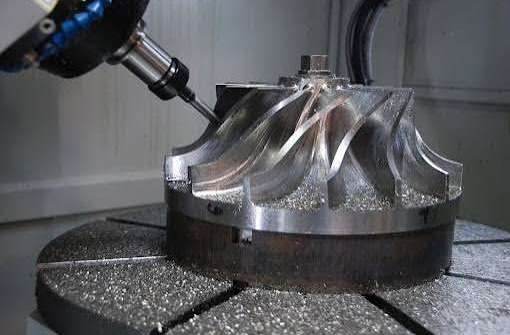
Fillets are essential features in CNC machining and mechanical design, transforming sharp corners into smooth, rounded transitions that enhance part performance and manufacturability. By adding a radius to internal or external edges, fillets reduce stress concentrations, improve safety, and facilitate easier assembly. They are commonly applied to pockets, holes, slots, and mating surfaces, preventing cracks, easing fluid flow, and minimizing injury risks from sharp edges. In industries like aerospace, automotive, and medical devices, fillets play a critical role in extending component lifespan and ensuring compliance with safety standards.
This comprehensive guide explores the fundamentals of fillets in CNC machining, including definitions, types, machining techniques, design rules, and practical tips. Whether you’re a mechanical engineer, product designer, or sourcing CNC services, understanding fillets can help optimize your designs, reduce machining costs, and achieve superior part quality. We’ll cover key considerations to avoid common pitfalls and maximize efficiency in prototyping and production.
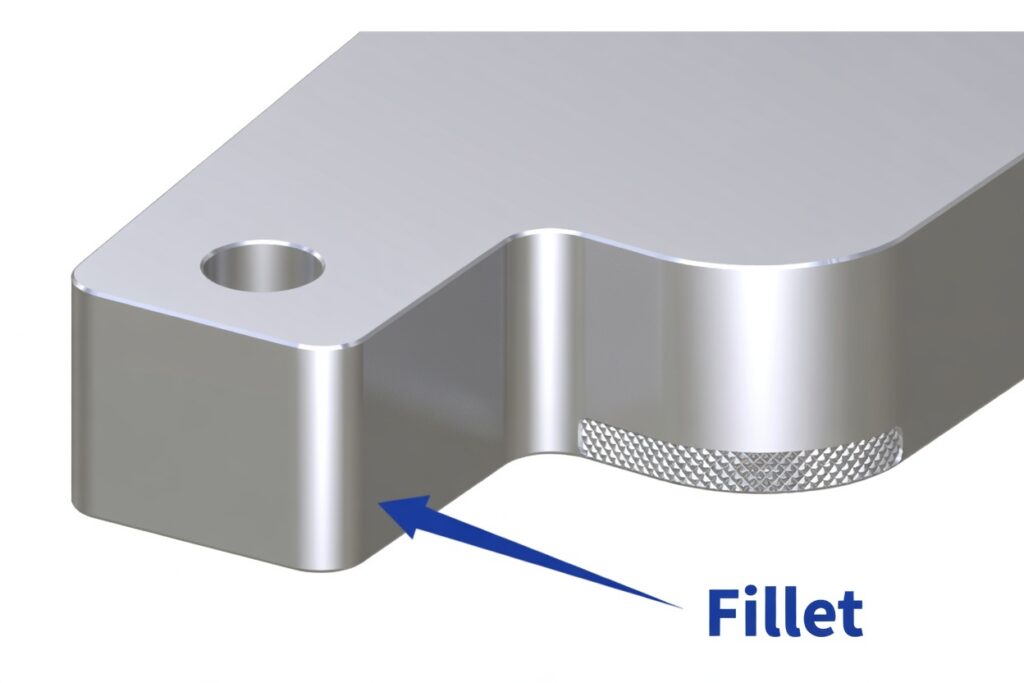
What Is a Fillet in CNC Machining?
A fillet in CNC machining is a curved radius applied to the intersection of two surfaces, replacing sharp 90-degree corners with a smooth arc. This feature distributes stress more evenly across the part, preventing failures under load and improving overall durability. Fillets are specified by their radius (e.g., R0.5 mm), which determines the curve’s size.
Key functions of files include:
- Stress Relief: Minimizes crack initiation in high-load areas.
- Safety Enhancement: Rounds edges to reduce cut risks during handling.
- Assembly Aid: Guides mating parts for smoother insertion.
- Aesthetic Improvement: Provides a polished, professional finish.
- Flow Optimization: Reduces turbulence in fluid or air channels.
Fillets are ideal for internal corners in pockets or between walls, but they require careful tool selection to avoid undercuts or excessive machining time. Unlike sharp edges, which can cause tool breakage, fillets promote longer tool life and better surface finishes.
Internal vs External Fillets in CNC-Machined Parts
Fillets come in internal and external varieties, each with unique applications and machining considerations.
Internal Fillets: Tooling Constraints and Cost Impact
Internal fillets are applied to inside corners, such as between vertical walls or in pockets, to relieve stress and improve strength. They are machined using ball end mills or corner-radius tools, but tooling constraints limit the minimum radius—typically matching the tool’s diameter. Smaller radii increase costs due to slower feeds and potential tool changes. For example, in deep cavities, larger radii (e.g., R1-2 mm) are preferred to allow full tool access and reduce vibration.
External Fillets: Use Cases and Design Benefits
External fillets round outer edges for safety and ergonomics, commonly used on handles or enclosures. They are easier to machine with standard end mills and offer benefits like reduced material removal and faster cycle times. In assembly, they prevent interference and enhance part mating.
Custom or complex fillets, such as variable radii, may require multi-axis CNC for precision, adding complexity but enabling advanced designs in aerospace components.
| Fillet Type | Common Radius | Applications | Machining Cost Impact |
|---|---|---|---|
| Internal | R0.5-2 mm | Pockets, walls | Higher due to access limits |
| External | R0.2-1 mm | Edges, handles | Lower, faster production |
| Custom | Variable | Complex geometries | Varies with tooling |
Chamfer vs Fillet: Key Differences
While both chamfers and fillets break sharp edges, they differ in geometry and purpose.
Geometric Differences Between Chamfers and Fillets
A chamfer is a straight, angled cut (e.g., 45°), creating a flat bevel, whereas a fillet is a curved radius, providing a seamless blend. Chamfers are simpler to machine but less effective for stress relief.
Functional Purpose of Fillet vs Chamfer
Fillets excel in reducing stress concentrations—up to 50% in some cases—making them ideal for load-bearing parts. Chamfers prioritize ease of assembly and cost savings in high-volume production. Choose fillets for durability; opt for chamfers when speed and simplicity matter.
Advantages of fillets:
- Superior stress distribution.
- Better fatigue resistance.
Advantages of chamfers:
- Quicker machining.
- Easier tool programming.
Disadvantages include higher costs for fillets due to specialized tools and potential for fillets to complicate assembly if oversized.
How Fillets Are Machined in CNC Processes
Fillets are typically added during finishing passes in CNC milling or turning, using programmed toolpaths that follow the radius contour. Precision relies on machine rigidity, coolant use, and CAM software for smooth arcs.
Common CNC Tools Used for Machining Fillets
- Flat End Mills: For basic external fillets via angled paths.
- Corner-Radius End Mills: Ideal for consistent internal radii.
- Ball End Mills: Best for 3D contours and variable fillets.
- Form Cutters: Custom tools for complex profiles.
Machining limitations include minimum radii tied to tool size (e.g., no smaller than half the tool diameter) and depth-of-cut effects, where deeper features require larger radii to avoid chatter.
Key techniques:
- Select tools matching the radius.
- Use CAM for precise interpolation.
- Adjust speeds/feeds for material (e.g., slower for aluminum).
- Inspect finishes to ensure smoothness.
Fillet Design Guidelines for CNC-Machined Parts
Effective fillet design balances functionality with machinability.
Fillet Radius Selection in CAD Models
Choose radii based on part scale: 0.5-1 mm for small features, up to 5 mm for larger ones. Match to standard tool sizes to avoid custom tooling costs.
Design Tips to Improve CNC Machinability and Part Strength
- Use uniform radii for programming efficiency.
- Add fillets early in CAD to prevent redesigns.
- Avoid radii smaller than 0.2 mm to minimize tool breakage.
- Integrate with tolerances (±0.1 mm typical) for fit.
Common mistakes: Over-specifying tight radii, ignoring tool access, or using fillets where chamfers suffice. Fixes include prototyping and consulting machinists.
When to Use Fillets in CNC Machining
Necessary Use Cases
Fillets are essential in:
- Inside corners between vertical walls to prevent stress cracks.
- Where vertical walls meet sloped/curved surfaces for seamless transitions.
- Internal edges between angled or curved faces for durability.
Optional Use Cases
Consider fillets for the following:
- Cosmetic face edges for aesthetics.
- Safety and ergonomics on handled parts.
- Assembly assistance, like easing pin insertion.
Avoid fillets in 3D printed parts (sharp corners are fine), bottom edges of cavities (complicates tooling), or unnecessary cosmetics to save time.
CNC considerations: Minimum size is tool-limited; match to standards; use alternatives like chamfers for cost.
Fillet Cost Considerations in CNC Machining
Fillets can increase costs due to tool setups and slower machining, especially for small radii or low volumes. Tool changes add time, and complex fillets raise programming expenses.
To reduce costs:
- Use larger radii when possible.
- Standardize sizes across parts.
- Replace with chamfers where stress relief isn’t critical.
In high production, fillets save long-term via reduced failures, but for prototypes, minimize them.
Applications of Fillet Machining Across Industries
Fillets enhance performance in:
- Automotive: Engine blocks for stress relief.
- Aerospace: Airframes for fatigue resistance.
- Medical: Implants for biocompatibility.
- Electronics: Enclosures for safety.
- Industrial: Gears and molds for durability.
FAQs
What is a fillet in CNC machining?
A fillet is a rounded corner replacing sharp edges to reduce stress and improve safety.
Fillet vs. chamfer: What’s the difference?
Fillets are curved for stress relief; chamfers are angled for assembly ease and lower cost.
When should I use a fillet?
Use fillets for load-bearing internal corners; avoid for 3D prints or unnecessary edges.
What is a typical fillet radius?
0.5-2 mm, depending on part size and tool availability.
How do fillets affect machining costs?
They increase costs via tool setups but save on long-term durability.
Can fillets be added to any material?
Yes, but adjust parameters for metals, plastics, or composites to avoid defects.
What tools are best for fillets?
Ball end mills for precision; corner radius for efficiency.
Conclusion
Fillets are powerful yet subtle features in CNC machining, offering stress relief, safety, and efficiency when designed thoughtfully. By selecting appropriate radii, tools, and applications, you can optimize parts for strength and cost. Avoid overcomplication, prioritize machinability, and leverage professional services for flawless results. Mastering fillets ensures your designs stand out in quality and reliability.