Ceramic CNC machining is a specialized manufacturing technique that leverages computer numerical control (CNC) technology to shape, cut, and finish ceramic materials with exceptional precision.
This process is essential in industries where components must withstand extreme conditions, such as high temperatures, corrosive environments, or intense wear.
Unlike metals or plastics, ceramics are inherently hard and brittle, making them challenging to machine but invaluable for their unique properties like thermal stability, electrical insulation, and chemical resistance.
In this comprehensive guide, we’ll explore everything you need to know about ceramic CNC machining.
From the fundamentals of the process to material selection, tools, parameters, advantages, challenges, and real-world applications, this article draws on expert insights to help engineers, manufacturers, and hobbyists understand how to effectively work with ceramics.
Whether you’re prototyping medical implants or producing aerospace components, mastering ceramic CNC machining can unlock new possibilities for durable, high-performance parts.
By the end of this guide, you’ll have a clear understanding of how to optimize your machining setup, reduce defects, and achieve the precision required for demanding applications. Let’s dive in.
What is Ceramic CNC Machining?
Ceramic CNC machining refers to the use of automated CNC machines to perform subtractive manufacturing on ceramic workpieces.
This involves removing material through cutting, grinding, drilling, or milling to create precise shapes and features.
The “CNC” aspect means the process is controlled by computer programs that translate digital designs into exact tool movements, ensuring repeatability and accuracy.
Ceramics, as a material class, are inorganic, non-metallic solids typically formed from clay or other compounds and hardened through heat (sintering).
They differ from metals in that they don’t deform plastically; instead, they fracture under stress. This brittleness necessitates specialized approaches in machining to avoid cracks or breakage.
The history of ceramic machining dates back to traditional methods like manual grinding, but CNC integration in the late 20th century revolutionized it by enabling complex geometries that were previously impossible.
Today, ceramic CNC machining is pivotal in high-tech sectors because it allows for tolerances as tight as 0.001 mm, far surpassing what casting or molding alone can achieve.
Key differences from machining other materials:
- Hardness: Ceramics rank high on the Mohs scale (e.g., alumina at 9), requiring diamond or CBN tools.
- Brittleness: No room for error in force application; excessive pressure leads to failure.
- Thermal Properties: Poor conductivity means heat buildup must be managed carefully.
In essence, ceramic CNC machining bridges the gap between raw ceramic blanks and finished, functional parts, making it indispensable for precision engineering.
Types of Ceramics for CNC Machining
Selecting the right ceramic material is crucial for successful CNC machining, as each type offers distinct properties that influence machinability, cost, and end-use performance.
Ceramics are broadly categorized into oxide and non-oxide types, with varying degrees of hardness, toughness, and thermal resistance.
Below, we outline the most common ceramics used in CNC machining, along with their key characteristics and applications.
Alumina (Al₂O₃)
Alumina, or aluminum oxide, is one of the most widely used ceramics due to its excellent balance of properties. It boasts high hardness (9 on the Mohs scale), superior wear resistance, electrical insulation, and chemical stability. Melting point: around 2050°C.
- Machinability: Moderate; it’s best machined in the green (pre-sintered) state to avoid excessive tool wear. Sintered alumina requires diamond tools.
- Advantages: Cost-effective, high compressive strength.
- Disadvantages: Brittle, prone to thermal shock.
- Common Applications: Insulators, wear-resistant parts, medical devices like prosthetics.
Zirconia (ZrO₂)
Zirconia stands out for its exceptional toughness and strength, often called “ceramic steel” because it can withstand impacts better than other ceramics. It has high thermal insulation and corrosion resistance.
- Machinability: Challenging due to toughness; pre-sintered machining preferred. Use low speeds to prevent chipping.
- Advantages: Fracture-resistant, biocompatible.
- Disadvantages: Higher cost, potential phase transformation under heat.
- Common Applications: Dental crowns, bridges, fuel cell components, thermal barrier coatings.
Silicon Carbide (SiC)
Known for extreme hardness and thermal conductivity, silicon carbide excels in abrasive environments. It’s chemically stable and has low thermal expansion.
- Machinability: Very hard; requires PCD or CBN tools. Conductive grades allow EDM.
- Advantages: High-temperature tolerance, wear resistance.
- Disadvantages: Brittle, expensive tooling needed.
- Common Applications: Abrasives, grinding wheels, aerospace parts, semiconductor substrates.
Silicon Nitride (Si₃N₄)
This ceramic offers outstanding thermal shock resistance and moderate toughness, making it ideal for high-temperature applications.
- Machinability: Good in the green state; sintered requires specialized setups.
- Advantages: High strength at elevated temperatures.
- Disadvantages: Oxidation-sensitive.
- Common Applications: Turbine blades, engine parts, bearings.
Aluminum Nitride (AlN)
AlN is prized for its high thermal conductivity while maintaining electrical insulation.
- Machinability: Brittle; use conservative toolpaths and dust extraction.
- Advantages: Excellent heat dissipation.
- Disadvantages: Costly, prone to dust issues.
- Common Applications: Heat sinks, power electronics, semiconductor tooling.
Boron Nitride (BN)
With diamond-like hardness and excellent lubrication properties, BN is used where low friction is key.
- Machinability: Moderate; produces fine dust.
- Advantages: High electrical resistivity, thermal stability.
- Disadvantages: Soft compared to others, limiting structural use.
- Common Applications: Cutting tools, protective coatings, insulators.
Machinable Glass Ceramics (e.g., Macor)
These are engineered for easier machining, behaving more like stiff plastics.
- Machinability: Excellent; can use carbide tools dry.
- Advantages: Holds fine features, low thermal conductivity.
- Disadvantages: Lower strength than advanced ceramics.
- Common Applications: Prototypes, insulating fixtures, electrical components.
Other Notable Types
- Graphite Ceramics: High thermal resistance and low tool wear for EDM electrodes.
- Steatite: Low-cost, heat-resistant; for high-voltage insulators.
- Mullite: Thermal shock resistant; for high-temperature uses.
- Quartz: Chemical resistant for optical parts.
When choosing a ceramic, consider factors like required thermal conductivity (high for AlN, low for alumina), wear needs (SiC for abrasives), and budget. Always consult material datasheets for specific machinability ratings.
Here’s a comparison table of key properties:
| Ceramic Type | Hardness (Mohs) | Thermal Conductivity (W/mK) | Machinability (1-10, 10 easiest) | Cost Level |
|---|---|---|---|---|
| Alumina | 9 | 20-30 | 5 | Low |
| Zirconia | 8.5 | 2-3 | 4 | Medium |
| Silicon Carbide | 9.5 | 100-150 | 3 | High |
| Silicon Nitride | 9 | 15-30 | 5 | Medium |
| Aluminum Nitride | 8 | 170-220 | 4 | High |
| Boron Nitride | 9.5 | 20-50 | 6 | Medium |
| Macor | 5-6 | 1.5 | 9 | Low |
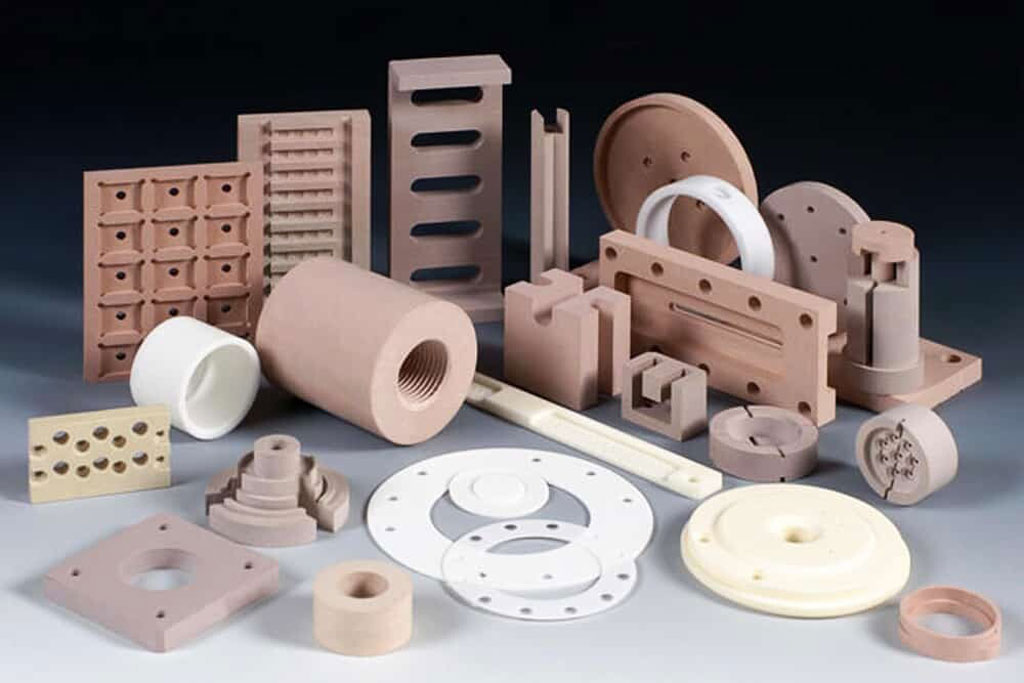
The Ceramic CNC Machining Process
The ceramic CNC machining process is a multi-step workflow designed to transform raw ceramic blanks into precise components. Due to ceramics’ properties, the process often involves both green (pre-sintered) and sintered states to balance ease of machining with final hardness.
Step 1: Design and Preparation
- CAD Modeling: Use software like SolidWorks or AutoCAD to create a 3D model. Optimize for machinability by avoiding sharp corners (use fillets >0.2 mm) and ensuring wall thicknesses >1 mm.
- Material Selection and Blanking: Choose the ceramic type and prepare blanks via pressing or casting. For green machining, blanks are soft and chalk-like.
Step 2: Green Machining (Optional but Recommended)
- Machine the pre-fired ceramic using carbide tools at higher speeds. This removes bulk material efficiently, reducing risk in the sintered phase.
- Techniques: CNC milling for shapes, drilling for holes.
- Benefits: Faster, less tool wear, fewer defects.
Step 3: Sintering
- Heat the green part in a furnace (800-2000°C depending on material) to densify it. Account for shrinkage (10-20%) in design.
Step 4: Sintered Machining
- Use diamond or CBN tools on the hardened part for final precision.
- Sub-processes:
- Milling: For 3D contours, use high spindle speeds (40,000-60,000 RPM) and shallow depths (0.01-0.05 mm).
- Grinding: For smooth finishes (Ra < 0.5 µm); employ abrasive wheels.
- Drilling: Peck drilling with diamond core drills to avoid chipping.
- Laser Cutting: Non-contact for thin sections or intricate designs.
- Ultrasonic Machining: Vibration-assisted for reduced forces.
- EDM: For conductive ceramics like SiC.
Step 5: Post-Processing
- Polishing/lapping for surface refinement.
- Heat treatment or annealing to relieve stresses.
- Coatings (e.g., PVD, DLC) for added wear resistance.
- Inspection: Use non-destructive testing (NDT) like ultrasonic or X-ray to check for microcracks.
Key Parameters
- Cutting Speed: 50-350 m/min (lower for brittle materials).
- Feed Rate: 5-30 mm/min; slow to prevent cracking.
- Depth of Cut: Shallow (<0.1 mm for finishing).
- Coolant: Mist or cryogenic (LN₂) to manage heat; dry for some like Macor.
The entire process can take hours to days, depending on complexity, but yields parts with tolerances of ±0.01 mm.
Here, you can see the step-by-step ceramic CNC machining process in action.
Tools and Equipment for Ceramic CNC Machining
Success in ceramic CNC machining hinges on using the right tools and machines, as standard equipment fails against ceramics’ hardness.
Tools
- Diamond-Coated Tools: Primary choice; PCD (polycrystalline diamond) for durability, used in end mills, drills, and burrs.
- CBN Tools: Cubic boron nitride for high wear resistance, ideal for finishing.
- Carbide Tools: Only for green or machinable ceramics like Macor.
- Specialized Variants: Rotary burrs (e.g., ZYB cylinder, KUD ball), diamond grit hole saws (5-152 mm diameters), and microtools for fine details.
- Coatings: Blue-Tec or DLC to extend life and reduce friction.
Tool geometry: Sharp edges, small radii (<1 mm), positive rake angles to minimize stress.
Machines
- CNC Mills and Lathes: Multi-axis (3-5 axes) for complex geometries; brands like HAAS for tight tolerances.
- Grinders: Surface or ID grinders with diamond wheels.
- High-Rigidity Setups: Granite bases, air-bearing spindles, vibration-damped systems.
- Auxiliaries: Dust extraction for abrasive particles, adaptive control for vibration monitoring.
Tips: Balance tool holders, use high-speed spindles, and ensure thermal stability.
Advantages of Ceramic CNC Machining
Ceramic CNC machining offers numerous benefits that make it preferable for high-stakes applications:
- Precision and Tolerances: Achieves 0.001-0.05 mm accuracy, enabling intricate designs without secondary operations.
- Material Properties: Parts resist heat (up to 2000°C), chemicals, wear, and electricity, outlasting metals.
- Durability: High strength-to-weight ratio, fatigue resistance.
- Versatility: Handles complex geometries like deep pockets or thin walls.
- Cost-Efficiency in Production: Automation reduces labor, and green machining saves time.
- Biocompatibility: Ideal for medical uses without corrosion.
- Environmental Resistance: Performs in extreme conditions, reducing maintenance.
Compared to alternatives like injection molding, CNC provides better customization for low volumes.
Disadvantages and Challenges in Ceramic CNC Machining
Despite its strengths, ceramic CNC machining has hurdles:
Disadvantages
- High Costs: Specialized tools (diamond/PCD) and slower speeds increase expenses.
- Brittleness: Risk of cracking, leading to scrap.
- Tool Wear: Abrasiveness shortens tool life.
- Time-Intensive: Low feeds extend cycle times.
- Dust Hazards: Fine particles require extraction for health and machine protection.
Challenges
- Thermal Management: Low conductivity causes microfractures; use coolants.
- Vibrations: Cause chipping; need rigid setups.
- Complex Designs: Fragile features break easily.
- Material Variability: Porosity or grain size affects outcomes.
Overcoming these requires expertise and optimization.
Applications of Ceramic CNC Machined Parts
Ceramic CNC machining produces components for diverse industries:
- Aerospace: Turbine blades, heat shields, insulators, bearings.
- Medical: Implants, dental prosthetics, imaging tools.
- Electronics: Substrates, heat sinks, insulators, semiconductors.
- Automotive: Brake pads, sensors, valves.
- Industrial: Wear plates, pumps, cutting tools.
- Defense: Armor, high-temp parts.
- Energy: Fuel cells, turbines.
Case example: Zirconia dental crowns machined for biocompatibility and strength.
How to Improve Precision and Reduce Defects in Ceramic CNC Machining
Achieving high precision while minimizing defects is key. Here are detailed tips:
For Precision
- Use multi-axis machines and CAD-optimized paths.
- Monitor forces with sensors; aim for tolerances ±0.01 mm.
- Employ ductile-mode machining (submicron cuts).
- Select high-purity materials (>99.5%).
Reducing Defects
- Tool Strategies: Proactive replacement, sharp edges.
- Parameters: Low speeds/feeds, shallow cuts.
- Techniques: Ultrasonic assistance (30-50% force reduction), cryogenic cooling.
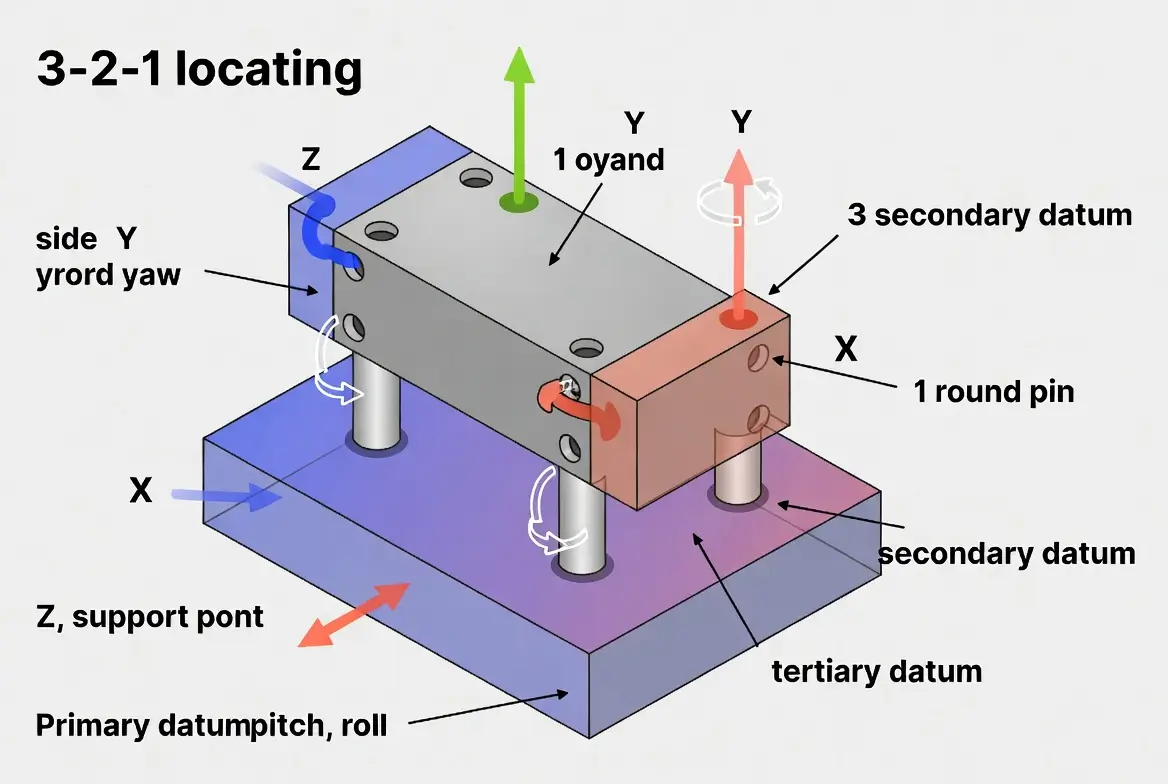
- Workholding: Vacuum chucks, soft jaws.
- Post-Treatments: Annealing (800-1200°C), polishing.
- Quality Control: In-process monitoring, NDT.
Material-specific: Pre-sinter for zirconia; air blasts for Macor.
Common defects and fixes:
- Cracking: Reduce vibrations.
- Chipping: Use climb milling.
- Roughness: Fine grinding.
Following these can boost yield by 20-40%.
Conclusion
Ceramic CNC machining allows engineers to create components that thrive where conventional materials fail. While it demands specialized knowledge, tooling, and patience, the results—ultra-durable, high-precision parts—are often worth the effort.
For prototypes, low-volume production, or extreme-performance requirements, ceramic CNC machining remains a powerful option in modern manufacturing.