The drone industry is growing fast. Professional drones are used for filming, mapping, inspections, farming, and even defense.
To perform well, these drones need parts that are
- lightweight
- very strong
- resistant to vibration
- aerodynamically clean
CNC machined UAV parts are the best choice for most of these demanding applications. CNC machining gives tight tolerances (usually ±0.02 mm or better), consistent quality, and the ability to create complex shapes from strong materials.
Whether you build multirotor drones, fixed-wing UAVs, or VTOL hybrids, precision CNC machining UAV parts helps you get smooth assembly, fewer failures, and longer flight times.
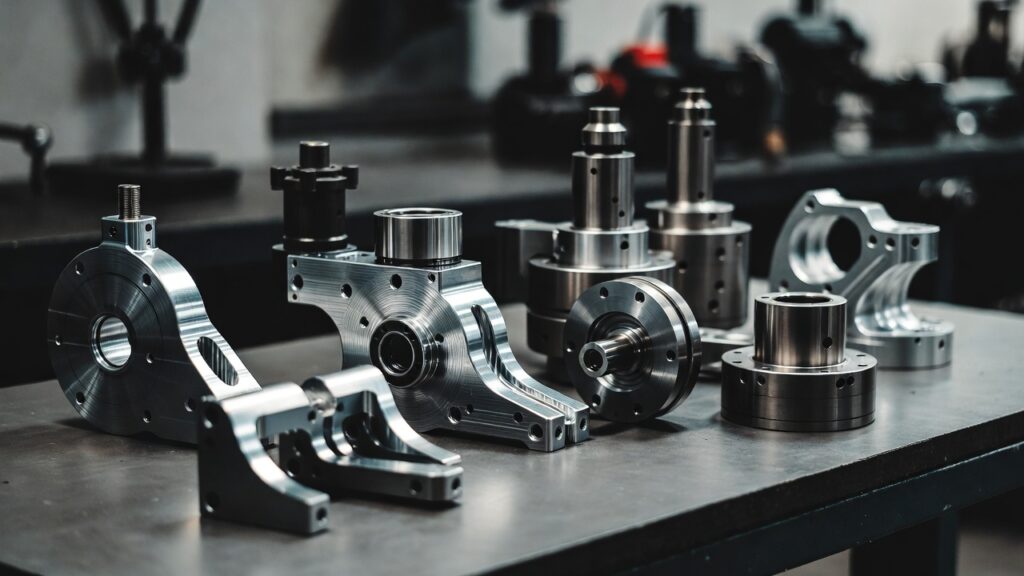
What Does “CNC Machined UAV Parts” Mean?
CNC stands for Computer Numerical Control.
It is a subtractive manufacturing method:
- Start with a solid block of metal or plastic
- A computer-controlled tool removes material step by step
- The final part has exact dimensions and a smooth surface
Compared to 3D printing, CNC offers:
- Stronger parts (no weak layers)
- Tighter tolerances (±0.005–0.02 mm possible)
- Better surface finish (Ra 0.8 μm or smoother)
- No visible layer lines
- Great results for prototypes and medium production (10–5,000 pieces)
Most Common CNC Parts Used in Professional Drones
Here are the parts most drone builders order:
- Frames and arms — main body and motor supports (usually aluminum 6061 or 7075)
- Motor mounts — hold brushless motors perfectly aligned
- Landing gear / landing skids — absorb shock during takeoff and landing
- Gimbal brackets & camera mounts — keep cameras and sensors steady
- Battery trays & payload mounts — secure heavy batteries or equipment
- Propeller adapters / hubs—connect props to motors without imbalance
- Electronics housings & sensor brackets — protect flight controllers, GPS, antennas
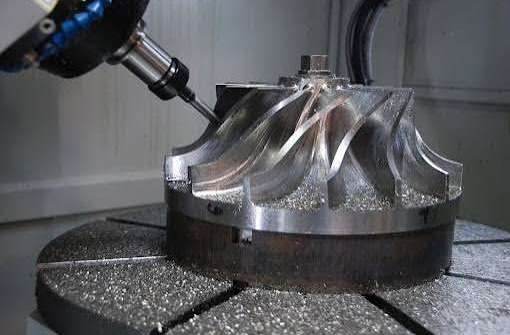
These parts are usually made on 3-axis, 4-axis, or 5-axis CNC mills. Some round features are done on CNC lathes.
Popular Materials for Drone Parts
| Material | Main Advantages | Common Uses | Tolerance / Cost Notes |
|---|---|---|---|
| Aluminum 6061-T6 | Lightweight, good corrosion resistance, easy to machine | Frames, arms, brackets | ±0.02 mm, lowest cost |
| Aluminum 7075-T6 | Very high strength-to-weight ratio | Motor mounts, landing gear, stressed parts | Slightly harder to machine, great strength |
| Titanium (Ti-6Al-4V) | Extremely strong, corrosion-resistant, heat-resistant | Military / high-end critical parts | ±0.015 mm possible, most expensive |
| Plastics (Delrin, PEEK) | Very light, low friction, damps vibration | Non-load-bearing brackets, insulators | Excellent tolerances, good for prototypes |
Aluminum 6061 and 7075 are used in ~80% of commercial and industrial drones because they offer the best mix of weight, strength, machinability, and price.
Why Choose CNC Over 3D Printing or Sheet Metal?
| Method | Strength | Tolerance | Surface Finish | Best For |
|---|---|---|---|---|
| CNC Machining | Excellent | ±0.005–0.02 mm | Very smooth | Load-bearing, precise parts |
| 3D Printing (most) | Good–Moderate | ±0.1–0.3 mm | Rougher | Complex shapes, very low qty |
| Sheet Metal | Good | ±0.1–0.5 mm | Depends | Flat / bent parts only |
CNC wins when you need the following:
- parts that carry real loads
- exact alignment (motors, gimbals)
- smooth surfaces to reduce air drag
- repeatable quality in batches of 10–2,000 pieces
Surface Treatments – Make Parts Last Longer
Most drone parts go outside and face sun, rain, dust, and vibration. Common finishes include:
- Anodizing (Type II or III) — adds corrosion protection + color (black is most popular)
- Hard anodizing — thicker and harder layer for better wear resistance
- Chem film / Alodine — very light corrosion protection
- Bead blasting — clean, matte look
- Powder coating or Cerakote — toughest protection for harsh environments
These finishes also improve appearance and help parts resist scratches.
Real Precision Examples from Professional Drones
High-end cinematography drones often require the following:
- Gimbal bracket flatness ≤ 0.01 mm (very important for stable video)
- Motor mount holes positioned within ±0.015 mm
- Frame arms parallel within 0.03 mm over 400 mm length
These tight specs reduce vibration → clearer footage and smoother flights.
Who We Are & How We Help
We specialize in CNC machined UAV parts using modern 3/4/5-axis machines.
What we offer:
- Aerospace-grade materials (with certificates if needed)
- Full inspection (CMM reports, optical measurement)
- Fast quotes — usually within 24–48 hours
- Prototypes in days, production in weeks
- Design for Manufacturing (DFM) feedback to save cost and time
Whether you need 5 pieces for a prototype or 1,000 pieces for a product launch, we can help.
Ready to start your next drone project? Send us your 3D model today. Our engineers will review it and send a quote + suggestions quickly.
FAQs
What is the typical tolerance for CNC UAV parts?
Normal tolerance: ±0.02 mm. Critical features can reach ±0.005–0.01 mm (depends on part, material, and quantity).
Which material is best for strong, lightweight frames?
Aluminum 7075-T6 gives the best strength-to-weight among easy-to-machine metals. Titanium is even better but costs more.
Is CNC good for small or custom orders?
Yes—perfect for 5–5,000 pieces. No expensive molds like injection molding.
Why is CNC better than 3D printing for drone parts?
CNC gives stronger parts, tighter tolerances, smoother surfaces, and consistent material strength in all directions.
What finish do you recommend for drones used outdoors?
Hard anodizing (Type III) for good wear + corrosion protection. Cerakote for extreme conditions.
Can you machine carbon fiber parts?
Yes—we cut carbon plates, honeycomb, and hybrid metal-carbon assemblies with special tools to avoid damage.
Which 3D file formats do you accept?
STEP, IGES, Parasolid, SolidWorks, Fusion 360, .prt, DXF, DWG. 3D files are best for complex shapes.
Do you provide material certificates and inspection reports?
Yes — mill certificates, full dimension reports, and First Article Inspection (FAI) are available on request.
Conclusion
CNC machined UAV parts remain the gold standard for professional and industrial drones that demand precision, strength, and reliability.
Whether you’re developing the next generation of aerial cameras, agricultural spraying systems, delivery platforms, or tactical UAVs, choosing the right manufacturing partner makes a huge difference in performance, safety, and time-to-market.
By combining aerospace-grade materials, advanced 5-axis CNC capabilities, strict quality control, and fast turnaround, high-quality CNC machining helps drone builders turn ambitious designs into real-world flying machines that perform consistently — flight after flight.
If you’re ready to move your UAV project forward with components you can trust, reach out today.