CNC machining is a powerhouse in modern manufacturing, transforming digital designs into precise parts for everything from aerospace components to custom electronics. Whether you’re a hobbyist tinkering in your garage or a professional scaling production, understanding CNC machining costs is key to budgeting effectively.
In 2026, with material prices fluctuating due to global supply chain shifts, energy costs rising from renewable transitions, and AI streamlining operations to boost efficiency, costs can range widely—but don’t worry, we’re here to break it down in detail.
In this expanded guide, we’ll explore the factors driving costs, typical pricing with real-world examples, smart buying tips, and ways to save big without sacrificing quality. We’ll also dive deeper into tools, calculators, and FAQs to give you a complete toolkit. Let’s dive in and help you make informed decisions.
CNC Machining Costs: 7 Key Factors to Consider
CNC machine prices aren’t one-size-fits-all—they depend on several variables that can significantly impact your bottom line. To give you a fuller picture, we’ll not only list these factors but also explain how they interplay in real scenarios, such as prototyping a custom bracket or scaling up for automotive parts. Here’s a detailed breakdown of the top factors to weigh when estimating costs:
Machine Size
Larger machines with bigger work envelopes (the area where parts are machined) naturally cost more due to increased materials, engineering, and structural reinforcements needed for stability. For example, a desktop unit might handle small prototypes affordably, ideal for hobbyists or startups, while industrial-scale machines for large parts—like those used in aerospace—can push prices into the tens of thousands. Consider your project’s scale: if you’re machining items over 1 meter, factor in not just the purchase price but also installation and floor space requirements.
Machine Complexity
More axes of motion mean greater versatility but higher costs. A basic 3-axis mill is budget-friendly for flat or simple 3D shapes, whereas 5-axis systems for intricate geometries add complexity in setup, programming, and operation, often doubling the price. In 2026, with hybrid machines incorporating additive elements like 3D printing heads, complexity can escalate further—but they pay off for multi-process workflows, reducing the need for multiple setups.
Machine Accuracy
High-precision machines with tight tolerances (like +/- 0.001 mm) require advanced components, such as linear guides and servo motors, plus rigorous calibration, driving up costs. If your project demands ultra-accuracy, like medical implants, be prepared to pay more—but for standard work in consumer goods, mid-range accuracy keeps things economical. Emerging tech like laser feedback systems in 2026 models can enhance precision without proportional cost hikes.
Machine Speed
Faster spindle speeds (up to 20,000 RPM or more) and rapid traverse rates reduce production time but increase machine costs through better motors, bearings, and controls. In 2026, AI-optimized speeds are becoming standard, balancing efficiency with affordability by predicting optimal paths and minimizing wear. For high-volume runs, this factor can yield long-term savings through faster throughput, but for low-quantity prototypes, prioritize reliability over raw speed.
Material Compatibility
Machines built for tough materials like titanium or composites need robust construction, including hardened frames and coolant systems, raising prices. Versatile units that handle a wide range—from soft plastics to hardened steels—offer long-term value but come at a premium. If your work involves exotic alloys, look for specialized spindles; otherwise, a general-purpose machine suffices and keeps costs down.
Brand and Reputation
Established brands with proven reliability, extensive warranties, and global support networks charge more, but they often include better resale value and fewer downtime risks. Emerging options from regions like China, such as those used by CNCPioneer, provide comparable quality at lower costs through direct manufacturing. Research user reviews and certifications like ISO 9001 to ensure you’re not trading quality for savings.
Additional Features
Extras like automatic tool changers (ATCs with 20+ positions), high-pressure coolant systems, or integrated probing for in-process measurements add convenience—and expense. Yes, that 20-position tool changer is awesome for reducing manual interventions, but evaluate if it’s essential for your needs to avoid unnecessary spending. In 2026, IoT connectivity for remote monitoring is a popular add-on, enabling predictive maintenance and cost efficiencies over time.
5 Common CNC Machine Tools
Different CNC tools excel in specific tasks, and their costs reflect capabilities. To expand on this, we’ll include pros, cons, and typical use cases for each, helping you decide which might fit your setup. Here’s a quick look at popular types:
CNC Laser Cutters
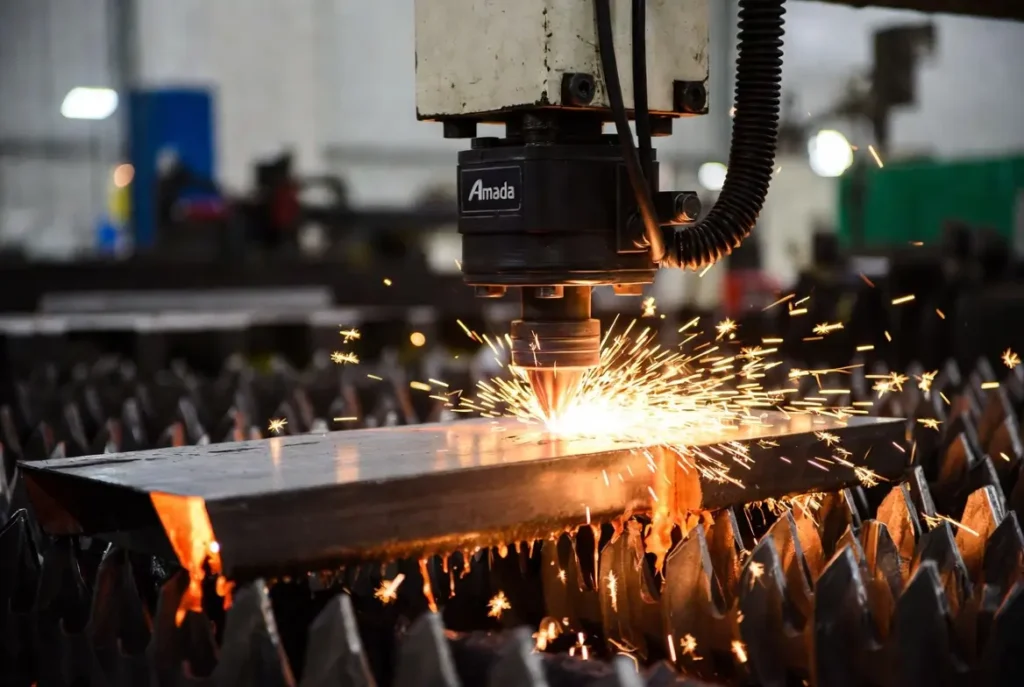
Ideal for precise cutting of metals and plastics with minimal waste and no physical contact, reducing tool wear. Entry-level CO₂ lasers start affordable for hobbyists, while fiber lasers for thicker materials (up to 20mm steel) command higher prices due to their efficiency. Pros: Clean edges, speed; Cons: Limited to flat sheets.
CNC Waterjet Cutters
Uses high-pressure water mixed with abrasives for clean cuts on diverse materials, including stone and glass. Great for heat-sensitive projects like composites, but the pumps, nozzles, and garnet abrasives make them pricier upfront and in operation. Pros: No heat distortion; Cons: Slower than lasers, higher consumable costs.
CNC Routers
Perfect for wood, foam, and soft metals in signage, furniture, or prototyping. These are often the most accessible entry point cost-wise, with vacuum tables for holding workpieces. Pros: Versatile for large panels; Cons: Less precise for hard metals.
CNC Milling Machines
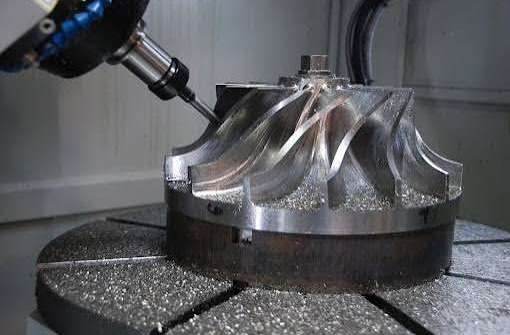
Versatile for 3D shaping, drilling, and pocketing across axes. From benchtop models for education to full industrial setups with enclosures, costs scale with axes and power. Pros: Handles complex geometries; Cons: Requires skilled programming.
CNC Plasma Cutters
Economical for cutting conductive metals with ionized gas, producing fast results for fabrication. Hobby-level units are budget-friendly, but professional ones add features like CNC tables for precision. Pros: Low cost per cut; Cons: Rougher edges, limited to metals.
How Much Do CNC Machines Typically Cost?
CNC machine prices in 2026 vary by category, level, and market conditions, influenced by factors like chip shortages or tariff changes. To provide more depth, we’ll include breakdowns for hobbyist vs. professional levels, plus estimates for total ownership costs over 5 years (factoring in maintenance, energy, and depreciation). Here’s a table summarizing typical ranges based on market data:
| CNC Machine Category | Cost Range (USD) | Hobbyist Example | Professional Example | 5-Year Ownership Add-Ons |
|---|---|---|---|---|
| Entry-level desktop CNC routers | $150 – $500 | Basic wood router for DIY signs | N/A | $100-200 (bits, software) |
| Hobbyist-level CO2 laser cutters | $1,000 – $3,000 | Small engraver for crafts | Fiber upgrade for metals | $500-1,000 (lenses, exhaust) |
| Mid-range 3-axis milling machines | $3,000 – $10,000 | Benchtop for prototypes | Industrial for small runs | $2,000-5,000 (tools, coolant) |
| Professional 5-axis CNC mills | $50,000 – $200,000+ | N/A | Aerospace-grade with ATC | $20,000+ (maintenance, training) |
| Industrial waterjet cutters | $50,000 – $150,000 | N/A | Multi-head for production | $15,000+ (abrasives, pumps) |
| High-end plasma cutters | $5,000 – $20,000 | Portable for garage fab | CNC table-integrated | $1,000-3,000 (consumables) |
These figures include basic setups; add-ons like software (e.g., Fusion 360) or enclosures can increase totals by 20-30%. Keep in mind, total cost of ownership factors in maintenance (annual servicing at 5-10% of purchase price) and energy—expect ongoing expenses of 10-20% annually, especially with rising electricity rates in 2026. For global buyers, importing from China can shave 15-25% off these prices through suppliers like us.
5 Things to Consider Before Buying a CNC Machine
Before pulling the trigger on a purchase, evaluate these essentials to ensure it fits your workflow. We’ve expanded this section with practical checklists and case studies to make it more actionable:
Your Specific Needs
What materials and part sizes will you machine? Match the machine to your projects—e.g., if you’re doing aluminum prototypes, a 3-axis mill suffices—to avoid over- or under-spending. Checklist: List top 5 projects; assess required tolerances and volumes.
How Much Space You Have
Larger machines require dedicated areas—measure your workspace and factor in ventilation for dust and fumes, plus access for loading materials. Case study: An LA-based startup was saved by opting for a compact unit in a shared warehouse.
Your Budget
Include not just the upfront cost but installation, training, and tools. In 2026, financing options like leases can help spread payments over 3-5 years at low interest. Checklist: Calculate ROI based on hourly rates vs. outsourcing.
Technical Requirements
Consider power supply (e.g., 220V three-phase), compatibility with CAD/CAM software, and ease of use. Newer models with AI integration simplify operations and reduce learning curves. Case study: A manufacturer cut setup time 40% with touchscreen interfaces.
Software and Compatibility
Ensure the machine works with your existing setup, like G-code from SolidWorks. Open-source options like LinuxCNC can save money but may lack support. Should you outsource? If your volume is low or needs vary, partnering with a service like CNCPioneer might be more cost-effective than buying, avoiding depreciation and idle time.
Buying Used CNC Machines and Equipment
Looking to save? Used machines can cut costs by 30-50%, making them attractive for budget-conscious buyers in 2026’s economy. But proceed with caution: Inspect for wear on spindles and guides, request a test run under load, and check service history from the seller.
Online marketplaces like eBay or specialized auctions (e.g., MachineryMax) are great sources—aim for models from reputable brands like Haas or Tormach with available parts. Common pitfalls: Hidden rust in older units or outdated controllers that aren’t upgradable to modern AI features.
To mitigate risks, hire a certified inspector (cost: $200-500) or buy from refurbished dealers with warranties. At CNCPioneer, we can advise on upgrades, source compatible parts from China, or handle your machining needs if buying used feels risky—often turning a potential headache into a seamless solution.
Reduce Your CNC Machining Costs with CNCPioneer Services
Why invest in expensive equipment when you can outsource? At CNCPioneer, our China-based facilities deliver precision CNC services at competitive rates, starting as low as $40 per hour. We offer a full suite:
- Laser cutting with 4kW-12kW fiber lasers for intricate metal work
- Waterjet and plasma options for diverse materials, including heat-sensitive composites
- Milling and turning for prototypes to high-volume production runs
- Additional finishes like anodizing, powder coating, plating, and even custom engraving
With no minimum order quantities, free DFM reviews to optimize designs, and shipping to Los Angeles in 7-14 days, we handle the heavy lifting so you focus on innovation. Our AI-driven quoting system ensures transparency, and bulk discounts can save up to 40% on repeat orders. Visit our website to get instant pricing and see how we can slash your costs by up to 30% compared to in-house or US-based options, all while maintaining ISO-certified quality standards.
Using a CNC Machining Cost Calculator
For quick, accurate estimates, use an online cost calculator—it’s a game-changer in 2026 with real-time data integration. Input details like material type (e.g., aluminum 6061), dimensions, tolerances (±0.005 mm), quantity, and any post-processing needs for instant quotes.
Our free tool at CNCPioneer accounts for current trends like material price hikes (up 10% from 2025) and energy surcharges, providing breakdowns by category (e.g., 40% materials, 30% machine time). Example: A 50-unit aluminum bracket might run $15-25 each, including global shipping and basic anodizing.
Advanced calculators even simulate DFM suggestions, like rounding corners to cut time by 15%. If you’re comparing options, plug in variables to see how batch size or material swaps impact the total—empowering you to negotiate better or refine designs before committing.
FAQs About CNC Machining Costs
Here are answers to some of the most common questions we receive at CNCPioneer, expanded with more context and tips for 2026 scenarios:
What is the average cost of CNC machining per hour in 2026?
Rates range from $50 to $150 hourly, varying by machine type and location. For standard 3-axis milling, expect $30-100; advanced 5-axis can hit $300+. We start at $40 for efficient China-based production, factoring in lower labor costs—ideal for global clients facing US inflation.
What is the cheapest material for CNC machining?
Aluminum ($10-50/kg) is often the go-to for affordability, ease of machining, and good strength-to-weight ratio. Plastics like ABS or nylon are even cheaper ($5-20/kg) for non-structural parts, reducing overall costs by 20-30% compared to metals like titanium. Tip: Check for recycled options in 2026 for eco-savings.
How does production volume affect CNC costs?
Larger batches reduce per-unit prices by 25-50% through shared setups and economies of scale. For example, a single prototype might cost $100 due to programming time, but producing 100+ units can drop it to $50-70 each. In high-volume scenarios, AI automation further amplifies savings by optimizing runs.
Should I buy a CNC machine or outsource?
Outsource for flexibility and savings if volumes are low or projects vary—avoiding upfront investments of $2,000-200,000. Buying suits consistent, high-output needs with space and expertise. Compare: Outsourcing via us can yield 20-40% lower effective costs over time, plus no maintenance hassles.
How can I get a custom quote for my CNC project?
Simply upload your design files (e.g., STEP, IGES, or DXF) to our website. Our team reviews it for free, suggesting optimizations, and provides a detailed quote within 24 hours, tailored to 2026 market conditions like fluctuating steel prices.
Are there additional fees for shipping from China to the US?
Typically $50-200 for small orders to Los Angeles, with delivery in 7-14 days via optimized carriers like DHL or FedEx. Bulk shipments qualify for discounts (up to 50% off), and we handle customs to minimize delays—trackable every step.
How is AI impacting CNC machining costs in 2026?
It optimizes toolpaths, predicts maintenance, and reduces errors, cutting labor and time by 10-20%. At CNCPioneer, we integrate AI for smarter quoting and production, passing savings to you—e.g., reducing scrap rates from 5% to under 1%.
How to Calculate CNC Machining Cost (Core Formula)
The standard industry formula (used by shops worldwide in 2025–2026) is:
Total Project Cost = Material Cost + (Machining Time × Machine Hourly Rate) + Setup/Program Cost + Finishing/Post-Processing + Tooling/Overhead
Cost per Part = Total Project Cost ÷ Quantity
- Material Cost = (Part Volume × Density × Price per kg) × (1 + Scrap Rate, typically 20–50%)
- Machining Time = sum of all cutting operations (detailed below)
- Setup/Program Cost = one-time fee (often $50–200) amortized over the batch
- Finishing = anodizing, polishing, etc. ($0.50–5+ per part)
- Overhead/Tooling = 10–20% markup for tools, inspection, etc.
Example (simple aluminum part, China shop): Material ($10) + 45 min machining @ $25/hr ($18.75) + setup ($30 amortized) + finishing ($3) = ~$62 total → $6–20 per part at 10–100 qty.
How Much Do CNC Machine Shops Charge Per Hour? (2025–2026 Rates)
Rates include machine depreciation, labor, power, and overhead. Location matters hugely:
| Machine Type | China / Asia (incl. HK sourcing) | US / Europe |
|---|---|---|
| 3-Axis Mill / Lathe | $8–50/hr (typical $15–40) | $40–100/hr |
| 4-Axis | $20–70/hr | $75–120/hr |
| 5-Axis / Complex | $30–100+/hr | $100–250+/hr |
- Hong Kong-specific: Local shops often quote $70–125/hr for 3-axis (higher than mainland China due to overhead), but most businesses outsource to Shenzhen/Dongguan for $15–40/hr with fast turnaround.
- Shops add separate setup/programming fees ($50–150) and material markup (18–35%).
How to Estimate CNC Machining Time
This is the biggest variable (often 50–70% of cost). Basic formula for any operation:
Machining Time (minutes) = Length of Cut (mm or in) ÷ Feed Rate (mm/min or in/min) + Rapid/Air Time + Tool Change Time
More precise versions:
- Milling: Time = (Length × No. of Passes) ÷ (Feed per Rev × RPM)
- Turning: Time = (π × Diameter × Length) ÷ (Feed × Cutting Speed × 1000)
- RPM = (Cutting Speed × 1000) ÷ (π × Tool Diameter)
Add 5–15% buffer for tool changes, probing, and operator handling. Use CAM software (Fusion 360, etc.) or online estimators for accuracy.
How to Charge for CNC Work (If You’re the Shop Owner/Machinist)
Charge machine hourly rate × total time + materials + setup + markup (20–50% profit).
- Quote per part for production runs (amortize setup).
- Add minimum order fee for prototypes.
- Common strategy: $60–100/hr base in mid-tier shops; adjust up for 5-axis or tight tolerances.
How Much Does Custom CNC Machining Cost?
- Prototypes (1–10 pcs): $50–500+ per part (simple Al) to $1,000+ (complex).
- Medium volume (100+ pcs): Drops 50–80% per part due to amortization.
- In China/HK sourcing: Simple custom parts often $10–100 total for prototypes vs. 2–3× in the West.
How to Reduce CNC Machining Costs (Proven Tips)
Design changes are the #1 way to cut costs (up to 50% savings):
- Add internal radii (≥ 1/3 cavity depth) — avoids small tools.
- Avoid deep pockets (limit depth to 4× length).
- Loosen non-critical tolerances (default ±0.1 mm is cheap).
- Use larger standard tools; minimize setups (machine from one side when possible).
- Choose easy materials (6061 aluminum > stainless > titanium).
- Increase quantity or split complex parts into simpler assemblies.
- Remove unnecessary features (text, thin walls < 0.8 mm, sharp internal corners).
- Deburr yourself or skip cosmetic finishes unless required.
If your question isn’t covered here, reach out to our support team for personalized advice, including virtual consultations.
Final Thoughts
Mastering CNC machining costs in 2026 means balancing factors like size, complexity, and volume with smart strategies, from DFM tweaks to strategic outsourcing. With economic pressures like supply chain volatility, choosing the right path—whether buying equipment or partnering—can make or break your budget.
At CNCPioneer, we’re your trusted ally for precision at a fraction of the cost, blending Chinese manufacturing efficiency with global service standards. We’ve expanded this guide to arm you with deeper insights, examples, and tools to navigate these challenges confidently. Ready to start? Upload your design today for a free quote—let’s pioneer your next project together and turn ideas into reality affordably!