CNC machining for renewable energy has become one of the most critical manufacturing processes driving the global shift to clean power.
As the world races to install more wind turbines, solar farms, battery storage systems, and green hydrogen plants, every component must deliver extreme reliability, tight tolerances, and long-term durability in harsh outdoor environments.
CNC machining for renewable energy components and parts meets these demands with unmatched precision, repeatability, and design flexibility.
In 2026, the renewable energy sector is growing faster than ever. Global wind capacity is projected to exceed 1,000 GW, solar installations continue to break records yearly, and green hydrogen is moving from pilot projects to gigawatt-scale production.
These systems operate under constant stress—high winds, salt spray, UV radiation, thermal cycling, and vibration. Only CNC-machined parts can consistently achieve the ±0.01 mm (or tighter) tolerances required for perfect alignment, minimal energy loss, and 25–30 year service life.
From massive wind turbine blade root flanges to micro-precision electrolyzer components, CNC machining for renewable energy parts is no longer optional—it is the foundation of performance and profitability.
Why Renewable Energy Needs CNC Precision Machining (Why Choose CNC?)
Renewable energy equipment faces engineering challenges that traditional manufacturing methods simply cannot solve reliably.
Ultra-tight tolerances Wind turbine pitch bearings and main shaft flanges must maintain ±0.005–0.01 mm accuracy to prevent vibration and premature wear. Solar tracker torque tubes require perfect straightness over 10+ meters. Hydrogen electrolyzer plates and valve bodies demand sub-0.01 mm flatness for leak-free sealing under high pressure. CNC machining consistently delivers these tolerances across thousands of parts.
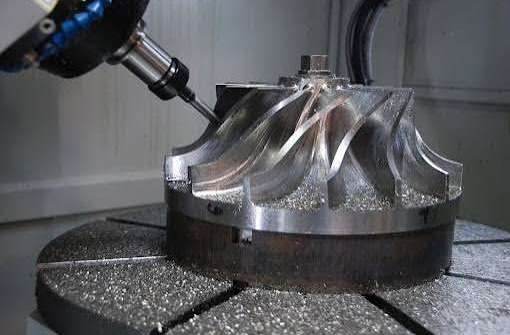
Complex geometries and multi-axis capability Modern renewable designs feature organic shapes, deep pockets, thin walls, and internal channels that only 4-axis and 5-axis CNC centers can produce in a single setup. This reduces assembly steps, eliminates weak weld joints, and cuts costs.
Exotic and difficult materials Renewable energy parts use aluminum alloys (lightweight, corrosion-resistant), stainless steels (marine-grade durability), titanium (high strength-to-weight in hydrogen systems), and carbon-fiber composites. CNC machining handles all of them with specialized tooling and fixturing.
Repeatability at scale From 5-piece prototypes to 10,000-piece production runs, CNC ensures every part is identical—critical for field assembly and warranty compliance.
Core Applications of CNC in Renewable Energy Components & Parts
1. Wind Energy
- Blade root flanges and root inserts (largest CNC-machined parts in the industry)
- Hub castings and pitch bearing housings
- Main shaft flanges and torque arms
- Tower connection rings and offshore foundation adapters
2. Solar / Photovoltaic
- Single- and dual-axis solar tracker torque tubes and drive ends
- Mounting brackets, rails, and pile caps
- Module frames and edge protection components
- Precision slew-drive housings
3. Energy Storage & Green Hydrogen
- Battery pack enclosures and cooling plates
- Hydrogen storage tank nozzles and end fittings
- PEM/AEM electrolyzer bipolar plates and manifolds
- Fuel cell precision valve bodies and flow fields
4. Emerging Applications
- Tidal and wave energy structural components
- Offshore wind monopile transition pieces
- Floating platform connection hardware
Typical CNC Machined Parts Case Studies
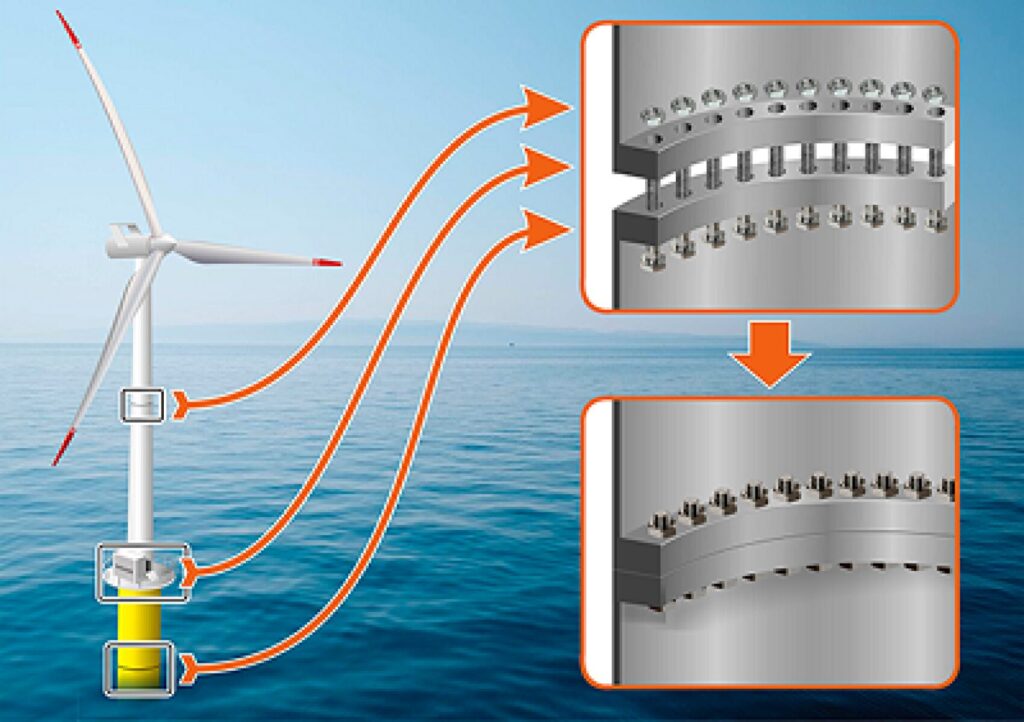
Case 1: 5-Axis CNC Machined Wind Turbine Main Shaft Flange These massive 2–4 meter diameter flanges connect the rotor to the drivetrain and must withstand millions of load cycles. Using 5-axis simultaneous machining on large-bed horizontal centers, we achieve ±0.008 mm flatness across the entire mating surface while maintaining perfect bolt-hole patterns.
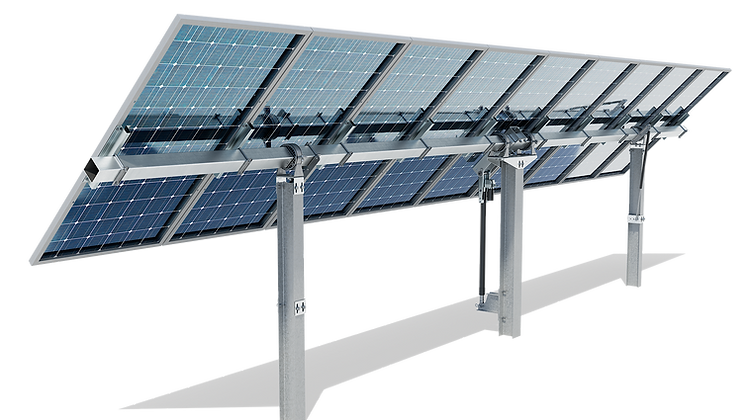
Case 2: Solar Tracker Torque Tube End Fittings High-volume production of torque tube adapters in 6061-T6 aluminum. 4-axis CNC machining with custom fixtures delivers 0.02 mm concentricity and perfect alignment for 20-year tracking accuracy.
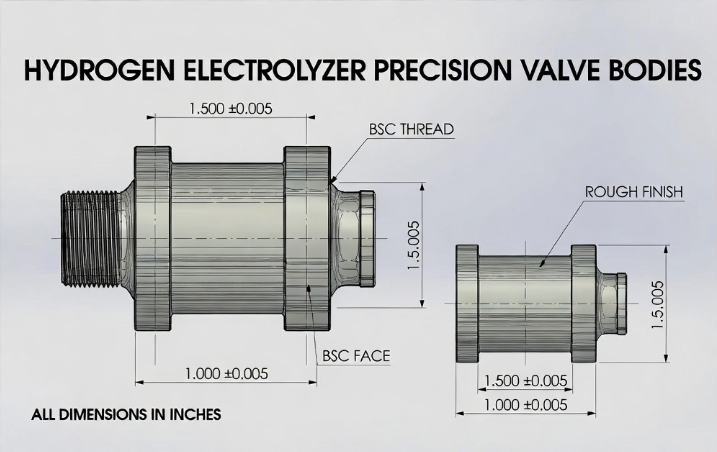
Case 3: Hydrogen Electrolyzer Precision Valve Bodies 316L stainless and titanium valve bodies with internal microchannels and sealing faces requiring an Ra 0.4 µm surface finish. Full 5-axis machining eliminates secondary operations and ensures zero leakage at 30 bar operating pressure.
Material Recommendations + Surface Treatment Processes
| Material | Key Advantages | Corrosion Resistance | Relative Cost | Best Renewable Application |
|---|---|---|---|---|
| Aluminum 6061 | Lightweight, excellent machinability | Good (with anodizing) | Low | Solar trackers, frames, brackets |
| Aluminum 7075 | Higher strength | Moderate | Medium | High-load wind components |
| Stainless 316L | Excellent corrosion resistance | Outstanding | High | Offshore wind, hydrogen systems |
| Titanium Grade 5 | Highest strength-to-weight, biocompatible | Superior | Very High | Electrolyzers, marine hardware |
Surface Treatments We Apply
- Hard anodizing (Type III) – 50–100 µm thickness for aluminum
- Passivation & electropolishing for stainless steel
- Powder coating and marine-grade painting
- Electroless nickel + PTFE for low-friction hydrogen valves
- Ceramic coating for high-temperature electrolyzer parts
Our CNC Machining Advantages for Renewable Energy Projects
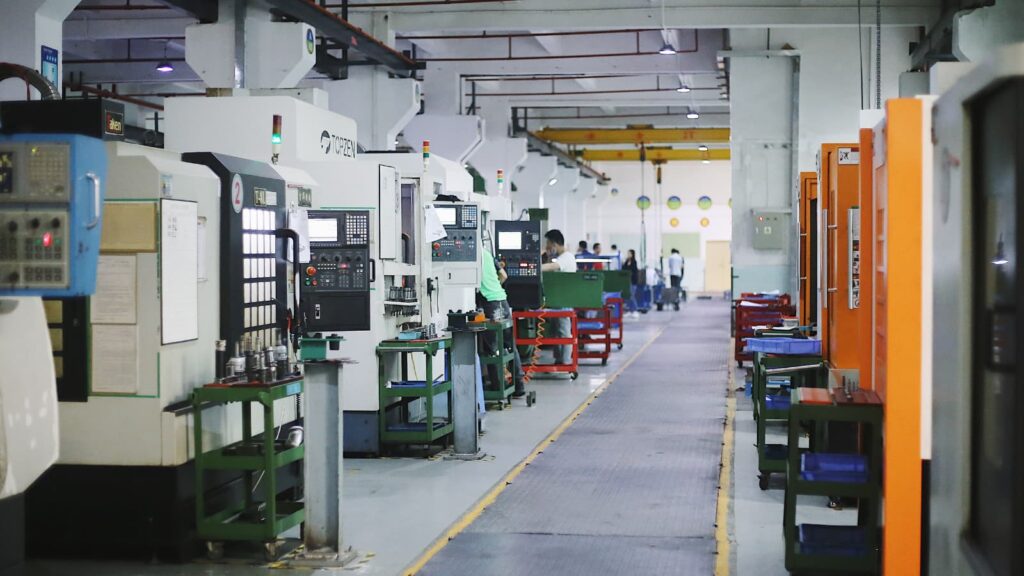
We operate a full fleet of 4-axis and 5-axis CNC machining centers (up to 3 m × 1.5 m travel) dedicated to the renewable sector.
- One-stop service: From DFM review and rapid prototyping (3–7 days) to low-volume and mass production (up to 50,000 pcs/month).
- Certified quality: ISO 9001, IATF 16949, and renewable-specific traceability.
- Proven track record: We have supplied precision components to Tier-1 wind OEMs, leading solar tracker manufacturers, and green hydrogen pilot projects across North America and Europe.
- Fast response: 24-hour quoting and free DFM analysis.
FAQ
Q: What makes CNC machining for renewable energy parts the most expensive?
A: 5-axis complex geometries, exotic materials (titanium), ultra-tight tolerances, and low-volume runs. However, the long-term savings in reduced field failures and downtime far outweigh the upfront cost.
Q: What is the typical delivery time?
A: Prototypes: 5–12 days. Production orders: 3–6 weeks depending on quantity and material. We offer expedited service for urgent projects.
Q: What is the minimum order quantity (MOQ)?
A: 1 piece for prototypes and DFM validation. Production MOQ usually starts at 50–100 pieces, but we are flexible for strategic renewable partners.
Q: Can you machine very large parts?
A: Yes—our largest machines handle parts up to 3 meters in diameter.
Ready to Power Your Next Renewable Project?
CNC machining for renewable energy is the invisible force behind every reliable wind turbine, solar tracker, and green hydrogen plant.
Need CNC machining for renewable energy components and parts? Contact us today for a free DFM analysis and quote within 24 hours. Whether you need 5 prototypes or 5,000 production parts, our team is ready to help you bring your green energy design to life—on time, on spec, and on budget.
Let’s build the future of clean energy together.