In precision manufacturing, laser cutting and CNC milling stand out as two of the most widely used subtractive processes. Both deliver high accuracy and repeatability, but they operate on fundamentally different principles—one uses a focused beam of light, and the other relies on rotating cutting tools. Choosing between them depends on your project’s material, geometry, thickness, production volume, and budget.
Many fabricators and engineers face this decision daily. Laser cutting often wins for speed and intricate 2D profiles on sheet materials, while CNC milling excels at complex 3D features, deeper cuts, and robust parts. Below, we break down how each process works, their key differences, pros and cons, ideal applications, and practical guidance to help you decide.
What Is Laser Cutting?
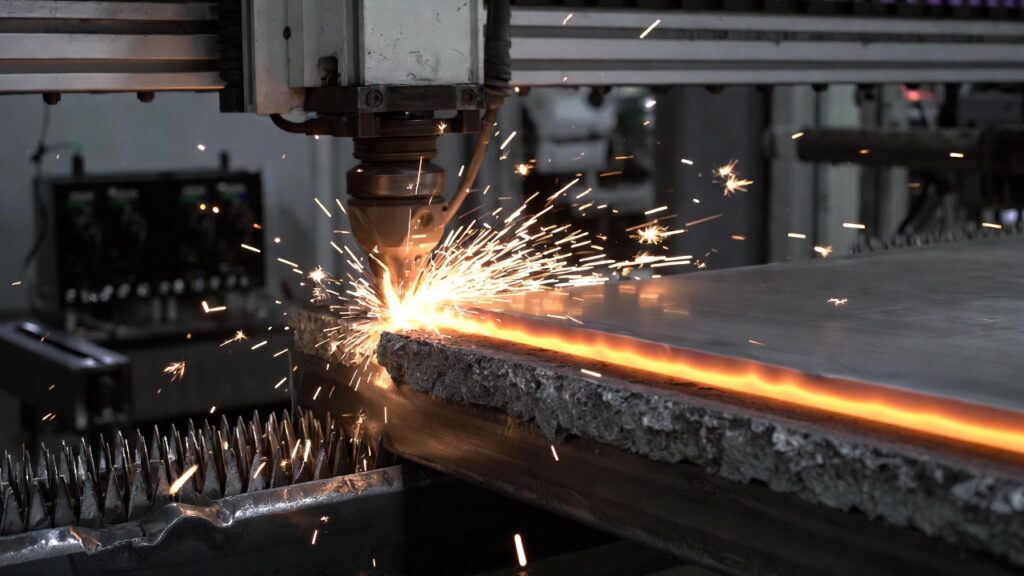
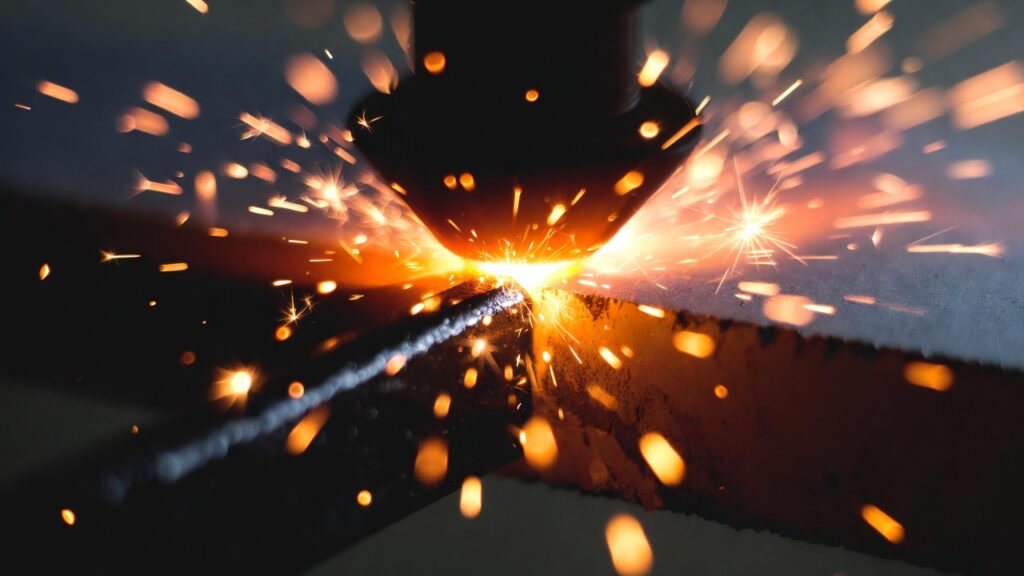
Laser cutting directs a high-powered laser beam—typically from a CO₂ or fiber laser—through optics to focus it into a tiny spot (often under 0.2 mm). The intense heat melts, burns, or vaporizes the material, while assist gas (nitrogen, oxygen, or compressed air) blows away molten residue for a clean edge.
The process is non-contact, producing minimal mechanical stress or distortion. Modern fiber lasers cut reflective metals like aluminum and copper efficiently, expanding their range beyond older CO₂ systems.
Here is a typical laser cutting setup in action:
What Is CNC Milling?
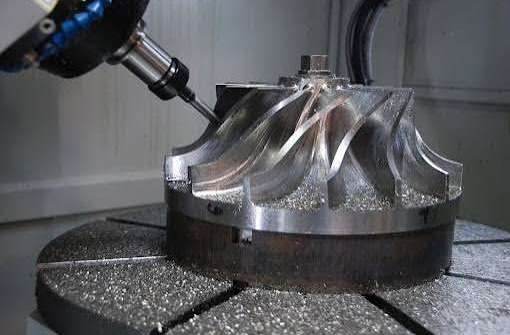
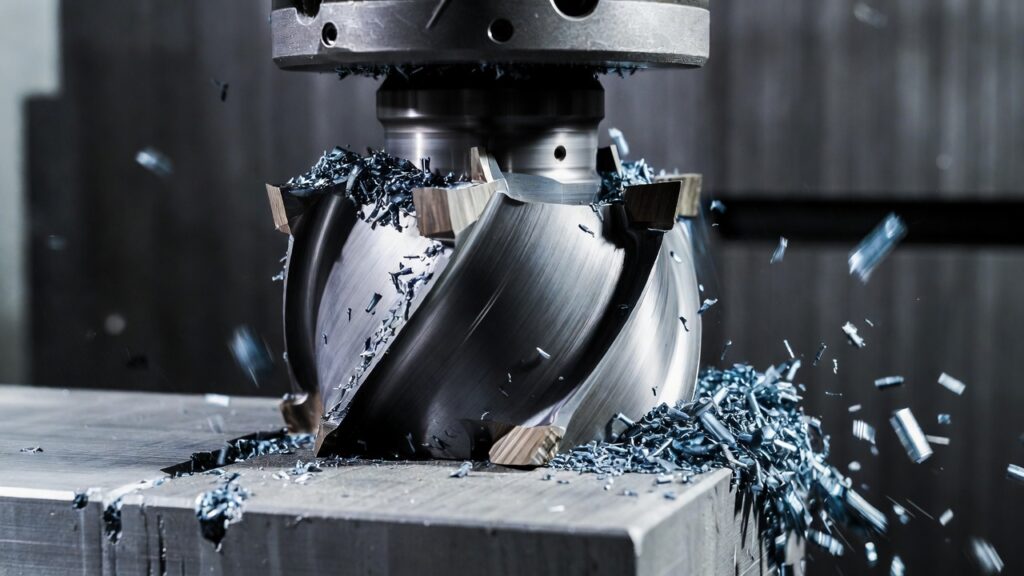
CNC milling uses computer-controlled rotating tools (end mills, face mills, drills) to remove material from a solid block or plate. The workpiece is fixtured on a table, and the spindle moves in multiple axes (3, 4, or 5) to create features like pockets, slots, contours, threads, and undercuts.
This subtractive method allows true 3D geometry and works across a wide range of materials. Tool changes and multi-pass strategies enable roughing for fast material removal followed by finishing for tight tolerances and smooth surfaces.
Here is an example of a CNC milling machine processing a workpiece:
Key Differences: CNC Milling vs. Laser Cutting
| Factor | Laser Cutting | CNC Milling |
|---|---|---|
| Cutting Method | Thermal (non-contact laser beam) | Mechanical (rotating tools) |
| Best For | 2D profiles, intricate flat patterns | 3D features, pockets, threads, contours |
| Material Thickness | Excellent for thin to medium (up to ~25 mm depending on power) | Handles thick blocks (100 mm+) |
| Precision | ±0.001–0.005 in (very fine details) | ±0.0005–0.005 in (excellent with 5-axis) |
| Edge Quality | Clean, minimal burr (often no post-processing) | Tool marks possible; may need finishing |
| Speed | Very fast for thin sheets and 2D cuts | Slower for complex 3D; fast roughing |
| Setup Time | Minimal (no tool changes) | Longer (tool selection, fixturing) |
| Material Waste | Narrow kerf (~0.1–0.5 mm) | Wider path (tool diameter) |
| Heat-Affected Zone | Present (can warp thin or sensitive materials) | Minimal heat if cooled properly |
| Tool Wear | None (consumables: lenses, nozzles) | Regular tool replacement |
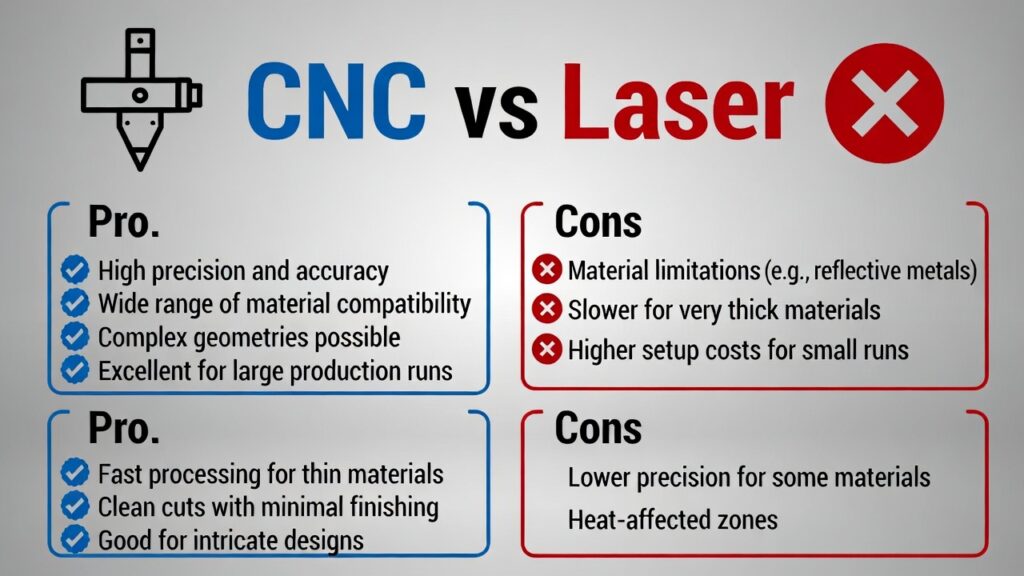
For a quick visual overview of the comparison:
Advantages and Disadvantages
Laser Cutting Advantages
- Extremely fast for sheet metal and flat parts
- Superior for fine details, engraving, and complex 2D patterns
- No tool contact → no distortion or clamping marks
- Excellent material utilization with tight nesting
- Clean edges on many materials (especially with nitrogen assist)
Laser Cutting Disadvantages
- Limited to mostly 2D (limited depth control)
- Struggles with very thick materials or highly reflective surfaces without specialized setup
- Heat-affected zone can discolor or weaken edges on some plastics/metals
- Fume extraction and ventilation required
CNC Milling Advantages
- True 3D capability with undercuts, deep features, and multi-sided machining
- Works on virtually any machinable material (metals, plastics, composites, wood)
- Produces strong, functional parts with excellent surface finish options
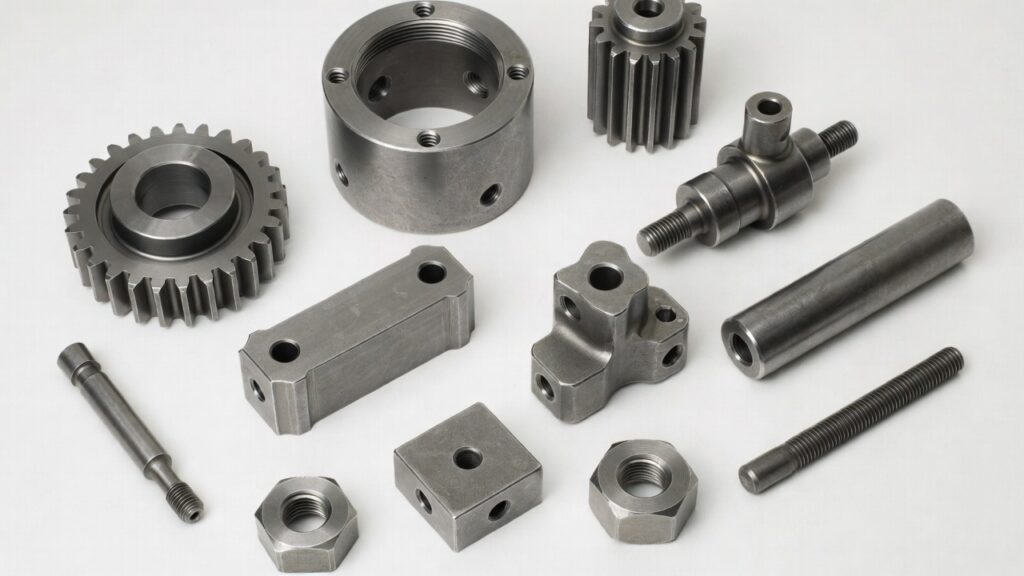
- Can add threads, chamfers, and precise holes in one setup
- Ideal for prototypes to low-volume production
CNC Milling Disadvantages
- Slower cycle times for intricate or high-volume flat work
- Tool wear increases costs over time
- More material waste from wider tool paths
- Requires skilled programming and fixturing
When to Use Laser Cutting
Choose laser cutting when your project involves:
- Thin to medium sheet materials (stainless steel, aluminum, acrylic, wood, leather)
- High-speed production of flat parts or panels
- Intricate designs, logos, perforations, or jewelry
- Minimal post-processing needed
- High-volume runs where speed and consistency matter
Common industries: signage, electronics enclosures, automotive trim, decorative metalwork, apparel patterns.
When to Use CNC Milling
Opt for CNC milling when you need:
- Complex 3D geometry or deep features
- Thick or hard materials (tool steel, titanium, engineering plastics)
- Functional prototypes or end-use parts with threads/holes
- Tight tolerances on mating surfaces
- Parts that require structural strength
Common industries: aerospace components, medical devices, molds, automotive prototypes.
Cost Considerations
Laser cutting usually has lower per-part costs for high-volume 2D work due to speed and minimal tooling. Setup is quick, but initial machine investment can be high for powerful fiber systems.
CNC milling often costs more per part for simple profiles (due to longer cycle times and tool wear) but becomes economical for complex parts that avoid secondary operations. Tooling and programming add expense, especially for small runs.
Hybrid approaches—laser cutting blanks then CNC milling features—frequently deliver the best balance of speed and capability.
Which Is Better?
There is no universal “better” option. Laser cutting generally wins for speed, fine detail, and thin-sheet efficiency. CNC milling is superior for 3D complexity, material versatility, and functional strength.
Evaluate your project by asking:
- Is the design primarily 2D or does it require depth/3D features?
- What material thickness and type are involved?
- What production volume do you expect?
- How critical are edge quality, tolerances, and post-processing?
Many shops use both technologies complementarily for optimal results.
Frequently Asked Questions (FAQ)
Can laser cutting handle 3D parts?
No, laser cutting is primarily 2D. It excels at flat profiles but cannot create deep pockets, undercuts, or multi-sided features without additional setups.
Which process is more precise?
Both offer high precision, but laser cutting often achieves finer details on thin materials (±0.001 in), while CNC milling provides superior accuracy on complex 3D geometries with proper tooling.
Is laser cutting safe for all metals?
Fiber lasers handle reflective metals (aluminum, copper) well, but older CO₂ lasers struggle without coatings or special assist gases.
Does CNC milling produce better surface finishes?
Yes, especially with multi-pass finishing and ball-end mills. Laser edges are clean but may show heat discoloration.
Which is faster for cutting sheet metal?
Laser cutting is significantly faster for 2D profiles on thin to medium sheets.
Can both processes cut plastics?
Yes—laser cutting works well on acrylic and some plastics (avoid PVC due to toxic fumes); CNC milling handles a wider range without heat issues.
What about material waste?
Laser cutting has a narrower kerf and better nesting efficiency, resulting in less waste than CNC milling’s wider tool paths.
Is one process more expensive to operate?
Laser cutting has lower consumable costs (no tools to replace frequently), but CNC milling incurs ongoing tool and coolant expenses.
Can I combine both technologies?
Absolutely—many projects laser-cut blanks for speed, then CNC mill features like holes, threads, or 3D contours.
Which is better for prototyping?
Laser cutting for quick 2D iterations; CNC milling for functional prototypes needing strength and precise features.
Does laser cutting cause warping?
Possible on thin materials due to heat; mitigated with proper parameters, assist gas, and fixturing.
What file formats work best?
Both accept vector files (DXF, SVG for laser; STEP/IGES for milling), but CNC often requires 3D models for complex work.
Ready to move your project forward? Whether you need fast, intricate laser-cut parts or robust, 3D CNC-milled components, the right choice starts with understanding your exact requirements.
Request a quote today for expert advice on laser cutting, CNC milling, or a hybrid approach tailored to your project. Let our team help you select the best process for speed, precision, and cost-efficiency. Contact us now!