Choosing between CNC machining and laser cutting is one of the most common decisions makers, hobbyists, small business owners, and manufacturers face today. Both are powerful digital fabrication technologies controlled by CAD/CAM software, but they work in completely different ways and excel in very different scenarios.
CNC uses spinning tools to physically remove material (subtractive machining), making it ideal for 3D shapes, thick stock, and complex features. Laser cutting uses a focused beam of light to melt, burn, or vaporize material in a non-contact thermal process, delivering unmatched speed and detail on flat sheets and thin materials.
In 2026, fiber laser technology continues to improve dramatically for metals, while CNC routers and mills remain the go-to for depth, structural integrity, and versatility. This guide compares the two head-to-head—including updated thickness limits, precision data, speed benchmarks, costs, materials, pros/cons, applications, and decision tables—so you can confidently pick the right process (or combination) for your next project.
Whether you’re building custom signs, prototyping enclosures, machining engine parts, or starting a side hustle in Etsy crafts, understanding these differences saves time, money, and frustration.
Quick At-a-Glance Comparison Table
| Feature | CNC Machining / Router | Laser Cutting |
|---|---|---|
| Cutting Method | Contact (spinning tool removes material) | Non-contact (thermal beam) |
| Best For | 3D geometry, thick materials, pockets, threads, multi-face parts | 2D profiles, intricate details, thin sheets, engraving |
| Typical Thickness | Up to 100 mm+ (practically unlimited) | Best <25 mm (up to 40–50 mm with high-power fiber) |
| Precision / Tolerance | ±0.01–0.1 mm (high-end ±0.005 mm) | ±0.05–0.2 mm (often ±0.05 mm on thin sheets) |
| Internal Corners | Rounded (limited by tool diameter) | Sharp (very small kerf ~0.1–0.3 mm) |
| Edge Quality | Clean, no HAZ, may need light deburring | Sharp & smooth (nitrogen assist), but HAZ possible |
| Speed (thin 2D) | Moderate to slow | Very fast (5–10× faster on sheets <12 mm) |
| Setup Time | Higher (fixturing, tool changes) | Very low (nesting only) |
| Material Waste | High (chips, scrap from stock) | Low (tight nesting, narrow kerf) |
| Byproducts | Chips, dust, coolant | Fumes, minimal dross |
| Entry-Level Cost | $2,000–$30,000 (desktop to pro) | $500–$15,000 (diode/CO2), $20k+ for fiber metal |
| Operating Cost | Tool wear, coolant, higher maintenance | Gas/electricity, lower consumables |
| Noise & Safety | High noise, rotating parts risk | Low noise, fumes & eye protection needed |
How CNC Machining Works
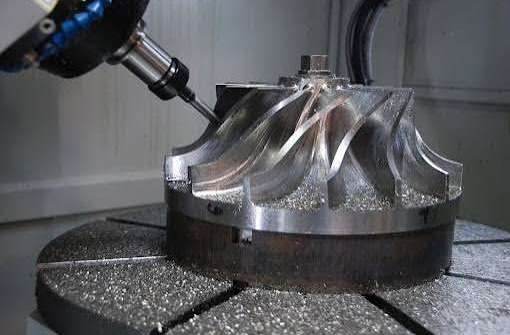
CNC (Computer Numerical Control) machining is a subtractive process where a computer-controlled tool physically cuts away material from a solid block, sheet, or billet. Common machines include CNC routers for wood and soft metals, CNC mills for precision metal parts, and CNC lathes for round components.
The workpiece is fixtured securely, the spindle spins a tool at high RPM, and multiple axes follow G-code toolpaths. Coolant removes heat and chips during roughing and finishing passes.
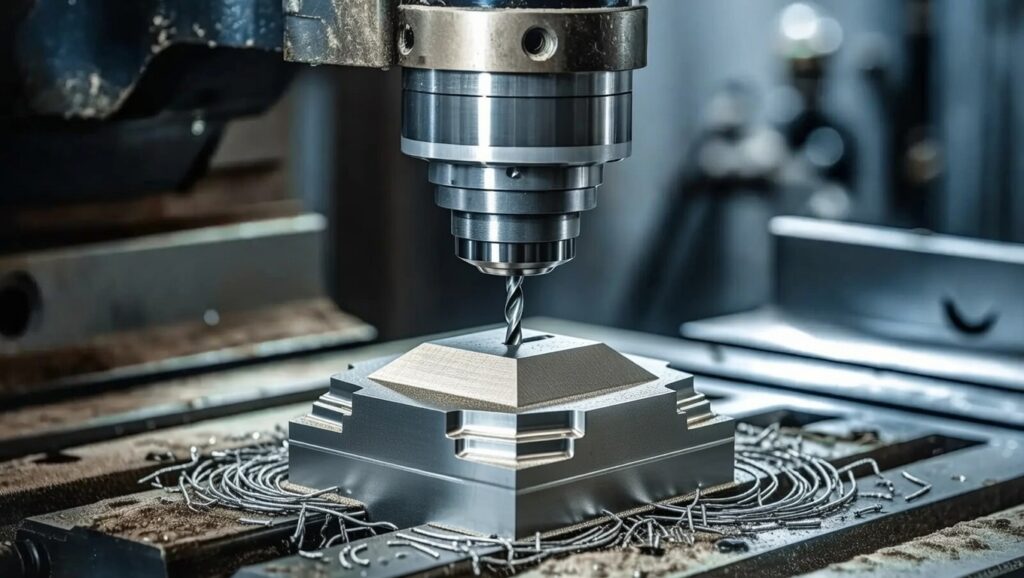
Strengths: True 3D capability (pockets, undercuts, threads, chamfers, multi-sided machining), excellent for thick/hard materials, no heat-affected zone (HAZ), ideal for structural/load-bearing parts.
Limitations: Tool wear and breakage, longer setup/fixturing, rounded internal corners, more waste, vibration/chatter on thin parts.
How Laser Cutting Works
Laser cutting is a non-contact thermal process. A high-power laser beam (CO₂ for non-metals, fiber for metals) is focused to a tiny spot, heating material to melting/vaporization point. Assist gas ejects molten material (dross).
Operation is simple: import the vector file, nest parts on the sheet, and run. No tool changes, minimal clamping.
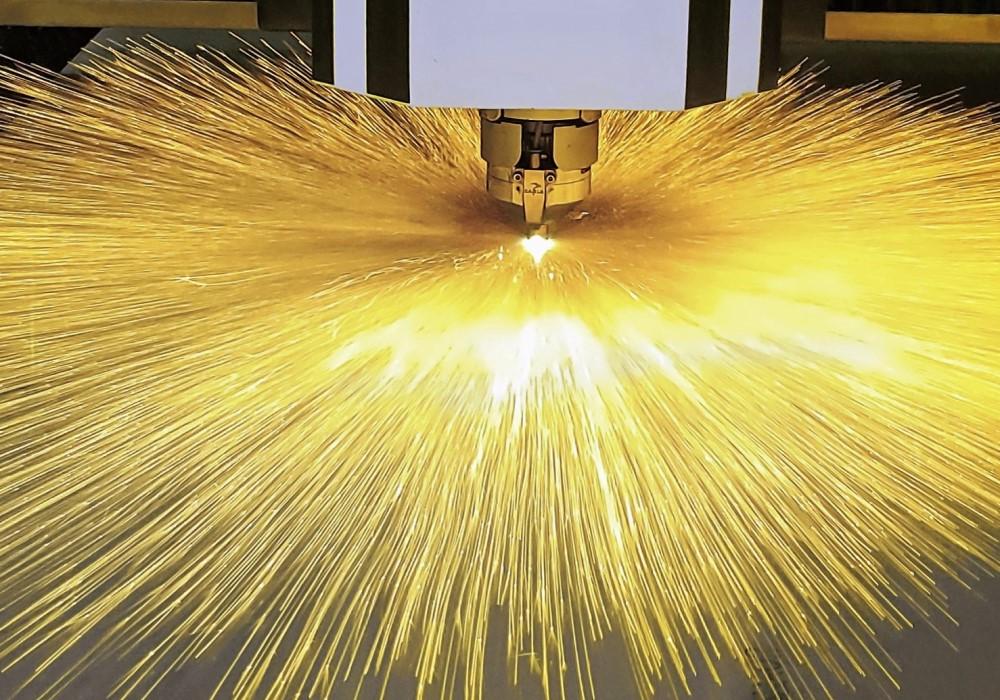
Types: CO₂ lasers for wood/acrylic/leather, fiber lasers for metals, and diode lasers for hobby use.
Strengths: Blazing speed on thin sheets, razor-sharp corners, fine details/engraving, low distortion, minimal setup.
Limitations: Mostly 2D (limited depth control), HAZ on metals, thickness cap (~25 mm optimal), fumes require extraction.
Key Technical Comparison Table
| Criterion | CNC Machining | Laser Cutting | Winner (Typical Case) |
|---|---|---|---|
| 2D Profiling Speed (thin sheet) | Moderate | Very high (100–120+ ipm, up to 100 m/min traverse) | Laser |
| Thick Material (>25 mm) | Excellent (100 mm+) | Slow, quality drops, high dross | CNC |
| 3D Features (pockets, undercuts) | Full capability | Very limited | CNC |
| Precision on Thin Sheets | ±0.02–0.1 mm | ±0.05 mm common, kerf 0.1–0.3 mm | Laser (often edges out) |
| Precision on Thick Blocks | Superior dimensional control | Not applicable | CNC |
| Edge Finish | Clean, no HAZ, possible burr | Smooth (nitrogen), HAZ/discoloration | Tie (depends on need) |
| Sharp Internal Corners | No (tool radius) | Yes | Laser |
| Heat Effects | None | HAZ (can alter properties) | CNC |
| Material Versatility | Very broad | Good but selective (thin sheets best) | CNC |
Material Compatibility Overview
Both handle many materials, but strengths diverge.
CNC excels with thick metals, hardwoods, engineering plastics, and composites.
Laser excels with thin sheet metals, acrylic (polished edges), wood veneers, leather, and fabric.
Advantages & Disadvantages Table
| Aspect | CNC Advantages | CNC Disadvantages | Laser Advantages | Laser Disadvantages |
|---|---|---|---|---|
| Geometry | True 3D, pockets, threads, multi-axis | Rounded corners, tool access limits | Sharp corners, fine detail | Mostly 2D, no real depth/pockets |
| Thickness | Thick stock & blocks | Slower on large flat areas | Ultra-fast on thin | Thickness limited, speed drops sharply |
| Speed & Throughput | Consistent for complex parts | Higher setup/fixturing time | Extremely fast 2D, quick changeover | Slower on thick, HAZ management |
| Cost (small run) | Good for one-offs with features | Tooling & setup expensive | Low per-part at volume | Higher machine cost for metal fiber |
| Maintenance | — | Tool replacement, coolant | Low consumables | Fume extraction, optics/gas |
Typical Applications & Examples
Choose Laser for signage, jewelry, thin metal brackets, acrylic displays, and intricate patterns.
Choose CNC for furniture components, molds, aerospace parts, thick structural elements.
Hybrid workflows are increasingly popular: laser for quick blanks and CNC for 3D finishing.
Which Should You Choose? Decision Guide
- Mostly flat 2D with fine details/engraving? → Laser
- Need depth, pockets, threads, or thick material? → CNC
- Thin sheets (<12–15 mm) in volume? → Laser
- Structural/load-bearing or heat-sensitive? → CNC
- Beginner/small hustle focused on crafts/signs? → Laser (easier curve)
- Need versatility across thick woods/metals? → CNC
Many shops eventually own both or use hybrid machines.
Frequently Asked Questions
Which is better for beginners?
Laser cutters (diode or enclosed CO₂) are usually easier—simpler software, fewer variables, and fast, impressive results. CNC needs more CAD/CAM and setup knowledge.
Can laser replace CNC entirely?
No—a laser can’t do true 3D pockets, threads, or thick structural work. They complement each other perfectly.
Is laser accurate enough for metal parts?
Yes—modern fiber lasers hold ±0.05–0.1 mm on thin sheets, often matching or beating CNC for 2D profiles.
Which is cheaper to run long-term?
Lasers typically have lower consumables; CNCs have higher due to bits/coolant, but it depends on volume/material.
What about woodworking?
CNC routing wins for depth/joinery/3D reliefs. Laser great for thin veneers/inlays/detailed 2D (but chars edges).
Conclusion
CNC machining and laser cutting aren’t direct competitors — they’re complementary tools with different superpowers. CNC delivers unmatched 3D versatility, thickness capability, and structural integrity. Laser cutting wins on speed, sharp detail, and efficiency for flat/thin work.
In 2026, with advancing fiber lasers and smarter software, the smartest approach is matching the tool to your geometry and material—and combining them when it makes sense.
Evaluate your project’s needs (thickness, detail, volume, and budget); test samples if possible, and you’ll choose the path that delivers better, faster results.