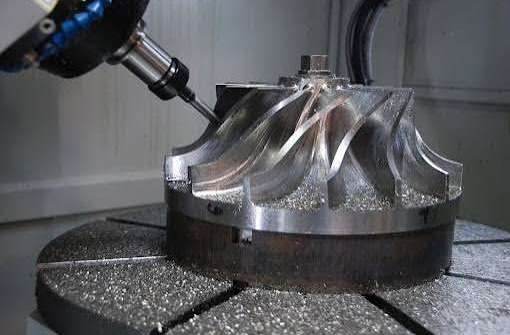
Machining surface finish, often just called surface finish or surface roughness, is one of the most important aspects of making metal parts. It describes how smooth or rough the surface of a machined part is after processes like turning, milling, grinding, or other CNC operations. A good surface finish improves how the part performs, looks, and lasts.
In this article, we’ll explain what machining surface finish means, why it matters, how it’s measured (especially with key terms like Ra and Rz), common values for different machining methods, and tips for getting the right finish. Whether you’re a beginner in machining or just want a clearer understanding, this guide breaks it down simply.
What Is Machining Surface Finish?
When you machine a part—cutting, drilling, or shaping metal—the tool leaves tiny marks on the surface. These marks create a texture with peaks (high points) and valleys (low points).
Surface finish refers to this texture. It’s not just about looks; it affects real-world performance.
Surface texture has three main parts:
- Lay — The main direction of the patterns (like lines from a turning tool going around in circles).
- Waviness — Bigger, wavy imperfections (often from machine vibration or deflection).
- Roughness — The tiny, fine peaks and valleys (this is what most people mean by “surface finish”).
In everyday machining talk, “surface finish” usually means surface roughness — how bumpy those tiny features are.
A smooth surface has low roughness (small Ra value). A rough surface has high roughness (large Ra value).
Why Does Machining Surface Finish Matter?
The right surface finish makes parts work better and last longer. Here are the main benefits:
- Reduces friction and wear — Smoother parts slide easier and don’t wear out as fast (great for bearings, pistons, or gears).
- Improves strength against fatigue — Fewer deep scratches mean less chance of cracks starting.
- Helps with coatings and paints — A good texture lets paint or plating stick better.
- Looks better — Smooth finishes give a shiny, professional appearance.
- Prevents corrosion — Rough surfaces trap moisture and chemicals; smooth ones resist rust.
- Boosts sealing — For gaskets or O-rings, a smooth finish creates better seals.
- Increases electrical conductivity in some cases.
Poor surface finish can lead to early failure, leaks, extra noise, or bad looks. That’s why engineers specify exact finish levels on drawings.
How Is Machining Surface Finish Measured?
The most common way to measure roughness is with a tool called a profilometer. It drags a tiny stylus over the surface and records the ups and downs.
The key parameters are:
- Ra (Roughness Average or Arithmetic Average) This is the most used number worldwide (especially in the US). Ra calculates the average height of all the peaks and valleys from a straight “mean line.” Lower Ra = smoother surface. Units: micrometers (µm) or microinches (µin). Example: Ra 3.2 µm is a standard “as-machined” finish—smooth to touch but with visible tool marks.
- Rz (Mean Roughness Depth or Ten-Point Height) Popular in Europe and internationally. Rz looks at the five tallest peaks and five deepest valleys in a section, then averages them. It catches big scratches or defects better than Ra (which averages everything and can hide extremes). Rz is usually 4–7 times higher than Ra on the same surface.
Other terms you might see:
- RMS (Root Mean Square) — Similar to Ra but uses a squared average (slightly higher than Ra).
- Rt or Rmax — The total height from the highest peak to the lowest valley.
- N grades (ISO scale) — Like N8 = Ra 3.2 µm, N7 = Ra 1.6 µm.
Machining Surface Finish Chart: Common Values and Conversions
Here’s a simple conversion chart for Ra values (based on standard references):
| Ra (µm) | Ra (microinches) | Approx. RMS (µin) | N Grade (ISO) | Description |
|---|---|---|---|---|
| 0.025 | 1 | 1.1 | N1 | Mirror-like, super-polished |
| 0.05 | 2 | 2.2 | N2 | Extremely smooth |
| 0.1 | 4 | 4.4 | N3 | Lapped or super-finished |
| 0.2 | 8 | 8.8 | N4 | Fine grinding |
| 0.4 | 16 | 17.6 | N5 | Precision grinding |
| 0.8 | 32 | 32.5 | N6 | Good finish turning/milling |
| 1.6 | 63 | 64.3 | N7 | Fine machining |
| 3.2 | 125 | 137.5 | N8 | Standard as-machined |
| 6.3 | 250 | 275 | N9 | Rough machining |
| 12.5 | 500 | 550 | N10 | Very rough |
Typical Ra values by machining process:
- Rough turning/milling — Ra 6.3–12.5 µm (visible marks, fast and cheap).
- Standard CNC turning/milling (as-machined) — Ra 3.2 µm (most common default).
- Fine turning/milling — Ra 1.6–0.8 µm (slower feeds, better tools).
- Grinding — Ra 0.8–0.2 µm (smooth, precise).
- Polishing/lapping — Ra 0.1 µm or lower (mirror finish).
For cast iron/steel, rougher finishes (like Ra 25 µm) come from coarse machining, while finer ones need extra steps.
Common Finishing Methods in Machining
Beyond basic machining, extra steps improve finish:
- As Machined — Ra 3.2 µm default; can go to 1.6, 0.8, or 0.4 µm with care.
- Bead Blasting — Matte look, uniform texture (mostly for appearance).
- Powder Coating — Adds tough, colorful layer for protection.
- Anodizing (Type II or III) — For aluminum/titanium; creates hard, corrosion-resistant surface (can be colored).
Tips for Achieving the Right Surface Finish
To get a better finish without wasting time/money:
- Use sharp tools and replace them often.
- Reduce feed rate and depth of cut.
- Increase spindle speed (within limits).
- Use coolant to reduce heat and vibration.
- Choose the right process—grinding beats milling for ultra-smooth.
- Don’t overspecify—Ra 3.2 µm is fine for most parts; tighter finishes cost more.
Precision shops use charts and experience to hit specs every time.
Final Thoughts
Machining surface finish is all about controlling those tiny peaks and valleys to make parts stronger, smoother, and more reliable. Ra is the go-to number for most specs, but Rz helps spot big issues. Standard finishes like Ra 3.2 µm work great for everyday parts, while finer ones (Ra 0.8 µm or lower) suit high-performance needs.
Understanding surface finish helps designers, machinists, and buyers get better results without extra cost. Next time you see a finish callout on a drawing, you’ll know exactly what it means and why it matters.

Ryan Wang
Ryan Wang is the CNC Machining Expert at Cncpioneer, with over 15 years of hands-on experience as a CNC programmer, process engineer, senior machinist, and precision manufacturing specialist. He has helped companies in aerospace, automotive, medical, and electronics sectors achieve micron-level tolerances and scale from prototypes to high-volume production. Ryan is also an experienced instructor in advanced CNC techniques, particularly five-axis machining and challenging materials.