Railroad wheel machining—also known as wheel re-profiling or turning—is a critical maintenance and manufacturing process in the railway industry. It restores worn wheels to their optimal profile, ensuring safe, efficient train operation while extending component life. Whether you’re a maintenance technician, workshop manager, or engineer, understanding railroad wheel machining helps reduce downtime, prevent derailments, and control costs.
This comprehensive guide draws from industry-leading sources like Sandvik Coromant, ZCC Cutting Tools, DANOBAT, Hegenscheidt, and real-world machining videos. We’ll cover everything from wheel wear basics to machine types, tools, step-by-step processes, cutting parameters, safety, and troubleshooting. By the end, you’ll have actionable knowledge to perform or oversee railroad wheel machining effectively.
Why Railroad Wheel Machining Matters
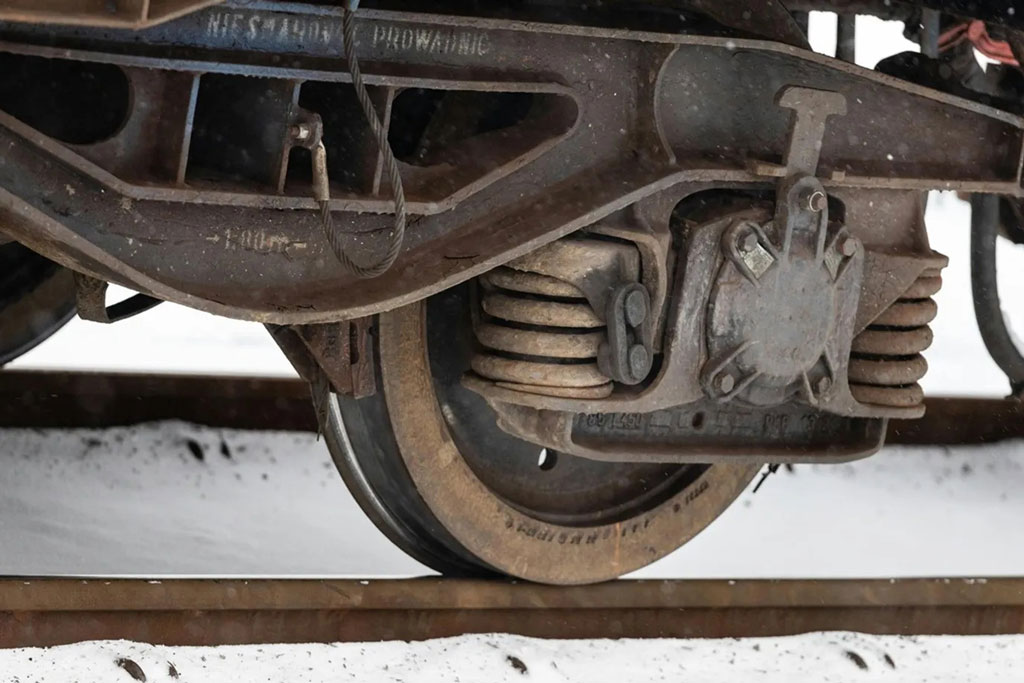
Railway wheels endure extreme stresses: heavy loads, braking forces, and constant rail contact. Over time, this causes wear patterns like:
- Flat spots — From wheel slide during hard braking.
- Shelling/spalling — Surface fatigue cracks and material loss.
- Hollowing — Concave tread wear.
- Flange thinning or sharpening — Reducing guidance and increasing derailment risk.
- Out-of-round conditions—Leading to vibrations and noise.
Unchecked wear increases rolling resistance, fuel consumption, track damage, and safety risks. Regular machining restores the wheel profile (e.g., UIC S1002 or AAR standards), improving traction, reducing noise, and extending wheel life by 30-50%.
There are two main contexts:
- New wheel production → Precision turning of forged blanks.
- Maintenance re-profiling → Removing minimal material from worn wheelsets, often without bogie disassembly.
Most railroad machining focuses on maintenance, where underfloor lathes dominate for speed and convenience.
Types of Machines Used in Railroad Wheel Machining
Choosing the right machine depends on wheel diameter (typically 400-1200 mm), wheelset type, and whether it’s new production or maintenance.
1. Underfloor (In-Pit) Wheel Lathes
These are the “heart of railway maintenance.” The lathe installs in a pit, allowing the train or bogie to roll directly over it. Wheels are driven by friction rollers while tools cut from below.
Key Advantages:
- No need to disassemble wheelsets or lift the vehicle fully.
- Minimal downtime—ideal for metros, locomotives, and passenger trains.
- High precision with CNC controls.
Examples:
- Hegenscheidt U2000 series.
- RAFAMET underfloor lathes.
Process Overview: The vehicle positions over the pit. Hydraulic supports engage axle bearings. Friction drive rotates wheels while tools re-profile the tread and flange.
2. Portal (Abovefloor) Wheel Lathes
These stand-alone machines feature a portal frame that moves over the wheelset. The wheelset clamps rigidly, and tools approach from above or the sides.
Key Advantages:
- Handles heavy freight wheelsets and severe wear.
- Higher power for deeper cuts.
- Often used when wheelsets are removed.
Examples:
- DANOBAT DPL series (portal roll-through design).
- Hegenscheidt PN 190 or Type 165.
Process Overview: Wheelset loads onto supports. Portal moves into position. Multiple tool heads machine both wheels simultaneously.
3. Vertical Lathes for New Wheel Production
Used primarily in manufacturing, these hold the wheel vertically with turrets machining from above and below.
Key Advantages:
- Simultaneous operations on both sides.
- High automation with robot loading.
- Precise for complex profiles.
Examples:
- TOSHULIN EXPERT series.
- NILES-SIMMONS RQ centers.
Process Overview: Wheel blank loads vertically. Turrets rough and finish rim, web, hub, and bore in sequenced operations.
Tools and Cutting Inserts for Railroad Machining
Modern railroad wheel machining relies on indexable carbide inserts for efficiency and consistency.
Recommended Insert Types
From Sandvik Coromant:
- Roughing → Large round inserts (RCMX 320900) or LNMX 301940-PR.
- Finishing → Smaller rounds (RCMX 160900) or -PF geometries.
- Grades → GC4215 (standard), GC4325 (tough conditions), GC3015 (hard wheels).
From ZCC CT:
- Roughing → LNUX 301940-RR YBC103 or RCMX 3209MO-A YBC252A.
- Medium/Finishing → LNUX 191940-RF YBC152.
- Specialized holders like RW-PLANR-30 for deep cuts.
General Tips:
- Use tangential LNMX/CNMX styles for long flanges.
- Wiper geometries (-WMX) for excellent surface finish on brake discs.
Step-by-Step Guide to Railroad Wheel Re-Profiling
This focuses on maintenance re-profiling, the most common railroad machining task.
Step 1: Pre-Machining Inspection
- Measure wheel diameter, flange thickness/height, tread hollowing, and flat spots using calipers or automated systems.
- Check for cracks via ultrasonic or magnetic particle testing.
- Determine material removal (typically 1-10 mm total).
Step 2: Machine Setup
For Underfloor Lathe:
- Position vehicle over pit.
- Lower retractable rails if needed.
- Engage hydraulic supports on axle journals.
- Activate friction drive rollers.
For Portal Lathe:
- Load wheelset onto machine supports.
- Clamp axle ends rigidly.
- Align portal and tool heads.
CNC Programming:
- Input target profile (from standards database).
- Set automatic measurement cycles.
Step 3: Rough Machining
- Goal: Remove bulk material and defects quickly.
- Use large, tough inserts (e.g., LNMX 301940-PR or RCMX 3209).
- Parameters (normal conditions): vc 70-100 m/min, fn 0.5-1.5 mm/rev, depth 3-10 mm.
- For severe damage: Reduce vc to 40-60 m/min.
- Machine flange and tread in multiple passes or one deep cut if machine power allows.
Step 4: Finish Machining
- Goal: Achieve final profile and surface finish.
- Switch to finishing inserts (-PF or -RF geometries).
- Parameters: vc 90-180 m/min, fn 0.2-0.8 mm/rev, depth 1-2 mm.
- Often done in a single profiling pass.
Step 5: In-Process and Final Measurement
- Modern machines measure automatically during/after cutting.
- Verify diameter, profile conformity, runout, and surface roughness (Ra < 3.2 μm typical).
Step 6: Post-Machining
- Deburr if needed.
- Apply anti-corrosion if required.
- Record data for maintenance logs.
Time Estimate: 20-60 minutes per wheelset on modern underfloor lathes.
Cutting Parameters and Best Practices
Standard Parameters (Re-Profiling, ER7-ER9 Steel)
| Operation | Insert Example | vc (m/min) | fn (mm/rev) | Depth (mm) | Grade Recommendation |
|---|---|---|---|---|---|
| Roughing | LNMX 301940-PR / YBC103 | 60-80 | 0.5-1.5 | 4-10 | GC4325 / YBC252 |
| Medium | LNUX 191940-RF / YBC152 | 70-90 | 0.2-0.4 | 2-4 | GC4215 |
| Finishing | RCMX 160900 / YBC152 | 100-180 | 0.6-1.0 | 1-2 | GC3015 |
Best Practices:
- Maximize depth of cut to minimize passes.
- Use high-pressure coolant (over/under tool) for 60%+ tool life gain in new production.
- Groove below hardened zones on damaged wheels.
- Re-profile frequently (every 5-8 weeks for high-speed trains).
- Maintain tools: Torque holders properly and clean seats.
Safety Considerations in Railroad Machining
- Lock out vehicle movement and secure with chocks.
- Wear PPE: Eye/hearing protection, gloves, and steel-toe boots.
- Ensure chip evacuation—dry machining produces heavy swarf.
- Follow CNC interlocks and emergency stops.
- Train operators on machine-specific hazards (e.g., pit falls).
Troubleshooting Common Railroad Machining Issues
| Issue | Likely Cause | Solution |
|---|---|---|
| Poor surface finish | Dull insert or vibration | Change insert, reduce overhang, increase feed |
| Chatter/vibration | Insufficient clamping | Check supports, reduce vc |
| Insert breakage | Hard spots or excessive depth | Lower vc/feed, use tougher grade |
| Profile deviation | Wrong program or wear on tool | Verify CNC input, measure tool compensation |
| Excessive tool wear | High speed on damaged wheel | Reduce vc, use coated grade |
Final Thoughts
Railroad wheel machining is both an art and a science—combining robust machines, precise tools, and operator expertise to keep trains running safely. Whether using an underfloor lathe for quick maintenance or a vertical setup for new production, following these steps and parameters will yield consistent results.
Implement regular inspections, invest in quality inserts (Sandvik, or similar), and leverage CNC automation for efficiency. With proper railroad machining practices, you’ll extend wheel life, reduce operational costs, and contribute to safer railways.