In 2026, artificial intelligence (AI) is changing CNC manufacturing fast. AI makes machines smarter, faster, and more reliable. Shops use AI to cut costs, reduce errors, and improve part quality.
This article focuses on three main areas:
- Automation — making processes run with less human work
- Spindles — keeping the machine’s heart healthy
- Precision engineering — hitting tight tolerances every time
We keep it simple and easy to read. Short sections, clear lists, and real examples help you understand quickly.
Why AI Matters in CNC Today
AI uses data from sensors to learn and make decisions. In CNC, this means:
- Predicting problems before they happen
- Adjusting settings in real time
- Automating boring tasks
Key benefits in 2026:
- Up to 50% less downtime
- 20-30% faster programming
- Better part accuracy with fewer defects
AI is now standard in many shops, not just a test tool. Real-time feedback from sensors lets machines adapt instantly.
AI in CNC Automation: Making Work Easier and Faster
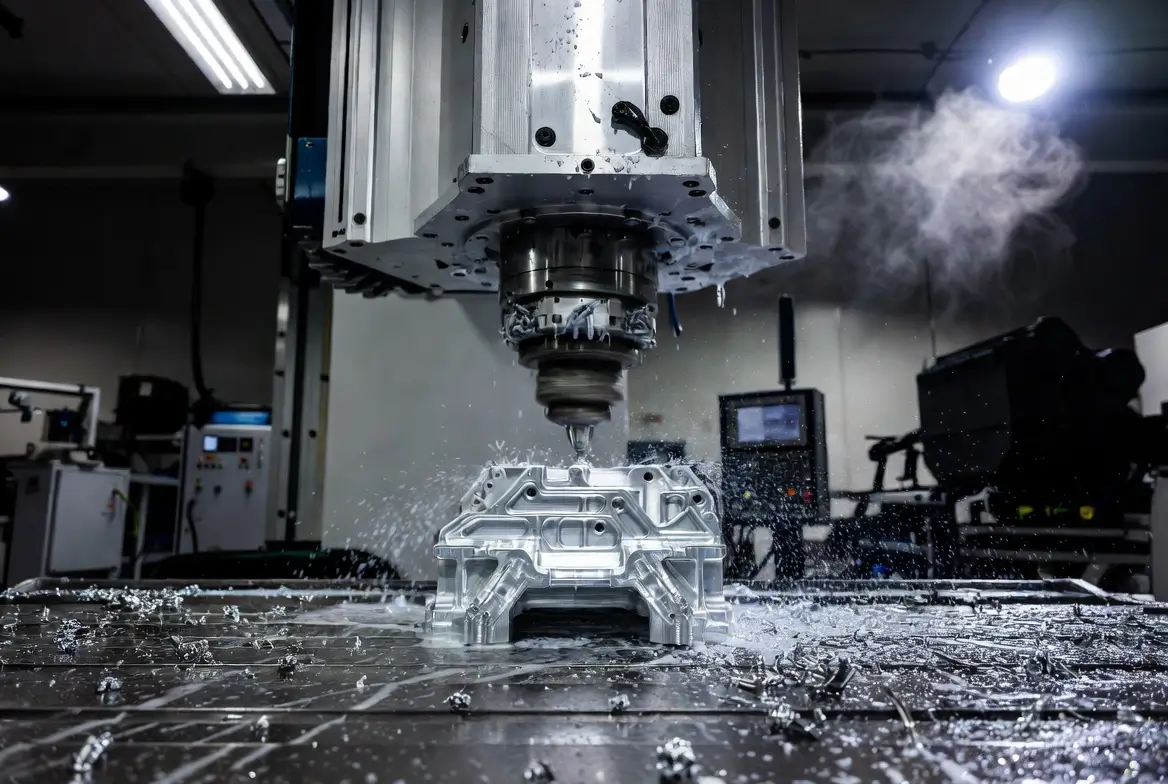
Automation handles loading, unloading, and running jobs. AI takes it further by thinking and optimizing.
Smart CAM Software and Programming
Programming used to take hours. AI CAM tools now do most of it in minutes.
Popular tools in 2026:
- CAM Assist (CloudNC) — Works with Mastercam, Fusion 360, and GibbsCAM. AI creates toolpaths and strategies fast. Saves up to 80% on repetitive work.
- Mastercam 2026 — Adds AI suggestions for toolpaths. Great for complex parts.
- Lambda Function — Learns from your team. Suggests better cuts and extends tool life.
How it works: Upload a CAD file → AI finds features (holes, pockets) → Generates optimized G-code.
Result: fewer errors, quicker setup, and more time for creative work.
Predictive Maintenance to Avoid Stops
AI watches machine health 24/7. Sensors track vibration, temperature, and load.
- AI spots early wear on tools or motors
- Alerts you before failure
- Adjusts settings to prevent damage
Example: Shops see 20-50% less unplanned stops. One small shop fixed a spindle issue early and saved thousands in scrap.
Robots and Lights-Out Running
AI helps robots work with CNC machines.
- Vision systems guide part handling
- AI plans safe paths
- Enables 24/7 production with few people
In 2026, lights-out (no humans at night) is common in many shops thanks to AI + robotics.
Quick List: Automation Wins
- Faster programming
- Less downtime
- Safer and more consistent runs
- Lower labor costs for routine jobs
AI does not replace people — it lets skilled workers focus on hard problems.
AI for CNC Spindles: Keeping the Core Strong
Spindles spin the tool. They fail often and cost a lot to fix. AI helps predict and prevent issues.
Real-Time Monitoring
Sensors on spindles send data: vibration, heat, and speed.
AI analyzes:
- Detects bearing wear early
- Spots imbalance or overheating
- Warns before big problems
Tools like IPercept use motion analysis for accurate predictions.
Predictive Maintenance for Spindles
No more fixed schedules. AI says when to service based on real use.
Benefits:
- Spindle life up 20-30%
- Downtime down 50%
- Fewer expensive replacements
Example: A shop used AI to pick which spindle needed work first—avoided wasting money on good ones.
Auto Adjustments During Cuts
AI changes spindle speed or feed if it senses trouble. Keeps cuts smooth and tools safe.
In 2026, edge AI (on the machine) makes decisions fast, with no cloud delay.
Simple Steps to Start Spindle AI
- Add vibration/temperature sensors
- Connect to AI software
- Use past data to train the system
- Set alerts and auto-fixes
- Check results and improve
Spindle AI ties into full automation for reliable, non-stop production.
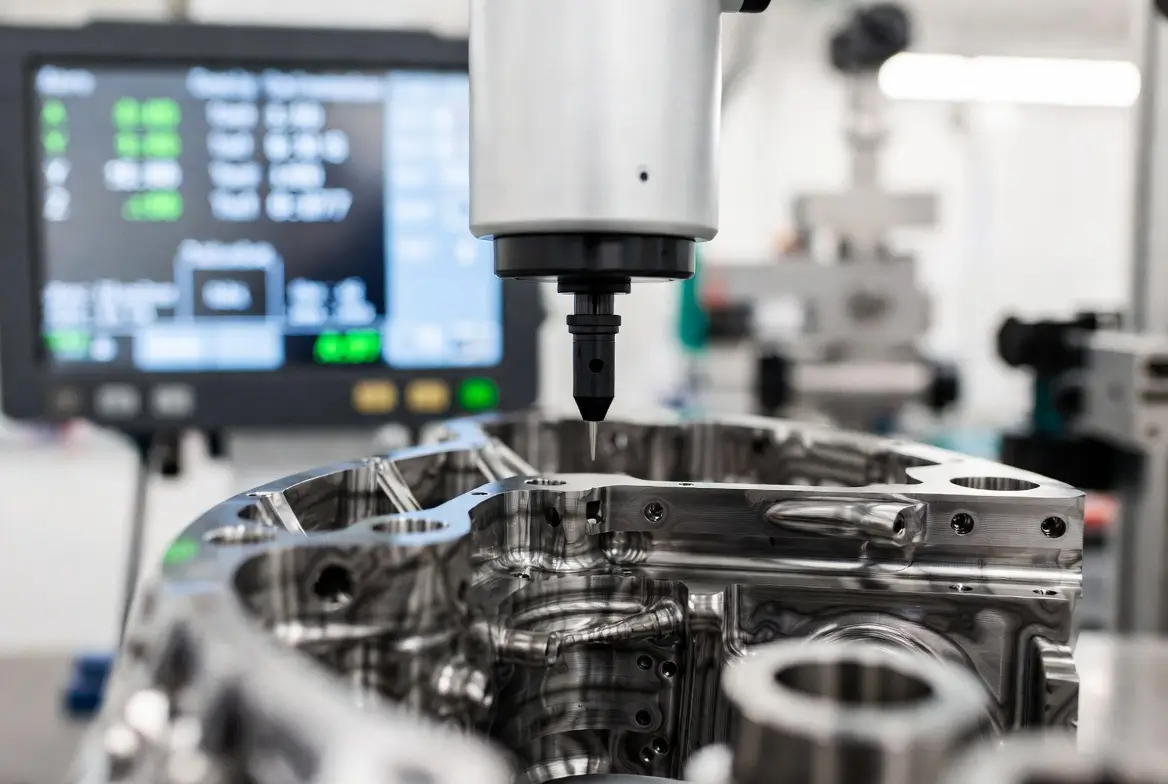
AI in Precision Engineering: Hitting Tight Tolerances
Precision means parts match the design exactly—often within microns.
AI helps by:
- Adjusting for heat, vibration, tool wear
- Checking quality live
- Optimizing every cut
Better Accuracy During Machining
AI reads sensors and tweaks them:
- Feed rates
- Spindle speeds
- Depths
Result: Smoother surfaces, tighter dimensions, less scrap.
Adaptive machining fixes issues like chatter instantly.
Smart Quality Checks
AI vision cameras inspect parts as they come off the machine.
- Spots defects fast
- Learns from examples
- Triggers fixes or stops bad runs
In 2026, this is key for aerospace and medical parts.
Tools Helping Precision
- Real-time adaptive controls (many new CNCs)
- AI in Mastercam/Siemens for path tweaks
- Vision systems for final checks
AI makes precision repeatable, even on hard materials or complex shapes.
Real Benefits and Easy Wins
Top Gains from AI in CNC
- Save time: Programming 30-50% faster
- Cut costs: Less waste, maintenance, downtime
- Improve quality: Fewer bad parts
- Scale up: Handle more jobs with same staff
Small shops start simple: One AI CAM plugin or sensor kit gives quick ROI.
Challenges:
- Learning curve (but tools are user-friendly now)
- Upfront cost (many pay back in months)
Start small, see results, then expand.
Real Examples from 2026
- A precision shop used AI spindle monitoring → Caught overheating early → Saved $12,000 in scrap in one month.
- Factories with AI CAM → Cut programming time in half → Took on more jobs.
- Big players like Mazak and Siemens → Embed AI in controllers → Run adaptive, high-precision jobs lights-out.
These show AI works in real shops today.
FAQs: Quick Answers on AI in CNC
1. What are main AI uses in CNC manufacturing?
Predictive maintenance, toolpath optimization, real-time adjustments, and quality checks.
2. How does AI improve automation?
Automates programming, predicts issues, runs robots, enables non-stop production.
3. Can AI help with spindle problems?
Yes — monitors health, predicts failure, and adjusts speeds to prevent damage.
4. Does AI make CNC parts more precise?
Yes—real-time tweaks fix vibration/heat, and vision checks catch defects early.
5. Will AI replace machinists?
No — it handles routine work so people focus on setup, complex jobs, and decisions.
6. Is AI hard for small shops?
Not anymore — plug-and-play sensors and cloud tools make it affordable and simple.
7. What’s next for AI in CNC?
More edge AI (fast on-machine decisions), deeper robot integration, and energy-saving optimizations.
Final Thoughts
AI applications in CNC manufacturing and automation are here in 2026. Focus on automation for speed, spindles for reliability, and precision for quality—these deliver the biggest wins.
Start with one area: Try an AI CAM tool or add spindle sensors. You’ll see faster work, fewer stops, and better parts.
The future is smart machines helping smart people. Embrace AI to stay competitive and grow your shop.

Ryan Wang
Ryan Wang is the CNC Machining Expert at Cncpioneer, with over 15 years of hands-on experience as a CNC programmer, process engineer, senior machinist, and precision manufacturing specialist. He has helped companies in aerospace, automotive, medical, and electronics sectors achieve micron-level tolerances and scale from prototypes to high-volume production. Ryan is also an experienced instructor in advanced CNC techniques, particularly five-axis machining and challenging materials.