In the 2026 precision manufacturing ecosystem, CNC turned parts remain the absolute core solution for producing high-precision rotationally symmetric components. This growth is fueled by AI programming automation, digital twin simulation, widespread adoption of 5-axis Mill-Turn composite machines, Swiss-type ultra-precision lathes capable of tolerances as tight as ±0.0001 inches (±0.0025mm), sustainable lightweight materials such as high-strength titanium alloys and PEEK composites, and the global reshoring boom. Demand for CNC turned parts is surging 15–20% annually across electric vehicles (EV), aerospace, medical implants, oil & gas, and consumer electronics, with automotive/EV holding a dominant share and medical devices growing fastest. [1]
This complete, ultra-detailed guide delivers DFM best practices, tolerance standards (ISO 2768, ASME Y14.5), real-world case studies with quantifiable savings, and answers to every high-frequency question. Whether you’re a CNC shop owner scaling production, a product designer optimizing prototypes, a procurement engineer sourcing high-volume parts, or an OEM building next-gen products, you’ll discover exactly which parts are ideal for CNC turning, how to design for 30–70% cost savings, how to specify tolerances correctly without inflating budgets, and why CNC turned parts consistently outperform milling or casting in most real-world scenarios. By the end, you’ll have a full end-to-end playbook to move seamlessly from reading → free DFM analysis → instant quoting → profitable bulk production.
What Are CNC Turned Parts? In-Depth Process Breakdown
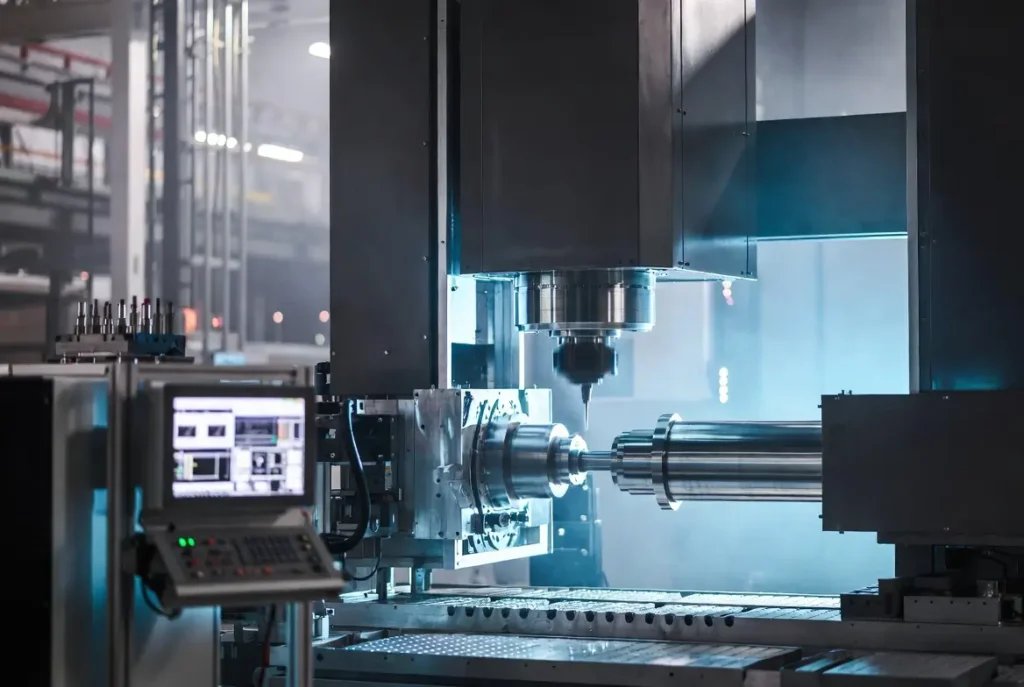
CNC turned parts are manufactured through a highly efficient subtractive process where the workpiece spins at high speed while cutting tools precisely remove material. Bar stock or preformed blanks are securely clamped in the spindle and rotated at thousands of RPM. Single-point carbide, ceramic, or diamond-coated tools feed along the X/Z axes (or with full C-axis live tooling linkage) to create perfect cylinders, tapers, external/internal threads, grooves, spheres, chamfers, and complex contours.
Unlike manual lathes from decades past, modern CNC turning delivers repeatability of ±0.005mm or better and scales effortlessly from single-piece prototypes to 100,000+ piece production runs. In 2026, the equipment landscape has evolved dramatically:
- Traditional CNC lathes now integrate drilling, tapping, boring, knurling, and even light milling in a single setup, eliminating secondary operations and reducing handling errors by up to 60%.
- Swiss-type sliding-headstock lathes are the go-to for ultra-slender parts under 20–32mm diameter. The guide bushing supports the bar stock right at the cutting zone, delivering 300% better vibration resistance and enabling L/D ratios of 20:1 or higher without deflection.
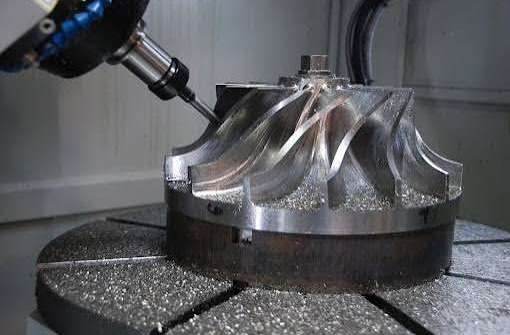
- 5-axis Mill-Turn composite centers represent the pinnacle of integration—combining turning, milling, laser marking, grinding, and even additive features in one machine. Setup errors drop by 80%, and complex parts that once required 5–8 separate operations are now completed in a single clamping.
- AI-assisted programming and digital twins automatically optimize toolpaths, predict chatter in real time, simulate entire cycles virtually, and adjust parameters on-the-fly—cutting programming time by 70% and achieving near-zero scrap rates.
Key 2026 trends shaping CNC turned parts production include digital twins for zero-scrap virtual validation, Minimum Quantity Lubrication (MQL) for greener and more sustainable machining, and fully automated “lights-out” factories running 24/7 with robotic loading. The core process advantage remains unmatched: cylindrical features on CNC turned parts are machined 3–5× faster than equivalent milling operations, with material utilization rates routinely exceeding 85%. This makes them the undisputed optimal choice for any rotationally symmetric design.
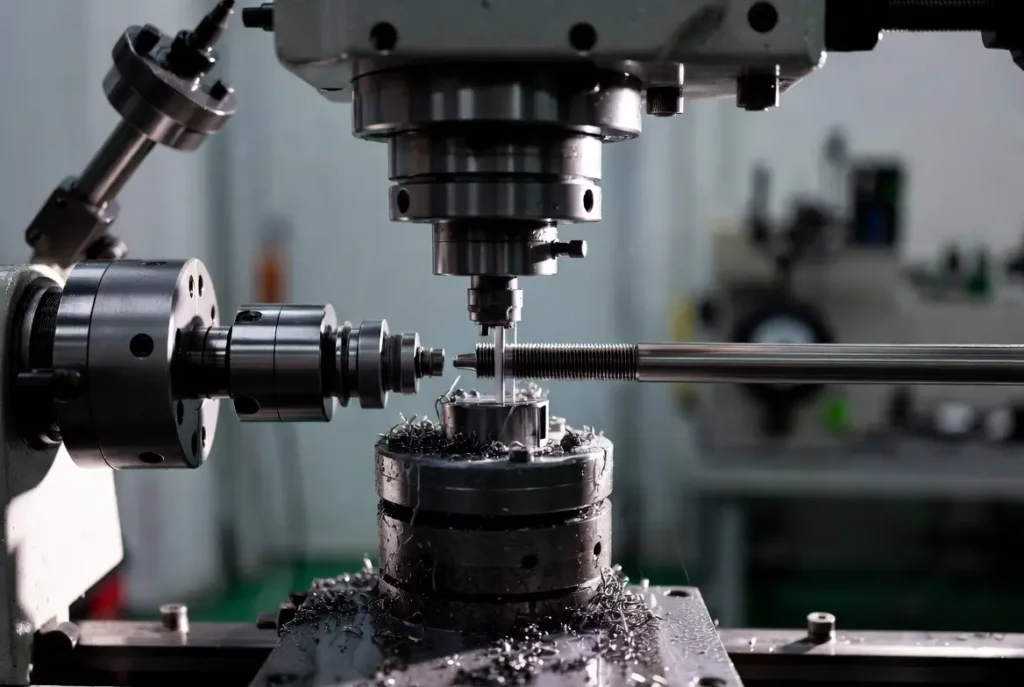
CNC Turned Parts Capabilities & Manufacturing
2026 has pushed CNC turned parts capabilities into the micron-level precision era with full composite integration. Here’s what’s realistically achievable today:
Precision & Tolerances (2026 Verified Data)
- Standard CNC lathes: ±0.005 in (±0.127mm)
- Precision setups with optimized fixturing: ±0.001 in (±0.025mm)
- Swiss-type machines: ±0.0001–0.0005 in (±0.0025–0.0127mm), with concentricity under 0.002mm and roundness often below 0.001mm
- Hard turning (replacing traditional grinding on hardened materials): surface finishes of Ra 0.4–0.8 μm consistently
Size Range
- Diameter: From micro 0.5mm medical needles and pins up to 800mm+ large industrial shafts and rollers
- Length: Primarily governed by the length-to-diameter (L/D) ratio—recommended ≤4:1 for standard machines; Swiss guide bushings or tailstock support easily handle 10:1 to 20:1 ratios without vibration issues
Advanced Mill-Turn Capabilities
- Live tooling for side keyways, hex flats, flats, cross-drilling, polygon turning, and full 3D contour milling — all in one setup
- Full threading (internal/external, metric, unified, acme), tapers, deep internal bores, knurling, and integrated laser engraving for traceability
- Surface roughness: Standard “as-turned” Ra 3.2–6.3 μm; optimized processes reach Ra 0.4 μm or better with minimal additional cost
Service Models Tailored to Your Needs
- Prototypes & validation: 1–3 days’ turnaround with digital twin verification
- Small batches (5–500 pcs): Fully automated robotic lines for consistent quality
- Medium-to-high volume (500–100,000+ pcs): Swiss multi-spindle and multi-axis setups drive unit prices down to 50% of traditional methods
- Certified & specialized: Medical-grade sterile packaging and cleaning, AS9100 aerospace certification, ITAR compliance, and full traceability from raw bar to finished part
Compared to pure milling, CNC turned parts deliver faster cycle times, lower per-part costs, and superior surface consistency on round features—making them the high-frequency inquiry winner for procurement teams worldwide.
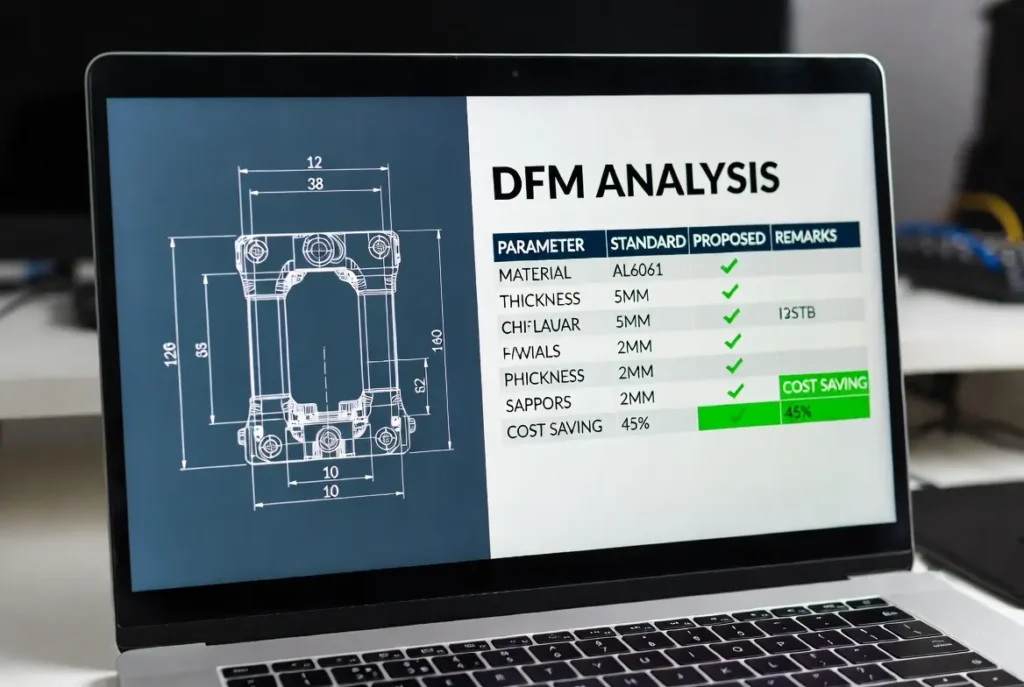
Why Choose CNC Turned Parts? Advantages, Data-Backed Comparisons
CNC turned parts continue to dominate in 2026 because they deliver unmatched precision, speed, and economics for the right geometries. Here are the proven advantages:
- Superior Precision on Cylindrical & Symmetric Features — Concentricity, roundness, and parallelism are consistently held within 0.005mm or better. Swiss machines routinely hit ±2–5μm, making them ideal for bearing housings, sealing surfaces, medical implants, and EV motor shafts where even micron-level variation causes failure.
- Extremely Fast Turnaround Times — Continuous rotary cutting is 3–5× more efficient than multi-axis milling. Prototypes ship in 1–3 days; production batches in 7–14 days. Lights-out automation compresses urgent orders to same-day or next-day delivery.
- Best-in-Class Cost Efficiency & Scalability — Material utilization exceeds 85%, tool life is significantly longer than milling, and medium-to-high volumes are 40–60% cheaper than milled equivalents. AI optimization in 2026 adds another 15–25% savings through predictive parameter adjustment.
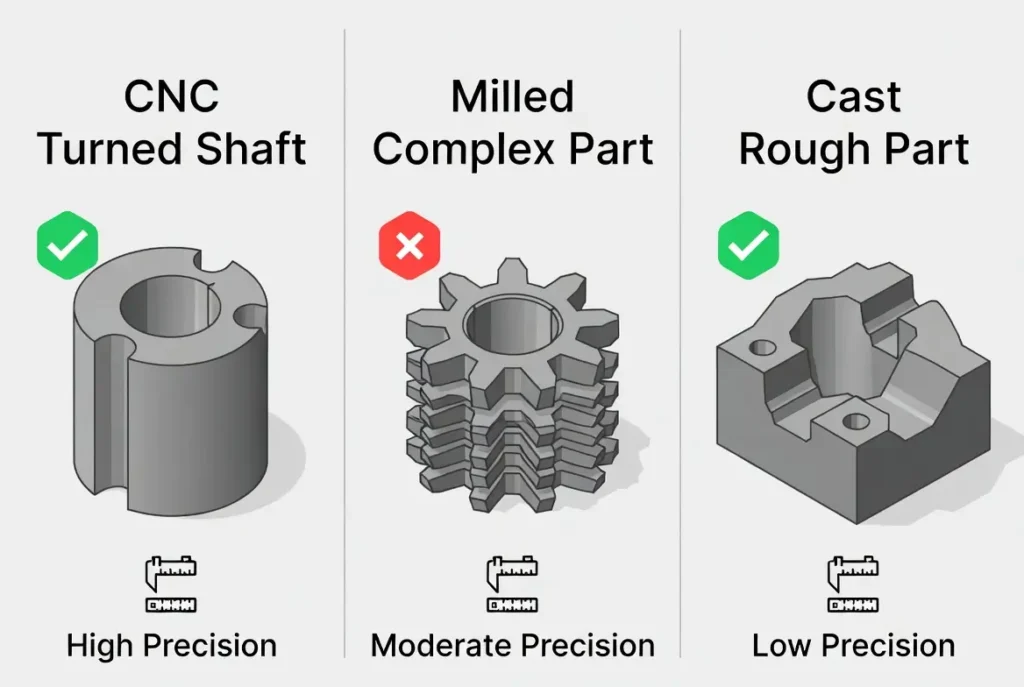
Comprehensive 2026 Comparison: CNC Turning vs CNC Milling vs Casting
| Dimension | CNC Turned Parts | CNC Milling | Casting | Best Choice Scenario |
|---|---|---|---|---|
| Geometry | Rotationally symmetric (shafts, sleeves, valves, pins) | Complex 3D, multi-plane, freeform | Simple shapes in ultra-high volume | Any primarily round or symmetric part → Turning |
| Achievable Precision | ±0.0025–0.127 mm (Swiss: ±0.0025mm) | ±0.05–0.2mm | ±0.5mm+ (post-machining needed) | Precision-critical → Swiss or Mill-Turn |
| Lead Time (Prototype) | 1–3 days | 3–7 days | 4–12 weeks (mold creation) | Rush or iterative designs → Turning |
| Cost at Medium Volume (100–10k pcs) | Lowest | Medium | Only lowest at 50k+ volumes | 100–10,000 pcs sweet spot → Turning |
| Material Waste & Utilization | Lowest (85%+ yield) | Medium | Highest (gates, risers, porosity) | Expensive alloys (titanium, Inconel) → Turning |
| Surface Finish Consistency | Excellent on cylinders | Good but directional | Variable, often requires secondary ops | Functional sealing or bearing surfaces → Turning |
Real-World EV Motor Manufacturer Case Study One leading EV motor supplier replaced traditional separate turning + milling with a single 5-axis Mill-Turn cell for rotor shafts. Setups dropped from 5 to 1, precision improved 2× (from ±0.05mm to ±0.01mm), cycle time fell 45%, and total part cost dropped 35% while maintaining full AS9100 traceability.
What Kinds of Parts Are Made with CNC Turning? 2026 Applications & Emerging Uses
CNC turned parts excel at any rotationally symmetric component. Here are the most common and fastest-growing categories in 2026:
Core High-Volume Categories
- Shafts, spindles, drive rods, and motor axles (EV, robotics, industrial automation)
- Pins, bolts, fasteners, and precision dowels
- Bushings, bearing sleeves, seal rings, and wear components
- Valve bodies, pipe fittings, nozzles, pump impellers, and fluid control parts
- Medical implants (bone screws, dental abutments), surgical tool handles, and micro instruments
- Aerospace fittings, landing gear bushings, turbine blade roots, and actuator components
- Consumer electronics knobs, pen refill tubes, eyeglass hinges, and connector shells
Swiss Screw Machine Specialty High-volume micro parts such as electronic connectors, medical microtubes, and watch components—single machines produce tens of thousands of pieces per day with sub-micron consistency.
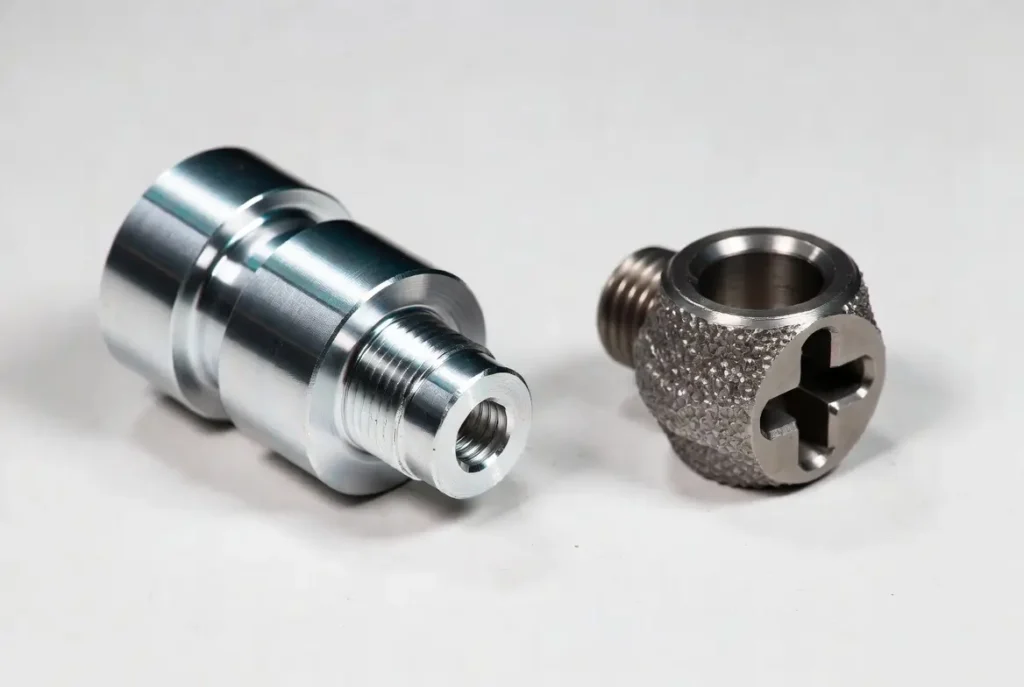
2026 Emerging Hot Applications
- EV battery interfaces and cooling channels in lightweight titanium
- Aerospace high-temperature alloy hard-turned turbine roots
- 5G/6G base station precision brass waveguides with integrated knurling
- Medical PEEK composite spinal implants and surgical robotics components
CNC Turned Parts Design Guidelines (DFM That Delivers 30–70% Cost Savings)
Excellent design is the single biggest lever for cost and quality. 70–80% of final manufacturing cost is locked in at the design stage. Follow these 2026-updated DFM principles:
- Add Realistic Stock Allowances — Bar stock carries ±0.1–0.2mm tolerance. Design with 0.5–1mm machining allowance and prioritize standard bar diameters (e.g., 12mm, 25mm, 50mm). This alone saves 15–30% on raw material costs and avoids secondary setups.
- Incorporate Proper Corner Radii—Minimum 0.2–0.5mm on internal corners to match standard tool nose radii. Sharp corners cause vibration and tool breakage. Apply the 6× rule: tool length should not exceed 6× diameter without larger radii or special support.
- Maintain Safe Length-to-Diameter Ratios — Keep ≤4:1 for standard machines. For longer parts, specify Swiss guide bushings or tailstock support. 2026 AI simulation software can predict and prevent chatter before the first cut.
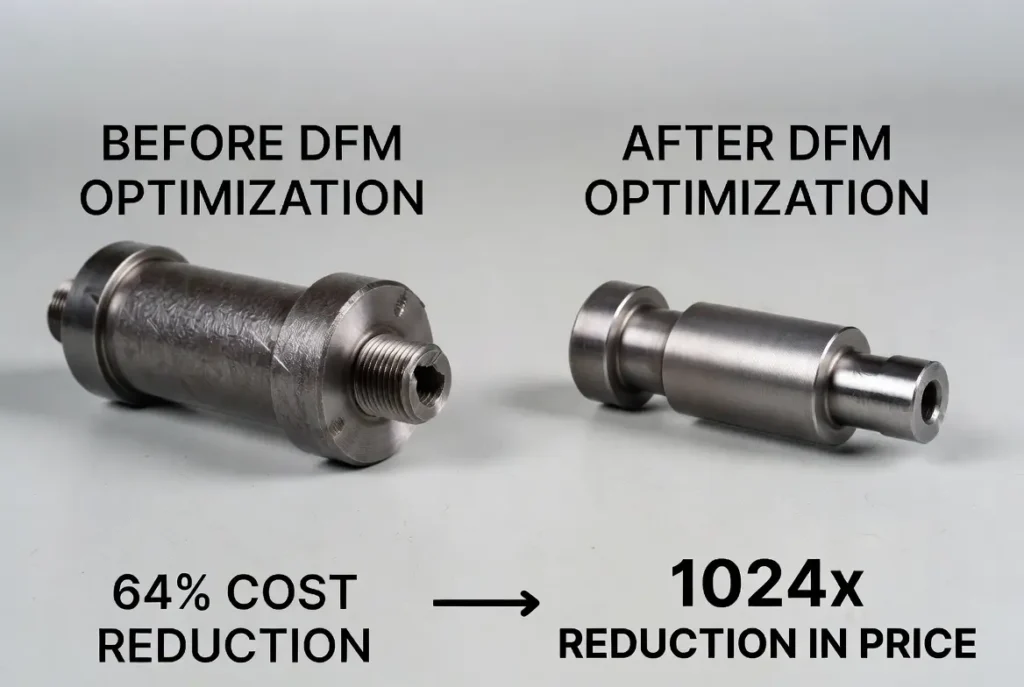
- Apply Tolerances Strategically — Use ISO 2768-m (medium) or ±0.005 in as default for non-critical features—this can save 40% versus blanket tight tolerances. Reserve ±0.001 in or tighter only for true Critical-to-Quality (CTQ) mating surfaces. [2]
- Design for Manufacturability—Uniform wall thickness to reduce distortion, standard thread sizes, generous tool access, and always note “As-Stock Surface OK” on non-functional external surfaces.
- GD&T Over Coordinate Tolerances—Geometric Dimensioning & Tolerancing provides more flexibility and often reduces cost while maintaining function.
2026 Tolerance Reference Table (Realistic Achievability)
| Process Type | Standard Tolerance | Precision Tolerance | Typical Applications | Cost Impact of Tightening |
|---|---|---|---|---|
| Standard CNC Turning | ±0.127mm | ±0.025mm | General shafts, sleeves, fittings | +20–30% |
| Swiss-Type | ±0.0127 mm | ±0.0025mm | Medical micro parts, electronics pins | +40–60% |
| 5-Axis Mill-Turn | ±0.05mm | ±0.01mm | Complex valves, EV motor components | +25–45% |
Common Expensive Design Mistakes & How to Avoid Them
- Mistake #1: Applying ±0.001″ everywhere → cost explosion of 80%+. Solution: CTQ-only tight tolerances + ISO 2768 defaults.
- Mistake #2: Ignoring material-specific behavior (e.g., thin walls in titanium) → 40% scrap rates. Solution: Early DFM review with material experts.
- Real Case: A medical device company reduced unit cost from $18 to $6.50 (64% savings) by relaxing noncritical tolerances and standardizing features—performance remained identical.
6+ Proven DFM Tips for 30–75% Cost Reduction in 2026
- Add stock allowances and use standard diameters
- Specify “As-Stock Surface OK” on non-functional areas (saves up to 75% machining time)
- Allow flexible center-drill marking for long shafts
- Match corner radii to standard tools
- Avoid over-specifying Ra (the 3.2 μm standard is sufficient for 80% of applications)
- Keep L/D ≤4× or clearly call out support requirements
- Bonus 2026 Tip: Use AI DFM software or supplier review before release—one medical orthopedic case achieved a 45% cost cut and 40% faster machining simply by reducing stepped diameters from 5 to 3.
Materials for CNC Turned Parts
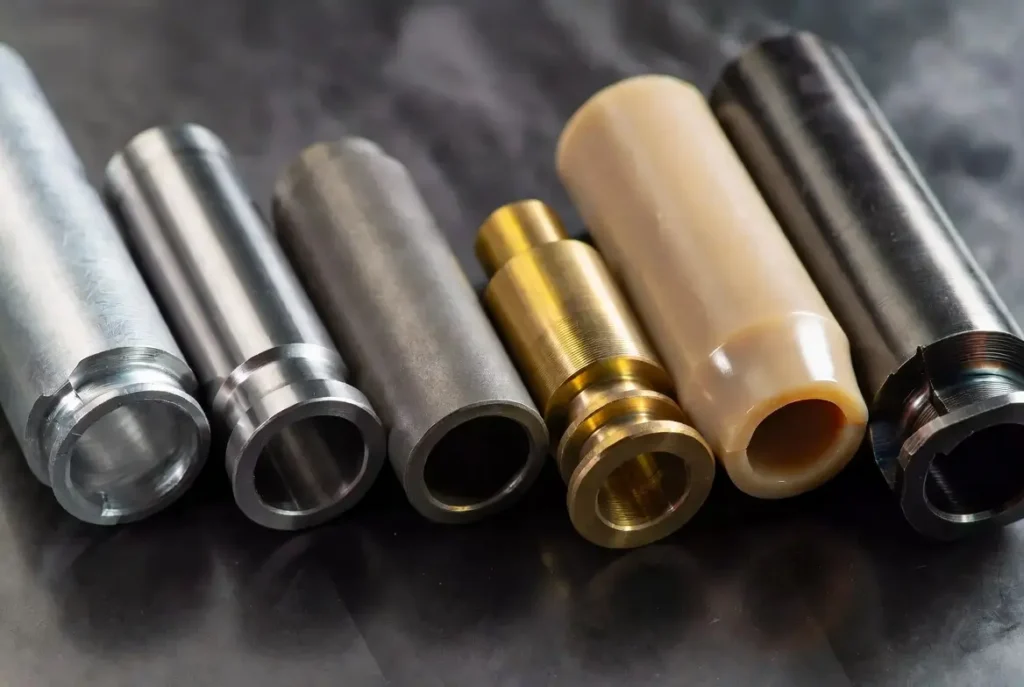
Material choice directly impacts machinability, strength-to-weight ratio, corrosion resistance, cost, and regulatory compliance. Here is the most comprehensive 2026 comparison:
| Material | Machinability | Strength/Weight Ratio | Cost Index | Best Applications | 2026 Market Trend & Notes |
|---|---|---|---|---|---|
| Aluminum 6061/7075 | Excellent | Medium | 1.0 | EV motor shafts, battery interfaces | Dominant lightweight leader; 40% order growth |
| Stainless Steel 304/316 | Good | High | 2.5 | Medical implants, food-grade valves | Corrosion upgrade; medical CAGR 7%+ |
| Titanium Ti-6Al-4V | Fair | Extremely High | 4.0 | Aerospace fittings, EV high-stress parts | Demand surging +35%; hard turning common |
| Brass C360 | Excellent | Medium | 1.2 | Electronics connectors, waveguides | High-volume micro parts; excellent conductivity |
| PEEK & High-Performance Plastics | Good | High | 5.0 | Medical & high-temp components | Composites mainstream; biocompatible surge |
| Carbon/Alloy Steel | Good | High | 1.5 | Industrial shafts, heavy-duty fasteners | Economical high-strength option |
Industries Driving CNC Turned Parts
In 2026, several high-growth industries are driving unprecedented demand for CNC turned parts. The global shift toward electrification, lightweighting, miniaturization, stricter regulatory requirements, and reshoring initiatives has created strong tailwinds. According to recent market analyses, the automotive and EV sector still holds the largest share (approximately 32–37.5%), while medical devices are experiencing the fastest growth (CAGR 7–9%). Aerospace follows closely with around 20% market share due to its extreme precision needs. [3]
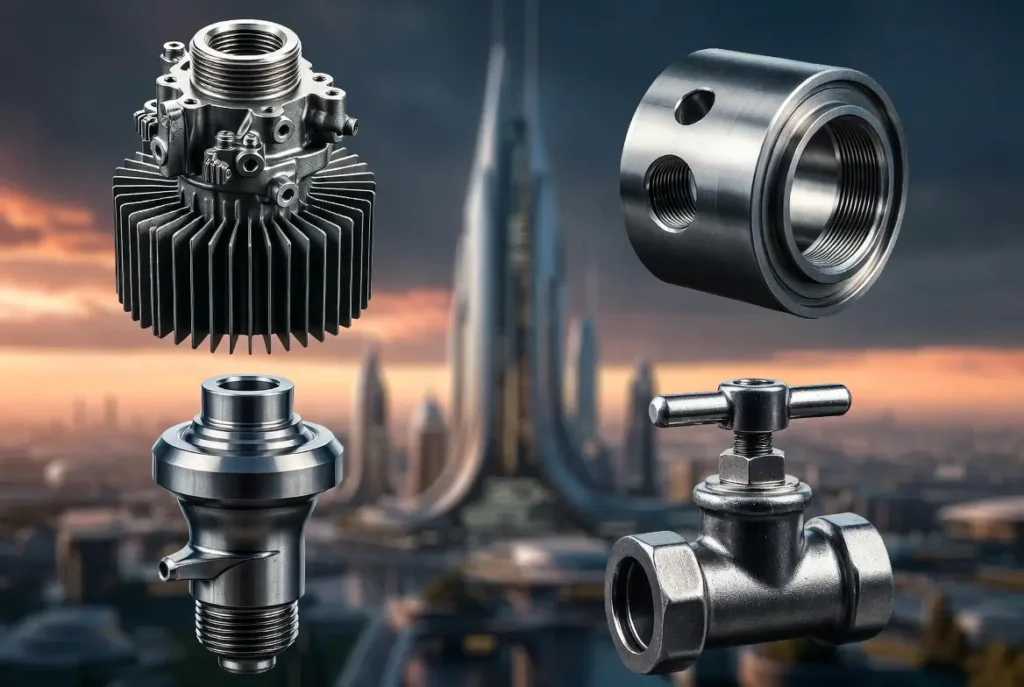
Here are the primary industries fueling this expansion, along with key applications and 2026 trends:
Electric Vehicles & Automotive
The rapid adoption of electric vehicles has become the single largest driver for CNC turned parts. Critical components include motor shafts, rotor shafts, stator housings, battery thermal management interfaces, e-axle assemblies, and precision fasteners. With the automotive sector commanding 32–37% of the precision turning market, EV-related orders are growing at 35–40% year-over-year. CNC turned parts are preferred here for their exceptional concentricity, high material utilization (85%+), and ability to machine lightweight aluminum 6061 and titanium alloys efficiently. Many leading EV manufacturers have adopted 5-axis Mill-Turn centers, reducing setups from multiple operations to single clamping and cutting costs by 30–35%. [4]
Aerospace & Defense
Aerospace and defense demand the highest levels of precision, reliability, and material performance. Key-turned components include landing gear bushings, turbine blade roots, actuator shafts, hydraulic fittings, and high-strength fasteners. Hard turning of nickel-based superalloys and titanium is increasingly replacing traditional grinding. With stringent AS9100 certification and safety-critical applications, Swiss and Mill-Turn machines dominate production. The sector is growing steadily at 15–18% annually, driven by new commercial aircraft programs and defense modernization. [5]
Medical & Healthcare
The medical device industry is one of the fastest-growing segments for CNC turned parts, fueled by an aging population and demand for minimally invasive technologies. Typical parts include bone screws, dental implants, surgical tool handles, spinal components, and microinstruments. Swiss-type lathes are particularly dominant due to their ability to achieve ±0.0025mm tolerances on tiny, high-precision components using biocompatible materials like titanium and PEEK. Growth in this sector is projected at a 7–9% CAGR, with strong emphasis on traceability, sterile processing, and ISO 13485 compliance. [3]
Oil & Gas
The oil and gas industry requires robust, corrosion-resistant CNC turned parts capable of withstanding extreme pressure and temperature. Common applications include high-pressure valve bodies, downhole tool components, pump shafts, nozzles, and sealing bushings. Materials such as stainless steel 316, duplex alloys, and Inconel are frequently used. Although the sector is mature, demand for replacement parts and new exploration projects continues to drive steady orders, particularly for components that benefit from the superior surface finish and dimensional stability of CNC turning.
Consumer Electronics & 5G/6G Infrastructure
Miniaturization and high-volume production make this sector ideal for Swiss screw machines. Key parts include precision connectors, waveguide components, knobs, hinges, and RF shielding elements, often produced in brass or aluminum. The rollout of 5G and upcoming 6G networks has significantly increased demand for high-tolerance turned parts. This segment excels in high-volume, cost-sensitive production where CNC turning delivers both speed and consistency.
Robotics & Industrial Automation (Emerging Hotspot)
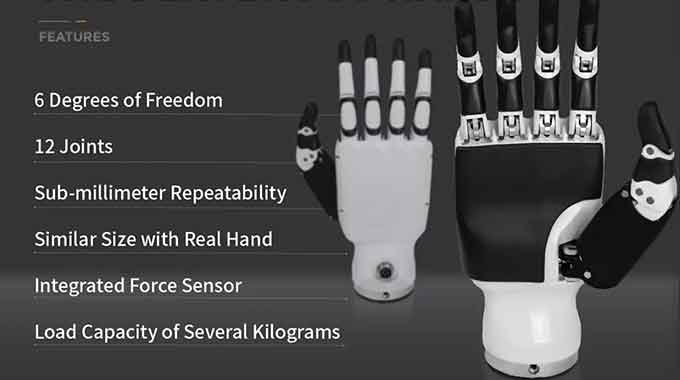
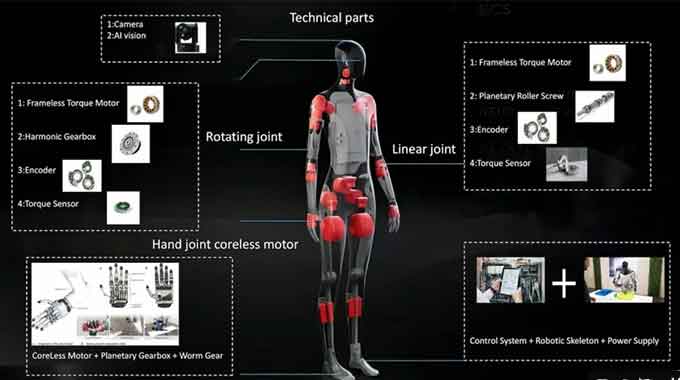
A rapidly rising sector in 2026 is robotics and industrial automation. CNC turned parts are widely used for robot joint shafts, harmonic drive components, actuator housings, and precision spindles. The push for smarter factories and collaborative robots (cobots) is accelerating demand for lightweight, high-repeatability parts. This segment is seeing double-digit growth as automation adoption spreads across manufacturing. [6]
Boeing Supplier Landmark Case A major aerospace supplier transitioned landing gear bushings to 5-axis Mill-Turn CNC turned parts. The results were impressive: cycle time dropped by 60%, consistent precision reached ±0.005mm, and overall program costs fell more than 30% while fully meeting stringent AS9100 and fatigue testing requirements.
Surface Finish Options for CNC Turned Parts – From Standard to Advanced
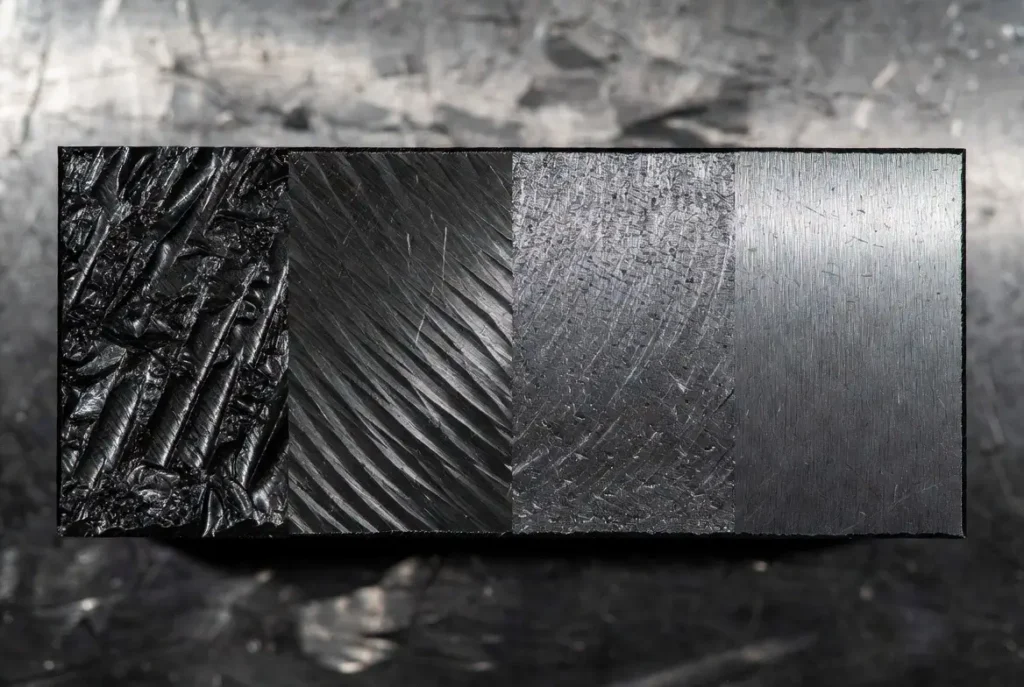
Standard “as-turned” finish of Ra 3.2–6.3 μm satisfies 80% of functional requirements. When tighter finishes or special properties are needed:
Ra Value Quick Reference
- Ra 6.3μm → Roughing / non-visible areas
- Ra 3.2μm → Standard production turning
- Ra 1.6μm → Fine finish
- Ra 0.8μm and below → Polished or ground (adds 20–50% cost per level)
Full Range of Post-Processing Options
- Mechanical: Polishing, vibratory finishing, sandblasting, knurling
- Electrochemical: Passivation (stainless), anodizing (aluminum with color options)
- Plating & Coatings: Hard chrome, electroless nickel, PVD/CVD for extreme wear resistance
- Advanced: Laser texturing for grip or branding, electropolishing for medical cleanliness
Pro Tip: Always tie surface finish requirements to actual function—over-specifying Ra is one of the fastest ways to inflate costs by 50%+.
Common Challenges in CNC Turned Parts Production in 2026 & Proven Solutions
- Challenge: Chatter on long/slender parts → Solution: Swiss machines or AI predictive damping
- Challenge: Material waste on expensive alloys → Solution: Near-net stock selection + DFM review
- Challenge: Supply chain delays → Solution: Reshoring partners with lights-out automation
How to Choose the Right CNC Turning Supplier in 2026
Look for ISO 9001/AS9100 certification, in-house Swiss and Mill-Turn capacity, digital twin simulation capability, and transparent DFM feedback within 24 hours. Request references from your exact industry and compare quotes side-by-side with tolerance and material details.
FAQs – CNC Turned Parts
Q1: What is the tightest tolerance achievable with CNC turned parts?
A: Swiss-type lathes routinely deliver ±0.0001 in (±0.0025mm) with proper setup.
Q2: When is CNC turning better than milling?
A: Whenever the part is primarily cylindrical or rotationally symmetric, turning is faster, cheaper, and more precise on those features.
Q3: How much can professional DFM really save on CNC turned parts?
A: 30–70% is common; documented cases show 45% average reduction through tolerance optimization and feature simplification.
Q4: Which materials are best for lightweight EV applications?
A: Aluminum 6061 for cost-effectiveness and Ti-6Al-4V for the highest strength-to-weight.
Q5: Can hard turning fully replace grinding?
A: Yes—modern hard turning achieves Ra 0.4–0.8 μm on hardened steels with 50% lower cost.
Q6: What is the practical maximum L/D ratio?
A: 4:1 standard; up to 20:1 with Swiss guide bushings.
Q7: How quickly can prototypes be delivered?
A: 1–3 days from most advanced shops with digital twin validation.
Q8: Do premium suppliers offer full certification?
A: Yes — AS9100, ISO 13485, ITAR, and sterile medical packaging are standard.
Q9: What is the standard surface finish for turned parts?
A: Ra 3.2μm “as-turned” meets most functional and aesthetic needs.
Q10: How do I get a free DFM report?
A: Simply upload your CAD file — most manufacturers return detailed feedback and cost-optimized suggestions within hours.
Q11: Are 5-axis Mill-Turn machines worth the investment?
A: For complex parts, yes — one setup replaces multiple operations and cuts costs 30–50%.
Q12: Which industries are seeing the fastest growth for CNC turned parts?
A: EV (40%), aerospace, and medical (7%+ CAGR).
Q13: How does AI change CNC turning in 2026?
A: Real-time toolpath optimization, vibration prediction, and 70% faster programming.
Q14: Can plastics be turned as effectively as metals?
A: Absolutely—PEEK, Delrin, and Nylon turn beautifully with specialized tooling.
Q15: What is the biggest cost driver to watch in 2026?
A: Overly tight tolerances and non-standard features — a single DFM review usually eliminates both.
Conclusion
CNC turned parts have fully entered the AI + Mill-Turn + sustainability era. With the market expanding rapidly and technology delivering unprecedented precision and efficiency, the companies that master DFM and partner with forward-thinking suppliers will gain decisive competitive advantage.
Immediate Next Steps
- Upload your CAD drawings today for a free, no-obligation DFM report including tolerance optimization and projected 30–70% cost savings.
- Request side-by-side Swiss vs. Mill-Turn quotes with full material and lead-time comparisons.
- Prioritize lightweight materials and automated production lines to lock in 2026 pricing and capacity.
Need CAD design templates, a custom cost calculator spreadsheet, industry-specific case PDFs, or a one-on-one video DFM consultation? Just leave a comment or reach out — our engineering team responds within 1 hour.
CNC turned parts — faster, stronger, cheaper, and smarter than ever. Let’s make your next project the most successful and profitable one yet.
Ready to optimize your design and start production in 2026? Upload your files now and watch the savings begin immediately.
References
[1] Mordor Intelligence. (2026). CNC Machines Market – Growth, Trends, COVID-19 Impact, and Forecasts (2026–2031). Retrieved from https://www.mordorintelligence.com/industry-reports/cnc-machines-market
[2] American Society of Mechanical Engineers. (2018). ASME Y14.5-2018 Dimensioning and Tolerancing. Retrieved from https://www.asme.org/products/codes-standards/y145-2018-dimensioning-and-tolerancing
[3] Precedence Research. (2026). Precision Turned Product Manufacturing Market Size, Share & Trends Analysis Report. Retrieved from https://www.precedenceresearch.com/precision-turned-product-manufacturing-market
[4] Grand View Research. (2026). Electric Vehicle Market Size, Share & Trends Analysis Report. Retrieved from https://www.grandviewresearch.com/industry-analysis/electric-vehicles-ev-market
[5] Fact.MR. (2026). Aerospace CNC Machining Market Outlook. Retrieved from https://www.factmr.com/report/aerospace-cnc-machining-market
[6] Society of Manufacturing Engineers (SME). (2026). Inflection Point: 2026 Marks a Transformative Era for Advanced Manufacturing. Retrieved from https://www.sme.org/sme-blog/posts/inflection-point-2026-marks-a-transformative-era/