Imagine holding something impossibly small in your hand—a screw so tiny it could fit on the tip of your finger, yet strong enough to anchor a bone in surgery.
Or picture a pin in a satellite, enduring the vacuum of space, keeping signals flowing without a hitch. These aren’t accidents of engineering. They’re the quiet miracles of Swiss machining. A process born from the hearts of 19th-century watchmakers in the Swiss Alps, who dreamed of perfection in every tick and tock. Over 150 years later, this craft has evolved into a symphony of technology and precision. It touches lives in ways we rarely see: healing bodies, powering flights, connecting worlds.
But how does it work? Why does it matter so deeply? In this complete guide, we’ll walk hand-in-hand through its story. From humble beginnings to cutting-edge innovations. We’ll dive deep into the mechanics, the magic, the challenges. And explore its broad reach across industries, materials, and futures. By the end, you’ll feel the heartbeat of Swiss machining—the care in every cut, the trust in every part. Let’s begin.
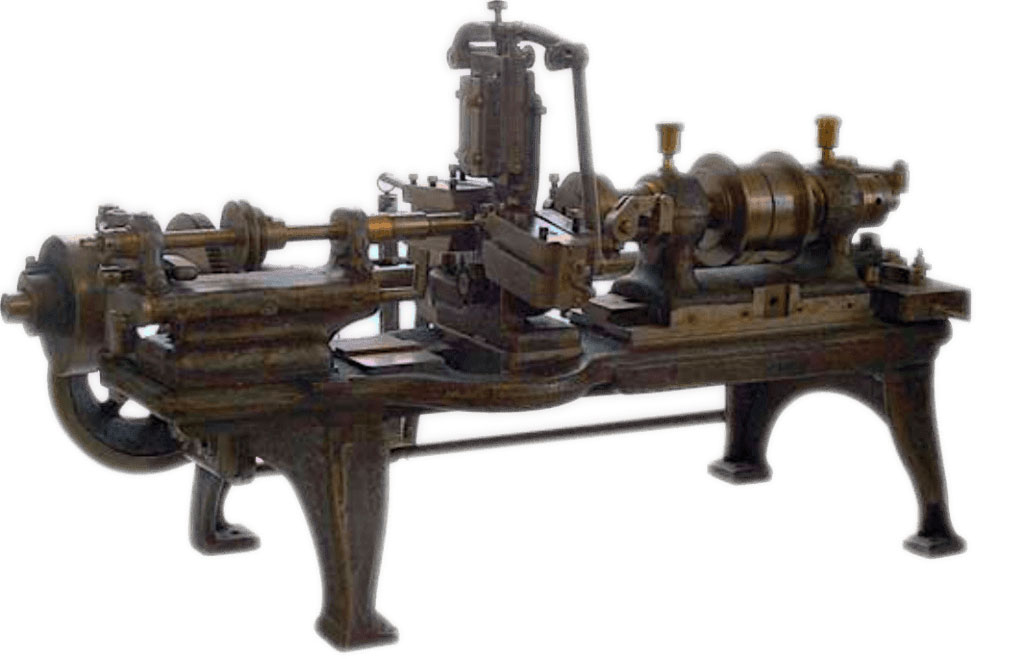
These vintage sketches capture the early Swiss lathes—simple tools that sparked a revolution.
What Exactly Is Swiss Machining?
Swiss machining is more than a technique. It’s a promise of precision. Also called Swiss turning or Swiss-style CNC machining, it’s a specialized process for crafting small, intricate parts with tolerances so tight they border on the impossible—often ±0.0001 inches, thinner than a strand of hair.
At its core, it’s subtractive manufacturing. You start with a bar of material. The machine shaves away the excess. But what sets it apart is the guide bushing—a supportive sleeve that holds the workpiece steady, right where the tools dance. No wobble. No bend. Just pure, unwavering accuracy.
Born for watch screws, it’s now the backbone of high-stakes industries. Think medical implants that save lives. Aerospace fittings that defy gravity. Electronics pins that power your daily scroll.
Modern Swiss machines are CNC wonders. They boast 7 to 13 axes. Live tooling for milling and drilling in one go. Sub-spindles that flip parts for backside magic. All automated, all precise. It’s not just making parts—it’s crafting reliability.
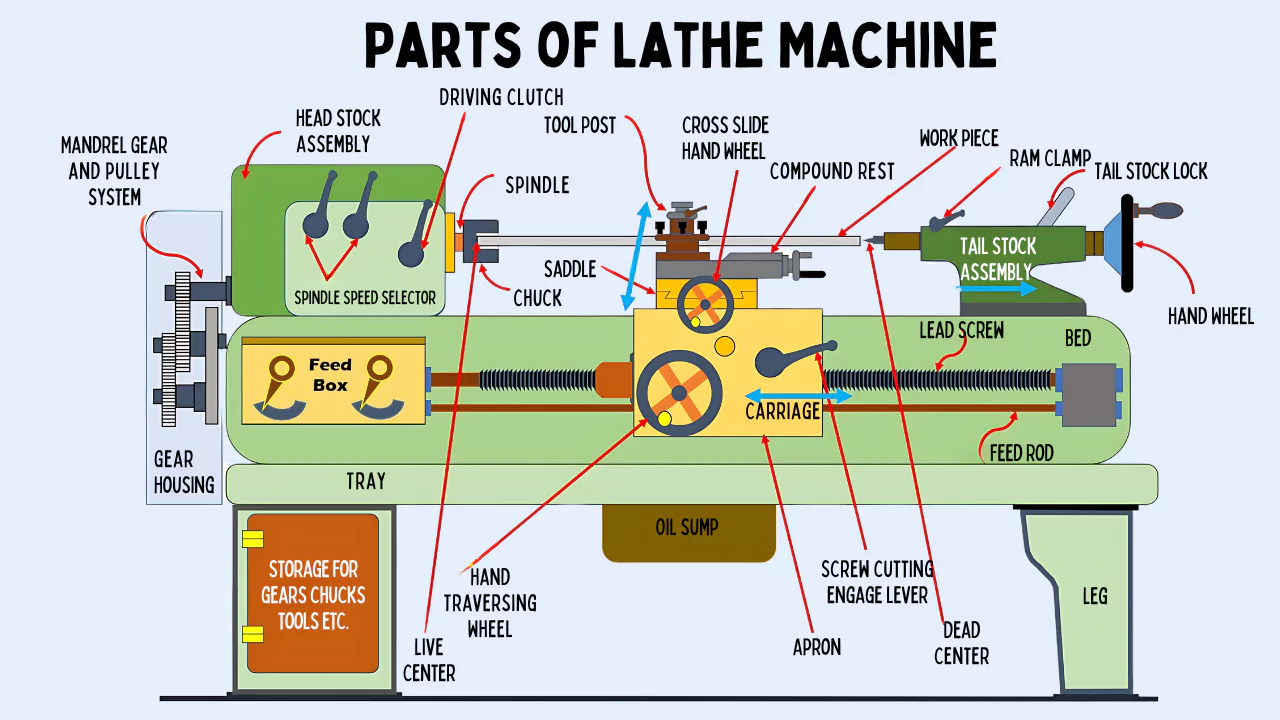
Here, diagrams show the guide bushing in action—the heart that keeps everything steady.
The Origins: A Tale of Ingenuity and Necessity
Let’s travel back to the 1870s. Switzerland’s valleys echoed with the tick of watches. Craftsmen hunched over benches, frustrated. Traditional lathes couldn’t handle tiny pins without them whipping like reeds in the wind.
Enter Jakob Schweizer (sometimes spelled Jacob Schweizer), a visionary watchmaker. He reimagined the lathe. Instead of moving tools around a fixed part, he slid the workpiece along its axis. Supported every step by a guide bushing.
This breakthrough? It turned Switzerland into the watch capital of the world. Brands like Rolex owe their precision to it. By the 1880s, machines were mass-produced. Spreading across Europe and beyond.
The 20th century brought wars and wonders. During World War II, Swiss machining fueled Allied efforts with precise components. In the 1960s, as medical and aerospace boomed, it found new homes. No longer just for watches—it tackled bone screws, hydraulic fittings.
The 1980s introduced CNC. Computers breathed life into cams and levers. Multi-axis control. Live tooling. Hybrid modes for even more versatility.
Today, in 2025, it’s evolving still. AI integration predicts tool wear. Industry 4.0 connects machines in smart factories. But the soul remains: a quest for flawless small things. A legacy of human care in mechanical form.
How Swiss Machining Works: The Step-by-Step Symphony
Picture a long bar of metal, waiting patiently. It’s fed from a bar feeder—automatic, endless supply. No human hands needed.
Step 1: The Bar Enters
The bar enters the guide bushing. This sleeve, ground to ±0.0002 inches, hugs it tight. Support right at the cut—0.020 to 0.080 inches away. No deflection, even for parts 20 times longer than wide.
Step 2: The Sliding Headstock Advances
The sliding headstock advances. It pushes the bar along the Z-axis, segment by segment. The main spindle spins it at up to 10,000 RPM. Tools stay fixed or move precisely.
Step 3: The Dance Begins
Multiple tools attack at once. One turns the diameter. Another drills a hole. A third mills a flat. Live tooling rotates for off-center work. Threading, grooving, tapping—all simultaneous. 7 to 13 axes make it possible.
Step 4: The Sub-Spindle Joins In
The sub-spindle grabs the part mid-process. Flips it. Machines the back side—drilling, tapping without re-chucking. No errors from repositioning.
Step 5: Cut-Off and Repeat
A blade severs the finished part. It drops into a bin. The bar advances. Repeat. Endless rhythm.
Coolant? Oil-based, for superior lubrication. It wicks heat away, extends tool life.
Surface finishes? Ra 0.2 μm or better. Mirror-like.
Programming via CAM software like Mastercam. G-code and M-code orchestrate it all.
The result: parts in seconds, not hours. Up to 30 per hour for complex ones. Efficiency with heart.
These visuals unfold the process—like a ballet of metal and motion.
Why Swiss Machining Touches the Heart: Deep Dive into Advantages
Swiss machining isn’t cold efficiency. It’s warmth in precision. Here’s why it resonates so deeply.
- Unmatched Accuracy: Tolerances to ±0.0001 inches. Concentricity within microns. For parts with thin walls, deep cuts, intricate features—it’s a savior. No chatter. No gouging. Just perfection.
- Speed with Soul: Simultaneous operations slash cycle times by 50-70%. High-volume runs? Thousands of parts per shift, defect-free. A medical manufacturer once produced 10,000 bone screws in a day—each one life-saving.
- Versatility for the Delicate: Handles aspect ratios up to 20:1 or more. Long, slender shafts that would warp elsewhere? Steady as rock. Combines turning, milling, drilling in one setup. Fewer secondary processes. Less handling. More integrity.
- Material Respect: Minimal waste—under 10%. Better than traditional methods’ 30%+. Sustainability in every shaving.
- Repeatability: CNC control ensures every part matches the first. No human variance. Just consistent care.
- Superior Surface Finishes: Ra 0.4 μm or better. Often no polishing needed. Feels as good as it performs.
- Cost Savings Over Time: High initial investment? Yes. But for volumes over 1,000, per-part costs plummet. Extended tool life. Reduced downtime.
In industries where failure isn’t an option—like aerospace or medical—Swiss machining builds trust. It’s the quiet guardian behind innovations.
The Honest Challenges: Disadvantages and Trade-Offs
Swiss machining demands commitment. These aren’t flaws—they’re reminders that it’s a tool for when precision matters most.
- Size Limits: Bar stock typically 0.030 to 2 inches diameter. Most under 38mm. Larger parts? Look elsewhere.
- High Upfront Costs: Machines start at $100,000+. Tooling specialized, expensive. Setup complex—calibration, programming take time.
- Skill Required: Operators need expertise. CAM software mastery. Training isn’t quick.
- Heat Management: Oil coolant lubricates well but dissipates heat slower than water. Long runs? Watch for buildup.
- Material Constraints: Needs consistent, round bar stock—Screw Machine Quality (SMQ). Out-of-round? Jams and failures.
- Not for Prototypes: Shines in production. One-offs? Too setup-heavy.
- Tooling Limits: Close quarters restrict tool size, geometry.
Choose wisely, and Swiss machining rewards immensely.
Where Swiss Machining Shines: Broad Applications Across Industries
The breadth of Swiss machining is breathtaking. It whispers in every corner of modern life.
Medical and Dental
Bone screws healing fractures. Stents opening arteries. Surgical tools in steady hands. Implants biocompatible, flawless. Catheters, brackets, prosthetics—all with tolerances that save lives. In 2025, with aging populations, demand surges.
Aerospace and Defense
Hydraulic fittings enduring G-forces. Fasteners in jets. Sensor housings in drones. Missile components, firing pins. Lightweight, strong—titanium wonders. Safety in the skies and battlefields.
Electronics
Connectors linking circuits. Pins in semiconductors. Housings for 5G tech. As devices shrink, Swiss steps up. Precision for the digital age.
Automotive
Fuel injectors boosting efficiency. Valves, shafts in engines. Brake parts saving lives. Bushings, sensors for electric vehicles. Mass production meets precision.
Watchmaking
Gears ticking eternally. Cases gleaming. The original love affair endures.
Other Realms: Energy—nuclear fittings. Marine—corrosion-resistant valves. Firearms—bolts, triggers. Musical instruments—tuners, rods. Robotics—micro-actuators. Renewables—wind turbine sensors. From hundreds to millions of parts. High-volume, high-stakes. Each one a story of care.
Behold these parts: implants, fittings, connectors—tiny titans.
Materials That Breathe Life into Parts
Swiss machining embraces diversity.
- Metals: Stainless steel, Titanium, Aluminum, Brass, Bronze, Copper, Nickel alloys (Inconel, Hastelloy), Carbon steel.
- Plastics: PEEK, Nylon, Polycarbonate, Rigid engineering plastics.
- Precious Metals: Platinum, Gold for electronics.
Key: Bar form, consistent diameter. SMQ stock ensures smooth feeding. Chamfer ends for grip. The right material amplifies the part’s purpose.
Swiss vs. The World: In-Depth Comparisons
To appreciate Swiss, contrast it with other methods.
| Aspect | Swiss Machining | Traditional Lathe | CNC Turning | Milling |
|---|---|---|---|---|
| Precision | ±0.0001″ | ±0.001″ | ±0.0005″ | High, but varies |
| Axes | 7-13 | 2-3 | 3-5 | 3-5+ |
| Part Size | Small/slender | Medium/large | Versatile | Versatile |
| Cycle Time | Fast for complex | Moderate | Slower for multi-op | Variable |
| Best For | High-volume micro parts | Simple large parts | General turning | Non-cylindrical parts |
In essence: Swiss for small, complex, precise. Others for broad, simple. Choose based on your heart’s need.
Expert Tips: Practical Wisdom for Success
- Design for Manufacturability (DfM): Use radii over sharp corners. Corner radius > tool diameter to avoid chatter.
- Tolerances: Strict only where vital. Saves time and cost.
- Walls: Not too thin—prevent warping.
- Holes: Standard sizes. Plan carefully for deep holes.
- Materials: Use SMQ bar stock. Chamfer ends on diameters >10mm.
- Coolant: Oil for better edge lubrication. Monitor heat buildup.
- Programming: Use CAM simulation to reduce errors.
- Setup: Calibrate bushing to ±0.0002″.
- Quality Control: Integrate metrology—optical comparators, multisensors.
- Sustainability: Minimize waste. Recycle chips.
- For Beginners: Partner with machinists early for design insight.
Future Horizons: Where Swiss Machining Is Headed
In 2025, Swiss machining pulses with innovation.
- AI Integration: Predicts maintenance, reducing downtime 20-30%.
- Industry 4.0: Connected smart factories with real-time data.
- Advanced CAD/CAM: Simulates even more complex tool paths.
- Micro-Machining: Shrinks further for nano-tolerances in quantum tech.
- Sustainability: Eco-coolants, energy-efficient machines.
- Hybrid Manufacturing: Combining additive (3D printing) with Swiss finishing.
- Growing Demand: Driven by medical robotics, EV components, and space exploration.
The future is a continuation of that 1870s dream: even more precise, efficient, and human-centered.
Case Studies: Real Stories of Impact
Medical Firm (2024): Needed 50,000 titanium bone screws. Traditional methods had deflection issues. Swiss machining delivered flawless parts on time, mending lives.
Aerospace Supplier: Hydraulic valves for jets with ±0.0004mm tolerances. Swiss delivered, making flights safer.
Electronics Giant: Miniature 5G connectors, high-volume production. Swiss scaled it, connecting the world.
These tales are proof of the heart in the machine.
Final Thoughts: The Enduring Beauty of Precision
Swiss machining is a love letter to the small. From Schweizer’s invention to today’s CNC symphonies. It heals, flies, connects. With depth in its mechanics, breadth in its reach.
If your project calls for tiny perfection… Embrace it. Find a partner. Share your vision. Together, create something lasting.
Because in the end, every perfect part holds a piece of humanity. Trust built, one micron at a time.