
Drawing Review Around Pin Function
Focus on locating fits, pivot diameters, shoulders and retention features so the drawing identifies the dimensions that affect assembly.
CNC turning for custom medical device pins in stainless steel, titanium and engineering plastics. Send your drawing to review pin geometry, material, finishing, inspection and order quantity.
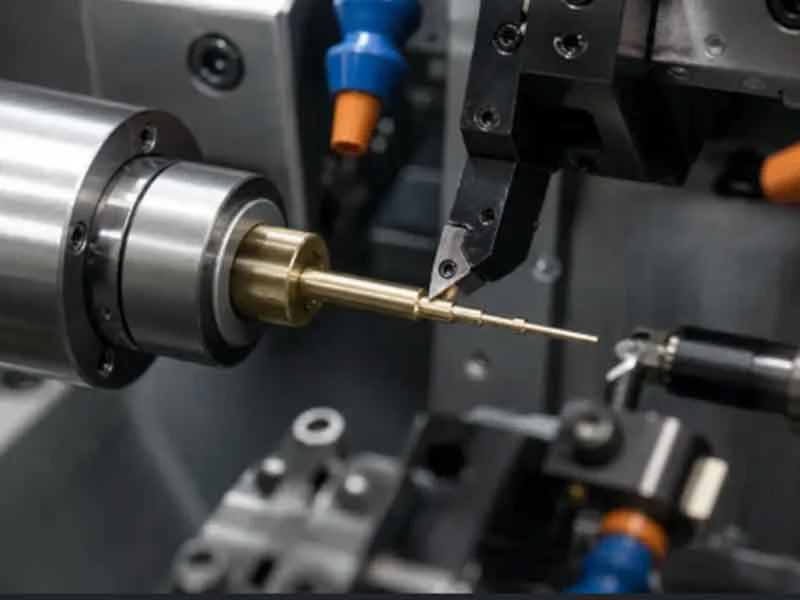
Medical device pins locate components, guide movement or form pivot connections in instruments and equipment. Their fit depends on the relationship between pin diameter, mating bore, shoulder position, straightness and surface condition.
CNCPioneer machines guide pins, locating pins, pivot pins and other small turned components to customer drawings. Swiss CNC turning supports slender features, while threads, grooves, flats and cross-holes are reviewed as part of the machining route.

Build the machining plan around how the pin fits, moves and is assembled into your medical device.
Focus on locating fits, pivot diameters, shoulders and retention features so the drawing identifies the dimensions that affect assembly.
Swiss CNC guide-bushing support can help control workpiece deflection close to the cutting zone. The setup is selected around the pin's geometry and material.
Coordinate steps, threads, grooves, flats and cross-holes within the machining route, with attention to their relationship to the main pin axis.
Define edge breaks, hole intersections and sensitive mating surfaces before machining. Deburring and inspection follow the agreed drawing requirements.
Review the specified material condition together with heat treatment, passivation or other finishing, including any dimensional allowance.
Use drawing revisions, first-piece feedback and agreed inspection records to carry the approved pin geometry into repeat production.
Representative pin configurations for drawing review. Specify the geometry, material and acceptance criteria for your component.
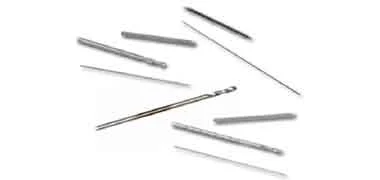
Slender pins with specified tip profiles, guiding diameters and entry features. Define the guiding length, straightness and surface finish needed by the mating mechanism.
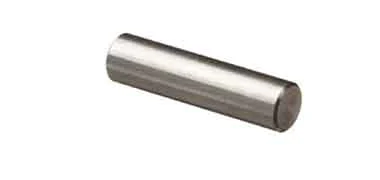
Cylindrical locating pins for repeatable component positioning during assembly. Review the bore fit, engagement length, end chamfers and installation method.

Turned pins for instrument pivots and hinged mechanisms. Specify the working diameter, bearing length, end retention and finish on moving contact surfaces.

Multiple-diameter pins with shoulders that locate or space mating parts. Control shoulder position and the relationship between concentric turned features.
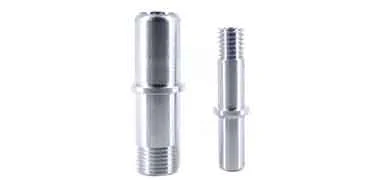
Pins with external threads, reliefs or retention grooves for removable or secured connections. Define the thread specification and final dimensions after finishing.
Long, small-diameter turned components for instrument and equipment mechanisms. Review support, runout, end features and inspection access with the drawing.
Pin functions vary across medical equipment. Share the assembly interfaces, motion and service conditions that guide your component requirements.

Pivot, hinge and connecting pins for instrument handles and mechanical linkages. Define the moving fit, retention details and required surface condition.

Guide and locating pins for equipment positioning, test fixtures and moving assemblies. Review alignment datums, mating bores and repeat-assembly requirements.

Dowel, shoulder and retaining pins for component alignment and mechanical connections. Coordinate installation method, engagement length and material records.
Small turned pins and instrument shafts for articulated mechanisms and coupling interfaces. Confirm fit, runout, contact surfaces and order-specific inspection.
Explore machining capabilities, material options and quality support for medical components.
Explore medical machiningMaterials
Material selection follows the device drawing and intended service conditions. Confirm the exact grade, condition and purchasing specification with your enquiry.
An option for pins where corrosion exposure and surface requirements influence material selection. Specify the delivery condition and any agreed passivation or polishing.
For pin designs requiring a defined heat-treated condition. Review hardness, processing sequence and final dimensional requirements with the drawing.
A titanium option for weight-sensitive pin and instrument components. Confirm the approved material specification, condition and surface requirements.
A polymer option for selected insulating or sliding interfaces. Define the resin grade, operating environment and dimensional conditioning requirements.
Finish selection
Choose finishing around the specified material and functional pin surfaces. State the process, final dimensions and acceptance criteria on the drawing or purchase specification.
Match the finishing route to the pin's mating fit and contact surfaces. Agree the required roughness and any secondary finishing before production.
Control entry edges and feature intersections without rounding functional locating surfaces. Identify edges that need particular attention on the drawing.
Review passivation against the stainless grade and purchase specification. Confirm the process, handling and documentation required for the order.
Consider electropolishing where the drawing calls for it. Review its dimensional effect on small diameters, edges and retention features.
Coordinate the machining sequence with the required material condition. Confirm distortion allowance and the dimensions to verify after treatment.
Agree the cleaning and packaging needed for delivery, including protection of fine tips and finished diameters, lot identification and handling requirements.
Swiss CNC turning and mill-turn machining for custom medical device pin prototypes and repeat orders.
Inspection & documentation
Connect material identity, critical pin dimensions, surface condition and lot records to the agreed drawing revision.
Pin tolerances, surface criteria, inspection frequency and delivery requirements are agreed for the specific material and geometry.
Confirm the certificates, inspection reports and production records needed for your order when sharing your drawing.
We review guide pins, locating and dowel pins, pivot pins, stepped pins, threaded pins and slender instrument components against customer drawings.
Send a dimensioned drawing, a 3D model where available, material grade, finish, order quantity and required delivery date. Highlight critical fits and any cleaning, packaging or documentation requirements.
Options include 316L and 17-4PH stainless steel, Ti-6Al-4V titanium and PEEK. The approved grade and condition are confirmed against the device drawing and purchasing specification.
Feasibility is reviewed feature by feature. Pin diameter, length, material, support, finishing and inspection access all influence the tolerances that can be agreed.
These features can be reviewed as part of the CNC turning and secondary machining route. Their relationship to the main pin axis and the available tool access determine the setup.
State the required roughness, edge condition and any approved finishing process. Cleaning, handling and protective packaging are agreed as separate delivery requirements for the component.
Request material certificates, lot identification, first-piece approval and dimensional reports with the enquiry. The exact records, inspection frequency and acceptance criteria form part of the order review.
CUSTOM CNC PARTS
Get quotes for custom medical device pin CNC turning from CNCPioneer in China. Send your drawing, material, critical fits, finish and quantity to review the machining route and delivery requirements.
 Medical Instrument Machining
 Medical Machining Parts
 Introducer Needle
 Titanium Swiss Screw Machined Parts