
eVTOL Precision
CNC Machining
CNCPioneer is an AS9100D certified eVTOL precision CNC machining specialist delivering TC4 motor shafts, tilt shafts, propeller hubs, rotor head bodies, actuator housings, and structural airframe fittings — with bearing journal accuracy ±0.002mm, bore concentricity ±0.003mm, compound angle accuracy ±0.020°, and fatigue-critical surface finish Ra 0.4μm — on 66+ MAZAK VARIAXIS 5-axis and mill-turn platforms and 78+ Swiss CNC lathes since 2011.
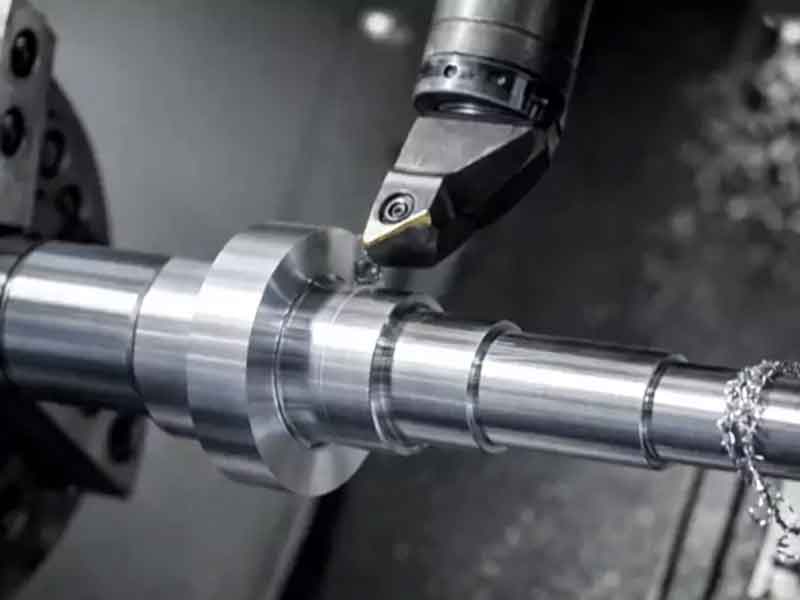
What Is eVTOL Precision
CNC Machining?
eVTOL precision CNC machining is the aerospace-grade manufacturing process — executed on 5-axis simultaneous machining platforms, multi-axis mill-turn centers, Swiss CNC turning systems, and wire EDM — that produces the structural, propulsion, drivetrain, and airframe components of electric vertical takeoff and landing aircraft: the tilt shafts, motor shafts, propeller hubs, rotor retention rings, actuator housings, structural fittings, and complete mechanical assemblies constituting the rotating and load-bearing mechanical architecture of electric air taxis, cargo drones, and urban air mobility aircraft.
eVTOL machining is distinct from conventional aerospace machining in four critical domains. First, mass criticality beyond any prior aerospace category: eVTOL aircraft operate at battery energy densities of 200–300 Wh/kg — approximately 1/50th the energy density of jet fuel — meaning every gram of structural mass directly reduces payload or range by a factor 20–50× larger than in a turbine aircraft. Second, extreme fatigue life at high-cycle loading: eVTOL rotary-wing components experience 10⁹–10¹⁰ loading cycles over a 30,000–50,000 flight hour design life, making surface finish Ra 0.4–0.8μm and fillet radii ±0.050mm non-negotiable for safety. Third, design iteration velocity from prototype to certification in 5–8 years, requiring 5–14 day first articles and 48-hour DFM cycles. Fourth, novel tiltrotor architectures demanding tilt shaft angular position accuracy ±0.020° with bearing seats ±0.002mm — specifications from single 5-axis setups without historical precedent.
-
5-axis single-setup accuracy for eVTOL compound geometry Propeller hubs, tilt shafts, and rotor head bodies have compound-angle blade attachment interfaces and asymmetric structural geometries that require 5-axis simultaneous machining for all critical features from one datum reference. CNCPioneer's MAZAK VARIAXIS platforms machine compound angles at ±0.020° and bore concentricity at ±0.003mm — all from a single setup without rechucking error contributing to the precision budget.
-
TC4 titanium machining discipline for eVTOL fatigue-critical parts TC4 (Ti-6Al-4V) is the dominant material for eVTOL motor shafts and tilt shafts — combining 950–1,100 MPa yield at 4.43 g/cm³ for the best specific strength of any commonly machined aerospace alloy. CNCPioneer's TC4 programs apply v_c = 50–80 m/min, 70-bar through-spindle coolant, trochoidal toolpaths, and dedicated fresh tooling for all fatigue-critical features to prevent heat concentration and built-up edge that compromise surface integrity and fatigue life.
-
AS9102 FAIR and full material traceability on every eVTOL part eVTOL machining programs require AS9100D documentation from the first prototype: 100% dimensional FAIR per AS9102, SII XRF material composition verification, heat number traceability from billet to serial number, shot peen certificates per AMS 2430, and UT inspection per AMS 2154 on life-limited primary structural billets. CNCPioneer's AS9100D system delivers this documentation as standard on all eVTOL programs — prototype through mass production.
-
40–60% China eVTOL machining cost advantage 40–60% below equivalent AS9100D eVTOL machining from US, European, and Japanese aerospace precision machining facilities at identical ±0.010mm accuracy, TC4 machining quality, and AS9102 FAIR documentation. A TC4 STA motor shaft at $1,850 from a US facility costs $380–450 at CNCPioneer at 500 annual units — the cost trajectory enabling eVTOL aircraft manufacturers to build commercially viable air taxi business cases.

Why CNCPioneer for
eVTOL Precision Machining?
Among eVTOL machining facilities globally, CNCPioneer's TC4 titanium machining expertise, 5-axis single-setup geometric accuracy, AS9100D documentation discipline, 48-hour DFM review velocity, and China cost economics establish our facility as the preferred eVTOL machining partner across tiltrotor, multirotor, and lift+cruise aircraft programs worldwide.
TC4 Titanium Machining as the Core Competency
TC4 (Ti-6Al-4V) dominates eVTOL primary structure — motor shafts, tilt shafts, rotor head fittings, and structural lug attachments — combining 950–1,100 MPa yield strength with 4.43 g/cm³ density for the best structural efficiency of any commonly machined aerospace alloy. CNCPioneer's 100+ TC4 aerospace programs apply specialized cutting parameters, trochoidal toolpaths, 70-bar through-spindle coolant, and dedicated fresh tooling on fatigue-critical features — delivering the surface integrity that eVTOL fatigue life requires.
5-Axis Single-Setup Geometric Accuracy Foundation
eVTOL propulsion components have compound-angle blade attachment interfaces, non-orthogonal bearing seat arrangements, and asymmetric structural geometries requiring 5-axis simultaneous machining for all critical features from one datum reference. CNCPioneer's MAZAK VARIAXIS programs machine eVTOL components with compound angle accuracy ±0.020°, bore-to-bore concentricity ±0.003mm from single setup, and blade pitch reference face perpendicularity 0.005mm — the geometric accuracy governing rotor track-and-balance performance and vibration levels in the assembled eVTOL aircraft.
24-Hour Quotation + 48-Hour DFM Review
eVTOL design teams operate on compressed schedules between funding rounds, design freeze milestones, and certification test campaigns — requiring a machining partner that evaluates new component designs and returns pricing within 24 hours and detailed DFM within 48 hours. CNCPioneer's eVTOL engineering team reviews every component DFM covering: 5-axis accessibility, minimum wall thickness, surface finish achievability for fatigue-critical zones, feature radius compliance with fatigue stress concentration requirements, and fixture datum strategy for AS9102 FAIR compliance.
Prototype-to-Production as a Documented Program Service
eVTOL machining programs progress through first article inspection per AS9102, pilot production qualification with SPC data accumulation, PPAP-equivalent production part approval, and volume production with AS9100D control plan governance. CNCPioneer's program management tracks eVTOL component programs through all production phases — maintaining revision-controlled CNC programs, material traceability records, and inspection documentation — so design changes or production ramp increases are managed through one AS9100D-governed supply relationship without re-qualification.
Mass Verification as a Standard Quality Requirement
Every eVTOL structural component ships from CNCPioneer with precision mass verification: component mass verified on calibrated precision scale to ±0.5g, compared to the design model calculated mass, and recorded in the AS9102 FAIR or production inspection record. Mass records per serial number provide the eVTOL OEM's weight and balance team with actual component mass data for aircraft weight build-up — enabling accurate prediction of flight envelope and center of gravity without weighing every aircraft at final assembly.
40–60% China eVTOL Machining Cost Advantage
CNCPioneer delivers eVTOL precision machining at 40–60% below equivalent AS9100D facilities in the US, Europe, and Japan at identical ±0.010mm accuracy, TC4 machining quality, and FAIR per AS9102. For an eVTOL OEM producing 500 aircraft annually with 6 motor shafts and 6 propeller hubs per aircraft, CNCPioneer delivers over $13.6M annual component cost reduction versus US aerospace machining sources — structurally significant for achieving commercial urban air taxi economics.
eVTOL Components
We Machine
CNCPioneer's eVTOL precision CNC machining programs cover the complete propulsion and structural component architecture of eVTOL aircraft — from TC4 motor shafts and tilt shafts through 7075-T6 propeller hubs, motor stator housings, structural fittings, landing gear trunnions, and battery structural frames at every production phase.

Motor Shafts & Drivetrain Shafts
The eVTOL traction motor output shaft transmits motor torque to the propeller hub — the most safety-critical machined component in the entire propulsion system. Front bearing journal ±0.002mm; front-to-rear journal concentricity ±0.002mm from single MAZAK mill-turn setup without rechucking; motor-to-propeller spline by wire EDM ±0.003mm; rotor stack mounting OD ±0.005mm k5; Ra 0.1μm bearing surfaces; dynamic balance ≤0.5 g·mm per plane ISO 1940 G1.0. Material: TC4 AMS 6931 STA (1,100 MPa yield) for high-power eVTOL motor shafts. Mass ±0.5g per shaft verified per serial number for aircraft weight build-up database.

Tilt Shaft & Tilt Mechanism Components
The tilt shaft is the most structurally and geometrically demanding component in tiltrotor eVTOL aircraft — the rotating shaft about which the entire propulsion nacelle tilts from vertical (VTOL) to horizontal (cruise). Tilt bearing seats ±0.002mm each; bearing seat-to-seat concentricity ±0.003mm from single setup; motor flange face perpendicularity to tilt axis ±0.020°; tilt stop cam angular position ±0.020°; actuation arm angular position ±0.010°. Material: TC4 AMS 6931 STA. Shot peen AMS 2430 Almen A 0.18–0.22mm on all surfaces. 47-characteristic AS9102 FAIR per shaft. Classified life-limited structural component with 5,000-flight-hour inspection interval.

Propeller & Rotor Head Bodies
Fixed-pitch propeller hubs for multirotor eVTOL: central bore ±0.003mm H6; blade attachment bores at equal angular spacing ±0.010°; blade bore perpendicularity to hub plane 0.010mm per bore; retention bolt circle ±0.010mm true position. Variable-pitch hubs: pitch bearing bore ±0.003mm per blade; pitch bore inter-blade angular spacing ±0.010°; all blade station features from one 5-axis setup. Material: 7075-T6 for commercial multirotor programs; TC4 for tiltrotor hubs. Mass ±1g verified per hub; matched-set documentation for multi-hub aircraft weight build-up. Type III hard anodize on blade attachment pocket interiors for wear resistance.

eVTOL Structural Fittings & Airframe Components
Wing-to-fuselage attachment lug fittings (TC4): lug bore ±0.005mm H8; lug face perpendicularity to bore 0.010mm; lug pair co-planarity ±0.020mm; compound-angle attachment face ±0.020° from 5-axis machining; FAIR per AS9102 on 100% of first-article production. Landing gear structural trunnion: trunnion bore pair ±0.002mm each; bore-to-bore center distance ±0.010mm; bore pair coaxiality ±0.005mm. Battery enclosure structural frame (7075-T6): wall ±0.100mm verified by CMM and ultrasonic thickness gauge; IP67 sealing face flatness 0.020mm; O-ring groove ±0.020mm; mass ±5g per frame; emergency vent port boss position ±0.100mm.

Motor Stator Housings & Gearbox Bodies
eVTOL motor stator housing (7075-T6 or 6063-T5): bore ±0.005mm; bearing seats ±0.002mm; cooling jacket machined and 100% pressure tested; bolt circles ±0.010mm; mass ±5g; Type II anodize. Gearbox housing (7075-T6): bearing bore pair center distance ±0.010mm; mating face flatness 0.010mm; gasket face flatness 0.020mm; bolt circle ±0.010mm; vent port boss ±0.050mm. Rotor mast housing: bore ±0.005mm; bearing seat pair concentricity ±0.005mm; oil seal bore ±0.003mm. All housings single-MAZAK-mill-turn setup for bore-to-bore concentricity integrity. Cooling jacket pressure test records per serial number in AS9102 FAIR documentation package.

Actuator Housings, Pitch Control Arms & Precision Hardware
Actuator housing (17-4PH H900): bore ±0.005mm h6; piston rod seal surface Ra 0.1μm; fatigue fillet R1.0mm ±0.050mm; thread ±0.005mm. Pitch control arm (TC4 AMS 4928): bore ±0.003mm; arm length ±0.050mm; fatigue fillet R2.0mm ±0.100mm. Swash plate guide sleeves (17-4PH): bore ±0.003mm H7; OD ±0.003mm; concentricity ±0.003mm from single Swiss CNC setup. Pitch control link pins (Ø8–15mm Swiss CNC, TC4): ±0.002mm OD for spherical bearing engagement; Ra 0.2μm; fatigue-critical fillet R0.5mm ±0.050mm. Electric motor output coupling body: spline bore by wire EDM ±0.003mm; flange bolt circle ±0.010mm; dynamic balance critical.
eVTOL Industries & Applications
CNCPioneer's eVTOL precision CNC machining serves the full advanced air mobility supply chain — from eVTOL aircraft manufacturers and electric air taxi developers through propulsion system suppliers, Tier 1 airframe suppliers, and certification service engineering partners requiring AS9100D documented eVTOL component programs worldwide.
eVTOL Aircraft
Complete propulsion and structural component portfolios — motor shafts, tilt shafts, propeller hubs, rotor head bodies, structural fittings, landing gear trunnions, and battery structural frames with prototype-to-certified production continuity. AS9102 FAIR on all new part numbers; prototype first articles 5–14 days; design iterations supported within 48-hour DFM review cycles; seamless transition from prototype through pilot production into AS9100D-documented mass production without re-qualification. Single-source eVTOL component machining across all propulsion and airframe programs.

Electric Air Taxi
Motor shaft, tilt shaft, and propeller hub programs for urban air mobility aircraft manufacturers operating under FAA AC 21.17-1 and EASA SC-VTOL certification frameworks — AS9100D documentation, PPAP-equivalent production part approval, and SPC Cpk ≥ 1.67 on all special characteristics supporting type certification programs. Component mass verification per serial number (±0.5g) for aircraft weight and balance database supporting certification flight test campaigns. 40–60% cost advantage below US/European eVTOL machining alternatives enabling commercial BOM cost targets.

eVTOL Propulsion System Suppliers
Motor shaft, spline shaft, and actuator component programs for electric motor and rotor system integrators supplying propulsion modules to eVTOL OEMs — AS9100D-governed supply programs with FAIR per AS9102 on every new part number, material traceability per serial number, and SPC data accumulation from first pilot production part. TC4 STA and 17-4PH H900 motor shaft programs with wire EDM spline ±0.003mm; harmonic content balance G1.0 ISO 1940; coordinated shot peen AMS 2430 at AS9100D qualified facilities. Pilot production to mass production transition on proven CNC programs without re-qualification.

eVTOL Landing Gear & Airframe
Structural fitting, trunnion, and frame machining programs for Tier 1 suppliers providing integrated structural assemblies to eVTOL OEMs — TC4 lug fittings with AS9102 FAIR per part, 7075-T6 battery enclosure structural frames with IP67 sealing face verification, and landing gear trunnion bore pair programs with CMM coaxiality ±0.005mm. AS9100D control plan governance on all Tier 1 supply programs; MRB process for any nonconforming primary structural parts with documented customer notification before disposition.

Advanced Air Mobility
Complete eVTOL component machining programs for AAM program integrators assembling propulsion, airframe, and rotor system modules from multiple Tier 1 and Tier 2 suppliers — AS9100D documentation packages compatible with OEM supplier quality requirements documents (SQRD), PPAP-equivalent production approval with 30-piece minimum sample Cpk data, MSA Gage R&R ≤ 10% on all critical gauging, and material traceability example chains from mill certificate to part serial number. Life-limited part records maintained per FAA/EASA tracking requirements for the component's certified life.

eVTOL Engineering
eVTOL component machining programs for certification test campaigns — first article hardware meeting AS9102 FAIR requirements for use in FAA DER-witnessed structural tests and fatigue qualification programs. TC4 tilt shaft and motor shaft programs with dimensional records, material traceability, and special process documentation formatted for Design Approval Holder (DAH) quality system review. FAIR packages accepted by major eVTOL OEM quality systems in first submission — 99% first-submission FAIR qualification rate on eVTOL structural programs.
eVTOL CNC Machining
Process & Capabilities
CNCPioneer's eVTOL precision CNC machining process runs on 66+ MAZAK VARIAXIS 5-axis simultaneous platforms and MAZAK mill-turn centers, 78+ Swiss CNC lathes with guide bushing, and wire EDM — delivering compound angle accuracy ±0.020°, bore concentricity ±0.003mm, TC4 titanium fatigue-critical surface integrity, and AS9102 FAIR documentation on every eVTOL component program.
24-Hour Quote + 48-Hour DFM Review
5-axis accessibility of all critical features · Minimum wall thickness adequacy for structural specification · Surface finish achievability for fatigue-critical zones · Feature radius compliance with fatigue stress concentration requirements (Kf = 1 + q(Kt − 1) analysis for TC4 fillet radii) · Fixture datum strategy for AS9102 FAIR dimensional compliance · TC4 vs 7075-T6 vs 17-4PH material recommendation for specific component loading and mass budget · Shot peen and surface treatment specification · Single-setup vs multi-setup datum strategy for concentricity and angular accuracy.
5-Axis Simultaneous Machining (MAZAK VARIAXIS)
Angular positioning accuracy ±0.005° per axis; compound angle accuracy ±0.008° from dual-axis combination · Linear positioning accuracy ±0.004mm per axis · Feature-to-feature angular relationship ±0.020° (blade pitch reference face perpendicularity to hub bore; tilt shaft bearing seat perpendicularity to tilt axis) · Maximum workpiece envelope 1,200mm × 1,000mm × 800mm · Spindle speeds 12,000 RPM standard; 30,000 RPM high-speed for aluminum thin-wall structures · Through-spindle coolant 70 bar for TC4; cryogenic coolant option for TC4 and Inconel 718 programs · Single-setup all critical eVTOL propulsion features from one datum reference.
CNC Milling & Turning (MAZAK Mill-Turn)
Turning diameter Ø10–Ø500mm · Bore accuracy ±0.003mm (bearing seats); ±0.005mm (motor stator bore) · OD accuracy ±0.005mm (journal surfaces); ±0.002mm (precision ground surfaces post-turn) · C-axis indexing accuracy ±0.001° (bolt circles, lug arrays, port features) · Sub-spindle enables complete eVTOL shaft machining including second-end thread, bore, and face without rechucking — critical for motor shaft concentricity specification · Live tooling: C-axis milling of cross-drilled oil passages, keyways, anti-rotation features, and lug profiles on shaft components in one mill-turn operation.
Swiss CNC Turning (Ø0.5–30mm)
78+ Swiss CNC lathes with guide bushing for miniature eVTOL precision components where L/D > 5:1 and dimensional accuracy ±0.002mm are simultaneously required · Pitch control link pins: Ø8–15mm; ±0.002mm OD for spherical bearing engagement; Ra 0.2μm; TC4 titanium · Anti-rotation pins: Ø5–12mm ±0.002mm; fatigue-critical fillet R0.5mm ±0.050mm · Sensor and encoder housing bodies for eVTOL motor commutation and position feedback sensors · Hydraulic actuator control rods: Ø8–25mm; thread ±0.005mm; fork eye bore ±0.003mm · Rotor hub bolts and inserts: precision thread ±0.003mm; shank ±0.002mm.
Wire EDM for eVTOL Precision Features
TC4 involute spline cutting: ±0.003mm profile — wire EDM produces correct involute form in hardened titanium without cutting force deflection · Thin-wall TC4 feature machining for 0.3–1.0mm web features where end mill cutting force would deflect and break walls · Contoured slot geometry in tilt mechanism locking cams and detent profiles; profile ±0.010mm · Recast layer management: ≤3μm recast layer on fatigue-critical eVTOL EDM features (multiple skim passes + diamond lapping on life-critical surfaces) · Wire EDM coordinates with mill-turn programs on motor shaft spline + journal programs as a complete single-source deliverable.
AS9100D Quality Documentation
AS9102 FAIR: 100% of all drawing dimensions measured on first article; measurement uncertainty ≤10% of tolerance per AS9102 Appendix D; material certification heat/lot number documentably linked to delivered part serial number · Section 4: special process records — shot peen (Almen intensity, coverage per AMS 2430); heat treat (temperature, time, furnace chart); NDT (UT per AMS 2154); surface treatment certificates · Clause 8.7 MRB for nonconforming primary structural parts with documented customer notification before disposition · ISO 10012:2003 calibrated measurement equipment: CMMs, air gauges, profilometers, Rockwell testers, mass balances · MSA Gage R&R ≤ 10% on critical gauging · Life-limited part records per FAA/EASA requirements.
Materials for eVTOL
Precision CNC Machining
eVTOL component material selection is governed by structural efficiency (specific strength), fatigue endurance limit, corrosion resistance without protective coating, and non-magnetic behavior adjacent to motor magnets. TC4 (Ti-6Al-4V) dominates eVTOL primary structure at the highest specific strength of any commonly machined aerospace alloy — 220 kN·m/kg versus 200 kN·m/kg for 7075-T6 and 160 kN·m/kg for 17-4PH H900.
TC4 Titanium (AMS 4928 Annealed)
950 MPa yield · 4.43 g/cm³ · Dominant material for eVTOL motor shafts, tilt shafts, rotor head fittings, and primary structural lug attachments — combining 950 MPa yield strength with the best specific strength (220 kN·m/kg) of any commonly machined aerospace alloy. CNCPioneer TC4 machining: v_c = 50–80 m/min with PVD-coated carbide tooling; through-spindle coolant at 70 bar; trochoidal milling for all TC4 pocket and slot features; dedicated fresh tooling for all fatigue-critical features. Corrosion resistance excellent in eVTOL atmospheric environments — no protective coating required for structural TC4 parts. Non-magnetic: critical for motor-adjacent components where magnetic interference must be avoided.
TC4 STA (AMS 6931 Solution Treated & Aged)
1,100 MPa yield · 4.43 g/cm³ · Preferred for motor shafts and tilt shafts where shaft diameter is constrained by the mechanism envelope — the additional 150 MPa yield strength versus annealed TC4 enables 15% shaft diameter reduction for equivalent torsional strength, contributing to nacelle mass reduction. Machining trade-off: TC4 STA is slightly harder (HRC 36 vs HRC 32 for annealed), requiring cutting speed reduction of approximately 15% from annealed parameters. CNCPioneer verifies final shaft hardness by Rockwell measurement after machining to confirm STA condition was not over-aged by machining heat. Fatigue endurance limit 600 MPa — the key property for eVTOL rotor component life at 10⁹–10¹⁰ loading cycles.
Aluminum 7075-T6
572 MPa yield · 2.80 g/cm³ · Preferred aluminum for eVTOL secondary structural members, motor housings, gearbox covers, battery enclosure frames, and aerodynamic fairing structures. 7075-T6 provides 2× higher yield strength than 6061-T6 at only 3.5% higher density — enabling 35–45% wall thickness reduction for the same structural load case. Machinability: 500+ m/min cutting speed with PCD tooling; Ra 0.2μm achievable directly from CNC turning. CTE 23.4 ppm/°C requires thermal stabilization between rough and finish passes on precision bore programs. Type II clear or Type III hard anodize for corrosion protection — bore anodize growth allowance incorporated in all precision bore dimensions.
Aluminum 2024-T4 / 2024-T351
470 MPa UTS · Fatigue endurance 138 MPa · High-fatigue-resistance aluminum for eVTOL rotating and cyclically-loaded structural components where 7075-T6's susceptibility to stress corrosion cracking under sustained-stress applications is a concern. Applications: rotor hub attachment lugs where sustained bolt pre-load combined with moisture exposure creates SCC risk; longeron fittings; primary wing spar attachment brackets. Lower strength than 7075-T6 (470 vs 572 MPa UTS) but superior SCC resistance in sustained-load configurations — the trade-off that governs eVTOL designer alloy selection per CNCPioneer DFM review guidance on all rotor hub and lug programs.
17-4PH H900 Stainless Steel
1,310 MPa yield · HRC 44–47 · Specified for eVTOL components requiring the combination of high strength, corrosion resistance without protective coating, and non-magnetic behavior — actuator piston rods (OD ±0.005mm h6; Ra 0.1μm seal surface), swash plate guide sleeves (bore ±0.003mm H7 from single Swiss CNC setup), electric motor output coupling bodies (spline bore by wire EDM ±0.003mm), and high-cycle fastener bodies for primary structural connections. CNCPioneer's 17-4PH eVTOL programs apply age-harden-after-machining: machine in solution-annealed condition → verify pre-age dimensions → precipitate to H900 (315°C × 3 hours) → post-age passivation ASTM A967 → final CMM FAIR inspection.
Inconel 718
Excellent high-temperature strength · Corrosion resistant · For eVTOL components operating at elevated temperatures adjacent to high-power density motors or power electronics — motor cooling jacket bodies in ultra-high-continuous-power motor programs (150+ kW motors where coolant jacket sees 150–200°C sustained); exhaust or thermal barrier structural elements in hybrid eVTOL programs. CNCPioneer Inconel 718 machining: v_c = 20–40 m/min; heavy coolant flood; ceramic or CBN finishing inserts for final surfaces. Also specified for eVTOL fasteners in extreme thermal cycling environments where titanium fatigue would be challenged.
PEEK (Victrex 450G)
572 MPa yield · 2.80 g/cm³ · Preferred aluminum for eVTOL secondary structural members, motor housings, gearbox covers, battery enclosure frames, and aerodynamic fairing structures. 7075-T6 provides 2× higher yield strength than 6061-T6 at only 3.5% higher density — enabling 35–45% wall thickness reduction for the same structural load case and consequent mass savings critical to eVTOL weight budget compliance. Machinability: 500+ m/min cutting speed with PCD tooling; Ra 0.2μm achievable directly from CNC turning without secondary grinding. CTE 23.4 ppm/°C requires thermal stabilization between rough and finish passes on precision bore programs. Type II clear or Type III hard anodize for corrosion protection — bore anodize growth allowance incorporated in all precision bore dimensions.
Titanium Ti-6Al-4V
880 MPa yield · 4.43 g/cm³ · Non-magnetic · Distal joint output shafts (wrist, finger, elbow) where titanium's specific strength delivers 43% mass reduction versus 17-4PH H900 at comparable strength — reducing distal link inertia, actuator sizing, and battery draw. MRI-compatible surgical robot bearing components: titanium's non-magnetic property (μᵣ ≈ 1.0005) satisfies MRI-compatibility requirements that ferromagnetic steel (μᵣ = 200–1000) fails. DLC coating on titanium bearing-interface zones compensates titanium's lower surface hardness (HRC 36) relative to bearing steel requirements at rolling contact surfaces.
PEEK Engineering Grade
ASTM E595 TML ≤0.030% · Excellent dielectric · Chemical resistance · PEEK for electrical isolation and non-magnetic structural components in motor-adjacent eVTOL structures — motor HV feedthrough insulator bodies, sensor mounting isolation bushings, rotor position encoder mounting bodies, and non-conductive structural elements in eVTOL propulsion system assemblies where metallic parts would create magnetic interference. CNCPioneer machines PEEK on the same MAZAK mill-turn platforms as metallic eVTOL components — delivering the same AS9102 FAIR documentation and mass verification (±0.5g per component) as metallic eVTOL structural parts. No post-machining heat treatment required; final CMM dimensional inspection confirms compliance before lot release.
Surface Treatments for
eVTOL CNC Machined Components
eVTOL CNC machining surface treatment selection addresses fatigue life enhancement on life-limited TC4 rotating components (shot peen AMS 2430), wear resistance and corrosion protection on 7075-T6 structural aluminum (Type II/III anodize), corrosion protection on stainless and 17-4PH parts (passivation ASTM A967), EMI bonding conductivity on aluminum structural fittings (Alodine MIL-DTL-5541), and recast layer management on wire EDM fatigue-critical features — all with allowances machined-in and verified post-treatment.
Passivation — ASTM A967
Shot peening per AMS 2430 is mandatory for all eVTOL life-limited TC4 rotating components — the compressive residual stress layer increases fatigue endurance limit by 20–40% at the stress concentration features (shaft shoulder fillets, bore transitions) governing component life. Almen A 0.15–0.25mm intensity range; 98–100% coverage verification per SAE AMS 2430; CNCPioneer coordinates shot peen at AS9100D qualified aerospace shot peen facilities with peening records (Almen strip results + coverage verification photos) per shaft serial number. Bearing seats and motor flange faces are masked before peening to preserve dimensional accuracy. Shot peen adds 3–4 business days to eVTOL component lead times and is included in CNCPioneer's 48-hour DFM review scope and program pricing.
Shot Peening — AMS 2430 (Fatigue Life Enhancement)
Shot peening is mandatory for all eVTOL life-limited TC4 rotating components — the compressive residual stress layer increases fatigue endurance limit by 20–40% at the stress concentration features (shaft shoulder fillets, bore transitions) governing component life. Almen A 0.15–0.25mm intensity range; 98–100% coverage verification per SAE AMS 2430; CNCPioneer coordinates shot peen at AS9100D qualified aerospace shot peen facilities with peening records (Almen strip results + coverage verification photos) per shaft serial number. Bearing seats and motor flange faces are masked before peening to preserve dimensional accuracy. Shot peen adds 3–4 business days to eVTOL component lead times.
Type III Hard Anodize (Aluminum eVTOL Components)
Type III hard anodize for 7075-T6 aluminum eVTOL structural components requiring wear resistance and corrosion protection — propeller hub blade attachment pocket interiors, motor stator housing bearing seat zones, and gearbox cover interface faces. Build-up: 0.010–0.025mm per surface; bore anodize growth allowance incorporated precisely into CNCPioneer's precision bore machining programs so post-anodize bore diameter remains within ±0.003mm of target H6/H7 class. Post-anodize air gauge bore verification 100% on bearing seat programs. Type II clear anodize for eVTOL structural aluminum components requiring corrosion protection without the dimensional build-up of Type III — the lighter-duty option for non-bearing-interface surfaces on battery enclosure frames and wingtip pylon bodies.
Passivation ASTM A967 (Stainless & 17-4PH Components)
Passivation per ASTM A967 for all stainless steel and 17-4PH H900 eVTOL components — removing free iron and other surface contaminants that form corrosion initiation sites in the eVTOL operating environment (atmospheric, coastal humidity, rain exposure). CNCPioneer's 17-4PH eVTOL programs include passivation as a standard post-machining step after precipitation hardening to H900 condition — the treatment sequence ensuring both maximum corrosion resistance and final dimensional compliance. Passivation certificate per lot included in AS9102 FAIR documentation package. Post-passivation dimensional verification on all precision features confirms treatment had no measurable dimensional impact before shipment to eVTOL OEM.
Alodine MIL-DTL-5541 Class 3 (Aluminum Structural Parts)
Alodine (chromate conversion coating) Class 3 for 7075-T6 and 2024-T4 aluminum eVTOL structural parts requiring corrosion protection while retaining electrical conductivity for EMI bonding — particularly landing gear structural fittings, wing attachment lugs, and battery frame structural members where the aerospace airframe electrical bonding network requires uninterrupted electrical continuity through bonding jumper attachment points. Negligible dimensional impact (≤1μm build-up) compatible with ±0.010mm structural feature tolerances without pre-coat machining allowance. Alodine certificate per lot with coating weight test coupon results included in AS9100D documentation package for eVTOL structural programs.
Wire EDM Recast Layer Management (TC4 Fatigue Parts)
Wire EDM on fatigue-critical eVTOL TC4 features (splines, thin-wall pockets, contoured locking cam profiles) is performed with recast layer management to ≤3μm — multiple skim passes after rough EDM cut to remove the heat-affected and re-resolidified surface material that would otherwise serve as a fatigue crack initiation site on life-limited eVTOL structural parts. Diamond lapping of the final EDM surface on life-critical features removes the skim-pass recast residual and achieves the fatigue-safe surface condition required for 5,000–10,000 flight hour component life. Recast layer measurement by metallographic section at CNCPioneer's in-house metallography capability confirms ≤3μm compliance before lot release.
All surface treatments on eVTOL CNC machining programs — shot peen AMS 2430, Type II/III anodize, passivation ASTM A967, Alodine MIL-DTL-5541, and EDM recast layer management — are documented with treatment certifications and post-treatment dimensional verification in the AS9102 FAIR package. Surface treatment allowances are machined-in to dimensions at the CNC machining stage and confirmed post-treatment by CMM or air gauge — ensuring specifications are met in the final delivered condition. Treatment selection guidance and allowance calculation are included in CNCPioneer's 48-hour DFM review at no additional cost.
Quality Assurance for
eVTOL CNC Machining Programs
eVTOL CNC machining quality assurance addresses TC4 titanium material traceability, fatigue-critical surface integrity verification, 5-axis compound angle CMM confirmation, and AS9102 FAIR documentation — with shot peen records per shaft serial number, mass verification per serial number, and Cpk ≥ 1.67 on all special characteristics for eVTOL production program approval.
Engineering Contract Review & 48-Hr DFM
48-hour DFM review covering: 5-axis accessibility of all critical features; minimum wall thickness adequacy for the structural specification; surface finish achievability for fatigue-critical zones; feature radius compliance with fatigue stress concentration requirements (Kf analysis for TC4 fillet radii at shaft shoulders); fixture datum strategy for AS9102 FAIR dimensional compliance; TC4 vs 7075-T6 vs 17-4PH material recommendation for specific loading and mass budget. All drawing ambiguities resolved before machining — non-conforming TC4 eVTOL primary structural parts consume expensive material and lose lead time that prototype certification schedules cannot recover.
Material Verification & Billet Inspection
SII XRF composition verification on every billet or bar lot before any eVTOL machining: TC4 AMS 4928 (Al 5.5–6.75%; V 3.5–4.5%; Fe ≤0.30%); 7075-T6 (Zn 5.1–6.1%; Mg 2.1–2.9%; Cu 1.2–2.0%); 17-4PH H900 (Cr 15.0–17.5%; Ni 3.0–5.0%; Cu 3.0–5.0%). Hardness verification per lot: TC4 annealed HRC 30–36; TC4 STA HRC 35–40; 17-4PH H900 HRC 44–47. UT per AMS 2154 Class A for life-limited primary structural billet. Full traceability chain established: mill certificate heat number → CNCPioneer lot → shaft serial number, maintained per FAA/EASA life-limited part tracking requirements.
In-Process CNC Machining Control
TC4 tool wear monitoring: carbide insert condition assessed every 5 components on precision feature operations; fresh inserts mandatory for all fatigue-critical features (fillet radii, undercut transitions, bearing surfaces). 5-axis thermal compensation verification: temperature probes on MAZAK VARIAXIS table; compensation algorithm active for angular positioning throughout production run. In-process CMM on critical features (bearing seats, tilt cam angles) before completing subsequent features that would obscure re-measurement access. Wall thickness probe at minimum wall cross-sections during roughing of topology-optimized eVTOL structures. SPC Cpk ≥1.67 on all eVTOL special characteristics.
Final Inspection — CMM, Profilometry & Mass Verification
Mitutoyo CMM (±0.001mm): all critical dimensions per drawing; 5-axis measurement of compound angles with measurement uncertainty documented for each 5-axis feature measurement. Profilometry: fatigue-critical surface Ra; bearing journal Ra; tilt shaft sealing surface Ra. Roundness tester: all bearing journal roundness and concentricity. Optical comparator: fatigue fillet radii at shaft transition features (±0.010mm measurement of fillet radius from optical shadow profile). Rockwell hardness: 3 points per TC4 STA or 17-4PH production lot (condition verification). Mass verification: every eVTOL component on calibrated balance ±0.5g; record per serial number. Visual under 5×: all fillet transitions; no sharp edges; no machining marks at fatigue-critical features.
Shot Peen Coordination & Certificate Management
CNCPioneer coordinates shot peen at AS9100D qualified aerospace shot peen facilities as a complete program deliverable — the peened eVTOL component returns to CNCPioneer with the facility's certificate (AMS 2430 compliance, Almen strip results per batch, coverage verification photos per shaft) before shipment to the eVTOL OEM. Bearing seats and motor flange faces are masked per CNCPioneer masking drawings before peening to preserve dimensional accuracy. CNCPioneer verifies coverage verification photos against AMS 2430 requirements (98–100% coverage) before accepting each peening lot. Post-peen dimensional check confirms peening-induced distortion remains within drawing tolerance before lot release. Peen records per shaft serial number in AS9102 FAIR package.
AS9102 FAIR Documentation Package
AS9102 Section 1 — Part Number Accountability: configuration drawing; revision level; applicable specifications indexed. Section 2 — Product Accountability: material certification; AMS specification; heat number; lot number; heat treat condition; mechanical test results; SII XRF verification; hardness verification; traceability to serial number. Section 3 — Characteristic Accountability: every drawing dimension measured; measurement equipment calibration status; actual value; conformance; measurement uncertainty ≤10% of tolerance per AS9102 Appendix D. Section 4 — Design Characteristics: shot peen records (Almen, coverage per AMS 2430); heat treat; NDT (UT per AMS 2154); surface treatment certificates. Section 5 — Appearance Accountability: surface finish; edge breaks; freedom from burrs; part identification. Part Submission Warrant: CNCPioneer quality manager signature. Records retained 20 years.
AS9100D Quality System for
eVTOL CNC Machining Programs
CNCPioneer's AS9100D quality management system — certified by Bureau Veritas — imposes specific requirements beyond ISO 9001:2015 particularly important for eVTOL machining programs: FAIR per AS9102 on all new part numbers, AS9100D Clause 8.4 control of externally provided special processes (shot peen, heat treat, NDT), MRB for nonconforming primary structural parts, and life-limited part traceability per FAA/EASA requirements.
AS9102 First Article Inspection Report
AS9100D Clause 8.5.1 requires FAIR per AS9102 for new part numbers and following engineering changes — CNCPioneer's eVTOL FAIR process covers 100% of all drawing dimensions (not sampling) on the first article. Measurement uncertainty documented per AS9102 (≤10% of tolerance as measurement system acceptance criterion). Material certification heat/lot number documentably linked to delivered part serial number. Special process certificates (shot peen, heat treat, NDT per AS9100D Clause 8.5.1.2). FAIR package submitted to eVTOL OEM in the format specified by the OEM's AS9100D-governed supplier quality requirements. CNCPioneer achieves 99% FAIR qualification rate on first submission across eVTOL structural programs.
- 100% dimensional FAIR per AS9102 on all new part numbers
- Measurement uncertainty ≤10% of tolerance per characteristic
- 99% first-submission FAIR qualification rate
Material Traceability Per Serial Number
AS9100D Clause 8.4 and FAA/EASA life-limited part regulations require that every eVTOL primary structural part has a documentable traceability chain from raw material billet to part serial number. CNCPioneer maintains electronic records linking billet heat number → machining lot → part serial number for every production eVTOL part — available for OEM audit, airworthiness review, and FAA/EASA continuing airworthiness investigation. SII XRF composition verification per lot (confirmed alloy against AMS specification) is recorded against the lot number. For life-limited eVTOL structural parts (shafts, tilt shafts, rotor fittings), traceability records are maintained for the component's certified life or 10 years minimum.
- Billet heat number → lot → serial number chain
- SII XRF composition per lot recorded against lot number
- Life-limited part records per FAA/EASA requirements
AS9100D Clause 8.7 — Nonconforming Output Control
For eVTOL safety-critical parts, nonconforming material is quarantined immediately, tagged with disposition status, and subject to a formal Material Review Board (MRB) process before any re-work, scrap, or use-as-is disposition. CNCPioneer's MRB process for eVTOL primary structural parts requires documented customer notification and disposition concurrence before any nonconforming part leaves the facility. Corrective action is documented per AS9100D NCR with root cause, containment, and permanent fix. Any eVTOL OEM is notified of any nonconformance potentially affecting shipped parts — CNCPioneer's Escape Notification procedure activates immediately for any escape from eVTOL primary structural programs.
- Immediate quarantine + MRB for all nonconforming primary structural parts
- Customer notification before disposition on eVTOL primary structure
- AS9100D NCR with root cause + corrective action documented
Production Part Approval & SPC Governance
PPAP-equivalent production approval (eVTOL OEM proprietary format equivalent to PPAP Level 3): 30-piece minimum sample dimensional data; Cpk ≥ 1.67 on designated critical characteristics (motor shaft bearing journal diameter, tilt shaft bearing seat concentricity, propeller hub blade bore angular spacing); MSA Gage R&R ≤ 10% on critical gauging; material traceability example chain; special process qualification records; PFMEA and control plan; process flow diagram. Mass production phase: revision-controlled CNC programs; monthly SPC review with response plan triggered at Cpk < 1.67 on any critical characteristic; 100% critical dimension control per control plan; engineering change requests evaluated through AS9100D change management before implementation.
- 30-piece minimum sample with Cpk ≥ 1.67 on all special characteristics
- MSA Gage R&R ≤ 10% on critical CMM and gauge measurement systems
- Monthly SPC review with response plan at Cpk < 1.67
eVTOL Precision CNC Machining FAQ
Common questions from eVTOL aircraft manufacturers, electric air taxi developers, urban air mobility OEMs, eVTOL propulsion system suppliers, and eVTOL certification engineering partners about CNCPioneer's eVTOL machining capability, TC4 titanium precision, tilt shaft angular accuracy, AS9102 FAIR documentation, and eVTOL program economics.
TC4's dominance in eVTOL motor shafts and tilt shafts reflects the specific trade-off between strength, density, fatigue life, and corrosion resistance that rotating eVTOL components require. High-strength steel (4340 QT at 1,600 MPa yield) provides higher yield than TC4 STA (1,100 MPa) — but steel's density is 7.85 g/cm³ versus TC4's 4.43 g/cm³, making a steel motor shaft 77% heavier than an equal-strength TC4 shaft for strength-governed geometry. For a 4-propeller eVTOL with 4 motor shafts at 1.2 kg each in TC4 versus 2.1 kg in steel: the 3.6 kg mass difference equals approximately 12 km of cruise range at typical eVTOL energy consumption — a commercially significant range penalty from shaft material selection alone. TC4 also provides superior fatigue endurance limit (600 MPa for TC4 STA versus 430 MPa for 4340 steel at equivalent stress concentration) normalized by density. The machining disciplines that make TC4 eVTOL machining reliable at CNCPioneer: controlled cutting speed (50–80 m/min) preventing the temperature spike that causes titanium to weld to tool faces; minimum 0.10mm chip load preventing rubbing and work-hardening; through-spindle flood coolant at 70 bar delivering coolant directly to the cutting zone; trochoidal toolpaths for TC4 pocket and slot features limiting maximum chip thickness; and fresh tooling for all fatigue-critical features ensuring the metallurgical surface integrity that eVTOL component fatigue life requires.
The 48-hour DFM review delivers a structured engineering assessment covering five analysis domains: manufacturing feasibility (can all critical features be machined to specified tolerance?), geometric accuracy chain analysis (does the single-setup or multi-setup approach produce the needed concentricity and angular relationships?), fatigue-critical feature assessment (are all stress concentration features specified with radii adequate for targeted fatigue life per the material's Kt sensitivity?), material and process sequence compatibility (does the specified heat treatment, shot peen specification, and surface treatment sequence produce material properties in the correct order?), and mass achievability from specified minimum wall features. The most common DFM findings on first eVTOL component submissions: (1) Fillet radius undersized at bearing shoulder transitions — design teams frequently specify R0.1–0.2mm at shaft shoulders; CNCPioneer's DFM recommends R0.5–1.0mm minimum for life-limited rotating shafts and documents the fatigue margin impact. (2) 5-axis accessibility conflict — compound-angle features on tilt shafts that require opposite table tilt directions cannot be accessed from the same 5-axis table position; CNCPioneer proposes fixture strategies or feature sequence changes. (3) Wall thickness below structural minimum at topology-optimized pocket intersections — aggressive optimization sometimes leaves 1.5–2.0mm walls that are within stress analysis margin but produce breakout risk during machining; CNCPioneer flags these and recommends minimum 2.5mm for machinability confidence.
The prototype-to-production transition for eVTOL components at CNCPioneer follows a structured program phase sequence. Prototype phase: first articles to drawing within 5–14 days; FAIR per AS9102 on first article; DFM-driven design iteration supported within 48 hours review + 5–14 days revised hardware; no minimum order quantity. Pilot production phase: production to current drawing revision; FAIR per AS9102 revalidated if engineering change materially affects any AS9102 characteristic; SPC data accumulation from first pilot part; all special processes under AS9100D-qualified subcontractor control with certificates per part; shot peen Almen and coverage verification per shaft serial number; mass records per serial number; CNC program revision-controlled at pilot production entry. Production part approval: CNCPioneer prepares PPAP-equivalent package — 30-piece minimum sample dimensional data; Cpk ≥ 1.67 on designated critical characteristics; MSA Gage R&R ≤ 10%; material traceability example chain; special process qualification records; PFMEA and control plan. Mass production phase: revision-controlled CNC programs; monthly SPC review; 100% critical dimension control per control plan; AS9100D non-conformance system governing any escapes; full traceability records per serial number maintained for the component's certified life or 10 years minimum.
Lead times at CNCPioneer's eVTOL machining facility: TC4 motor shaft (AMS 4928 annealed, mill-turn, FAIR) — 7–10 business days; TC4 STA motor shaft (AMS 6931, mill-turn, hardness verify, FAIR) — 8–12 business days; 7075-T6 propeller hub (3-blade, 5-axis, Type III anodize, FAIR) — 10–14 business days; TC4 tilt shaft (5-axis, complete, shot peen coordination, 47-characteristic FAIR) — 12–16 business days; 17-4PH H900 actuator rod (age-hardened, Swiss CNC) — 7–10 business days; 7075-T6 motor stator housing (mill-turn, cooling jacket, pressure tested) — 8–12 business days. Shot peen coordination adds 3–4 days; additional NDT (UT, LPT) adds 2–3 days. Pilot production (25–200 units): 2–4 weeks per batch; SPC accumulation; 25–40% per-unit cost reduction from prototype. Production approval: 6–8 weeks from pilot data completion. Mass production: 2-week monthly releases with dedicated MAZAK and 5-axis capacity. Economics: a TC4 STA motor shaft (Ø34mm × 280mm, complete mill-turn, shot peened, FAIR) that costs $1,850 from a US aerospace precision machining facility costs approximately $1,020 at CNCPioneer prototype — and $380–450 at 500 annual units. A TC4 7-blade variable-pitch propeller hub that costs $4,200 from a US facility costs approximately $2,300 at CNCPioneer prototype — and $850–1,050 at 500 annual units. For an eVTOL OEM producing 500 aircraft annually with 6 motor shafts and 6 propeller hubs per aircraft, CNCPioneer's China eVTOL machining delivers over $13.6M annual component cost reduction versus US aerospace machining sources.
CNCPioneer's eVTOL machining programs implement the following key standards: AS9100D — CNCPioneer's QMS governing all eVTOL programs, certified by Bureau Veritas; AS9102 — FAIR on all new eVTOL part numbers and after engineering changes; AMS 4928 — TC4 bar, billet, plate (annealed condition for most structural fittings and propeller hubs); AMS 6931 — TC4 bar STA for motor shafts and tilt shafts requiring higher yield strength; AMS 2430 — Shot peen specification, applied to all life-limited TC4 rotating eVTOL components with Almen strip records per batch and coverage verification photos per shaft; AMS 2154 — UT inspection of titanium billet for primary structural life-limited eVTOL parts; AMS 2630 — Fluorescent penetrant inspection for surface crack detection on eVTOL Ti and steel fatigue parts; AMS 5643 — 17-4PH bar and plate specification for actuator and coupling components; ISO 1940 — Balance quality grades (G1.0 for eVTOL rotating components); FAA AC 27-1B and AC 21.17-1 — Basis for eVTOL rotating component structural and fatigue requirements governing CNCPioneer's fatigue-critical feature specifications; EASA SC-VTOL — European eVTOL certification special condition influencing documentation requirements for European eVTOL OEM programs.
Get a Quote for eVTOL Precision CNC Machining
Upload your eVTOL component drawings, CAD models, or material specifications and receive a competitive quotation within 24 hours and a full DFM review within 48 hours — covering 5-axis feasibility for your compound-geometry tilt shaft or propeller hub, TC4 vs 7075-T6 vs 17-4PH material recommendation, fatigue-critical fillet radius assessment, single-setup datum strategy for concentricity and angular accuracy, shot peen and surface treatment specification, AS9102 FAIR scope and timeline for your certification program, and complete pricing from prototype eVTOL parts through pilot production and AS9100D-governed mass production supply.