
Non-Magnetic Material Machining Competency
The most distinctive technical requirement of eVTOL flight control sensor housing programs is the non-magnetic material specification.
Sensor housing machining to your drawing. Review mounting faces, pockets, wall thickness, material, finishing and inspection requirements before production.
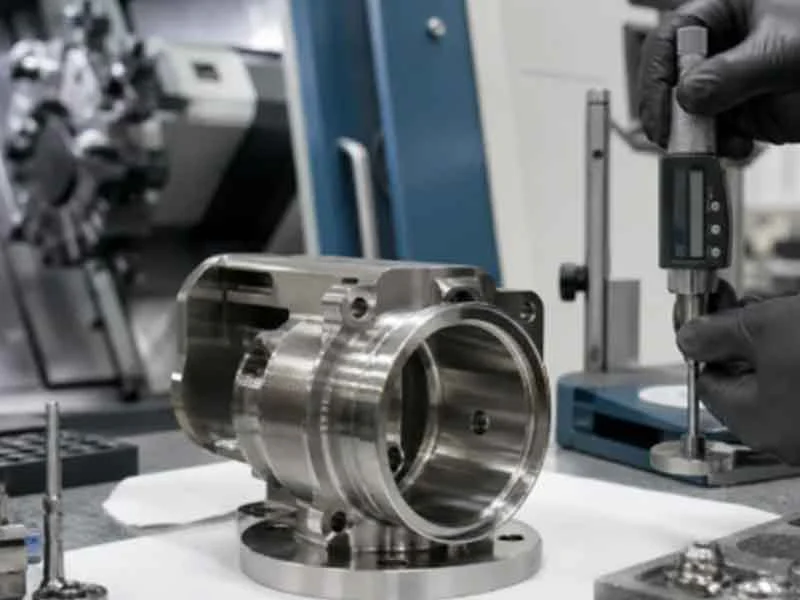
eVTOL sensor housing machining is technically distinct from conventional aerospace sensor housing manufacturing in three domains.
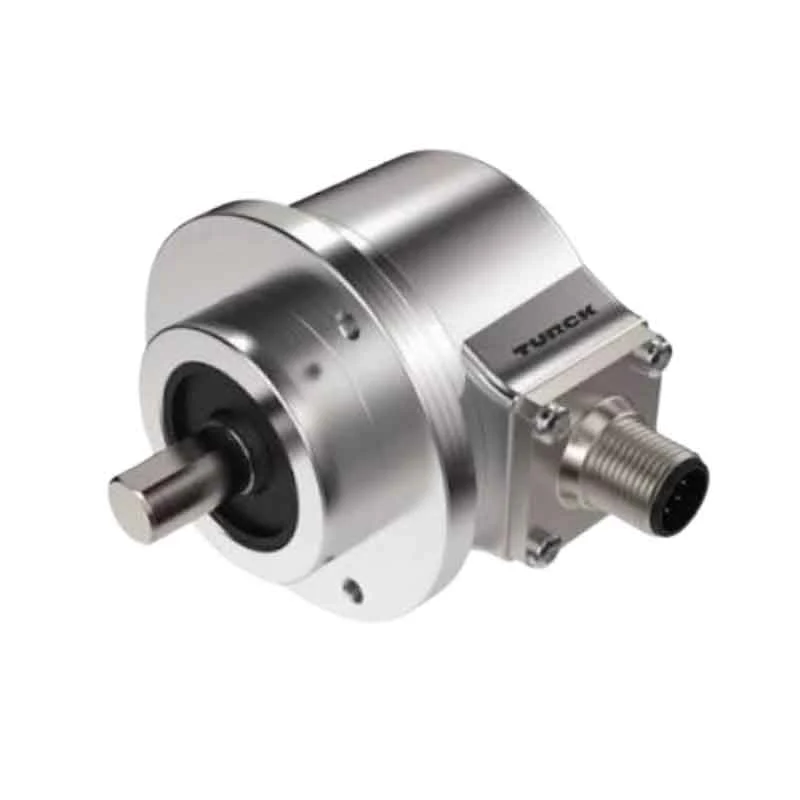
Coordinate geometry, material, finishing and inspection around the part's intended function.
The most distinctive technical requirement of eVTOL flight control sensor housing programs is the non-magnetic material specification.
eVTOL IMU housing bore accuracy (±0.003mm) limits installation-induced angular misalignment between the IMU's calibrated measurement axes and the aircraft's structural datum.
Motor position encoder accuracy in eVTOL FOC drives is limited not by encoder resolution (12–16 bits standard) but by the mechanical runout of the shaft carrying the encoder target.
eVTOL avionics bay structural frames must maintain the spatial relationship between sensor measurement axes and aircraft body axes to the accuracy flight control sensor fusion algorithms require.
Review mounting faces, pockets and wall thickness and functional requirements before defining the process.
Sensor housing and encoder shaft machining from US and European aerospace precision machining facilities costs 40–60% more than CNCPioneer's AS9100D equivalent programs at identical non-magnetic material compliance, dimensional accuracy, and documentation.
Explore representative configurations and share your drawing for a product-specific review.

TC4 AMS 4928 annealed non-magnetic (μ_r = 1.00003; VSM verified ≤1.005 per incoming lot) primary flight control IMU housing bodies for Honeywell HGuide, Collins MEMS IMU, and equivalent.

Air Data Sensor & Probe Housing Bodies machined to your drawing. Confirm material, functional dimensions and finish before production.

Motor Position Encoder Shafts machined to your drawing. Confirm material, functional dimensions and finish before production.
Resolver programs for high-vibration, high-temperature eVTOL motor environments (tiltrotor nacelles, motors exceeding optical encoder temperature limits).
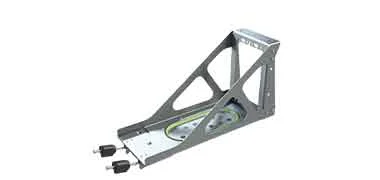
Machined structural frames locating FCCs, avionics modules, and interconnect wiring in the aircraft's avionics bay for triple-redundant fly-by-wire eVTOL architectures.
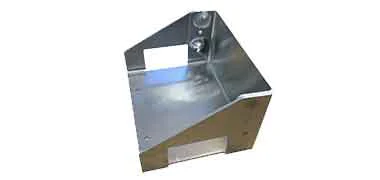
TC4 magnetometer isolation brackets (non-magnetic VSM verified; bore axis angular alignment ±0.050° from aircraft axis 5-axis CMM verified; TC4 fastener specification for all attachment points within 300mm radius; PEEK grommet cable passage isolating shield ground loops).
Sensor housings for flight control, motion feedback, vehicle monitoring and measurement equipment. Confirm the material, interfaces and inspection scope for your application.

Machined IMU and flight-control sensor housings for electric aircraft, with drawing-defined mounting datums, connector interfaces and sealing features.
Explore eVTOL machining
Sensor enclosures and instrument housings for aircraft avionics, with bore alignment, cable routing and material traceability specified for the assembly.
Explore aerospace machining
Encoder housings and sensor mounts for robot joints and automated equipment, with concentric locating bores, mounting faces and cable exits.
Explore robotics machining
Sensor housings for EV powertrains, battery systems and vehicle monitoring, with mounting geometry, connector fit and environmental sealing defined by the drawing.
Explore automotive machining
Housings for diagnostic instruments and medical equipment sensors, with cleanable surfaces, assembly interfaces and material documentation reviewed for the intended use.
Explore medical machining
Precision housings for measurement sensors and semiconductor inspection equipment, with mounting datums, optical or electrical interfaces and surface finish defined for assembly.
Explore semiconductor machiningMaterials
Confirm the exact grade, delivery condition and finish compatibility with your drawing.
Titanium options for weight-sensitive and corrosion-resistant components. Confirm the approved grade, material condition and surface requirements.
μ_r = 1.00002 (paramagnetic; B_perturb negligible for any sensor proximity — no VSM verification required); excellent machinability for complex avionics frame geometry; lightweight (2.70 g/cm³ versus TC4 4.43 g/cm³).
μ_r ≤1.005 in solution-annealed condition (AMS 5653); corrosion resistance in rain, ice, and urban pollution; non-magnetic for magnetometer-adjacent programs when lot-verified.
CTE = 1.2 ppm/°C — 0.030mm dimensional change from −40°C to +85°C (200mm reference body) versus TC4 0.215mm and aluminum 0.590mm.
Engineering-plastic options for insulating or low-friction components. Confirm the resin grade, conditioning and operating environment.
HRC 44–47; 1,310 MPa yield; excellent wear resistance on encoder target mounting surfaces; most encoder shaft programs. μ_r ≈ 40–80 (ferromagnetic in martensitic H900 condition) — NOT acceptable within 200mm of magnetometer or Hall-effect current sensors.
Finish selection
Select the finish around the specified material, functional surfaces and service conditions. Confirm process details and acceptance requirements with your drawing.
Review alodine class 3 against the material, functional surfaces and intended service conditions.
Review black type iii hard anodize against the material, functional surfaces and intended service conditions.
Review passivation & no treatment against the material, functional surfaces and intended service conditions.
Machining resources for drawing review, prototypes and repeat-production programs.
Inspection & documentation
Review material identity, machining datums, functional dimensions and production records for your component.
Final tolerances, inspection coverage and acceptance criteria are confirmed against your drawing, material and geometry.
Confirm the certificates, inspection reports and production records needed for your order when sharing your drawing.
The product range includes TC4 IMU Housing Bodies, Air Data Sensor & Probe Housing Bodies, Motor Position Encoder Shafts. Custom geometry is reviewed against the approved drawing.
Material options include TC4 Titanium AMS 4928 Annealed, 6061-T6 / 7075-T6 Aluminum, 316L Stainless. The exact grade and condition should be confirmed for your application.
Define mounting faces, pockets and wall thickness, together with datums, tolerances and required surface condition.
Finishing options include alodine class 3, black type iii hard anodize, passivation & no treatment. Applicability is reviewed against the specified material and geometry.
Pricing and delivery are confirmed after reviewing the drawing, material availability, quantity, machining route, finishing and inspection scope.
CUSTOM CNC PARTS
Share your drawing or 3D model, material, critical dimensions, finish and order quantity. We’ll review the machining route, inspection scope and delivery requirements.
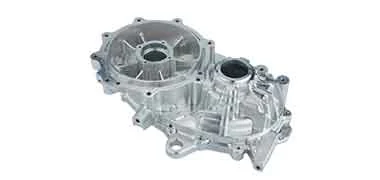 5-Axis Aluminum CNC Machining Parts
 5-Axis CNC Machining Aerospace Components
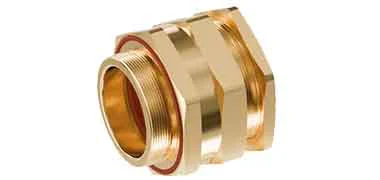 CNC 5-Axis Machining for Brass Parts
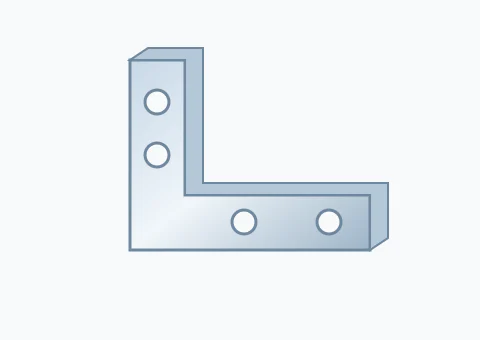 CNC 5-Axis Machining for Aluminum Structures