
Custom EV Charging Gun
Manufacturing
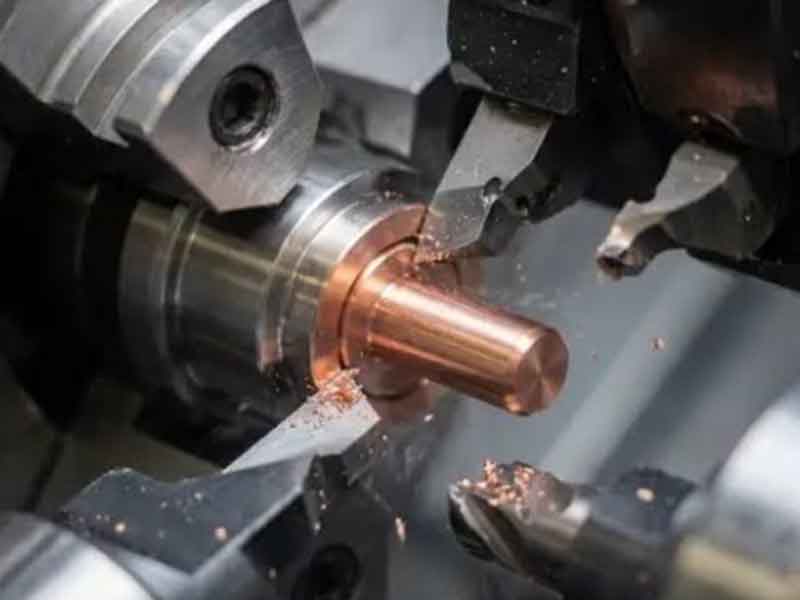
CNCPioneer is a precision custom EV charging gun manufacturing specialist and IATF 16949 certified China EV charging gun manufacturer delivering complete custom charging gun machined component programs — GB/T 20234.2 AC charging gun contact pin precision turning, GB/T 20234.3 DC fast charging gun power contact body machining, trigger mechanism body programs, face insert machining, and complete component sets from prototype through high-volume production.
With 78+ Swiss CNC lathes, 66+ MAZAK mill-turn centers, and 5-axis platforms, we provide AC contact pin OD accuracy of ±0.003mm, DC power contact OD of ±0.002mm, and contact resistance ≤0.5 mΩ at 10,000,000+ annual unit capacity since 2011.
What Is Custom EV Charging Gun
Manufacturing?
Custom EV charging gun manufacturing is the precision CNC machining, coordinated surface treatment, and assembly-ready component production process that produces the metallic contact pins, trigger mechanism bodies, pistol grip structural elements, latch cam components, cable management hardware, sealing features, and signal contact arrays of the hand-held EV charging connector — known in China as the charging gun (充电枪) — that delivers electric power from the charging pile to the electric vehicle.
The term reflects the pistol-grip form factor: a handle perpendicular to the contact face, a trigger for latch release, and a cable from the rear. China's EV charging infrastructure — the world's largest — demands hundreds of millions of precision machined charging gun components annually, requiring the high-volume Swiss CNC capability and IATF 16949 quality that CNCPioneer's China EV charging gun factory provides.
-
GB/T 20234 standard expertise as the compliance foundation GB/T 20234.2 AC (7-contact array) and GB/T 20234.3 DC (9-contact array) define exact contact geometry. CNCPioneer machines to ±0.003mm AC contact OD, ±0.002mm DC power contact OD, and ±0.020mm pitch — ensuring interoperability with every Chinese and international automotive OEM adopting the GB/T standard.
-
Trigger mechanism body precision as the reliability foundation The squeeze trigger or lever trigger mechanism must provide 10,000+ cycles of smooth actuation. CNCPioneer machines trigger pivot bore ±0.005mm, latch pawl cam profile ±0.020mm, and spring seat flatness 0.010mm — producing consistent latch engagement and release force throughout service life.
-
High-volume Swiss CNC capacity for China market scale China's 11+ million public charging piles and tens of millions of residential wall boxes generate annual charging gun production at 50–150 million units. CNCPioneer's 78+ Swiss CNC lathes produce AC brass contacts at 2,000–3,000 pins/hour and DC CuCrZr contacts at 1,000–1,500 pins/hour — providing the throughput this market demands.
-
IATF 16949 quality and China cost advantage Chinese automotive OEMs require IATF 16949:2016 with PPAP Level 3 for dealer-network and vehicle-bundled charging gun programs. CNCPioneer delivers this automotive quality at 40–60% below European precision manufacturers — the economics that determine competitiveness in China's charging equipment market.

Why CNCPioneer — China EV Charging Gun
Manufacturer
Among custom EV charging gun machining providers globally, CNCPioneer's GB/T 20234 standard expertise, trigger mechanism body precision, high-volume Swiss CNC capacity, integrated plating supply chain, IATF 16949 automotive quality, and China cost advantage establish our factory as the preferred China EV charging gun manufacturer.
GB/T 20234 Standard Expertise
Deep familiarity with GB/T 20234.2 AC (7-contact array: Phase A/B/C, N, PE, S1, S2) and GB/T 20234.3 DC (9-contact array: DC+, DC−, PE, S+, S−, CC1, CC2, A+, A−). Contact pin OD ±0.003mm (AC) and ±0.002mm (DC power) from Swiss CNC; inter-contact pitch ±0.020mm from CMM fixture; contact length ±0.050mm for designed socket engagement — the dimensional compliance ensuring correct mating with GB/T vehicle inlets.
Trigger Mechanism Body Precision
The trigger latch mechanism determines user experience and service life. CNCPioneer machines: trigger pivot bore ±0.005mm for smooth rotation without rattle or binding; latch pawl cam surface profile ±0.020mm for consistent engagement force; trigger spring seat flatness 0.010mm for uniform pre-load; and ergonomic trigger arm 5-axis milled to Ra 0.8μm — producing 10,000-cycle durability.
High-Volume Swiss CNC Capacity
The Chinese EV charging gun market operates at 50–150 million units annually. CNCPioneer's 78+ Swiss CNC lathes produce AC brass contact pins at 2,000–3,000 pins/hour and DC CuCrZr power contact pins at 1,000–1,500 pins/hour — providing the manufacturing throughput for OEMs scaling to China's accelerating EV adoption trajectory through 2030.
Integrated Silver & Gold Plating Supply Chain
Machining and plating must be coordinated single-source in China to achieve 3–5 day prototype and 2-week volume lead times. CNCPioneer coordinates silver plating (5–15μm for DC power) and gold plating (0.3–1.0μm for AC/signal) through qualified partners with 1–2 day transit — delivering plated, ready-to-assemble contact sets without week-long international delays.
IATF 16949 for Automotive OEM Programs
Chinese automotive OEMs (BYD, NIO, Li Auto, XPENG, SAIC, Geely) require IATF 16949:2016 with PPAP Level 3 for charging gun suppliers. CNCPioneer's certification and automotive infrastructure (SPC, MSA, APQP, 8D) supports OEM supplier qualification — differentiating from general industrial machining suppliers in China's lower-quality tier.
China EV Charging Gun Factory Cost Advantage
European charging connector manufacturers or North American precision suppliers cost 50–70% more than CNCPioneer's IATF 16949-equivalent programs at identical GB/T compliance, plating specifications, and contact resistance — the manufacturing economics determining profitability in China's competitive charging equipment market.
Custom EV Charging Gun Components
We Manufacture
CNCPioneer's custom EV charging gun manufacturing programs cover the complete precision machined component portfolio for GB/T 20234.2 AC and GB/T 20234.3 DC charging guns — from contact pins through face inserts, trigger mechanisms, and cable strain relief collars.

GB/T 20234.2 AC Charging Gun Contact Pins
7-contact array: Phase A/B/C, N, PE (Ø6.3mm ±0.003mm C26000 brass or CuCrZr for 63A); S1/S2 signal (Ø4.0mm ±0.005mm). Ground contact protrudes 2mm for ground-first engagement. Hard gold 0.3–1.0μm per ASTM B488 Class 1. Contact resistance ≤10 mΩ AC power / ≤50 mΩ signal. Swiss CNC at 2,500 pins/hour capacity.

GB/T 20234.3 DC Power Pins (DC+, DC−)
Ø10mm (250A standard) or Ø12mm (400A enhanced) CuCrZr C18150 H02 verified ≥82% IACS. Swiss CNC OD ±0.002mm; Ra 0.1μm from CBN grinding; silver 10–20μm per ASTM B700 on Ni 3μm; contact resistance ≤0.5 mΩ at 250A (≤0.3 mΩ at 400A). Optional Ø1.5mm NTC sensor bore for thermal monitoring.

GB/T 20234.3 Signal Contact Pins
S+/S− (CAN bus), CC1/CC2 (socket confirmation), A+/A− (auxiliary 12V). Ø4.0mm ±0.005mm C26000 brass; hard gold 0.3μm for CAN signal integrity at 500 kbps; contact resistance ≤50 mΩ. Sequential engagement ladder: CC1 shorter than CC2, CC2 shorter than PE, PE shorter than DC power — length differential ±0.050mm per GB/T safety sequencing.
Industries & Applications
CNCPioneer's custom EV charging gun manufacturing serves every industry in the Chinese and global EV charging ecosystem — from charging gun OEMs and charging pile manufacturers to automotive OEM accessory programs and fleet charging infrastructure builders.
EV Charging Gun
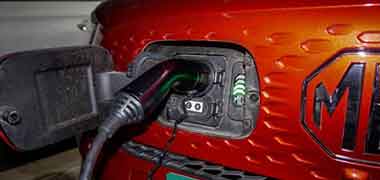
Complete machined component programs for GB/T 20234.2 AC and GB/T 20234.3 DC charging guns — C26000 brass AC contact sets, CuCrZr DC power pins, 6061-T6 face inserts, 17-4PH H900 trigger latch pawls, and cable collars. Per-gun component kit supply with IATF 16949 lot traceability at 10M+/year capacity.

EV Charging Pile
Major Chinese charging pile manufacturers requiring high-volume DC and AC charging gun components — DC power pins at 82% IACS verified conductivity; signal contact arrays; face insert bore programs to GB/T 20234.3; PPAP Level 3 for automotive OEM vehicle-bundled charging programs.

Residential Wall Box Charging Gun
32A and 63A AC contact pin programs at 10M+/year volume; gold plating 0.3–0.5μm for 10,000-cycle residential use; IP55 face insert sealing for outdoor residential installation; volume pricing at 10M+ annual production.
EV Charging Gun Manufacturing
Process & Capabilities
CNCPioneer's custom EV charging gun manufacturing process runs on 78+ Swiss CNC lathes with guide bushing support, 66+ MAZAK mill-turn centers, and MAZAK VARIAXIS 5-axis platforms — delivering complete precision machined component portfolios from prototype first articles through 10,000,000+ annual unit production.
24-Hour Quote & 48-Hour DFM
Complete engineering DFM covering GB/T 20234 standard compliance review for contact geometry; CuCrZr C18150 H02 aging condition specification from rated DC current and ambient temperature; silver vs gold plating selection from mating cycle life requirement; plating thickness from cycle life at rated contact force; contact resistance prediction from pin OD tolerance and surface finish; IP sealing face achievability for gun body housing geometry; trigger mechanism actuation and retention force analysis from latch cam profile and spring pre-load design; per-gun component kit cost analysis.
Swiss CNC Turning for Contact Pins
CuCrZr C18150 H02 bar receiving with XRF + eddy current ≥82% IACS verification; Swiss CNC rough turn with guide bushing; CBN cylindrical grind Ra 0.1μm; OD ±0.002mm DC / ±0.003mm AC; 100% laser micrometer before plating. C26000 brass AC pins at 2,500 pins/hour. Dedicated Swiss CNC cells for EV charging gun programs with automated OD measurement and NC offset correction.
5-Axis Machining for Trigger & Face Inserts
MAZAK VARIAXIS 5-axis for trigger latch cam profiles ±0.020mm and engagement angle ±0.020° from one datum. Face insert 7-bore or 9-bore arrays ±0.010mm with inter-bore pitch ±0.020mm. Creepage rib between DC contacts. IP sealing face 0.010mm/100mm CMM 9-point verification. Trigger mechanism housing pivot bore pair ±0.005mm coaxiality from single setup.
In-Process Control
100% OD laser micrometer integrated with Swiss CNC output; automatic NC offset correction for thermal drift. First-article CMM on contact array pitch and length differential (PE protrusion, sequential engagement). Trigger pivot bore CMM diameter and coaxiality. Face insert bore array CMM on 7-pin or 9-pin fixture. SPC Cpk ≥1.67 on critical contact dimensions for high-volume programs.
Plating Coordination & Post-Plate Verification
Hard gold 0.3–1.0μm ASTM B488 Class 1 for AC/signal; silver 10–20μm ASTM B700 for DC power. XRF thickness ±0.2–0.3μm per lot. Contact resistance 4-wire milliohmmeter: ≤0.5 mΩ DC, ≤10 mΩ AC, ≤50 mΩ signal. Anti-tarnish ASTM B809 for silver in sulfur-containing environments. Salt spray ASTM B117 96–500h per application. Adhesion ASTM B571 tape test per lot.
IATF 16949 / AS9100D Documentation
Certificate of Conformance with full lot traceability. Laser micrometer OD records per pin per lot. CMM dimensional reports including contact pitch, perpendicularity, and sequential engagement length differential. XRF plating thickness records per lot. Contact resistance verification per lot. Material certifications with EN 10204 3.1 certificates. PPAP Level 3 for Chinese automotive OEM and charging pile OEM programs. FAIR per AS9102. Records retained 20 years.
Materials for Custom EV Charging Gun
Programs
Custom EV charging gun machined component material selection is governed by electrical conductivity for current-carrying contacts, mechanical strength for trigger and latch durability, corrosion resistance for outdoor service, and electromagnetic compatibility for locking mechanisms. CuCrZr C18150 H02 dominates DC power contact programs as the practical optimum.
CuCrZr C18150 H02
82% IACS · 550 MPa UTS · 500°C softening · HV 160–180. The practical optimum for DC fast charge power contacts — combines highest practical electrical conductivity with mechanical strength for 10,000+ mating cycles and thermal stability at high current. Eddy current conductivity ≥82% IACS verified per incoming lot. Used for GB/T 20234.3 DC+ / DC− and 63A AC at elevated thermal conditions.
C26000 Cartridge Brass
28% IACS · 525 MPa UTS · 300°C softening. Standard for GB/T 20234.2 AC power contacts at 32A and all signal contacts (S1, S2, S+, S−, CC1, CC2, A+, A−). Excellent Swiss CNC machinability at high volume. Hard gold 0.3–1.0μm for 10,000-cycle residential life. Economical and proven across China's tens of millions of residential wall box installations.
C19400 Cu-Fe-P
65% IACS · 450 MPa UTS · 300°C softening. Higher conductivity than brass with excellent formability. Used for premium 63A AC contacts and formed blade contacts such as NACS-style geometry where formed rather than turned geometry is required. Bridges the conductivity gap between brass and CuCrZr for mid-current applications.
316L Stainless Steel
485 MPa UTS · 870°C softening. Superior corrosion resistance for marine, coastal, and industrial outdoor durability. Full-metal grip bodies for fleet and industrial charging guns; latch pawl bodies in corrosive environments. Passivation ASTM A967 with 500–1,000h salt spray per ASTM B117. Non-magnetic option for specialized charging applications.
17-4PH H900 / 4340 QT
17-4PH H900: 1,310 MPa UTS · HRC 44–47 · corrosion + strength + wear. Latch pawl cam surfaces and high-cycle trigger mechanism bodies requiring 10,000+ actuations without degradation. 4340 QT: 1,480 MPa UTS · high strength for GB/T electromagnetic locking plunger bodies requiring ferromagnetic compatibility and wear resistance at lock engagement.
6061-T6 Aluminum
310 MPa UTS · lightweight · corrosion with anodize. Face inserts, grip handle inserts, cable strain relief collars, and trigger mechanism housing bodies. Type II anodize standard for outdoor IP55 weathering protection; Type III hard anodize for premium wear resistance on commercial fleet charging gun face inserts. Bores masked during anodize; post-anodize air gauge verification ±0.005mm.
TC4 Titanium
950 MPa UTS · 315°C softening · lightweight · non-magnetic. Premium latch cam bodies and lightweight grip structural inserts where specific strength and corrosion resistance justify material cost. Non-magnetic property useful for specialized charging applications requiring magnetic field transparency. Passivated for maximum outdoor durability.
304 Stainless Steel
520 MPa UTS · cost-effective stainless · outdoor corrosion resistance. Cable strain relief collars and standard outdoor AC gun structural hardware where 316L's premium corrosion resistance is not required. Passivated for humid southern China climates (Guangdong, Fujian, Hainan). Best machinability among standard stainless grades for high-volume collar production.
PEEK Engineering Grade
100 MPa UTS · 250°C softening · high-voltage insulation · chemical resistance. Contact array insulating separators and high-voltage DC contact guide bodies within the gun assembly. Machined to ±0.002mm tolerance with bore Ra 0.4μm from precision fine-boring; no post-machining heat treatment required. Used where electrical isolation between contact groups is required.
Surface Treatments for EV Charging Gun
Components
Custom EV charging gun component surface treatment selection addresses maximum current capacity and minimum contact resistance for DC power contacts (silver plating), tarnish-free signal stability for AC and pilot contacts (hard gold), corrosion protection for aluminum housings (anodize), and wear resistance for trigger latch mechanisms (electroless Ni-P, hard chrome).
Hard Gold Plating — ASTM B488 Class 1 (AC & Signal)
Standard for AC power contacts (Phase A/B/C, N, PE) at 32A–63A and all signal contacts (S1, S2, S+, S−, CC1, CC2, A+, A−). Electrolytic nickel 1.5–3.0μm undercoat; hard gold (Au-Co) 0.3–1.0μm topcoat. XRF thickness ±0.2μm per lot. Contact resistance ≤10 mΩ AC power; ≤50 mΩ signal. 10,000-cycle life from 0.3μm gold at residential wall box mating frequency.
Silver Plating — ASTM B700 (DC Power)
The standard plating for DC fast charge power contacts from superior conductivity and high-current stability. Electrolytic nickel 2–5μm undercoat; fine silver 10–20μm (250A) or 15–25μm (400A). XRF ±0.3μm per lot. Anti-tarnish ASTM B809 prevents AgS formation in urban sulfur-containing environments. Contact resistance ≤0.5 mΩ at 250A. Mating cycle life 10,000+ from 15μm silver on 3μm nickel.
Type II Clear Anodize — MIL-A-8625 (Aluminum)
Standard corrosion protection for 6061-T6 aluminum face inserts, cable strain relief collars, and trigger mechanism housing bodies. 5–10μm clear anodize provides outdoor IP55 weathering protection. Contact registration bores are masked during anodize to prevent dimensional change; post-anodize bore diameter verified ±0.005mm by air gauge to ensure correct contact press-fit and bearing specifications.
Passivation — ASTM A967 (Stainless)
For 316L and 304 stainless full-metal grip bodies, latch pawl bodies, and cable strain relief collars. Nitric or citric acid passivation restores the passive chromium oxide layer at machined surfaces; prevents flash rust visible to end-users during product inspection and in coastal outdoor charging gun installations. 500–1,000h salt spray per ASTM B117. Passivation certificates included in standard shipment documentation.
Type III Black Hard Anodize — Premium Face Inserts
For charging gun face inserts in premium commercial and fleet programs requiring maximum scratch and wear resistance. HV 400+; 30–50μm thickness; black dye for premium aesthetics and UV stability. Bore masking mandatory; post-anodize verification essential as hard anodize produces larger bore change than Type II. Post-anodize air gauge confirms bore within ±0.005mm of specification.
Electroless Ni-P — Wear Surfaces
5–8μm Ni-P per MIL-C-26074 providing HV 500 surface hardness for latch cam wear resistance at 10,000 engage/disengage cycles. Used on cost-sensitive programs where 17-4PH H900 base material is not specified — compatible with 4340 QT or 6061-T6 latch bodies. Uniform deposition on complex cam profiles; post-plate dimensional verification by CMM ensures profile accuracy is maintained within ±0.020mm.
All surface treatments on custom EV charging gun component programs — hard gold ASTM B488 Class 1, silver ASTM B700, Type II/III anodize MIL-A-8625, passivation ASTM A967, and electroless Ni-P MIL-C-26074 — are documented with treatment certifications and post-treatment dimensional verification. Plating allowances are machined-in and confirmed post-treatment by XRF, air gauge, and laser micrometer.
Quality Assurance for Custom EV Charging Gun
Programs
Custom EV charging gun quality assurance addresses bearing-quality contact pins with 100% laser micrometer OD verification and XRF plating thickness verification, trigger mechanism CMM verification, and PPAP Level 3 documentation for automotive OEM supply chains.
Engineering Contract Review & DFM
24-hour DFM review covering GB/T 20234 standard compliance for contact geometry; CuCrZr C18150 H02 aging condition specification from rated DC current and ambient temperature; silver vs gold plating selection from mating cycle life; plating thickness from cycle life at rated contact force; contact resistance prediction from pin OD tolerance and surface finish; IP sealing face achievability for housing design; trigger mechanism actuation and retention force analysis. All drawing ambiguities resolved before machining.
Material Verification
SII XRF composition confirmation on every material lot — CuCrZr C18150 (Cr 0.5–1.5%; Zr 0.03–0.30%), C26000 brass (Cu 68.5–71.5%), 6061-T6, 17-4PH H900, 316L. Eddy current conductivity ≥82% IACS mandatory for all DC power contact programs. Hardness: CuCrZr HV ≥160; 17-4PH HRC 44–47. EN 10204 3.1 material certificates archived per lot with traceability through production.
In-Process Control
100% OD laser micrometer integrated with Swiss CNC output for all charging gun contact pin programs; automatic NC offset correction when thermal drift detected. First-article CMM on contact array pitch and length differential (PE protrusion, sequential engagement). Trigger pivot bore CMM diameter and coaxiality. Face insert bore array CMM on 7-pin or 9-pin fixture. SPC Cpk ≥1.67 on critical contact dimensions.
Post-Plate Verification & Contact Resistance
XRF plating thickness: gold ±0.2μm, silver ±0.3μm per lot. 4-wire milliohmmeter at designed contact force: ≤0.5 mΩ for DC power contacts; ≤10 mΩ for AC; ≤50 mΩ for signal contacts. Adhesion test ASTM B571 tape test per lot; no peeling. Salt spray ASTM B117 96–500h per application. Visual inspection under 10×: no pinholes; uniform coverage at lead-in chamfer.
PPAP and IATF Production Documentation
IATF 16949:2016 control plan for EV charging gun contact pin programs: measuring frequency (100% OD; per-lot plating thickness XRF; per-lot contact resistance); gauging systems (laser micrometer, CMM, eddy current meter, milliohmmeter all calibrated per ISO 10012:2003); reaction plans (SPC Cpk alarm at Cpk < 1.33; contact resistance out-of-spec triggers plating lot segregation and 8D corrective action). PPAP Level 3 available for automotive OEM qualification.
Final Inspection & Shipment Documentation
Certificate of Conformance · Laser micrometer OD diameter records per pin per lot · Air gauge bore records per lot · CMM dimensional report (concentricity, perpendicularity, pitch positions, groove positions) · Profilometer surface finish records · XRF plating thickness records per lot · Contact resistance verification per lot · Material certifications with heat lot traceability · Heat treatment and plating certifications · PPAP Level 3 for automotive programs · FAIR per AS9102 · All records retained 20 years.
IATF 16949 Quality System for
Custom EV Charging Gun Programs
CNCPioneer's IATF 16949 and AS9100D certified custom EV charging gun quality system addresses the four quality dimensions specific to EV charging gun machining: GB/T 20234 standard dimensional compliance, 100% laser micrometer and XRF verification at sub-3μm resolution, trigger mechanism and IP67 sealing face quality protocol, and PPAP Level 3 bridge to volume charging equipment supply chain qualification.
GB/T 20234 Standard Dimensional Compliance
GB/T 20234.2 AC (7 contacts) and GB/T 20234.3 DC (9 contacts) define exact pin geometry. CNCPioneer machines to ±0.003mm AC OD, ±0.002mm DC OD, and ±0.020mm pitch from authoritative GB/T dimensional drawings — not just coarse standard tolerance. This ensures interoperability with every Chinese and international OEM adopting GB/T, and correct sequential engagement (ground-first, then signal, then power) for safety.
- AC contact OD ±0.003mm per GB/T 20234.2
- DC power contact OD ±0.002mm per GB/T 20234.3
- Contact pitch ±0.020mm from CMM fixture
100% Laser Micrometer OD & XRF Verification
Every custom EV charging gun component lot receives 100% dimensional verification: laser micrometer (0.1μm resolution) on all OD contact pins and air gauge on all precision bores. 100% XRF verifies plating thickness on every lot. CMM verifies contact array pitch and sequential engagement length differential. This instrument suite resolves all critical dimensions that determine charging current capacity and gun interoperability.
- 100% laser micrometer OD on all contact pins
- 100% XRF plating thickness per lot
- CMM 7-pin and 9-pin array fixture verification
IP67 Sealing Face & Trigger Mechanism Quality Protocol
Gun face insert sealing faces achieve 0.010mm/100mm flatness by CMM 9-point measurement — uniform gasket compression without gap zones. Trigger mechanism pivot bores are verified to ±0.005mm coaxiality and cam profile to ±0.020mm by 5-axis CMM — confirming 50N cable retention force compliance per GB/T 20234.1 before assembly. Spring seat flatness 0.010mm verified for consistent trigger feel.
- Sealing face flatness 0.010mm/100mm CMM
- Trigger pivot bore ±0.005mm coaxiality
- Latch cam profile ±0.020mm 5-axis CMM
PPAP Level 3 & Volume Supply Chain Qualification
PPAP Level 3 qualification for automotive OEM supply chains: design records, process flow (including single-setup sequence documentation), PFMEA covering tool wear diameter drift and plating adhesion failure modes, control plan, MSA Gage R&R on laser micrometer and XRF systems, initial capability studies (Cpk ≥1.67 on IATF special characteristics: contact OD, plating thickness, contact resistance), and part submission warrant. Volume blanket production at 10,000,000+ annual units per program.
- PPAP Level 3 for automotive charging OEM supply
- Cpk ≥ 1.67 on contact OD / plating / resistance
- MSA Gage R&R on laser micrometer + XRF
Custom EV Charging Gun Manufacturing FAQ
Common questions from EV charging gun OEMs, Chinese charging pile manufacturers, automotive Tier 1 suppliers, and global charging infrastructure distributors about CNCPioneer's custom EV charging gun manufacturing capability, materials, plating, trigger mechanisms, and volume program economics.
The terms describe the same product category but reflect distinct market conventions. The Chinese "charging gun" (充电枪) uses a pistol-grip form factor — handle perpendicular to the contact face, trigger latch under the grip, cable from the rear — optimized for high-frequency insertion at busy public charging hubs. European "charging plugs" use a more cylindrical barrel with rotating locking rings or sliding latches. The machined component differences follow: Chinese charging guns require a precision trigger pivot bore (±0.005mm), latch pawl cam body (profile ±0.020mm), and spring seat (flatness 0.010mm) that European plug designs do not use. Conversely, European CCS2 plugs require a rotating locking collar body not used in GB/T guns. The contact arrays also differ: GB/T 20234.2 uses a 7-contact layout (Phase A/B/C, N, PE, S1, S2) while IEC 62196-2 Type 2 uses a different 7-contact layout (L1, L2, L3, N, PE, PP, CP) with different positions and diameters. These are distinct machined components requiring separate Swiss CNC programs — CNCPioneer maintains independent engineering programs for GB/T and IEC standards without cross-contamination.
H02-aged CuCrZr has 82% IACS conductivity from precipitated Cr₂ and ZrO₂ particles; un-aged (solution-annealed) material traps these atoms in supersaturated solid solution, reducing conductivity to 55–65% IACS. At the contact spot carrying 250A DC, current density reaches 1,250 A/mm². Local power density in un-aged material is 51% higher than H02-aged baseline, producing an additional ~12°C contact spot temperature rise. In China's summer ambient (up to 40°C), this pushes contact body temperature toward 97°C — above GB/T 20234.1 limits. The failure progression: (1) 500–1,000 cycles — elevated temperature anneals the contact zone, plastically deforming micro-peaks; (2) 2,000–3,000 cycles — contact resistance rises to 1.5–3.0 mΩ, forcing current derating from 250A to 180A; (3) 5,000+ cycles — resistance reaches 5–10 mΩ, generating 62.5–250W at the contact pair, burning the nylon retainer and creating visible carbonized damage. CNCPioneer's incoming eddy current conductivity verification (≥82% IACS per lot, costing ~$0.15 per pin amortized) eliminates this entire failure progression.
GB/T 20234.1 requires the charging gun to withstand 50N axial withdrawal force without decoupling. The latch pawl cam profile determines retention force across manufacturing tolerance. For a designed 60N retention force (20% margin above 50N minimum), the tolerance chain includes: cam profile error (±0.54N from CNCPioneer's ±0.020mm machining), spring pre-load variation (±10N), cam-to-socket gap (±3.5N), and pivot bore clearance (±0.5N). RSS total variation is ~10.6N, giving a worst-case 49.4N — just meeting specification. CNCPioneer achieves this by 5-axis MAZAK VARIAXIS true surface interpolation (theoretical profile error ≤0.010mm), CMM measurement at 30 cross-section points, and machining trigger pivot bore, pawl pivot bore, and spring seat from one fixture datum — eliminating the angular relationship errors that multi-setup machining accumulates.
Prototype lead times: C26000 brass AC 7-pin set (gold-plated, 25-gun kit) — 4–6 days; CuCrZr DC power pin set (silver-plated, 25-gun kit) — 5–7 days; 6061-T6 7-bore AC face insert — 6–9 days; 17-4PH H900 trigger latch pawl — 5–8 days; complete AC gun kit — 8–12 days; complete DC gun kit — 10–14 days. Volume economics: AC 7-pin set at 10M+/year: $1.18–$1.75; CuCrZr DC pin set at 5M+/year: $1.52–$2.25; face insert at 5M+/year: $3.70–$5.50. Total per-AC-gun kit at 10M+/year: ~$11–$14. Total per-DC-gun kit at 5M+/year: ~$18–$24. European equivalent sourcing: AC gun $28–$40; DC gun $48–$68 — per-unit savings of $13–$21 (AC) and $23–$41 (DC). At 10,000,000 AC guns/year: $130M–$210M annual component cost reduction versus European supply.
GB/T 20234.2 is the AC charging gun standard for Mode 3 charging with 7 contacts (Phase A/B/C, N, PE, S1, S2) at 32A or 63A AC — used at residential wall boxes and public AC piles. Contacts are typically C26000 brass with hard gold 0.3–1.0μm plating. GB/T 20234.3 is the DC fast charging gun standard for Mode 4 charging with 9 contacts (DC+, DC−, PE, S+, S−, CC1, CC2, A+, A−) at 250A–400A DC — used at motorway service areas and city fast charging hubs. DC power contacts are CuCrZr C18150 H02 with silver 10–25μm plating; signal contacts are gold-plated brass. The contact arrays, current ratings, materials, plating specifications, and sequential engagement safety sequencing differ fundamentally between the two standards.
Get a Quote for Custom EV Charging Gun Manufacturing
Submit your GB/T 20234.2 AC or GB/T 20234.3 DC charging gun contact pin drawings, face insert CAD files, trigger mechanism designs, or complete machined component BOM and receive a competitive quotation within 24 hours and complete engineering DFM within 48 hours — covering standard compliance, material selection, plating specification, contact resistance prediction, IP sealing achievability, trigger mechanism analysis, and complete pricing from prototype through volume production.