
Robot Actuator
Housings
CNCPioneer is an IATF 16949 and AS9100D certified robot actuator housings specialist and China robot joint actuator manufacturer delivering custom robot actuator housing bodies, actuator casing assemblies, motor housing structures, integrated gearbox-motor housings, frameless motor integration casings, QDD actuator outer shells, harmonic drive housing bodies, and planetary actuator outer cases — with stator seat accuracy ±0.005mm, coaxial bearing seat pairs 0.005mm, motor housing bore cylindricity ±0.002mm/50mm, and single-setup MAZAK mill-turn machining preserving all geometric relationships from one datum since 2011.

What Is a
Robot Actuator Housing?
A robot actuator housing is the precision-machined structural enclosure — the body, casing, or shell — that contains, aligns, and structurally integrates the motor, gearbox, bearing stack, position sensor, torque sensor, thermal management, and cable routing elements constituting one actuated degree of freedom in a robot, while simultaneously serving as the kinematic structural member connecting one robot limb segment to the next across the joint the actuator drives. The robot actuator housing is architecturally distinct from industrial motor housings in four ways that define what custom robot actuator housing CNC machining must achieve.
Integration density: a robot actuator housing integrates in one precision-machined body what conventional assemblies distribute across three or four separate housings — stator mounting bore, gearbox structural shell, bearing seat stack, encoder mounting pocket, and cable routing channels all in one machined actuator casing body. Coaxiality chain: the motor stator bore, gearbox input shaft bearing seat, output bearing seat, and encoder mounting pocket must share a common axis within 0.005–0.008mm — any eccentricity produces air gap variation (motor cogging), gear mesh misalignment (transmission error), and encoder runout (position noise) that the robot's force and position controllers experience as mechanism noise. Mass criticality: every custom robot actuator housing has a mass target (±0.5–2g) because housing mass adds to the joint inertia the robot's control system must model. Structural load path: robot actuator housings carry the full joint bending moment from the distal limb — simultaneously a precision mechanism body and a structural beam.
-
Single-setup coaxiality — the defining actuator casing quality The stator seat, wave generator bearing seat, cross roller output seat, and encoder pocket must share one axis within 0.005mm. CNCPioneer's MAZAK mill-turn single-setup programs machine the complete coaxiality chain without rechucking — holding coaxiality by machine positioning accuracy (±0.002mm) rather than chuck re-registration uncertainty (±0.010–0.030mm per rechuck). Multi-setup machining is the primary reason assembled actuators exhibit cogging and encoder runout that control engineers didn't expect from individual part tolerances that all passed inspection.
-
Complete actuator integration features in one housing CNCPioneer's custom robot actuator housing programs machine every integration detail: frameless motor stator slots and keyways, cable routing channels, thermal management contact surfaces Ra 0.8μm, O-ring grooves for IP sealing, torque sensor reaction flanges, resolver/encoder mounting platforms, and external structural attachment interfaces — complete actuator casing bodies delivered ready for motor and gearbox assembly without secondary operations.
-
Multi-architecture robot actuator housing capability Harmonic drive joint housings, planetary gearbox motor housings, QDD outer casings, linear actuator housings, and hybrid architectures — CNCPioneer's robot actuator housings portfolio covers every actuator topology in current humanoid and collaborative robot designs, scaling from miniature finger joint motor housings (Ø15mm OD) through hip joint harmonic drive housings (Ø200mm OD), including compound-axis 5-axis housings for hip cluster and wrist differential programs.
-
40–60% China robot joint actuator manufacturer cost advantage CNCPioneer delivers 40–60% below equivalent custom robot actuator housing from US, European, and Japanese precision machining facilities at the same ±0.005mm stator bore accuracy, 0.005mm coaxiality chain, and IATF 16949 PPAP Level 3 documentation. For a humanoid robot containing 28–60 robot actuator housings, China sourcing versus domestic sourcing saves $1,400–$12,000 per robot in actuator housing cost alone — the category savings enabling commercial deployment rather than research-budget confinement.

Why CNCPioneer —
China Robot Joint Actuator Manufacturers
Among robot actuator housings manufacturers globally, CNCPioneer's single-setup coaxiality discipline, complete actuator integration feature machining, multi-architecture housing capability, 24-hour DFM, IATF 16949 volume production infrastructure, and China robot joint actuator manufacturer cost advantage establish our factory as the preferred robot actuator housing in China partner.
Single-Setup Coaxiality as the Defining Quality
Every robot actuator housing contains a coaxiality chain: stator seat, gearbox input bearing seat, gearbox output bearing seat, and encoder pocket must share one axis within 0.005mm. CNCPioneer's MAZAK mill-turn single-setup programs machine the complete bore sequence (stator bore → front bearing seat → rear bearing seat → encoder pocket) without rechucking — holding coaxiality by machine positioning accuracy (±0.002mm) rather than chuck re-registration uncertainty (±0.010–0.030mm per rechuck). Multi-setup machining of robot actuator housings is the primary reason assembled actuators exhibit cogging and encoder noise the control engineer didn't predict from individual part tolerances.
Complete Actuator Integration Features in One Housing
CNCPioneer's custom robot actuator housing programs machine not only the primary bore features but every integration detail: frameless motor stator keyways, cable routing channels through the housing wall, thermal management contact surfaces (Ra 0.8μm), O-ring grooves for IP65/IP67 sealing, torque sensor reaction flanges, resolver/encoder mounting platforms, anti-rotation features, and external structural attachment interfaces — complete actuator casing bodies ready for motor and gearbox assembly without secondary operations.
Multi-Architecture Robot Actuator Housing Capability
Harmonic drive joint housings, planetary gearbox motor housings, QDD outer casings (large-diameter thin-wall Ø80–160mm), linear actuator housings, collaborative robot motor housings, modular actuator casing families, and compound-axis 5-axis joint housings for hip cluster (±0.02° angular relationships) and wrist differential programs — CNCPioneer covers every actuator topology in current humanoid and collaborative robot designs, from miniature finger joint motor housings (Ø15mm OD) through hip joint harmonic drive housings (Ø200mm OD).
Custom Robot Actuator Housing DFM from First Inquiry
Every custom robot actuator housing inquiry receives 24-hour DFM review covering: stator bore tolerance class for motor OD fit specification; coaxiality chain feasibility; thin-wall distortion risk for QDD and large-diameter housings; water jacket sealing feasibility; cable channel accessibility; sealing groove compliance for target IP rating; mass target pre-check; structural interface position network analysis; and thermal interface surface finish recommendation — before any machining commitment.
IATF 16949 Volume Production Infrastructure
PPAP Level 3 qualification with Cpk ≥1.67 on stator bore and bearing seat special characteristics; 100% CCD automatic laser measurement on stator bore diameter for programs above 10,000 annual units; adaptive CNC offset correction detecting and correcting diameter drift within ±0.001mm before approaching control limit; SPC real-time control charts per shift; and blanket order 2–3 week monthly delivery — the China robot joint actuator manufacturer production infrastructure that scaling robot programs need from their actuator housing supplier.
Robot Actuator Housing in China Cost Advantage
CNCPioneer's robot actuator housing in China delivers 40–60% per-unit cost reduction versus equivalent custom robot actuator housing from US, European, and Japanese precision machining facilities — at identical ±0.005mm stator bore accuracy, 0.005mm coaxiality chain, and IATF 16949 documentation. For a humanoid robot with 28–60 housings, at $50–$200 per housing cost differential, China sourcing saves $1,400–$12,000 per robot in actuator housing cost — the category savings enabling commercial deployment price targets.
Robot Actuator Housing
Architecture Portfolio
CNCPioneer's robot actuator housings programs cover every actuator topology in current humanoid, collaborative, legged, and surgical robot designs — from the smallest miniature finger joint motor housing (Ø15mm OD, 1–5 Nm) through the largest hip joint harmonic drive housing (Ø200mm OD, 100–350 Nm) — with the same single-setup MAZAK mill-turn coaxiality discipline applied at every size class.

Harmonic Drive Robot Actuator Housing
The dominant actuator architecture in humanoid robot hip, knee, shoulder, and waist joints. Cylindrical body integrating frameless motor stator bore, wave generator input bearing seat, cross roller output bearing seat, and encoder pocket. Stator bore ±0.005mm diameter, ±0.002mm/50mm cylindricity, Ra 0.8μm; wave generator bearing seat concentricity to stator seat ±0.005mm; cross roller output seat ±0.002mm bore, OD/ID concentricity ±0.003mm; encoder pocket position ±0.005mm from housing axis. Complete coaxiality chain stator-to-output: 0.008mm achievable single-setup. Size range: finger/thumb Ø20–35mm (1–5 Nm) through hip Ø90–150mm (100–350 Nm). Material: 7075-T6 standard; AZ91D magnesium for distal joint harmonic casings (finger, wrist) with 35% mass reduction. Integrated oil seal groove Ra 0.4μm; anti-rotation stator keyway ±0.010mm; IP67-capable O-ring groove geometry.

Planetary & QDD Actuator Housing
Quasi-direct-drive and precision planetary actuator housings for backdrivable robot joints — ankle, elbow, and wrist axes where impact tolerance and backdrivability take priority. QDD features: large-diameter thin-wall cylindrical shell Ø80–160mm OD with 3–6mm walls at ±0.050mm uniformity; stator bore ±0.005mm integrating high-torque low-ratio frameless motor; planetary ring gear housing bore ±0.003mm; output bearing seat ±0.002mm coaxial to stator bore ±0.008mm. Thin-wall QDD protocol: conforming chuck jaw fixtures distributing clamping force over maximum OD contact area; low-force clamping before bore finish pass; thermal stabilization between roughing and finishing; post-machining free-state roundness verification confirming bore geometry in unclamped state. 5-axis machining opportunities for integrated structural features on large-diameter QDD housing OD.

Collaborative Robot Motor Housing
Cobot joint modules use compact integrated actuator housings where the housing is both the joint mechanism body and the external surface the robot presents to its working environment — requiring cosmetic surface quality Ra 1.6μm alongside mechanism precision. Features: smooth external surface directly machined from aluminum 6061-T6 without post-machine filling; integrated cable exit and gland features; LED indicator window precision pocket ±0.050mm; impact-resistant wall ≥3mm with internal corner fillets ≥1mm; anodize or powder coat cosmetic finish with color matching across production batches. IATF 16949 volume production: PPAP Level 3 with Cpk ≥1.67 on stator bore, 100% CCD automatic sorting on stator bore diameter; complete SPC records per lot for cobot actuator housing volumes 10,000–500,000 units annually.

Linear & Hybrid Robot Actuator Housing
Linear actuators — ball screw, lead screw, or voice coil driven — use actuator casings with prismatic rather than cylindrical architecture. Motor housing bore Ø30–80mm: stator integration with same ±0.005mm concentricity requirements as rotary programs. Ball screw nut housing bore ±0.005mm for nut cartridge seating; squareness to motor bore axis 0.010mm/100mm. Linear rail mounting surface flatness 0.010mm/200mm; bolt pattern ±0.020mm. End-of-travel stop hardened insert bore ±0.010mm. Material: 6061-T6 standard; 7075-T6 for high-load linear robot programs. Hybrid prismatic/rotary actuator casings for combined linear-and-rotation joints requiring both bore coaxiality and rail surface flatness in a single MAZAK machined housing body.

Modular Robot Actuator Housing
Modular robot architectures use standardized actuator casings enabling robot joint reconfiguration and field replacement without dedicated assembly tooling. Standardized proximal input interface: OD register ±0.005mm; bolt circle ±0.010mm per modular robot standard. Standardized distal output interface: register ±0.005mm compatible with interchangeable output modules. Torque class variants within the same outer envelope: wall thickness adjusted for torque class while maintaining identical external interface geometry — CNCPioneer machines torque-class variants from one program family without separate qualification per variant. Program families covering 5–10 torque class variants from one housing OD standard are produced under single PPAP Level 3 qualification covering the variant family's common features and individual qualification for wall thickness and bore diameter variants.

Compound-Axis & 5-Axis Joint Housings
Hip cluster housings integrating three actuated axes at compound orientations (yaw/roll/pitch) and wrist differential housings with bevel gear mechanism bores at designed angles require 5-axis MAZAK VARIAXIS single-setup machining to hold ±0.02° angular relationships — in 3-axis machining, separate setups accumulate ±0.05–0.10° total angular error appearing as systematic kinematic model deviation in the assembled robot. 5-axis compound joint housing features: three actuator stator bore interfaces at compound orientations ±0.02° single-setup; three bearing bore systems coaxiality 0.005mm per axis pair; cable routing channels crossing between axis systems; freeform external contour at Ra 0.8μm. Material 7075-T6 or Ti-6Al-4V for high-payload programs. Mass verified ±2g per housing.
Industries & Applications
CNCPioneer's robot actuator housing in China programs serve every industry building precision robot actuators — from humanoid robot OEMs requiring complete actuator housing BOM supply in synchronized kit programs through collaborative robot manufacturers scaling cobot production at IATF 16949 quality levels.

Humanoid Robot OEMs
Custom robot actuator housing programs for all joint types — finger through hip — in harmonic, planetary, QDD, and differential actuator architectures. Single-supplier robot actuator housing in China covering the complete humanoid robot actuator housing BOM with prototype-to-volume continuity, synchronized delivery per robot build slot, and 40–60% cost advantage versus domestic alternatives at equivalent IATF 16949 documentation.

Collaborative Robot
IATF 16949 certified cobot motor housing and actuator casing production — cosmetic anodize quality, complete integration feature machining, PPAP Level 3 supply chain qualification, and 100% CCD automatic stator bore sorting for cobot actuator housing production at 10,000–500,000 annual units. China robot joint actuator manufacturer cost advantage enabling competitive cobot BOM economics for mass-market deployment price targets.

Robot Actuator
Custom robot actuator housing supply for harmonic drive, QDD, and planetary actuator module producers — complete housing bodies with stator bore, bearing seats, encoder pocket, and sealing features completed and documented, arriving at actuator assembly without secondary operations. Housing programs at 100,000+ annual units with PPAP Level 3 and monthly blanket delivery for actuator assembly line supply.
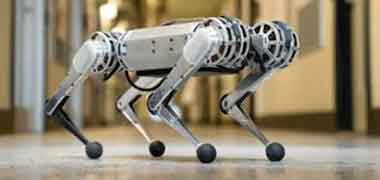
Legged Robot Developers
High-torque actuator housings for quadruped and biped locomotion systems — 42CrMo4 and 7075-T6 large-diameter housing bodies for hip and knee actuators at 100–350 Nm torque class, with fatigue-optimized housing wall geometry and fillet networks. QDD ankle actuator casings with thin-wall protocol and 5-axis compound-angle structural interfaces for biped legged robot programs requiring differential ankle DOF.
Surgical Robot Companies
316L stainless and Ti-6Al-4V robot actuator housings for surgical robotic wrist and arm joint mechanisms — non-magnetic materials, Ra 0.8μm stator bore finish for maximum thermal contact conductance, passivation per ASTM A967, and ISO 13485-compatible documentation including material certifications, CMM reports, and passivation certificate. MRI-compatible surgical robot actuator housing programs in Ti-6Al-4V with non-magnetic property verification.

Industrial Robot & Exoskeleton
Actuator casing programs for industrial robot joint modules at volumes from 1,000 to 500,000 units annually with dedicated MAZAK capacity and blanket order scheduling aligned to industrial robot assembly line cadence. Lightweight titanium and AZ91D robot actuator housings for exoskeleton joint actuators — mass-verified per housing, structural interface geometry matching body-conforming kinematic architecture, pilot device and clinical evaluation quantities.
Robot Actuator Housing
Integration Zones & Capabilities
Every custom robot actuator housing integrates seven functional zones whose specifications CNCPioneer's DFM review addresses jointly — not as independent parts but as an interacting system where the machining sequence, datum strategy, and tolerance allocation across zones determine whether the assembled actuator performs as designed.
Zone 1 — Motor Integration (Stator Seat)
The most dimensionally critical feature in every robot actuator housing: stator bore diameter ±0.005mm (interference class determining stator seating and thermal contact) · Bore cylindricity ±0.002mm/50mm (taper or barrel distorts laminations, varying air gap axially and producing cogging) · Surface finish Ra 0.8μm (governs thermal contact conductance — 30–50% resistance reduction vs Ra 1.6μm directly improving continuous torque rating) · Anti-rotation keyway ±0.010mm for stator angular positioning relative to encoder · Stator axial stop ±0.020mm. Frameless motor note: actuator casing bore IS the motor housing bore — its precision governs motor performance directly.
Zone 2 — Gearbox Integration (Bearing Stack)
Harmonic: wave generator input bearing seat ±0.003mm, concentricity to stator seat ±0.005mm · Circular spline housing bore ±0.003mm (or integrated wire EDM internal teeth) · Cross roller output seat ±0.002mm, OD/ID concentricity ±0.003mm · Seal groove Ra 0.4μm running surface. Planetary: ring gear housing bore ±0.003mm for planetary module installation (or integrated wire EDM ring gear teeth) · Planet carrier output bore ±0.002mm. QDD: large-diameter thin-wall shell Ø80–160mm at ±0.050mm wall uniformity · Stator bore coaxial to output bearing seat ±0.008mm. All architectures: complete coaxiality chain achievable 0.005mm single-setup.
Zone 3 — Encoder, Torque Sensor & Sealing
Absolute encoder mounting pocket: stator position ±0.005mm from housing axis · Encoder disc hub bore ±0.003mm · Axial depth ±0.050mm for disc-to-stator air gap compliance. Resolver stator bore ±0.005mm; angular orientation reference ±0.5°. Torque sensor reaction flange face flatness 0.005mm for correct strain coupling. O-ring face seal grooves at housing/end cap interface: ±0.020mm width and depth for IP65–IP67 per IEC 60529 · Labyrinth seal grooves at output shaft exit ±0.030mm · Cable entry gland boss thread ±0.005mm pitch diameter · Vent boss M6/M8 for GORE-TEX vent membrane preventing moisture breathing under thermal cycling.
Zone 4 — Thermal Management
Stator contact surface Ra 0.8μm standard on all CNCPioneer actuator housing programs — reduces stator-to-housing thermal resistance 30–50% versus Ra 1.6μm, directly improving motor continuous torque rating at zero additional cost. Water jacket channel: annular cooling channel machined as part of main boring sequence — channel width ±0.1mm; O-ring grooves at each end ±0.020mm sealing coolant from motor internals. Thermal break features: PEEK spacer bores or air-gap isolation features between stator bore and encoder pocket when axial distance below 20mm — encoder accuracy degradation from stator heat prevented. External fin features: Ra 3.2μm on thermal radiating zones increasing convective rejection on air-cooled housing programs.
Zone 5 — Structural Interface & Cable Management
Proximal attachment (to fixed robot limb): mounting face flatness 0.010mm; bolt pattern ±0.010mm; alignment pin bore ±0.003mm. Distal attachment (to output link): flange register OD ±0.005mm; face perpendicularity 0.008mm to joint axis. Multi-axis housing angular relationship ±0.02° (hip cluster, wrist differential programs). External datums for robot kinematic calibration: precision machined reference surfaces ±0.010mm. Cable routing features: axial cable channel ±0.2mm position, radius ≥3× cable bundle diameter for bend radius compliance; radial cable exit port ±0.050mm; grommet groove ±0.030mm; hollow through-bore for joint-axis cable routing concentricity ±0.005mm.
Zone 6 — Production & Volume Programs
Prototype 5–14 days (aluminum in stock 5–7 days; AZ91D 7–10 days; 5-axis complex 9–14 days). Pilot production 10–500 units, 2–3 weeks; SPC accumulation from first 25 units; 100% CMM pilot batch. PPAP Level 3 qualification 6–8 weeks from pilot: Cpk ≥1.67 on stator bore and bearing seats; MSA Gage R&R ≤10% gauge variation; PFMEA and control plan finalized. Volume blanket orders: stator bore diameter 100% CCD automatic laser measurement above 10,000 annual units; adaptive CNC offset correction within ±0.001mm; SPC control charts per shift; 2–3 week monthly release schedules. Volume pricing: –45–55% vs prototype at 500–2,000 units; –65–70% at 10,000–50,000 units; maximum discount at 50,000+ annual units.
Materials for
Robot Actuator Housings
Robot actuator housing material selection is governed by mass-to-stiffness ratio (actuator housing inertia directly loads proximal joint motors), yield strength for housing wall stress under rated torque reaction, thermal conductivity for stator heat extraction, and environmental compatibility. Aluminum 7075-T6 dominates at 65% of programs; magnesium AZ91D for lightest distal joint casings.
Aluminum 7075-T6
503 MPa yield · 2.80 g/cm³ · The default for humanoid and collaborative robot actuator housings — yield strength sufficient for housing wall stress under rated joint torque reaction, density 2.80 g/cm³ producing the mass budget that distal robot joint actuators require, and excellent response to Type II/III anodize for environmental protection and cosmetic finish. 7075-T6 actuator housings machine cleanly to ±0.005mm stator bore and ±0.003mm bearing seat dimensions on MAZAK mill-turn platforms without the thermal distortion risk of more difficult alloys. Standard for all harmonic drive actuator housings, QDD shells, and compound-axis joint housings.
Aluminum 6061-T6
276 MPa yield · 2.70 g/cm³ · Superior anodize cosmetic quality for collaborative robot motor housings where the Type II anodize finish must meet product industrial design standards — 6061-T6's lower alloy content produces more consistent anodize color and texture across batches than 7075-T6, critical for cobot programs with color-matched robot body panel appearance standards. Also used for linear actuator casings where moderate structural loading and machinability cost reduction are both objectives. Type II clear anodize ASTM E595 TML ≤0.05% available for vacuum-environment actuator housing programs.
Aluminum 6063-T5
200 W/m·K thermal conductivity · 2.70 g/cm³ · 186 MPa yield · The highest thermal conductivity aluminum alloy in CNCPioneer's robot actuator housing program — 6063-T5's superior thermal conductivity versus 7075-T6 (200 W/m·K vs 130 W/m·K) reduces stator-to-ambient thermal resistance in high-duty-cycle robot actuators operating at 30–200W stator dissipation. Specified for thermally-managed motor housings with integrated heat sinking where continuous torque rating is the primary design driver. External fin arrays machined integral to 6063-T5 actuator casing wall; fin geometry designed with CNCPioneer's DFM to maximize fin surface area while maintaining machining access for stator bore operations.
Magnesium AZ91D
1.81 g/cm³ · 35% lighter than 7075-T6 · The minimum-mass robot actuator housing material — specified for distal joint motor casings (finger, thumb, wrist) where housing mass adds to arm-end inertia that proximal shoulder and elbow motors must accelerate. AZ91D actuator casings reduce housing mass by 35% versus 7075-T6 at adequate structural stiffness for distal joint torque reaction. Mandatory electroless nickel MIL-C-26074 for all AZ91D actuator housings — magnesium's corrosion susceptibility requires uniform EN coating including stator bore inner surface; EN plating allowance machined into stator bore dimension; post-plate bore air gauge confirms final bore within stator fit specification. Wall ≥2.5mm minimum for AZ91D actuator casing structural integrity.
Stainless 316L
Non-magnetic · Biocompatible · For surgical robot motor housings in sterilization, saline, and tissue-contact proximity environments where aluminum cannot provide the corrosion resistance required. Non-magnetic property satisfies MRI-compatible surgical robot requirements. 316L actuator housings machine to ±0.005mm stator bore at Ra 0.8μm with passivation ASTM A967 as standard. ISO 13485-compatible documentation: material certifications, CMM reports, and passivation certificate for surgical robot actuator housing programs. Higher density (7.99 g/cm³) limits 316L to distal surgical robot joints where mass is less critical than biocompatibility and sterilization compatibility.
Stainless 17-4PH H900
HRC 44–47 · 1,310 MPa yield · For actuator structural end caps, output flanges, and high-strength housing interface elements where 7075-T6 yield strength is insufficient for the compact cross-section that joint volume budget allows. 17-4PH H900 actuator housing flanges at ±0.002mm bearing seat and ±0.003mm OD/ID concentricity — machined in H900 condition at HRC 44–47 without post-machining grinding. Passivation ASTM A967 standard. Used in high-payload robot shoulder and hip actuators where cross roller bearing seat housings require stainless hardness to resist fretting wear at bearing outer race interface under high-load dynamic gait cycles.
Titanium Ti-6Al-4V
880 MPa yield · 4.43 g/cm³ · Non-magnetic · Ti-6Al-4V robot actuator housings for two use cases: high-load joint structural housings where titanium's fatigue strength advantage over 7075-T6 (500+ MPa vs 150 MPa fatigue limit) is decisive in the housing wall fillet stress at peak gait cycle loading; and MRI-compatible surgical robot actuator housings where non-magnetic property (μᵣ ≈ 1.0005) satisfies MRI-compatibility constraints that ferromagnetic steel and some aluminum-silicon alloys cannot meet. Ti-6Al-4V actuator housings mass-verified per component; stator bore ±0.005mm by air gauge on MAZAK mill-turn single-setup program. DLC coating on titanium bearing bore surfaces compensating titanium's lower surface hardness in high-load bearing seat applications.
Surface Treatments for
Robot Actuator Housings
Robot actuator housing surface treatment selection addresses structural aluminum protection and wear resistance (Type III anodize), cosmetic cobot housing exterior (Type II clear anodize, powder coat), magnesium casing corrosion sealing (electroless nickel), stainless housing passivation (ASTM A967), EMC bonding continuity (Alodine Class 3), and internal bearing surface friction reduction (DLC).
Type III Hard Anodize — MIL-A-8625
Standard wear and corrosion protection for aluminum robot actuator housing exterior surfaces — HV 400+ hardness resisting scuff damage during robot assembly and field service. Black Type III hard anodize standard for humanoid robot programs where actuator casings must minimize visual contrast with robot body panels — uniform matte black appearance across all joint torque classes (finger through hip) machined from 7075-T6. Type III anodize allowance (12–25μm) machined into all precision structural interface bores before anodizing; post-anodize CMM confirms bolt circle and alignment pin positions within tolerance in finished state. Clear hard anodize option for programs requiring dimensional visibility of machined surfaces for field inspection.
Type II Clear Anodize & Powder Coat
Type II clear anodize (5–25μm) for collaborative robot motor housing exterior surfaces where Type III dark appearance conflicts with cobot industrial design. 6061-T6's superior anodize color consistency versus 7075-T6 enables color-matched cobot motor housing batches across production runs — critical for robot OEMs maintaining visual brand consistency across cobot generations. ASTM E595 TML ≤0.05% for Type II vacuum-environment actuator housing programs. Powder coat over Alodine Class 1A pretreatment for branded cosmetic finish on commercial cobot product programs — applied to final machined housing dimension, color-matched to robot OEM specification, withstanding the 500+ hour salt spray corrosion resistance that commercial cobot warranty commitments require.
Electroless Nickel — MIL-C-26074
Mandatory corrosion protection for all magnesium AZ91D robot actuator housings — magnesium's corrosion susceptibility in humid, outdoor, and sweat-contaminated robot operating environments requires uniform electroless nickel on all housing surfaces including stator bore inner surface, cable routing channels, and counterbored features that line-of-sight plating cannot reach. Mid-phosphorus EN (8–10% P, HV 500+) deposits uniformly across complex housing geometry. Stator bore plating allowance machined into housing dimension — post-plate bore air gauge confirms bore within stator OD fit class, maintaining the stator-to-housing interference class that was the subject of CNCPioneer's DFM review. EN also applied to steel gear-adjacent actuator housing components in humidity-exposed outdoor robot environments.
Passivation — ASTM A967
Mandatory treatment for all 316L stainless and 17-4PH H900 robot actuator housing components — surgical robot motor housings, stainless actuator structural end caps, and 17-4PH output flanges. Passivation removes free iron from stainless housing surface, builds the passive chromium oxide layer for maximum corrosion resistance in sterilization, saline, and humidity-exposed robot operating environments. Zero dimensional change — passivation adds no detectable dimension on ±0.002mm bearing seat surfaces in 17-4PH housing flanges. Passivation certificates included in standard actuator housing documentation package for surgical robot and corrosion-sensitive actuator housing programs.
Alodine Class 3 — MIL-DTL-5541
Electrically conductive surface conversion for robot actuator housings requiring EMC bonding continuity between housing body and robot chassis — EMC-compliant actuator casing programs for robot platforms requiring FCC/CE electromagnetic emission certification. Class 3 chromate conversion maintains contact resistance <5 mΩ/cm² indefinitely, versus anodized surfaces whose contact resistance increases over time from oxide growth. Applied to actuator housing bonding surfaces (designated grounding tabs and chassis contact pads) while remainder of housing exterior receives Type II or Type III anodize for corrosion and cosmetic protection — CNCPioneer machines bonding surface recesses at final dimension after Alodine treatment, ensuring the conductive bonding surface is exposed metal-to-metal and not isolated by anodize.
DLC Coating — Internal Bearing Surfaces
Ultra-low friction (μ 0.05–0.15, HV 2,000–5,000) for robot actuator housing internal surfaces in contact with rotating elements — applicable to housing bore surfaces in integrated actuator designs where rotor or bearing outer ring rotates against the housing bore without a rolling element intermediary, and to actuator casing thin-wall cross roller outer race seats in designs where the bearing outer race rotates with the joint output. DLC's 1–3μm coating thickness adds negligible dimension on ±0.005mm stator bore and ±0.002mm bearing seat features — coating allowance in final housing bore dimension adjusted 1–3μm per surface. The standard recommendation for housing bore surfaces with relative motion, eliminating the wear mode that causes actuator casing bore enlargement under high-cycle robot gait loading.
All robot actuator housing surface treatments — Type III/II anodize, black anodize, powder coat, electroless nickel MIL-C-26074, passivation ASTM A967, Alodine Class 3, and DLC coating — are documented with treatment certifications and post-treatment bore diameter air gauge verification in the actuator housing documentation package. Treatment allowances machined into stator bore and bearing seat dimensions are confirmed post-treatment, ensuring the dimensional specifications governing motor stator fit class and bearing preload are met in the final delivered condition. Surface treatment selection guidance is included in CNCPioneer's 24-hour DFM review at no additional cost.
Quality Assurance for
Robot Actuator Housings
Robot actuator housing quality assurance centers on the coaxiality chain — verifying not just individual bore diameters but the spatial relationship between stator seat, wave generator bearing seat, output bearing seat, and encoder pocket on every first article and on a statistical basis throughout volume production.
Engineering Contract Review & DFM
24-hour DFM on every robot actuator housing inquiry: stator bore tolerance class for motor OD fit specification (interference class, thermal growth, assembly force) · Coaxiality chain feasibility from stator seat to output bearing seat — is the full chain achievable in one setup on the housing geometry? · Thin-wall distortion risk for QDD and large-diameter housings — clamping protocol and fixture design assessment · Water jacket sealing feasibility: O-ring groove geometry against target IP rating · Cable channel accessibility: minimum wall thickness at routing channel position · Mass target pre-check from CAD model · Angular relationship feasibility for compound-axis housing programs · Surface treatment allowance specification for stator bore and bearing seats.
Material Verification
SII XRF composition verification on every robot actuator housing lot — 7075-T6, 6061-T6, 6063-T5, AZ91D, Ti-6Al-4V, 316L, 17-4PH confirmed before machining begins. Hardness verification on 17-4PH H900 lots (HRC 44–47). Billet flatness incoming for thin-wall QDD actuator casing programs — out-of-flat billet contributes to housing distortion during machining. Full lot traceability from mill certificate through finished actuator housing shipment.
First-Off & In-Process Quality Control
First-off stator bore diameter air gauge verification before batch release — confirming bore center of tolerance before committing to full-batch machining cycle. Coaxiality chain CMM verification (stator seat → wave generator bearing seat → output bearing seat) on every first article — the inter-feature measurement that confirms single-setup program achieved the 0.005mm coaxiality target. SPC control charts on stator bore, bearing seat diameters, and coaxiality with Cpk ≥1.67 maintained. Adaptive CNC offset correction detecting and correcting diameter drift from tool wear within ±0.001mm before approaching control limit. 100% CCD automatic laser measurement on stator bore diameter for volume programs above 5,000 annual units. Thin-wall QDD housing free-state bore roundness verified after clamping force release on every QDD program.
Thin-Wall Actuator Casing Special Protocol
Large-diameter thin-wall QDD actuator casings (Ø80–160mm, wall 3–6mm) are the most distortion-prone robot actuator housings — chuck clamping at large diameter creates significant ovalization. CNCPioneer's QDD casing protocol: conforming chuck jaw fixtures matching housing OD contour distributing clamping force over maximum contact area · Low-force clamping before bore finish pass (verified by clamping force measurement) · Thermal stabilization pause between roughing and finishing cycles (30–60 minutes on housing thermal thermocouple) · Post-machining free-state roundness verification confirming bore geometry in unclamped state before final surface treatment. Protocol documentation included in each QDD actuator housing lot record.
Final Inspection
Air gauge: stator bore diameter and all bearing seat bores 100% on precision programs · Roundness tester: stator bore cylindricity (±0.002mm/50mm) and paired bearing seat coaxiality verification · Mitutoyo CMM (±0.001mm): structural interface network (mounting face flatness, bolt circles, alignment pin positions, flange perpendicularity, encoder pocket positions, O-ring groove geometry) · Profilometer: stator bore surface finish Ra verification · Precision balance: mass verification against design target · Visual: cable routing channels clear, no burrs at stator bore entry chamfer, O-ring groove radius verified as sharp-corner-free for seal seating.
Documentation Package
Certificate of Conformance · CMM dimensional report (bore diameters, coaxiality measurements, structural interface positions, bolt circles, encoder pocket positions, O-ring groove dimensions) · Air gauge stator bore and bearing seat records per lot · Roundness tester bore cylindricity and coaxiality records · Profilometer stator bore Ra records · Mass verification record · Material certifications with lot traceability · Surface treatment certifications · PPAP Level 3 for volume robot actuator housing programs · FAIR per AS9102 for aerospace and defense programs · All records retained 20 years.
IATF 16949 Quality System for
Robot Actuator Housings
CNCPioneer's IATF 16949 and AS9100D certified robot actuator housing quality system addresses the four quality dimensions unique to actuator casing precision: single-setup coaxiality governance, IATF 16949 SPC production control with 100% CCD stator bore sorting, thin-wall casing free-state quality protocol, and PPAP Level 3 qualification bridging prototype to volume actuator housing supply.
Single-Setup Coaxiality Governance
Coaxiality of the robot actuator housing bore system — stator seat to wave generator bearing seat to cross roller output seat — is the single most critical quality parameter in robot actuator housing production, and it is a process architecture outcome rather than an inspection outcome. CNCPioneer's MAZAK mill-turn single-setup programs make this coaxiality a machine positioning accuracy result (±0.001–0.002mm) rather than a rechucking-error result (±0.010–0.030mm per rechuck). The quality system controls this at the process design level: single-setup mandated for all housing programs with coaxiality specifications ≤0.010mm; deviation from single-setup requires engineering approval and validated measurement evidence that coaxiality is achieved by alternative means. This process architecture control is the reason CNCPioneer's robot actuator housings consistently achieve 0.005mm coaxiality in volume production rather than achieving it on first articles and regressing in production.
- Single-setup mandatory for coaxiality ≤0.010mm
- Coaxiality governed by machine positioning accuracy
- 0.005mm coaxiality chain stator-to-output
IATF 16949 SPC & 100% CCD Stator Bore Sorting
Stator bore diameter is an IATF 16949 special characteristic on every robot actuator housing program at CNCPioneer — Cpk ≥1.67 maintained with real-time SPC per shift and adaptive CNC offset correction detecting and correcting tool-wear diameter drift within ±0.001mm before approaching the control limit. For programs above 5,000 annual units, 100% CCD automatic laser measurement on stator bore diameter replaces 100% manual air gauge — every housing measured individually at production throughput, zero escapes to actuator assembly of housings with out-of-specification stator bore diameter that would produce incorrect stator interference fit. Bearing seat diameters: Cpk ≥1.67; coaxiality: Cpk ≥1.33. MSA Gage R&R on air gauge and CCD systems: ≤10% gauge variation of tolerance, documented in PPAP package.
- Cpk ≥1.67 stator bore & bearing seats
- 100% CCD laser measurement >5,000 units/year
- Adaptive offset correction within ±0.001mm
Thin-Wall QDD Casing Free-State Quality Protocol
Large-diameter thin-wall QDD actuator casings present a quality failure mode unique to robot actuator housings: the bore is accurate under clamping force but springs non-round after unclamping, producing a stator bore that is within specification at machining but out-of-specification after unclamping — and the motor's stator interference fit then contacts a non-round bore, distorting stator laminations and producing variable air gap. CNCPioneer's free-state quality protocol prevents this: clamping force reduction before final bore pass (verified by force measurement); roundness tester verification in low-force state before final unclamping; post-unclamping free-state bore roundness verification before release to quality system. This protocol is documented in the QDD actuator housing control plan and produces 100% of QDD casing bore roundness records in free-state geometry rather than chuck-distorted machining geometry.
- Low-force clamping before bore finish pass
- Free-state roundness verified post-unclamping
- Protocol documented in QDD control plan
PPAP Level 3 — Prototype to Volume Continuity
PPAP Level 3 qualification for volume robot actuator housing programs: design records, process flow (including single-setup sequence for coaxiality chain), PFMEA (covering stator bore diameter drift from tool wear, thin-wall distortion, clamping-induced bore ovalization, plating allowance deviation), control plan (stator bore measurement frequency, coaxiality verification protocol, CCD sorting threshold), MSA Gage R&R on all measurement systems, initial process capability studies (Cpk ≥1.67 on stator bore and bearing seat IATF special characteristics), and part submission warrant. Generated on the same MAZAK programs used in prototype and volume production — because prototype programs at CNCPioneer use production platforms, the PPAP process capability data is drawn from the same process that produced the first prototype housing, providing statistical evidence that the production process was in control from the first article rather than requiring a separate process qualification run.
- PPAP Level 3 for volume actuator housing programs
- Cpk ≥ 1.67 stator bore & bearing seats
- Prototype programs on production platforms = PPAP continuity
Robot Actuator Housings FAQ
Common questions from humanoid robot OEMs, collaborative robot manufacturers, robot actuator module producers, legged robot developers, and surgical robot companies about CNCPioneer's custom robot actuator housing capability, coaxiality achievement, thermal design features, prototype-to-volume timeline, and robot actuator housing in China economics.
Three structural differences drive the additional machining requirements. First, integration density: an industrial motor housing contains the motor alone — a robot actuator housing contains the motor, gearbox, bearing stack, position sensor, torque sensor, cable routing, and sealing system in one machined body whose features must be coaxial within 0.005–0.008mm. This requires single-setup machining where all coaxial features are generated from one datum without rechucking — impossible in conventional industrial motor housing production where stator bore and bearing bores are often machined in separate setups. Second, coaxiality specification: industrial motors tolerate 0.020–0.050mm total indicator runout between stator bore and shaft bearing seats — a robot actuator housing must achieve 0.005mm coaxiality between stator seat, wave generator bearing seat, and cross roller output seat because any eccentricity appears directly as motor cogging, gear mesh misalignment, and encoder noise in the robot's control loops. Third, mass criticality: an industrial motor housing has no mass specification beyond material compatibility — every custom robot actuator housing has a mass target (±0.5–2g) because housing mass adds to the joint inertia the robot's control system must model and the proximal joints must accelerate, requiring pocket-optimized wall geometry that industrial motor housings never need. These three differences — integration density, coaxiality tightness, and mass targeting — collectively define what separates a China robot joint actuator manufacturer capable of serving robot programs from a general-purpose motor housing machining facility.
Through single-setup MAZAK mill-turn machining that completes the entire coaxiality chain — stator bore, wave generator input bearing seat, and cross roller output bearing seat — without rechucking between features. The physics: each time a housing is removed from the chuck and re-registered for the next boring operation, the re-registration introduces 0.010–0.030mm of centering error between the previous bore and the new bore axis. A robot actuator housing with stator seat to output bearing seat coaxiality specification of 0.005mm cannot absorb even one rechucking operation — 0.010mm rechucking error is 2× the entire coaxiality budget. CNCPioneer's actuator housing programs on MAZAK Integrex and Quick Turn mill-turn centers complete the full bore sequence in one chucking: rough stator bore and bearing bores → thermal stabilization pause → finish stator bore (this bore becomes the master datum reference) → finish front bearing seat using stator bore as reference → sub-spindle transfer or long-reach boring bar for rear bearing seat → encoder pocket machining at C-axis indexed position. All bores share the identical turning center axis established in the first finish pass — coaxiality between them is governed by machine positioning accuracy (±0.001–0.002mm) rather than rechucking error (±0.010–0.030mm). This is the specific reason CNCPioneer's programs specify MAZAK mill-turn platforms rather than machining centers that cannot perform the complete bore sequence in one chucking from a single rotational datum.
Thermal management is the most underspecified zone in most early-stage custom robot actuator housing designs, and the one most likely to require expensive design revision after thermal validation reveals inadequate continuous torque capability. Four thermal features should be specified in every custom robot actuator housing. First, stator contact surface finish Ra 0.8μm — the contact conductance between stator OD and housing bore is the dominant thermal resistance in an air-cooled actuator, and Ra 0.8μm versus Ra 1.6μm reduces this resistance by 30–50%, directly improving the motor's continuous torque rating without any design change other than specifying the finish on the DFM drawing. CNCPioneer's standard actuator housing bore finish is Ra 1.6μm; Ra 0.8μm is a no-cost specification addition that CNCPioneer recommends as default for all actuator housing programs. Second, water jacket channel: for high-duty-cycle robots (>30% duty), an annular cooling channel around the stator bore machined into the housing wall — CNCPioneer machines these as part of the main housing boring sequence; O-ring grooves at each end seal the coolant channel from motor internals. Third, thermal break features: between stator bore zone and encoder pocket — PEEK spacer bores or air-gap features preventing stator heat from reaching the encoder when axial distance is below 20mm. CNCPioneer machines these isolation features as standard when encoder pocket-to-stator bore axial distance is below 20mm. Fourth, external surface area: external fin features or Ra 3.2μm on exterior surfaces designated as thermal radiating zones.
Four phases. Phase 1, first article (5–14 days): driven by material lead time (aluminum in stock; titanium requires 3–5 day procurement), machining cycle time (simple cylindrical harmonic housing 2–3 hours; complex 5-axis QDD shell 6–10 hours), and surface treatment lead time (anodize +2–3 days). Phase 2, design iteration (5–14 days per revision): CNCPioneer maintains revision-controlled programs per housing part number; revisions changing only one bore or pocket update the affected pass without reprogramming the full housing cycle — most revisions produce revised first articles in 7–10 days. Phase 3, pilot production (10–500 units, 3–8 weeks): first 25 units accumulate SPC data for stator bore Cpk; 100% CMM this batch establishes the dimensional scatter model for PPAP calculation; pilot batch typically reveals one or two CNC parameter refinements that stabilize Cpk above 1.33. Phase 4, PPAP Level 3 qualification and volume release (6–8 weeks from pilot): PPAP package compiled from pilot data; Cpk ≥1.67 confirmed; PFMEA and control plan finalized; PSW signed; volume blanket orders placed with 2–3 week monthly release. Because prototype phases use production-intent programs on production platforms, no equipment change or process requalification occurs at the prototype-to-volume transition — the tenth-thousandth housing is machined by the same program that produced the first prototype.
The economic argument is direct: CNCPioneer's robot actuator housing in China delivers 40–60% per-unit cost reduction versus equivalent custom robot actuator housing from US, European, and Japanese precision machining suppliers — at the same ±0.005mm stator bore accuracy, 0.005mm coaxiality chain, IATF 16949 PPAP Level 3 documentation, and prototype delivery lead times (5–14 days, comparable to US domestic rapid-turn suppliers). The cost differential is structural — China manufacturing economics in labor, overhead, and material procurement — not a reflection of capability or quality shortfall. For a humanoid robot containing 28–60 robot actuator housings per robot, at a BOM unit cost differential of $50–$200 per housing depending on size, China sourcing versus domestic sourcing saves $1,400–$12,000 per robot in actuator housing cost alone — the category savings that enables humanoid programs to reach price points where commercial deployment is viable rather than confined to research budgets. With 3–5 day airfreight from Shenzhen to US/European customers, prototype delivery timelines are equivalent to domestic lead times. CNCPioneer's robot actuator housing in China programs mitigate supply chain risk through dedicated capacity reservation, rolling safety stock of completed housings for volume customers, and quality documentation depth (CMM records, SPC charts, material traceability) enabling customer quality organizations to audit the actuator casing supply chain with data rather than proximity.
Get a Quote for Robot Actuator Housings
Upload your robot actuator housing or motor housing drawings or CAD files and receive a free DFM review and competitive quotation within 24 hours — covering stator bore tolerance class for your motor OD fit specification, coaxiality chain feasibility analysis, thermal management feature recommendations, sealing groove specification for target IP rating, mass target pre-check, structural interface position network analysis, material and surface treatment selection, and complete pricing from prototype custom robot actuator housing through volume robot actuator housing in China production supply.