
Humanoid Robot
Joint Housings
CNCPioneer is an IATF 16949 and AS9100D certified humanoid robot joint housings specialist and China humanoid robot joint housing manufacturers facility delivering bearing bore housings, structural joint shells, cross-roller seat assemblies, thin-wall lightweight joint housing bodies, multi-bore intersection casings, and complete bearing bore housing assemblies — with bearing bore diameter accuracy ±0.002mm, bore-to-bore concentricity ±0.003mm, bore roundness ±0.001mm, thin-wall uniformity ±0.050mm, and mass verification ±0.5g on lightweight joint housing components since 2011.
What Is a
Humanoid Robot Joint Housing?
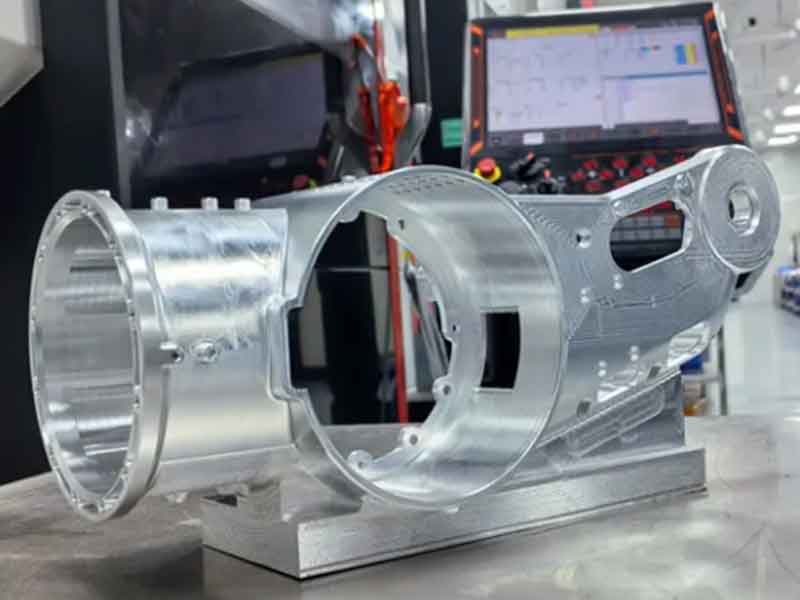
A humanoid robot joint housing is the precision-machined structural body that physically constitutes the outer frame of one actuated degree of freedom — the machined shell or casing that provides the bearing seats supporting the joint's rolling elements, the structural walls carrying external bending and torsional loads from adjacent limb segments, the precise interface geometry coupling the joint mechanism to the robot structure, and the controlled enclosure maintaining the actuator's sealing, cable management, and thermal environment. Humanoid robot joint housings differ from robot actuator housings: an actuator housing is primarily a motor integration body (stator bore, coaxial gearbox bearing seats, encoder pocket — all coaxial within 0.005mm). A joint housing is primarily a structural precision body — bearing bore systems locating the joint's rolling element bearings, structural walls carrying gait and manipulation loading, interface surfaces coupling joint to limb at the angular accuracy the robot's kinematic model requires, and lightweight design minimizing limb inertia.
The bearing bore housing is the dimensional heart of every humanoid robot joint housing. Every dimensional error in the bearing bore propagates directly into bearing performance: bore diameter error produces bearing preload error (oversize clearance allows race creep; undersize interference distorts internal rolling geometry). Bore roundness error distorts the bearing race, redistributing rolling element contact stress non-uniformly and concentrating fatigue damage. Bore-to-bore concentricity error forces rolling elements to travel on an elliptical path, generating once-per-revolution stiffness variation the joint's force controller cannot distinguish from real external loading. These bearing bore housing precision requirements — ±0.002mm diameter, ±0.001mm roundness, ±0.003mm concentricity — define what separates a qualified humanoid robot joint housing manufacturer from a general-purpose precision machining facility.
-
Bearing bore housing precision as core competency CNCPioneer achieves ±0.002mm bore diameter within H6/J6/K6 fit class, ±0.001mm bore roundness preventing race distortion and variable joint stiffness, and ±0.003mm bore-to-bore concentricity in single-setup MAZAK mill-turn programs — specifications verified by air gauge, roundness tester, and CMM on every humanoid robot joint housing lot. These are the specifications that distinguish China humanoid robot joint housing manufacturers capable of serving robot programs from general CNC machining facilities.
-
Lightweight joint housing design and mass discipline CNCPioneer's lightweight joint housing programs machine pocket-optimized wall geometry in 7075-T6 aluminum and AZ91D magnesium (1.81 g/cm³ — the lightest structural alloy) with wall thickness verified to ±0.050mm by ultrasonic mapping and mass verified to ±0.5g per housing. A wrist joint housing in AZ91D weighs 35% less than 7075-T6, removing 120g from bilateral wrist and elbow masses — reducing shoulder actuator torque requirement by 8–12% and extending battery endurance at equal actuator sizing.
-
Single-setup bore concentricity preservation The most common bearing bore housing failure mode is input-to-output bore concentricity error from sequential boring setups: when bores are machined in separate chucking operations, re-registration error (0.010–0.030mm) produces bearing misalignment generating parasitic joint friction 30–80% above the designed value. CNCPioneer's MAZAK mill-turn single-setup programs machine both bearing bores of every joint housing in one chucking, holding bore-to-bore concentricity by machine positioning accuracy (±0.002mm) rather than chuck re-registration uncertainty.
-
40–60% China humanoid robot joint housing manufacturers cost advantage CNCPioneer as a China humanoid robot joint housing manufacturers facility delivers 40–60% below US, European, and Japanese precision machining suppliers at identical bearing bore accuracy, mass verification discipline, and IATF 16949 documentation. A standard 7075-T6 elbow joint housing costing $180 as a US prototype may cost $45–55 at 5,000 annual units in China — multiplied across 60 joint housings per robot, producing $3,000–$6,000 per-robot BOM savings from joint housing alone.

Why CNCPioneer —
China Humanoid Robot Joint Housing Manufacturers
Among humanoid robot joint housing manufacturers globally, CNCPioneer's bearing bore precision triad (diameter, roundness, concentricity), lightweight joint housing mass discipline, single-setup bore concentricity preservation, custom DFM engineering partnership, and China cost advantage establish our factory as the preferred humanoid robot joint housing in China partner across the full joint type and torque class range.
Bearing Bore Housing Precision as Core Competency
CNCPioneer's bearing bore housing programs achieve the three-specification triad that defines qualified China humanoid robot joint housing manufacturers: ±0.002mm bore diameter within H6/J6/K6 fit class (air gauge 100% verification), ±0.001mm bore roundness (roundness tester; free-state verification after clamping force release), and ±0.003mm bore-to-bore concentricity in single-setup MAZAK mill-turn programs (CMM verification per first article). All three specifications are verified instrumentally on every program lot — on humanoid robot joint housings, unverified tolerance is fiction.
Lightweight Joint Housing Design & Mass Discipline
CNCPioneer machines topology-optimized pocket geometry in 7075-T6 and AZ91D magnesium — the lightest structural alloy at 1.81 g/cm³ — with wall thickness verified to ±0.050mm by ultrasonic mapping and mass verified to ±0.5g per housing (±0.1g for hand joint housings) against design targets. Left/right limb pair matching to ±0.5g differential — asymmetric limb mass degrades gait symmetry that no control algorithm fully compensates. Mass records shipped with every lot for robot assembly inertia parameter initialization.
Custom Humanoid Robot Joint Housing Development
Every custom humanoid robot joint housing inquiry receives 24-hour DFM review covering: bearing bore fit class recommendation for the specified bearing model (including anodize growth allowance in machined bore); bore-to-bore concentricity feasibility for single vs. multi-setup routing; thin-wall distortion risk and clamping protocol selection; mass target pre-verification from CAD; structural interface position network analysis; and 5-axis accessibility for compound-bore joint housings — preventing the design iterations that delay programs when bearing bore machining feasibility is discovered at prototype stage.
Complete Joint Type Portfolio — Finger to Hip
Finger MCP housings (Ø4–15mm bore, walls 1.0–2.5mm, mass ±0.1g) through hip 3-DOF cluster housings (Ø70–150mm bore systems, mass 800g–2,500g ±2g) — CNCPioneer's humanoid robot joint housing in China capability spans the complete joint size range within one qualified manufacturing relationship, eliminating the multi-supplier qualification that sourcing different joint sizes from different China humanoid robot joint housing manufacturers requires. One IATF 16949/AS9100D quality system, one supplier relationship, one synchronized delivery program.
Single-Setup Bore Concentricity Preservation
The most common bearing bore housing failure mode is input-to-output bore concentricity error from sequential boring — rechucking between front and rear bore introduces 0.010–0.030mm re-registration error producing bearing misalignment generating parasitic joint friction 30–80% above design. CNCPioneer's MAZAK mill-turn single-setup programs machine all bearing bores in one chucking: rough both bores → thermal stabilization → finish front bore (becomes datum) → finish rear bore via sub-spindle, concentricity ±0.003mm governed by machine positioning accuracy (±0.002mm) rather than rechucking error.
Humanoid Robot Joint Housing in China Cost Advantage
CNCPioneer delivers 40–60% per-unit cost reduction versus US, European, and Japanese humanoid robot joint housing manufacturers at identical bearing bore precision and IATF 16949 documentation. A standard 7075-T6 elbow joint housing at $180 US prototype pricing costs $45–55 at 5,000 annual units in China — multiplied across 60 joint housings per robot: $3,000–$6,000 per-robot BOM savings from joint housing alone, the cost discipline that enables sub-$30,000 commercial humanoid robot price points.
Humanoid Robot Joint Housing
Portfolio by Joint Location
CNCPioneer's humanoid robot joint housing in China programs cover every joint type in the humanoid robot's complete kinematic chain — from the 2g finger MCP housing with Ø6mm cross roller seat and 1.0mm walls through the 2,500g hip cluster housing with three major bore systems at compound angular orientations — with the same bearing bore precision discipline applied at every scale.

Finger & Hand Joint Housings
The highest part-count, smallest-scale humanoid robot joint housing category — MCP, PIP, and DIP joint housings with bearing bores Ø4–15mm at 1.0–2.5mm walls. MCP housing: bearing bore ±0.002mm diameter, ±0.001mm roundness; pivot bore pair Ø2–6mm at ±0.003mm concentricity; tendon routing channel ±0.2mm, Ra 0.2μm for friction minimization; 5-axis contour at finger anatomical envelope ±0.050mm; 7075-T6 standard, Ti-6Al-4V for high-force grasp programs; mass 2–8g verified ±0.1g. PIP/DIP housing: single-axis pivot pair Ø1.5–5mm ±0.003mm; thin-wall 1.0–1.5mm ±0.050mm; polished tendon passage. Thumb CMC saddle joint: non-circular bore profile by wire EDM or 5-axis machining; compound bore orientation ±0.02° (opposition axis relative to flexion axis); mass 5–12g ±0.1g.

Wrist Joint Housings
The most geometrically complex joint housings per unit mass in the humanoid robot arm — 2–3 DOF in a volume smaller than a human wrist. 2-DOF wrist: primary flexion bore Ø20–40mm thin-section bearing seat ±0.002mm; secondary deviation bore concentricity to primary ±0.003mm at angular orientation ±0.02°; both bores machined 5-axis single-setup (compound angular relationship not achievable in correct relationship by sequential 3-axis setups); differential mechanism cavity ±0.2mm for bevel gear or cable differential clearance; cable through-bore Ø6–15mm concentricity ±0.005mm; 7075-T6 standard, AZ91D for lightest wrist programs; mass 35–75g ±0.2g. 3-DOF wrist: three bearing bore systems at orthogonal orientations, bore network machined single-setup on MAZAK VARIAXIS 5-axis platform, bore-to-bore angular relationships ±0.02° between all three axes.

Elbow & Shoulder Joint Housings
Elbow (single-DOF): primary bearing bore pair Ø30–60mm ±0.002mm, concentricity ±0.003mm single-setup; hollow cable through-bore Ø10–20mm coaxiality ±0.005mm for forearm cable routing; structural flange interface perpendicularity ±0.005mm to bore axis; integrated pronation/supination bearing seat Ø25–45mm at ±0.02° from flexion axis; 7075-T6; mass 120–250g ±0.5g. Shoulder 3-DOF yoke (most structurally demanding lightweight joint housing in the arm): three bearing bore systems (abduction Ø40–80mm, flexion Ø35–70mm, rotation Ø30–60mm) machined single-setup MAZAK VARIAXIS at mutual angular relationships ±0.02°; yoke fork arm bore-to-bore coaxiality across arm pair 0.005mm; freeform external shoulder contour 5-axis at Ra 0.8μm; topology-optimized pocket geometry; mass 200–450g ±0.5g; 7075-T6 standard, Ti-6Al-4V for high-payload programs.
Industries & Applications
CNCPioneer's humanoid robot joint housing in China programs serve every industry building precision humanoid robot joint mechanisms — from embodied AI hardware developers requiring 5-day prototype joint housings for bi-weekly hardware iteration through established humanoid OEMs scaling PPAP Level 3 volume production with monthly blanket releases.

Humanoid Robot OEMs
Complete humanoid robot joint housing programs — all joint types from finger to hip — as a single China humanoid robot joint housing manufacturers relationship. Bearing bore housing precision across all joint torque classes, lightweight joint housing mass verification, build-synchronized delivery per robot serial number, PPAP-qualified volume production, and 40–60% cost advantage versus Western alternatives at identical bearing bore accuracy and IATF 16949 documentation.

Embodied AI Hardware
Rapid custom humanoid robot joint housing prototypes at 5–14 day turns for hardware iteration programs — same-day DFM on joint housing design revisions, mass target pre-verification before machining commitment, and flexible pilot quantities enabling hardware teams to iterate on bearing fit class and wall thickness without tooling investment. A bearing bore diameter revision from H6 to J6 fit class modifies one program line — no tooling write-off, no lead time for re-tooling.

Collaborative Robot
IATF 16949 certified cobot joint housing production — cosmetic anodize quality, integrated cable management, 100% air gauge bearing bore verification, and PPAP Level 3 supply qualification for cobot joint housing at 10,000–500,000 annual units. China humanoid robot joint housing manufacturers cost advantage enabling competitive cobot hardware BOM economics for sub-$20,000 commercial cobot price targets.
Legged Robot & Quadruped Developers
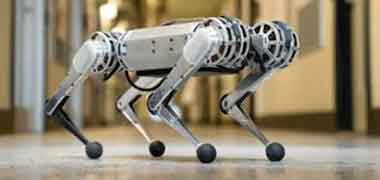
High-load lightweight joint housing programs for quadruped hip and knee joint structures — 42CrMo4 inserts within 7075-T6 joint housing bodies for maximum structural performance per gram, fatigue-optimized fillet geometry with load-path fillet radii ±0.05mm, and bearing bore housing precision for high-cycle locomotion loading. Left/right matched pair delivery for all bilateral quadruped joint housings within ±0.5g differential.
Surgical Robot Companies
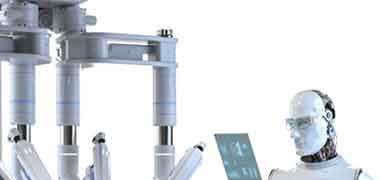
316L stainless and Ti-6Al-4V humanoid robot joint housing programs for surgical robotic wrist and instrument drive mechanisms — non-magnetic materials, Ra 0.4μm bearing bores, passivation per ASTM A967, and ISO 13485-compatible documentation for surgical robot joint housing supply. Non-magnetic joint housing property satisfies MRI-compatible surgical robot requirements where ferromagnetic materials would compromise imaging quality.
Exoskeleton
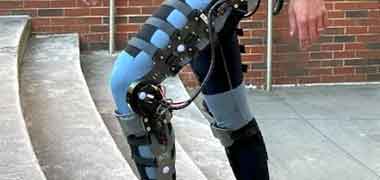
Custom humanoid robot joint housing in China for exoskeleton knee, hip, and shoulder joints — body-conforming joint housing geometry from 5-axis machining at ±0.050mm profile tolerance, lightweight joint housing mass verification ±0.5g, AZ91D magnesium option for maximum mass reduction at distal exoskeleton joints, and pilot device quantities at 5–14 day prototype turns without tooling investment for clinical evaluation and regulatory submission programs.
Humanoid Robot Joint Housing
Technical Capabilities
CNCPioneer's humanoid robot joint housing machining capability addresses six technical disciplines — bearing bore diameter and fit class precision, bore roundness for race distortion prevention, bore concentricity for parasitic friction elimination, lightweight material and topology machining, thin-wall process controls, and volume production quality infrastructure — each requiring specific process architecture decisions that separate qualified China humanoid robot joint housing manufacturers from general precision machining facilities.
Bearing Bore Diameter & Fit Class Precision
H6 ±0.002mm within the H6 band (bore to 0.003mm upper limit, not merely within H6's full tolerance) for stationary outer ring humanoid robot joint housings in most configurations · J6 near-zero fit for tightest practical stationary outer ring engagement without unacceptable assembly force · K6 interference for vibration-loaded joints (ankle, knee) where clearance fit allows race creep and fretting · 100% air gauge on all bearing seat bores in precision programs · SPC Cpk ≥1.67 on bore diameter · Critical DFM note: anodize growth (0.015–0.050mm per side) consumes fit class tolerance — bore machined undersize by growth allowance; post-anodize bore dimension confirmed by air gauge verifying fit class in finished condition.
Bearing Bore Roundness — Race Distortion Prevention
Standard humanoid robot joint housing roundness: ±0.002mm for deep groove and angular contact bearings in moderate-load joints (shoulder, elbow, wrist). High-precision roundness: ±0.001mm for cross roller bearing outer race seats in all load-bearing joints (hip, knee, ankle, precision wrist). Three protocols compounded: (1) Low-force clamping before bore finish-machining — thin-wall housings (3–8mm walls) distort under standard chuck pressure; free-state roundness verified post-release. (2) Thermal stabilization between roughing and finishing — cutting heat expands bore non-uniformly in thin walls; controlled stabilization hold before finish boring. (3) Single-pass finish boring — multiple passes accumulate spindle error motion; one precision pass at optimized depth-of-cut produces cleanest roundness result.
Bore-to-Bore Concentricity — Single-Setup Programs
Standard multi-bore concentricity: ±0.005mm (MAZAK mill-turn with sub-spindle transfer). High-precision: ±0.003mm (single-setup, all bores from one chucking). Ultra-precision: ±0.002mm (single-setup with in-process bore gauging feedback). Single-setup sequence for two-bearing joint housing: rough both bores → thermal stabilization → finish front bore (becomes datum axis) → finish rear bore via sub-spindle, concentricity to front bore ±0.003mm governed by machine positioning accuracy. No rechucking between front and rear bore finish operations — 0.010–0.030mm rechucking error eliminated from the concentricity budget entirely. For compound-axis joint housings (shoulder, hip, wrist): MAZAK VARIAXIS 5-axis single-setup boring all bearing bore systems at designed angular offsets ±0.02°.
Lightweight Joint Housing — Materials & Topology
AZ91D magnesium 1.81 g/cm³ (35% lighter than 7075-T6): NFPA 484 fire-safety protocols; wet chip conveyors; Class D extinguisher stations; electroless nickel mandatory; plating allowance as standard bore program parameter; same-facility plating within 72h of machining. 7075-T6 topology-optimized programs: freeform external pocket surfaces by 5-axis simultaneous at ±0.050mm profile tolerance; variable-thickness walls 1.2→4.0mm along load gradient ±0.050mm local verification; organic fillet network ±0.05mm (fatigue-critical geometry); rib network 1.0–2.5mm at ±0.100mm width. Ti-6Al-4V premium programs for fatigue-critical hip and high-load joint housings. Mass verification ±0.1–0.5g per housing; left/right pair matched within ±0.5g.
Thin-Wall Joint Housing Process Disciplines
Minimum achievable walls: 7075-T6 1.0mm standard; AZ91D 1.2mm; Ti-6Al-4V 1.5mm. High-speed machining (HSM) toolpaths: reduced radial engagement ≤0.3mm at 18,000–24,000 RPM (aluminum) minimizing cutting force per pass while maintaining material removal rate — allowing thin-wall pockets without wall deflection exceeding ±0.030mm. Intermediate wall thickness probing: in-process CMM or touch probe verification after roughing before finish passes that cannot be reversed. Residual stress management: roughing alternating pocket sides to balance stress release from each removed zone, preventing housing bowing as sequential pockets release non-uniform residual stress. Ultrasonic wall mapping on all thin-wall sections below 3mm — 5mm grid spacing confirming wall uniformity before surface treatment investment.
Volume Production & PPAP Qualification
Prototype 5–14 days: aluminum single-bore 5–7 days; 5-axis compound-bore Ti-6Al-4V 12–14 days; surface treatment +2–4 days. Pilot 10–500 units, 2–5 weeks: SPC accumulating from first 25 units; 100% CMM pilot batch; 35–50% per-unit cost reduction. PPAP Level 3 qualification 6–8 weeks: Cpk ≥1.67 on bearing bore diameter and concentricity; MSA Gage R&R ≤10% on all gauging systems; PFMEA and control plan finalized. Volume blanket orders: 100% air gauge all bearing bore diameters above 5,000 annual units; adaptive offset correction within ±0.001mm; 2–3 week monthly releases with dedicated MAZAK VARIAXIS capacity reservation. Volume pricing: –40–55% vs prototype at 500–2,000 units; –65–72% at 10,000–50,000 units.
Materials for Humanoid
Robot Joint Housings
Humanoid robot joint housing material selection is governed by mass-to-stiffness ratio for structural walls, yield strength for load-path zones under rated joint torque reaction, fatigue endurance limit for high-cycle gait loading, and environmental compatibility. Aluminum 7075-T6 dominates at 60% of programs; magnesium AZ91D for lightest distal joint housings; titanium for fatigue-critical high-load joints.
Aluminum 7075-T6
503 MPa yield · 2.80 g/cm³ · The default for humanoid robot joint housings across all joint types — yield strength allows structural wall thicknesses of 1.5–3.0mm under calculated joint housing stress from rated torque reactions, producing housings 65% lighter than steel at equivalent structural performance. 7075-T6 pocket-optimized joint housings machine to wall uniformity ±0.050mm by high-speed machining toolpaths and residual stress management protocols. Fatigue endurance limit approximately 150 MPa at 10⁸ cycles — adequate for all but the highest-load hip joint housings in the highest-payload humanoid programs. Type III hard anodize standard on structural joint housing exterior and bearing bore surfaces; Type III allowance machined into bore dimensions as standard program parameter.
Aluminum 6061-T6
276 MPa yield · 2.70 g/cm³ · Superior anodize cosmetic quality for collaborative robot joint housings — 6061-T6 produces more consistent anodize color and texture across production batches than 7075-T6, critical for cobot programs with color-matched robot body panel appearance standards. Also used for low-load non-structural joint housing shells and covers where moderate structural loading makes 6061-T6's lower yield strength adequate and machinability advantage reduces cycle time on complex external geometry. Type II clear anodize over 6061-T6 joint housings provides cosmetic finish with ASTM E595 TML ≤0.05% for vacuum-environment joint housing programs.
Aluminum 6063-T5
186 MPa yield · 200 W/m·K thermal conductivity · For humanoid robot joint housings with integrated heat sinking where continuous actuator duty cycle drives thermal design — 6063-T5's thermal conductivity advantage over 7075-T6 (200 vs 130 W/m·K) materially improves heat dissipation from bearing bore zone to the external environment. External fin geometry machined integral to joint housing wall; fin surface area maximized for convective air cooling of high-duty-cycle joint actuators in walking robots. Bearing bore ±0.002mm maintained on 6063-T5 programs with same air gauge 100% verification protocol as 7075-T6 programs.
Magnesium AZ91D
230 MPa UTS · 1.81 g/cm³ · Minimum-mass structural material for distal humanoid robot joint housings — finger, wrist, and elbow joint housings where housing mass adds directly to limb inertia that proximal actuators must accelerate across 10⁶+ gait and manipulation cycles per year. AZ91D joint housing is 35% lighter than 7075-T6 equivalent; bilateral wrist and elbow savings of 120g reduces shoulder actuator torque requirement by 8–12%. NFPA 484 machining protocols mandatory. Electroless nickel MIL-C-26074 mandatory on all surfaces. Bearing bore plating allowance machined in as standard parameter; post-plate bore air gauge confirms H6/J6 fit class in coated condition. Wall minimum 1.5mm standard; 1.2mm high-precision thin-wall programs with chip-breaking tool geometry.
Steel 42CrMo4
1,000 MPa UTS (HRC 28–34) · Toughness · 42CrMo4 structural inserts within 7075-T6 joint housing bodies for maximum structural performance per gram in high-load quadruped and legged robot hip and knee joint housings where aluminum cannot provide the load-path cross-section required at specified wall thickness. Inserts pressed or bolted into 7075-T6 outer housing; bearing bore machined into the 42CrMo4 insert at ±0.002mm with roundness ±0.001mm. Black oxide treatment for insert surfaces; passivation not applicable to carbon steel. Insert-and-housing assembly verified by CMM confirming bore-to-housing-interface concentricity and perpendicularity of insert bore axis to housing attachment face.
Stainless 316L
485 MPa UTS · Non-magnetic · Biocompatible · For surgical robotic wrist and instrument drive joint housings requiring autoclave compatibility, non-magnetic property in MRI-compatible surgical systems, and biocompatibility in tissue-proximity applications. 316L humanoid robot joint housing bearing bores machined to Ra 0.4μm (beyond standard Ra 0.8μm) for optimal rolling element contact quality in surgical robot wrist joints. Passivation ASTM A967 mandatory; ISO 13485-compatible documentation: material certifications, CMM reports, passivation certificate, and Certificate of Conformance for every 316L joint housing program.
Stainless 17-4PH H900
1,310 MPa yield · HRC 44–47 · For joint housing flanges, end caps, and structural insert elements where 7075-T6 yield strength is insufficient at the compact cross-section that joint volume budget allows. 17-4PH H900 joint housing flanges at ±0.002mm bearing seat and ±0.003mm concentricity, machined in H900 condition at HRC 44–47 — bearing-quality bore achievable by precision boring without post-machining grinding. Passivation ASTM A967 standard; added wear resistance at cross roller bearing outer race contact versus aluminum housing bores reduces fretting susceptibility under high-load gait cycling.
Titanium Ti-6Al-4V
950 MPa UTS · 4.43 g/cm³ · Non-magnetic · For high-load humanoid robot joint housings where 7075-T6's fatigue endurance limit (150 MPa at 10⁸ cycles) is insufficient for the hip joint housing's 10⁸-cycle load spectrum at rated torque. Ti-6Al-4V joint housings achieve the same structural performance as 7075-T6 at 25–35% reduced wall thickness — net mass roughly equivalent for load-limited designs with dramatically superior fatigue life. MRI-compatible joint housing property (μᵣ ≈ 1.0005) for surgical robot programs requiring non-magnetic joint housing structure. Bearing bore Ra 0.4μm standard; DLC coating on titanium bearing bore surfaces compensates titanium's lower surface hardness.
PEEK Engineering Grade
1.32 g/cm³ · Excellent dielectric · For electrically isolating inserts within aluminum or stainless humanoid robot joint housings — separating structural housing sections at ground-isolated robot joint electrical architecture boundaries, and providing dielectric isolation between bearing inner race and joint shaft in magnetically-actuated joint designs. PEEK insert bearing bores machined to ±0.002mm at Ra 0.4μm in single-step precision boring operations. PEEK tendon guide features within finger and wrist joint housing channels: self-lubricating PEEK reduces tendon friction at routing direction changes without the wear debris that PTFE alternatives generate under high-cycle tendon loading.
Surface Treatments for
Humanoid Robot Joint Housings
Humanoid robot joint housing surface treatment selection is critical because bearing bore housings are affected by coating thickness in ways that directly impact fit class: Type III anodize grows 0.015–0.050mm per side on bearing bores — every CNCPioneer joint housing program incorporates anodize growth allowance in machined bore dimensions by default, with post-treatment air gauge confirming fit class in the delivered condition.
Type III Hard Anodize — MIL-A-8625
Standard wear and corrosion protection for aluminum humanoid robot joint housing exterior and bearing bore surfaces — HV 400+ hardness resisting fretting wear at joint housing assembly contact interfaces and damage during robot assembly and field service. Black Type III hard anodize standard for humanoid robot programs requiring visual continuity with robot body panels. Critical bearing bore note: Type III anodize grows 0.015–0.050mm per side on bore surfaces — all CNCPioneer humanoid robot joint housing programs incorporate anodize growth allowance in machined bore dimensions by default; post-anodize bore air gauge verifies final bore within designed H6/J6/K6 fit class. Eddy current thickness verification in bearing bore zones confirms anodize growth within the designed allowance range — preventing tolerance consumption by variable anodize growth from compromising bearing fit class in the finished joint housing.
Type II Clear Anodize & Powder Coat
Type II clear anodize (5–25μm, thinner than Type III) for collaborative robot joint housing exterior surfaces where Type III dark appearance conflicts with cobot industrial design — Type II's lighter coating reduces bearing bore allowance risk while providing adequate corrosion protection for indoor cobot deployment environments. Cosmetically superior color consistency on 6061-T6 cobot joint housings versus 7075-T6. ASTM E595 TML ≤0.05% for vacuum-environment joint housing programs. Powder coat over Alodine Class 1A pretreatment for branded commercial cobot joint housing programs — color-matched to robot OEM specification across production batches, withstanding 500+ hour salt spray requirements for commercial robot warranty compliance.
Electroless Nickel — MIL-C-26074
Mandatory corrosion protection for all AZ91D magnesium lightweight joint housing bodies — uniform electroless nickel covering all surfaces including internal bearing bore, pocket floors, rib faces, cable channel inner surfaces, and external structural walls. Pre-plate part orientation optimized ensuring solution exchange in all internal features; post-plate inspection of internal bore nickel coverage by eddy current gauge confirming uniform protection depth throughout. Plating allowance machined into all bearing bores and structural features before plating; post-plate air gauge confirms bearing bore within H6/J6 fit class, maintaining the designed interference or clearance class that CNCPioneer's DFM review established. Machining-to-plating within 72 hours maximum in controlled factory humidity — preventing AZ91D corrosion initiation in the unincoated window between machining and protection.
Passivation — ASTM A967
Mandatory treatment for all 316L stainless and 17-4PH H900 humanoid robot joint housing components — surgical robot joint housings, stainless joint housing flanges, and 17-4PH end caps. Passivation removes machining free iron from stainless joint housing surface, builds the passive chromium oxide layer for maximum corrosion resistance in sterilization, saline, and humidity-exposed robot operating environments. Zero dimensional change — passivation adds no detectable dimension on ±0.002mm bearing seat surfaces in 17-4PH joint housing flanges. Passivation certificates included in standard joint housing documentation package for surgical robot and corrosion-sensitive joint housing programs.
DLC Coating — Bearing Bore Running Surfaces
Diamond-like carbon (1–3μm, μ 0.05–0.15, HV 2,000–5,000) for humanoid robot joint housing bearing bore running surfaces in designs where bearing outer rings or joint structural elements slide against housing bore surfaces without a rolling element intermediary — and on titanium Ti-6Al-4V bearing bore surfaces where titanium's lower surface hardness (HRC 36) would otherwise create fretting wear at the bore-to-bearing-outer-ring interface under high-cycle gait loading. Wire EDM bore finish (Ra 0.2μm from skim cuts) provides optimal DLC adhesion substrate on complex joint housing bearing bore surfaces — the combination of wire EDM profile accuracy and DLC tribological performance for specialized joint housing bearing interfaces. DLC adds 1–3μm uniformly on bore surfaces; allowance pre-planned into machined bore dimension.
Alodine Class 3 & Black Oxide
Alodine Class 3 MIL-DTL-5541 electrically conductive chromate conversion for aluminum humanoid robot joint housing EMC bonding surfaces — contact resistance ≤5 mΩ/cm² for EMC-compliant robot platforms requiring FCC/CE shielding effectiveness at joint housing assembly interfaces. Applied to designated bonding surfaces while Type II/III anodize covers remainder of housing exterior. Black oxide for steel 42CrMo4 structural inserts within aluminum joint housing bodies in vision-system-adjacent joint locations — low-reflectance mild corrosion protection reducing stray reflections in robot camera calibration fields of view. Adds zero dimensional impact on insert bearing bore tolerances: black oxide 1–3μm with no mechanical measurement effect at ±0.002mm bore precision.
All humanoid robot joint housing surface treatments — Type III/II anodize (with post-treatment air gauge confirming bearing bore fit class), powder coat, electroless nickel MIL-C-26074 for AZ91D magnesium (with eddy current bore coverage verification), passivation ASTM A967, DLC coating (with allowance pre-planned in bore dimensions), Alodine Class 3, and black oxide — are documented with treatment certifications, post-treatment bore diameter air gauge records, and anodize/nickel thickness verification in the joint housing documentation package. CNCPioneer's 24-hour DFM review addresses anodize growth allowance in bearing bore dimension specifications as the most commonly overlooked detail in first-time custom humanoid robot joint housing designs — ensuring the designed fit class is achieved in the finished, treated housing rather than only in the as-machined state.
Quality Assurance for
Humanoid Robot Joint Housings
Humanoid robot joint housing quality assurance centers on the bearing bore precision triad — diameter, roundness, and concentricity verified instrumentally (air gauge, roundness tester, CMM) with the three compounded process disciplines (low-force clamping, thermal stabilization, single-pass finish boring) that produce ±0.001mm free-state bore roundness that general precision machining does not achieve as standard practice.
Engineering Contract & DFM Review
24-hour DFM on every humanoid robot joint housing inquiry: bearing bore fit class recommendation (H6/H7/J6/K6) for specified bearing model — including explicit anodize growth allowance in machined bore dimension specification · Bore-to-bore concentricity feasibility for single versus multi-setup routing — ±0.003mm requires single-setup; ±0.005mm achievable in three-setup sub-spindle program · Thin-wall distortion risk under clamping for walls below 5mm — low-force clamping protocol selection · Mass target pre-check from CAD geometry versus design target — lightweight material recommendation if aluminum mass target unachievable · 5-axis accessibility for compound-bore joint housings (shoulder, hip, wrist) · Structural interface position network analysis · AZ91D magnesium feasibility and electroless nickel plating allowance coordination.
Material Verification
SII XRF composition verification on every humanoid robot joint housing lot — 7075-T6, 6061-T6, AZ91D, Ti-6Al-4V, 316L, 17-4PH H900 composition confirmed before machining. Hardness verification on 17-4PH H900 (44–47 HRC) and 42CrMo4 inserts (HRC 28–34). Billet and bar stock flatness/straightness incoming inspection before thin-wall joint housing programs — out-of-flat billet contributes to housing distortion during machining that wall thickness probing cannot detect until material is already removed. Full mill-certificate-to-robot-serial-number lot traceability enabling field traceability from robot symptom back to specific material lot in that joint housing's build.
In-Process Quality Controls
First-off air gauge bore verification on all bearing bores before batch release. Bore-to-bore concentricity CMM check on first article of every joint housing program and at defined production intervals. Thin-wall in-process probing between roughing and finishing passes on housings below 2.0mm wall. Thermal stabilization hold documented in process traveler — enforced protocol, not operator discretion. SPC control charts on bearing bore diameters with Cpk ≥1.67 on all special characteristics. Adaptive CNC offset correction detecting and correcting bore diameter drift from tool wear within ±0.001mm before approaching control limit. 100% CCD automatic sorting on bearing bore diameter for programs above 5,000 annual units.
Low-Force Clamping & Free-State Bore Verification
The defining quality discipline for thin-wall humanoid robot joint housing bearing bore programs: transition to minimum-retention clamping force before bore finish-machining (clamping force measurement documented per housing type); single-pass precision finish boring at optimized depth-of-cut and feed; roundness tester verification on the bore in the minimum-retention clamped state (not standard clamping force); bore diameter air gauge in minimum-retention state; unclamping and free-state roundness re-verification confirming bore geometry in the condition identical to the assembled joint housing. Free-state roundness documented in the final inspection record — not clamped-state roundness that does not reflect assembled performance.
Final Inspection
Air gauge: all bearing bore diameters 100% in precision programs · Roundness tester: bearing seat roundness ±0.001mm and cylindricity; bore-to-bore concentricity verification · Mitutoyo CMM (±0.001mm): structural interface network (face perpendicularity, bolt circles, alignment pin positions, O-ring groove dimensions, angular relationships in multi-axis housings, compound-bore orientation angles) · Profilometer: bearing bore surface finish Ra record · Ultrasonic wall mapping: 5mm grid on all thin-wall sections below 3mm · Precision balance: mass verification per housing and left/right pair mass differential · Eddy current gauge: anodize thickness in bearing bore zones after surface treatment confirming growth within allowance range.
Documentation Package
Certificate of Conformance · CMM dimensional report (all bore diameters, bore-to-bore concentricity, structural interface positions, angular relationships, face perpendicularity, bolt circles) · Air gauge bore records (all bearing seats, per lot) · Roundness tester bore roundness and cylindricity records · Profilometer bore surface finish Ra records · Ultrasonic wall thickness records (thin-wall programs) · Mass verification records with left/right pair differential · Material certifications with lot traceability · Anodize batch records and bore zone thickness verification · Electroless nickel records and bore coverage thickness for AZ91D programs · PPAP Level 3 for volume humanoid robot joint housing programs · FAIR per AS9102 for defense and aerospace robot programs · All records retained 20 years.
IATF 16949 Quality System for
Humanoid Robot Joint Housings
CNCPioneer's IATF 16949 and AS9100D certified humanoid robot joint housing quality system addresses the four quality dimensions unique to bearing bore housing precision: bore roundness free-state verification, single-setup concentricity governance, mass verification and left/right pair matching, and PPAP Level 3 qualification with anodize-growth allowance management from prototype through volume production.
Bore Roundness Free-State Verification Protocol
±0.001mm bore roundness in a thin-wall humanoid robot joint housing is only meaningful if it is verified in free state — the condition identical to the assembled joint housing receiving its bearing outer ring. CNCPioneer's quality system mandates free-state bore roundness verification as the documented quality record for all cross roller bearing outer race seat programs: the roundness tester measurement is taken at minimum-retention clamping force (not standard chuck clamping force), and repeated after full unclamping to confirm the bore remains within ±0.001mm in the unclamped free-state condition. Chuck-distorted bore roundness that springs non-round after unclamping is not acceptable even if within ±0.001mm under clamping — because the bearing outer ring experience the free-state geometry, not the clamped machining geometry.
- Roundness measured at minimum-retention clamp force
- Free-state re-verification post-unclamping
- ±0.001mm free-state documented as quality record
Single-Setup Concentricity Governance & 100% Air Gauge
Bore-to-bore concentricity ±0.003mm is a process architecture outcome — not an inspection outcome — at CNCPioneer: single-setup MAZAK mill-turn programs are mandated for all joint housing programs with concentricity specifications ≤0.005mm, making bore-to-bore concentricity governed by machine positioning accuracy (±0.002mm) rather than rechucking error (0.010–0.030mm). Deviation from single-setup requires engineering approval and validated measurement evidence. All bearing bore diameters: 100% air gauge verification on precision programs (Cpk ≥1.67); for programs above 5,000 annual units, 100% CCD automatic laser measurement replaces 100% manual air gauge — every bore on every housing, zero escapes. Adaptive offset correction within ±0.001mm prevents diameter drift from tool wear before approaching control limit.
- Single-setup mandatory for concentricity ≤0.005mm
- 100% air gauge; 100% CCD above 5,000 units/year
- Cpk ≥1.67 bearing bore diameter
Mass Verification & Left/Right Pair Matching
Mass verification is a functional quality requirement for humanoid robot joint housings — not a documentation formality. Every lightweight joint housing is weighed against the customer design mass target at final inspection: finger and wrist joint housings ±0.1g; elbow and shoulder joint housings ±0.2g; knee and hip joint housings ±0.5–2g. Left/right limb pair matching: both joint housings for each bilateral joint location weighed as a pair; mass differential ±0.5g maximum. Asymmetric limb mass generates dynamic coupling that the whole-body controller must model and compensate — a 2g mass differential in bilateral hip joint housings contributes to gait asymmetry detectable in the robot's center-of-pressure trajectory. Mass records shipped with every joint housing lot, labeled per robot serial number for assembly inertia parameter initialization.
- Mass verified ±0.1–2g per joint type
- Left/right pair matched within ±0.5g differential
- Mass records per robot serial number
PPAP Level 3 with Anodize Allowance Management
PPAP Level 3 qualification for volume humanoid robot joint housing programs includes a process element unique to bearing bore housing production: anodize growth allowance management documentation. The PPAP control plan specifies machined bore dimension (including allowance for anodize growth at the 95th-percentile growth rate for the housing geometry and anodize bath), post-anodize 100% air gauge protocol, and re-work response for bores whose post-anodize diameter falls outside fit class. MSA Gage R&R on air gauge systems ≤10% gauge variation of H6 tolerance. Initial capability study confirms Cpk ≥1.67 on post-anodize bore diameter (the delivered dimension) rather than machined bore diameter (the intermediate dimension). FAIR per AS9102 for aerospace and defense robot joint housing programs. All records retained 20 years.
- PPAP Level 3 including anodize allowance management
- Cpk ≥1.67 on post-anodize bore diameter
- MSA Gage R&R on air gauge ≤10% H6 tolerance
Humanoid Robot Joint Housings FAQ
Common questions from humanoid robot OEMs, embodied AI hardware developers, collaborative robot manufacturers, legged robot developers, and surgical robot companies about CNCPioneer's humanoid robot joint housing in China capability, bearing bore roundness significance, AZ91D magnesium lightweight joint housing programs, bearing fit class specification, and development-to-production program economics.
The distinction is architectural and carries directly into different machining requirements. A robot actuator housing is a motor integration body — its most critical feature is the coaxiality chain: stator bore, gearbox input bearing seat, and output bearing seat all on one axis within 0.005–0.008mm. The actuator housing is machined by MAZAK mill-turn in one chucking completing all coaxial bores from a single datum — stator bore quality and coaxiality govern motor performance, gearbox alignment, and encoder accuracy. A humanoid robot joint housing is a structural precision body — its most critical features are the bearing bore precision triad (diameter ±0.002mm, roundness ±0.001mm, concentricity ±0.003mm) and the structural accuracy of the interface geometry coupling the joint to adjacent limb segments. The joint housing carries the external bending and torsional loads of robot gait and manipulation, serves as the outer structural frame of the joint mechanism, and establishes the kinematic accuracy of the robot's skeleton. The sourcing distinction matters because these two part types optimize for different process capabilities: actuator housing quality is dominated by single-setup coaxiality discipline (MAZAK mill-turn long-span boring accuracy); joint housing quality is dominated by thin-wall bearing bore precision discipline (low-force clamping, thermal stabilization, free-state roundness verification, anodize growth management). Both require MAZAK mill-turn single-setup capability, but the quality protocols and verification instruments differ — actuator housing quality confirmation centers on concentricity between motor and output axis; joint housing quality confirmation centers on bore roundness and cross roller seat precision in the free-state condition.
Bore roundness error has three distinct performance consequences in assembled humanoid robot joints, each appearing at a different timescale. Immediately at assembly: out-of-round housing bore distorts the cross roller bearing outer race into the same non-round shape when pressed or thermally installed, redistributing rolling element contact stress non-uniformly around the race circumference. Regions of the race with higher contact stress than design carry disproportionate fatigue damage — reducing bearing life from the 10⁸ cycle design target to 10⁶–10⁷ cycles in a joint accumulating gait cycles. During operation: the out-of-round outer race causes rolling elements to travel on a non-circular path, generating once-per-revolution radial stiffness variation as each rolling element passes through the high-contact regions. In a robot force-controlled joint, this stiffness variation appears as torque variation at the rotation frequency — the joint's force controller interprets it as an external load variation and compensates with control action, producing steady-state oscillation at the robot's gait frequency that the controller cannot eliminate because it cannot distinguish mechanism stiffness variation from real external load variation. Over time: concentrated contact stress at the non-round-induced high-stress zones accelerates fatigue spalling of the rolling elements or race surface, ultimately producing bearing failure at a fraction of the design service life. CNCPioneer's ±0.001mm bore roundness free-state specification eliminates this failure cascade — ±0.001mm bore distortion of a bearing outer race produces a contact stress redistribution below the bearing's Hertzian fatigue threshold at rated joint load.
AZ91D magnesium lightweight joint housings present five challenges that distinguish qualified China humanoid robot joint housing manufacturers from facilities without AZ91D program experience. Fire safety: magnesium chips and fines are Class D fire hazards — ignition temperature 473°C, and magnesium fires cannot be extinguished by water (water reacts with burning magnesium producing hydrogen gas). CNCPioneer's AZ91D machining requires NFPA 484 compliance: dedicated machines with wet chip conveyors; Class D extinguishers adjacent to every AZ91D machine; chip accumulation quantity limits enforced by shift procedure; no compressed air chip clearing that generates explosive airborne fines. Corrosion before plating: AZ91D begins surface oxidation within hours of bare machined exposure in ambient humidity — machining-to-electroless-nickel plating within 72 hours maximum, with controlled factory humidity in the interim. Bearing bore plating allowance: electroless nickel deposits 8–12μm per surface on bore ID — bore machined undersize by calculated plating allowance; post-plate bore air gauge confirms H6/J6 fit class. Tool selection: sharp carbide tooling with positive rake angles essential — AZ91D's tendency to tear rather than shear with worn or negative-rake tools produces rough bore surfaces preventing ±0.002mm and ±0.001mm bore specifications from being achieved. Tendon channel surface quality: guide channel Ra 0.2μm for low friction requires dedicated finishing passes in AZ91D — the material's low elastic modulus means Ra verification must be performed after the bore is fully unclamped and in free state, as clamping deflects thin walls in a way that temporarily smooths the surface appearance under stylus profilometry.
Four specification elements together constitute a complete bearing fit class callout for humanoid robot joint housing bearing seats. First, the ISO bore tolerance class: H6 for standard stationary outer ring; H7 for light-load non-precision joints; J6 for press fit without hydraulic installation; K6 for interference fit in vibration and impact loading (ankle, knee). Second, the bearing outer ring diameter tolerance at operating temperature — specify the bearing outer ring dimension and tolerance at joint operating temperature, not the room-temperature nominal, to correctly calculate interference or clearance in the thermally-expanded state that governs robot joint performance in operation. Third, the surface treatment: if Type III anodize is applied, state "H6 after Type III anodize" explicitly, signaling that CNCPioneer must machine the bore undersize by the anodize growth allowance; if no treatment on bore, state "H6 as-machined". Fourth, the surface finish: Ra 0.4–0.8μm standard; Ra 0.2μm for surgical robot joint housings and high-precision cross roller seats. With these four elements, CNCPioneer's DFM review can produce a complete machined bore dimension specification including anodize growth allowance, verify the specified fit class is achievable at the housing geometry and wall thickness, and generate the appropriate air gauge verification protocol for post-treatment bore confirmation. Most first-design humanoid robot joint housing drawings from OEM programs that did not previously work with specialized China humanoid robot joint housing manufacturers omit element three — specifying H6 without indicating post-anodize measurement. CNCPioneer's DFM review identifies this omission and coordinates the allowance specification with the customer before machining begins.
Five phases from first prototype to full production. Phase 1, first article (5–14 days): 7075-T6 single-bore joint housings in stock 5–7 days; 5-axis compound-bore (shoulder cluster, wrist differential) 10–14 days; AZ91D adds 2–3 days for plating; Ti-6Al-4V 8–12 days; Type III anodize +2–3 days. Phase 2, design iteration (5–12 days per revision): a bearing bore fit class change (H6 to J6) changes one program variable — 5–7 day revised first article. Adding an O-ring groove changes one feature — same. Major redesign (new bore layout): 10–14 days. Phase 3, pilot batch (2–6 weeks, 10–500 units): SPC accumulation from first 25 units establishes bore diameter Cpk; 100% CMM pilot batch; 100% post-anodize air gauge confirms fit class process; mass verification establishes population variance for left/right matching protocol. Phase 4, PPAP Level 3 qualification (6–8 weeks from pilot): all capability studies on post-anodize bore diameter; anodize growth allowance documented in control plan; MSA Gage R&R finalized; PSW signed. Phase 5, volume production: 100% air gauge all bearing bores; CCD above 5,000 units/year; 2–3 week monthly releases. Economics: –35–50% per unit at 100–500 units (setup amortization); –55–65% at 2,000–10,000 units (batch efficiency and dedicated fixturing); –65–72% at 50,000+ units versus first-prototype pricing. For a 7075-T6 elbow joint housing at $180 US prototype pricing: $95–110 at 100 units; $65–80 at 500 units; $45–55 at 5,000 units in China humanoid robot joint housing production — multiplied across 60 joint housings per robot producing $3,000–$6,000 per-robot BOM savings from joint housing alone.
Get a Quote for Humanoid Robot Joint Housings
Upload your joint housing drawings or CAD files and receive a free DFM review and competitive humanoid robot joint housing in China quotation within 24 hours — covering bearing bore fit class specification (including Type III anodize growth allowance), bore-to-bore concentricity feasibility, thin-wall distortion risk assessment, AZ91D lightweight joint housing mass target pre-verification, 5-axis accessibility for compound-bore joint housings, left/right pair matching protocol, and complete pricing from prototype through PPAP Level 3 volume humanoid robot joint housing production.