
AS9100D Quality Framework
AS9100D controls support drawing review, configuration management, material traceability, FAIR documentation and key characteristic inspection.
CNCPioneer mills flight-ready satellite components for structures, RF systems, attitude control, propulsion, payloads and CubeSat platforms with AS9100D controls, 24-hour DFM review, CMM inspection and FAIR documentation per AS9102.
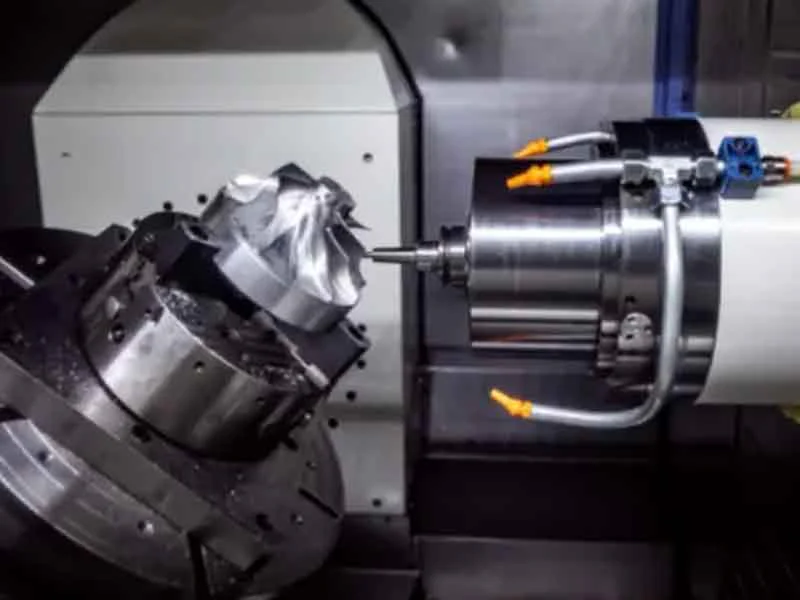
Satellite component CNC milling produces pockets, cavities, bores, mounting faces and hole patterns in spacecraft housings, brackets, panels and instrument supports.
Thin walls and deep pockets need a machining plan that balances low mass with dimensional stability. Drawing review should define datum relationships, wall thickness, flatness, mating features, material condition and surface finish, together with the required inspection and traceability records.

Coordinate geometry, material, finishing and inspection around the part's intended function.
AS9100D controls support drawing review, configuration management, material traceability, FAIR documentation and key characteristic inspection.
MAZAK mill-turn centers reduce re-fixturing error on parts that combine milled pockets, turned bores, bolt patterns and connector features.
Review assembly datums, angled features and thin-wall geometry and functional requirements before defining the process.
DFM can include material, finish, cleaning and ASTM E595 evidence needs so contamination-sensitive programs are planned correctly from the start.
Aluminum, titanium, stainless and Invar prototypes can move from review to first article with focused inspection and release documentation.
Competitive production cost helps commercial satellite and CubeSat teams source precision hardware without dropping aerospace documentation.
Milled housings, brackets, interface plates and structural fittings for satellite bus systems and payloads. Share your drawing to review material, geometry, finish and inspection requirements.
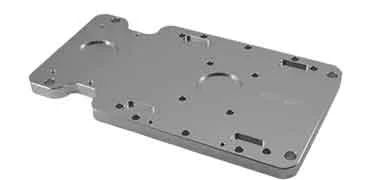
Interface ring fittings, panel inserts, bus frame nodes, CubeSat rails, separation hardware and lightweight structural fittings with controlled hole patterns and flatness.
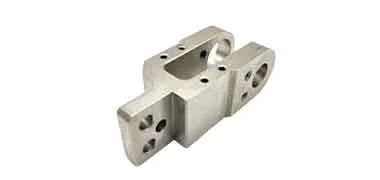
Reaction wheel casings, gimbal housings, star tracker baffle parts, fine pointing mechanism platforms and sensor mounting plates.
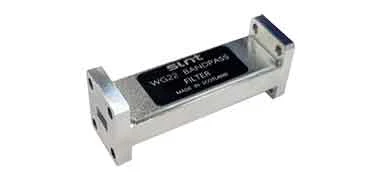
Waveguide filter bodies, RF cavities, feed horn elements, multiplexer bodies, transponder chassis and phased-array mounting plates.
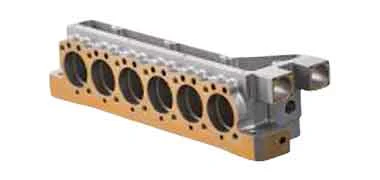
Valve bodies, tank boss fittings, thruster mounting plates, PPU housings and propulsion-adjacent structural parts in titanium, stainless or Inconel.
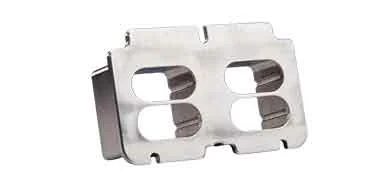
Optical bench plates, mirror cell hardware, focal plane supports, SAR antenna frames and instrument bodies where flatness and thermal stability matter.
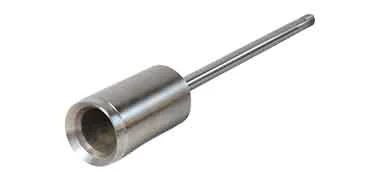
Heat sinks, heat-pipe saddles, thermal strap brackets, solar array drive structures, battery module mounts and PCDU chassis bodies.
Explore representative parts for six satellite applications, from communications constellations and research payloads to compact CubeSat platforms.

Camera mounting plates, optical bench supports, sensor housings and antenna brackets for Earth observation payloads. Review mounting flatness and alignment features against the assembly drawing.

RF housings, phased-array mounting plates, compact electronics enclosures and heat sinks for LEO communications satellites. Define interface dimensions, pocket geometry and finish requirements for repeat production.

Waveguide filter bodies, multiplexer housings, amplifier chassis and antenna pointing brackets for GEO communications payloads. Review cavity geometry, mating surfaces and coating requirements with the drawing.

Optical bench plates, instrument housings, mirror supports and sensor mounting brackets for scientific payloads. Specify datum alignment, mounting flatness and material requirements for the instrument assembly.

CubeSat rails, panel frames, payload trays and mounting brackets for small satellite platforms. Review thin-wall features, pocket depth and hole patterns around the available assembly space.

Payload enclosures, mounting interfaces and structural fittings for defense and exploration spacecraft. Agree material traceability, drawing revision control and inspection records for the specific program.
Explore machining capabilities, material options and quality support for satellite components.
Explore satellite machiningMaterials
Confirm the exact grade, delivery condition and finish compatibility with your drawing.
Practical default for bus fittings, brackets, enclosures and pocketed structures where machinability and cost matter.
Higher-strength aluminum for load-path fittings, interface rings and compact structural parts where lower mass is needed.
Fatigue-resistant aluminum option for dynamic mechanism components and structural details exposed to repeated load cycles.
High specific strength and CFRP-friendly CTE for propulsion hardware, interface fittings and compact loaded structures.
High-strength stainless for mechanism hardware, shafts, compact fittings and separation system components.
Corrosion-resistant and low-magnetic option for sensor housings, clean payload hardware and magnetometer-adjacent parts.
Ultra-low CTE material for optical bench plates, telescope support structures and instrument reference frames.
Matched-expansion alloy for hermetic RF packages, ceramic-adjacent structures and glass-to-metal seal interfaces.
Finish selection
Select the finish around the specified material, functional surfaces and service conditions. Confirm process details and acceptance requirements with your drawing.
Hard anodize for aluminum housings, brackets and structural parts where wear resistance, corrosion protection or black thermal surfaces are required.
Alodine or equivalent conversion coating for aluminum parts that require electrical bonding, RF shielding continuity or ESD control.
Passivation for stainless steel, titanium and nickel alloy parts to remove free iron and support clean corrosion resistance.
Gold plating for RF contact surfaces, electrical bonding areas, connector-adjacent features and low-resistance contact interfaces.
Silver plating for waveguide cavities, multiplexer housings and amplifier surfaces where high conductivity reduces RF insertion loss.
Uniform coating option for complex cavities, bores and flow passages where consistent thickness is important.
Machining resources for drawing review, prototypes and repeat-production programs.
Inspection & documentation
Review material identity, machining datums, functional dimensions and production records for your component.
Final tolerances, inspection coverage and acceptance criteria are confirmed against your drawing, material and geometry.
Confirm the certificates, inspection reports and production records needed for your order when sharing your drawing.
The product range includes Structural & Bus Component Milling, Attitude Control Component Milling, RF & Communications Component Milling. Custom geometry is reviewed against the approved drawing.
Material options include 6061-T6, 7075-T6, 2024-T351. The exact grade and condition should be confirmed for your application.
Define assembly datums, angled features and thin-wall geometry, together with datums, tolerances and required surface condition.
Finishing options include hard anodizing - mil-a-8625 type iii, chemical film - mil-dtl-5541, passivation - astm a967. Applicability is reviewed against the specified material and geometry.
Pricing and delivery are confirmed after reviewing the drawing, material availability, quantity, machining route, finishing and inspection scope.
CUSTOM CNC PARTS
Share your drawing or 3D model, material, critical dimensions, finish and order quantity. We’ll review the machining route, inspection scope and delivery requirements.
 5-Axis CNC Machining Aerospace Components
 Aluminium Alloy CNC Turning Milling Parts
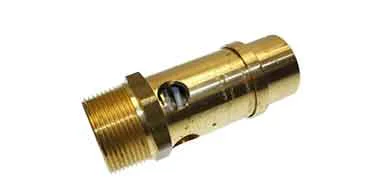 Brass Turning Milling Parts
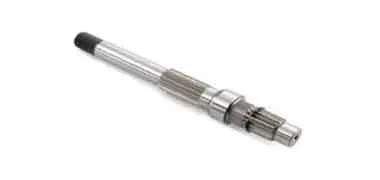 CNC Turning and Milling Parts