
Stainless Steel
5-Axis CNC Parts
CNCPioneer is an AS9100D and IATF 16949 certified stainless steel 5-axis CNC parts specialist delivering complex-geometry stainless steel structural bodies, multi-plane interface fittings, compound-angle aerospace and industrial components, and precision mechanism bodies — with compound face angle ±0.020°, structural bore ±0.003mm, inter-feature position ±0.010mm, and electropolished surface finish Ra ≤0.25μm on MAZAK VARIAXIS simultaneous 5-axis platforms since 2011.

What Is Stainless Steel 5-Axis
CNC Machining?
Stainless steel 5-axis CNC machining is the precision computer-controlled manufacturing discipline — executed on MAZAK VARIAXIS simultaneous 5-axis machining platforms with PVD-coated carbide tooling, mandatory 70 bar through-spindle high-pressure coolant, and in-process CMM probing — that produces complex-geometry stainless steel structural bodies, multi-plane interface fittings, compound-angle aerospace and industrial components, and precision mechanism bodies whose three-dimensional geometry cannot be produced to dimensional specification by any combination of 3-axis or turning operations from multiple sequential setups.
The combination of stainless steel's demanding machining physics with 5-axis simultaneous interpolation represents the most technically challenging intersection of material and process in standard precision CNC manufacturing. Aluminum 5-axis machining is challenging from geometry complexity alone — the material cooperates readily with high-speed PCD cutting at 600–1,200 m/min. Stainless steel 5-axis machining adds three simultaneous material-specific challenges on top of geometric complexity: severe work-hardening of austenitic grades, extreme heat concentration from low thermal conductivity, and chip control challenges from long stringy chips in continuously changing orientations.
-
Grade-specific 5-axis parameter database 200+ production-validated stainless steel 5-axis programs across 303, 304, 316L, 316Ti, 17-4PH H900, 2205 duplex, 420, and 440C — producing first-article qualification rates above 98% on new stainless 5-axis programs by drawing from validated parameters rather than developing them experimentally at the customer's cost.
-
Work-hardening prevention discipline Every 5-axis toolpath for austenitic stainless is post-processed through chip-load analysis before first machining — flagging any path segment where projected chip load drops below 0.10 mm/tooth (0.12 mm/tooth for 2205 duplex) and reprogramming with entry lead angles, exit lift transitions, or local feed-rate compensation.
-
70 bar coolant with B-axis nozzle tracking CNCPioneer's MAZAK VARIAXIS programs coordinate the adjustable through-spindle coolant nozzle orientation with the B-axis tilt position — maintaining the coolant jet directed at the tool-chip interface throughout compound-angle machining passes, reducing chip-zone temperature by 40–60°C relative to fixed-nozzle programs.
-
Single-setup datum preservation The workpiece never moves between any two features in the part's geometry; compound face angles derive from the VARIAXIS table positioning accuracy (±0.020°) without fixture repositioning error addition — eliminating the ±0.030–0.100mm fixture-compliance-induced position variation typical of multi-setup stainless structural programs.

Why CNCPioneer for Stainless Steel
5-Axis CNC Parts?
Among stainless steel 5-axis CNC machining facilities globally, CNCPioneer's grade-specific parameter database, work-hardening prevention discipline, MAZAK VARIAXIS coolant tracking infrastructure, single-setup datum preservation, complete grade portfolio, and China cost advantage establish our factory as the preferred partner for aerospace, pharmaceutical, marine, medical, and industrial stainless 5-axis programs.
Grade-Specific 5-Axis Parameter Database
Each stainless grade behaves differently in 5-axis machining: 303 at v_c = 150–220 m/min with chip-breaking short chips; 304/316L at v_c = 80–130 m/min with mandatory ≥0.10 mm/tooth chip load enforcement; 17-4PH H900 at HRC 44–47 requiring CBN-tipped boring bars and negative-rake carbide at v_c = 70–100 m/min; 2205 duplex at v_c = 60–90 m/min with the highest chip load requirement of all standard stainless grades. This production-validated database from 200+ programs produces 98%+ first-article qualification rates versus the 50–65% typical of facilities without grade-specific protocols.
Work-Hardening Prevention in 5-Axis Toolpaths
The most dangerous quality failure mode in stainless steel 5-axis CNC machining — producing parts dimensionally correct on the CMM while carrying surface hardness spikes and residual tensile stress that fail fatigue and corrosion requirements — is work-hardening from insufficient chip load at path transition zones. CNCPioneer's 5-axis chip load enforcement strategy mandates minimum 15° tool tilt, helical/tangential entry arcs, and post-processor chip load floor monitoring at 0.5mm intervals — preventing the surface defects and dimensional scatter unverified paths produce.
MAZAK VARIAXIS with 70 Bar Coolant Tracking
In 5-axis simultaneous stainless machining, the cutting tool continuously changes orientation — the chip formation zone that 70 bar coolant must reach also continuously changes position. CNCPioneer's VARIAXIS programs coordinate the adjustable through-spindle coolant nozzle with the B-axis tilt position in the NC program, maintaining coolant jet direction at the tool-chip interface throughout compound-angle passes. This reduces chip-zone temperature by 40–60°C, keeping the interface below the diffusion wear threshold that accelerates WC-Co carbide tool wear.
Single-Setup 5-Axis Datum Preservation
Stainless steel's cutting force (3–5× aluminum's at equivalent material removal rate) distorts the workpiece in the fixture during heavy milling passes — a distortion that relaxes when the fixture is reopened, returning the workpiece to a slightly different position. Single-setup VARIAXIS machining eliminates fixture re-registration entirely: the workpiece never moves between any two features; compound face angles derive from table positioning accuracy (±0.020°) without fixture repositioning error addition.
Complete Stainless Grade Portfolio & Compliance
CNCPioneer's stainless steel 5-axis programs cover all commercially significant grades — 303, 304, 316L, 316Ti, 17-4PH H900, 2205 duplex, 420 hardened, 440C hardened — with SII XRF composition verification on every incoming lot before machining commitment. For 316L and 303 non-magnetic applications: VSM magnetic permeability measurement per bar lot confirming μ_r ≤1.005. Material compliance framework matches AS9100D and IATF 16949 requirements aerospace and automotive OEM customers mandate.
40–60% China Stainless 5-Axis Cost Advantage
Stainless steel 5-axis CNC parts from established European or North American precision machining facilities cost 40–60% more than CNCPioneer's AS9100D-equivalent programs at identical grade compliance, 5-axis dimensional accuracy, and passivation/electropolish surface treatment quality — the China manufacturing economics that enable stainless steel 5-axis structural programs that would be cost-prohibitive from Western supply chains. Engineering DFM, FAIR, and PPAP documentation are included without surcharges.
Stainless Steel 5-Axis CNC Parts
We Manufacture
CNCPioneer's stainless steel 5-axis CNC machining programs deliver specific component geometries that cannot be produced by 3-axis or turning operations — complex manifold bodies with compound-angle port arrays, aerospace mechanism bodies with cam profiles and pivot bores, duplex pump housings with multi-plane flanges, and hygienic reactor heads with crevice-free compound junctions.

316L Complex Manifold & Multi-Port Valve Bodies
5-axis simultaneous machining of 316L stainless steel complex manifold bodies and multi-port valve bodies with compound face angles for pharmaceutical, chemical, and food processing equipment. Central chamber bore ±0.010mm; 6–16 port bores at compound angles with bore axis ±0.020° from chamber axis; port face perpendicularity ±0.010mm from 5-axis face milling; thread pitch diameter ±0.005mm per ISO metric or NPT standard; 100% thread GO/NO-GO and 100% pressure test at 1.5× rated pressure. ASME BPE SF3 electropolish to Ra ≤0.25μm; 3-A crevice-free geometry with junction radii ≥0.5mm; citric acid passivation ASTM A967.

17-4PH H900 Aerospace Lock & Actuation Mechanism Bodies
17-4PH H900 stainless steel aerospace uplock/downlock mechanism bodies and actuation structural fittings machined in the HRC 44–47 hardened condition. Cam profile surface ±0.020mm from 5-axis ball-nose or CBN milling with Ra 0.4μm; primary pivot bore ±0.003mm diameter from CBN boring bar with perpendicularity 0.005mm; secondary latch engagement bore pair coaxiality ±0.005mm from single VARIAXIS setup; actuator attachment face flatness 0.010mm/50mm at compound angle ±0.020°. Two-stage protocol: rough machine in solution-annealed condition → H900 age at 480°C × 1 hour → CBN finish-machine precision features. AS9102 FAIR with dimensional data in H900-aged condition; ASTM A967 passivation.

2205 Duplex Pump Housings & Marine Valve Structural Bodies
2205 duplex stainless steel pump housing and impeller bodies for seawater, bilge, and fire-fighting pump applications — compound impeller bore geometry and multi-plane flange attachment architecture from single VARIAXIS setup. Impeller chamber bore ±0.010mm with axis alignment ±0.020mm; inlet/outlet nozzle flange faces at compound pipe angles with flatness 0.010mm/150mm and bolt pattern ±0.010mm true position; seal gland pocket ±0.005mm bore with perpendicularity 0.010mm to impeller axis. 100% hydrostatic pressure test at 1.5× rated pressure per serial number. PREN 35 chloride pitting resistance; yield strength 450–550 MPa. ASTM A967 citric acid passivation for marine service.

316L Surgical Robot Arm Links & Non-Magnetic Sensor Housings
316L stainless steel surgical robot structural arm link bodies with compound joint pivot bore arrays machined from single-setup 5-axis programs. Joint pivot bore pair ±0.003mm diameter per bore; coaxiality ±0.003mm from single VARIAXIS setup; angular relationship between bore axes ±0.010° governing end-effector positioning accuracy. Arm cross-section structural hollow with wall thickness ±0.100mm from in-process CMM probing; motor mount interface perpendicular to pivot bore axis ±0.010°. Non-magnetic 316L solution-annealed with VSM-verified μ_r ≤1.005 per lot for MRI-compatible environments. Electropolish Ra ≤0.4μm for steam autoclave sterilization compatibility; ASTM A967 passivation standard.

316L Reactor Heads & Food-Grade Mixing Housing Bodies
316L stainless steel pharmaceutical bioreactor heads and food processing mixing vessel heads with compound-angle inspection port bores, agitator shaft penetrations, and multi-plane flange interfaces. Main chamber flange face flatness 0.010mm/300mm; agitator shaft bore ±0.005mm with perpendicularity 0.010mm to flange face; 3–6 inspection port bores at compound angles with face perpendicularity ±0.010mm to bore axis. 3-A crevice compliance: all 5-axis machined surface junctions verified ≤0.5mm gap depth; drainage slope ≥3° verified from 3D model. ASME BPE SF3 electropolish to Ra ≤0.25μm with EP certificate per lot; EHEDG Ra ≤0.8μm; citric acid passivation ASTM A967.

304/316Ti Exhaust Manifolds & Industrial Valve Structural Bodies
304 and 316Ti stainless steel exhaust manifold bodies with 3–8 cylinder head port faces at compound angles (15–25° compound) matching engine port geometry. Port face flatness 0.020mm/50mm; gasket groove ±0.020mm; fastener pattern ±0.010mm per face; collector outlet flange flatness 0.020mm/100mm; O₂ sensor boss M18×1.5 at compound angles with thread ±0.005mm. 316Ti specified for EGR applications at 400–700°C with Ti addition providing intergranular corrosion resistance. Industrial multi-stage pump bodies and valve manifolds in 316L and 2205 duplex with compound impeller bore, diffuser passage, and casing flange geometry from one datum. IATF 16949 PPAP Level 3; SPC Cpk ≥1.67 on port face angles.
Industries & Applications
CNCPioneer's stainless steel 5-axis CNC parts serve every industry where corrosion resistance, strength, hygienic surface quality, and geometric complexity coexist — from aerospace structural hardware requiring AS9102 FAIR to pharmaceutical equipment requiring ASME BPE SF3 electropolish and 3-A crevice-free geometry.

Aerospace
AS9100D-certified 17-4PH H900 and 316L stainless steel 5-axis CNC parts for lock mechanisms, actuation bracket bodies, structural fittings, and non-magnetic sensor housing bodies — AS9102 FAIR 100% new part numbers; ASTM A967 passivation; VSM non-magnetic compliance per lot; AS9100D life-limited part records per serial number.
Pharmaceutical
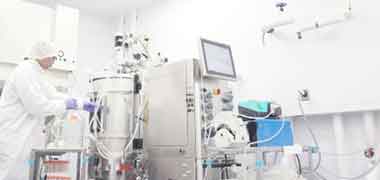
316L stainless steel 5-axis reactor heads, complex manifold bodies, and bioreactor structural components — ASME BPE SF3/SF4 electropolish; 3-A crevice-free geometry DFM; ASTM A967 citric acid passivation; 100% pressure decay per body; FDA 21 CFR Part 11-compatible documentation.

Marine
2205 duplex and 316L stainless 5-axis pump housing bodies, offshore structural fittings, and desalination valve components — highest chloride corrosion resistance; ASTM A967 passivation; 100% pressure test; NACE MR0175 documentation on request for sour service offshore applications.

Medical Device
316L non-magnetic stainless 5-axis surgical robot arm link bodies, endoscope structural bodies, and medical imaging equipment components — VSM μ_r ≤1.005 per lot; electropolish Ra ≤0.4μm sterilization-compatible; AS9100D or ISO 13485-compatible documentation.

Food & Beverage
316L stainless 5-axis mixing vessel heads, homogenizer bodies, and food processing equipment structural components — 3-A SSI; EHEDG Ra ≤0.8μm; electropolish Ra ≤0.4μm; crevice-free geometry; ASTM A967 citric acid passivation.

Semiconductor
316L non-magnetic stainless 5-axis gas distribution manifold bodies, process chamber structural components, and chemical delivery system fitting bodies — VSM permeability per lot; electropolish Ra ≤0.4μm; ASTM E595 TML ≤0.010% for enclosed equipment; electroless Ni-P for DI water service.
Stainless Steel 5-Axis CNC Parts
Process & Capabilities
CNCPioneer's stainless steel 5-axis CNC machining process runs on MAZAK VARIAXIS simultaneous 5-axis platforms with PVD-coated carbide tooling, 70 bar through-spindle high-pressure coolant, and in-process CMM probing — integrating grade-specific cutting parameters, continuous chip-load monitoring, and B-axis-coordinated coolant nozzle tracking.
48-Hour DFM & Engineering Review
Grade selection from corrosion environment, strength, magnetic permeability, and machining economics requirements · Work-hardening risk assessment from 5-axis part geometry with minimum chip load achievability at all path orientations · Compound face angle achievability from MAZAK VARIAXIS simultaneous 5-axis confirming all compound angles ±0.020° before quoting · Hygienic geometry compliance review for ASME BPE, EHEDG, or 3-A programs · Surface treatment specification from functional or aesthetic requirement · Pressure test scope for sealed valve and manifold programs.
Grade-Specific 5-Axis Machining Parameters
316L austenitic: v_c = 80–120 m/min, PVD TiAlN-coated carbide, chip load f_z = 0.10–0.18 mm/tooth with ≥0.10 mm/tooth floor enforced via toolpath verification, 70 bar coolant with B-axis tilt-coordinated nozzle tracking, tilt ≥15° enforced, insert change at VB ≤0.15mm. 17-4PH H900: v_c = 70–100 m/min, negative rake (−5° to −8°), CBN boring bars for precision bores, 2-stage machining with H900 aging at 480°C × 1 hour between rough and finish. 2205 duplex: v_c = 60–90 m/min, positive rake mandatory (+5° to +8°), chip load ≥0.12 mm/tooth, VB ≤0.12mm.
Work-Hardening Prevention Protocol
Step 1 — Tilt angle constraint: minimum 15° tool tilt from workpiece surface normal throughout all austenitic stainless toolpaths, eliminating zero-speed rubbing. Step 2 — Entry and exit arc control: helical or tangential entry arcs with full design chip load from first tooth contact; exit arcs extending beyond target surface. Step 3 — Chip load floor monitoring: post-processor calculates instantaneous chip load at 0.5mm intervals; any segment below minimum is flagged and reprogrammed before NC release. This verification adds 2–4 hours to program preparation but prevents production quality failures.
Single-Setup MAZAK VARIAXIS Datum Advantage
For a representative 316L chemical reactor head with three non-orthogonal inspection port bores and two flange attachment faces: multi-setup 3-axis alternative accumulates angular error up to ±0.150° (three repositioning errors at ±0.050° each) — impossible against the ±0.020° optical inspection port bore specification. MAZAK VARIAXIS single-setup machines all features from the same datum reference frame with angular error ±0.020° from table positioning only, achieving Cpk = 1.67+ in production.
Complete Surface Treatment Integration
ASTM A967 passivation standard on all austenitic stainless deliveries (no additional charge) · Electropolish ASME BPE SF1–SF4 with Ra verification per EP lot · PVD TiN gold / TiCN bronze/anthracite / black TiN / ta-C DLC for colored or "anodized equivalent" stainless programs · Electrochemical oxide coloring for architectural rainbow stainless · Electroless Ni-P MIL-C-26074 for wear or chemical service · Hard chrome AMS 2460 for dynamic seal contact programs · Black oxide for low-reflectance tactical and optical hardware.
AS9100D / IATF 16949 Documentation
AS9102 FAIR on 100% of new stainless steel 5-axis part numbers for AS9100D programs · PPAP Level 3 for IATF 16949 automotive programs · SII XRF per incoming lot with EN 10204 3.1 or AMS mill certificate · Rockwell per 17-4PH aging lot · VSM μ_r per 316L/303 lot for non-magnetic programs · 100% thread GO/NO-GO · 100% pressure decay sealed bodies per serial · Copper sulfate passivation per lot · Cpk ≥1.67 bore diameter and compound angles for volume production · Records retained 20 years.
Stainless Steel Grades for
5-Axis CNC Machining
CNCPioneer's stainless steel 5-axis CNC machining programs cover all commercially significant stainless grades with SII XRF composition verification on every incoming lot before machining commitment — from free-machining 303 through precipitation-hardened 17-4PH H900 and super-corrosion-resistant 2205 duplex.
316L Austenitic Stainless
UTS 485–690 MPa · Excellent corrosion resistance · Non-magnetic (VSM verified μ_r ≤1.005). The most common hygienic and corrosion-critical 5-axis stainless grade. v_c = 80–120 m/min PVD TiAlN; chip load ≥0.10 mm/tooth enforced via toolpath verification; 70 bar coolant with B-axis nozzle tracking; tilt ≥15° enforced. Primary applications: pharmaceutical reactor heads, chemical manifolds, surgical robot arm links, semiconductor gas distribution manifolds, marine valve bodies, food mixing vessel heads.
304 Austenitic Stainless
UTS 515–690 MPa · Very good corrosion resistance · Non-magnetic. v_c = 80–120 m/min; same chip load enforcement as 316L; 70 bar coolant. Standard grade for general industrial 5-axis parts, automotive exhaust manifolds, and food equipment in non-chlorine environments. Lower molybdenum content than 316L reduces cost while maintaining adequate corrosion resistance for indoor and non-marine applications.
303 Free-Machining Stainless
UTS 500–700 MPa · Moderate corrosion resistance · Non-magnetic. S 0.15–0.35% produces chip-breaking short chips at v_c = 150–220 m/min — the most cooperative stainless for 5-axis milling with minimal work-hardening risk. Primary applications: instrumentation structural bodies, indoor precision mechanism 5-axis parts, seal carriers, and adapter sleeves where machinability and cost efficiency are prioritized over maximum corrosion resistance.
316Ti Titanium-Stabilized
UTS 515–690 MPa · Excellent corrosion resistance + high temperature · Non-magnetic. Same machining parameters as 316L with Ti addition providing intergranular corrosion resistance at 400–700°C service temperatures. Primary applications: automotive EGR (exhaust gas recirculation) valve bodies and elevated-temperature corrosion 5-axis parts where 316L's standard carbon content would sensitize at elevated service temperature.
17-4PH H900
UTS 1,170–1,310 MPa · HRC 44–47 · Very good corrosion resistance · Magnetic. v_c = 70–100 m/min negative rake; CBN boring bars for precision bores; 2-stage machining: rough solution-annealed → H900 age 480°C/1h → CBN finish. The dominant aerospace stainless for 5-axis machined mechanism bodies — combining hardness for wear resistance, 1,170 MPa yield strength, and corrosion resistance equivalent to 304 without cadmium plating.
2205 Duplex Stainless
UTS 620–860 MPa · Superior corrosion resistance · Slightly magnetic. Two-phase microstructure combining hard ferritic and tough austenitic regions. v_c = 60–90 m/min; chip load ≥0.12 mm/tooth; positive rake mandatory (+5° to +8°); sharpest PVD TiAlN inserts; VB ≤0.12mm. Primary applications: marine pump housings, offshore structural fittings, high-pressure chemical 5-axis parts, and desalination plant valve structural frames.
420 Martensitic Stainless
UTS 1,500–1,900 MPa (hardened) · Moderate corrosion resistance · Magnetic. Machined in annealed condition; CBN grind precision features post-hardening. Primary applications: valve balls, hardened precision mechanism 5-axis parts, and components requiring higher hardness than 17-4PH H900 can provide but with stainless corrosion resistance superior to carbon steel.
440C Martensitic Stainless
UTS 1,900 MPa (hardened HRC 60) · Moderate corrosion resistance · Magnetic. Machined annealed; hardened post-5-axis; CBN finish in hardened condition. Primary applications: precision bearing races, maximum hardness 5-axis stainless mechanism parts, and components requiring rolling-contact fatigue resistance at the highest hardness available in standard stainless grades.
304 / 316L Decorative & PVD Programs
For architectural hardware, premium consumer products, and decorative structural components requiring compound-surface machined profiles with PVD TiN gold, TiCN bronze/anthracite, black TiN, ta-C DLC black, or electrochemical oxide rainbow coloring as "stainless steel anodized" surface finish alternatives. Electropolish mirror Ra ≤0.1μm available. 10-piece to 100,000+/year programs with integrated Shenzhen precision PVD coating cluster at 2–3 day transit.
Surface Treatments for
Stainless Steel 5-Axis CNC Parts
CNCPioneer provides complete surface treatment programs for stainless steel 5-axis CNC parts — from standard ASTM A967 passivation through ASME BPE SF-grade electropolishing, PVD decorative and functional coatings, and wear-resistant overlays that achieve the same functional results customers seek from "stainless steel anodized" terminology.
Electropolishing — ASME BPE SF1–SF4
Electropolishing simultaneously planarizes the stainless surface (Ra reduction 40–60%) and creates a chromium-enriched passive oxide superior to mechanical passivation in corrosion resistance. EP on 5-axis stainless CNC parts produces Ra 0.2–0.4μm from PCD-machined Ra 0.8μm base — the cleanability and corrosion resistance specification that pharmaceutical, food, and chemical processing OEMs specify as "hygienic surface treatment." EP certificate per lot with Ra verification at 3 positions per body.
Passivation — ASTM A967 Standard
Standard mandatory treatment on all austenitic stainless 5-axis CNC parts deliveries — removes free iron contamination from machining and restores the passive chromium oxide layer that is stainless steel's fundamental corrosion protection mechanism. Provided as standard at no additional charge on all austenitic deliveries. Citric acid method preferred for pharmaceutical and food markets (no nitric acid residue concern on product-contact surfaces). Copper sulfate test per lot, 5 parts per production lot; certificate per monthly lot.
PVD TiN, TiCN & Black TiN — Decorative Color
PVD TiN (gold/brass, 1–4μm, HV 2,300+), TiCN (bronze/dark grey/anthracite, HV 3,000+), and black TiN (flat/gloss black, HV 2,300+) provide the "stainless steel anodized" aesthetic equivalent on 5-axis CNC milled parts — achieving colored decorative surface finishes functionally analogous to aluminum anodizing. XRF-verified thickness control ±0.3μm. Used on architectural hardware, premium kitchen equipment, tactical hardware, and precision optical instrument bodies requiring colored or non-reflective stainless finishes.
ta-C DLC — Ultra-Hard Wear Resistance
Diamond-like carbon (1–3μm, HV 3,000+, black) for high-cycle stainless mechanism bodies including surgical robot joints, aerospace actuation latching surfaces, and precision valve stems in corrosive service. Friction coefficient μ = 0.05–0.10 versus stainless-on-stainless μ = 0.4–0.7. Provides the wear resistance function equivalent to Type III hard anodize on aluminum, but on stainless steel 5-axis mechanism bodies. Adhesion tested per ASTM C1624 per lot.
Electroless Ni-P — Wear & Chemical Resistance
Medium-phosphorus Ni-P (5–8% P, HV 500) on stainless steel 5-axis parts provides wear resistance 3× uncoated stainless at dry sliding contact — the stainless equivalent of Type III hard anodize's wear resistance function. High-phosphorus (10–12% P) for maximum corrosion resistance. Applied on mechanism bodies where surface wear resistance is required without dimensional change of hard chrome. Note: Ni-P adhesion on stainless requires activation step specific to stainless steel (copper strike or activation bath before deposition).
Electrochemical Coloring & Black Oxide
Controlled electrochemical oxidation of 316L or 304 stainless produces interference-colored oxide films — champagne/gold (0.2μm), blue (0.4μm), magenta/purple (0.7μm), green (1.0μm) — without dye or pigment. Black oxide at 1–3μm provides low-reflectance matte black for tactical and optical instrument hardware with negligible dimensional impact compatible with ±0.002mm journal tolerance. Both processes serve the "stainless steel anodized" market searching for colored or blackened stainless 5-axis CNC milled components.
All surface treatments on stainless steel 5-axis CNC parts programs — passivation ASTM A967, electropolish ASME BPE, PVD TiN/TiCN/DLC, electroless Ni-P, electrochemical coloring, and black oxide — are documented with treatment certifications and post-treatment dimensional verification. Plating and coating allowances are machined into journal and bore dimensions at the 5-axis CNC stage and confirmed post-treatment by CMM, air gauge, or profilometer. Treatment selection guidance and dimensional allowance calculation are included in CNCPioneer's 48-hour DFM review at no additional cost.
Quality Assurance for
Stainless Steel 5-Axis CNC Parts
CNCPioneer's quality assurance for stainless steel 5-axis CNC parts addresses material compliance, grade-specific machining physics, single-setup geometric precision, and surface treatment verification — with SII XRF on every lot, chip load floor verification on every program, and 100% FAIR coverage on aerospace programs.
Engineering Contract Review & DFM
48-hour DFM covering stainless steel grade selection from corrosion environment, strength, magnetic permeability, and machining economics requirements · Work-hardening risk assessment from 5-axis part geometry with minimum chip load achievability at all path orientations and tilt constraint impact · Compound face angle achievability from MAZAK VARIAXIS confirming all angles ±0.020° before quoting · Hygienic geometry compliance review for ASME BPE, EHEDG, or 3-A programs · Surface treatment specification from functional or aesthetic requirement · H900 aging sequence confirmation for 17-4PH programs.
Material Verification
SII XRF composition confirmation on every stainless lot before machining commitment — 316L (C ≤0.030%; Cr 16.0–18.0%; Ni 10.0–14.0%; Mo 2.0–3.0%), 304 (Cr 18.0–20.0%; Ni 8.0–10.5%), 303 (S 0.15–0.35%), 17-4PH (Cr 15.0–17.5%; Ni 3.0–5.0%; Cu 3.0–5.0%; Nb 0.15–0.45%), 2205 duplex (Cr 22.0–23.0%; Ni 4.5–6.5%; Mo 3.0–3.5%; N 0.14–0.20%). Hardness verification post-aging (17-4PH H900: HRC 44–47) and post-heat-treatment per lot. VSM magnetic permeability μ_r ≤1.005 per 316L/303 bar lot for non-magnetic programs. Full mill-certificate-to-shipment lot traceability.
In-Process 5-Axis Control
Chip load floor verification: every 5-axis stainless toolpath post-processed through chip load analysis before machining release; any segment <0.10 mm/tooth (austenitic) or <0.12 mm/tooth (2205 duplex) is reprogrammed; verification record archived per program revision. Insert change enforcement: VB ≤0.15mm (austenitic), VB ≤0.12mm (2205 duplex), VB ≤0.10mm (17-4PH H900 CBN boring). 70 bar coolant verification: pressure gauge verified before each stainless 5-axis production session; B-axis nozzle tracking confirmed from NC program. First-piece 5-axis verification: CMM measurement of compound face angle and bore position after first production piece before committing full run.
Final Inspection — 100% Dimensional Verification
CMM (5-axis scanning capability): all structural bore diameters, bore pair coaxiality, compound face angles (measurement uncertainty ≤10% per AS9102), cam profile surfaces, fastener hole true positions, face flatness, O-ring groove dimensions, inter-feature position relationships. Roundness tester: all precision pivot and bearing bores. Thread gauge: 100% per production lot all threaded stainless 5-axis parts. Pressure test: 100% per sealed body per serial number at 1.5× rated pressure. Surface treatment: passivation copper sulfate per lot; EP Ra verification per EP lot; PVD XRF thickness per coating lot.
Volume Supply & SPC Monitoring
Pre-purchased 303, 304, 316L stainless bar safety stock with SII XRF per lot and 3-month forward inventory. 17-4PH and 2205 duplex safety stock: 6-week forward from domestic and European suppliers with AMS or EN 10204 3.1 certificate per lot. Dedicated MAZAK VARIAXIS cell allocation for volume OEM stainless 5-axis programs. SPC Cpk ≥1.67 critical bore dimensions and compound angles for volume production; SPC monitoring all critical features. MSA Gage R&R ≤10% on CMM measurement systems.
Documentation Package
AS9102 FAIR on 100% of new stainless steel 5-axis part numbers for AS9100D aerospace programs · PPAP Level 3 for IATF 16949 automotive programs · Certificate of Conformance · Material certifications with full lot traceability · Heat treatment and coating certifications · Passivation copper sulfate test certificate per lot · EP Ra certificate per EP lot · PVD XRF thickness verification per coating lot · Pressure test records per serial number · VSM permeability records per non-magnetic lot · All records maintained per AS9100D life-limited part requirements for aerospace safety-critical stainless parts.
AS9100D Quality System for
Stainless Steel 5-Axis CNC Parts
CNCPioneer's AS9100D and IATF 16949 certified stainless steel 5-axis CNC parts quality system addresses the four quality dimensions specific to stainless 5-axis machining: material grade compliance and verification, work-hardening prevention and chip load governance, single-setup geometric precision and CMM verification, and complete documentation traceability from raw bar to delivered component.
Material Compliance & Grade Verification
SII XRF on every stainless lot confirms composition before machining commitment — 316L, 304, 303, 17-4PH, 2205 duplex, 420, 440C all verified against specification. Hardness verification post-aging (17-4PH H900: HRC 44–47 Rockwell per lot). VSM magnetic permeability μ_r ≤1.005 per 316L and 303 bar lot for non-magnetic sensor-adjacent and MRI-compatible applications. EN 10204 3.1 or AMS mill certificate archived per lot with material lot traceability to part serial number in AS9100D/IATF 16949 system.
- SII XRF per incoming lot — all grades
- Rockwell per 17-4PH H900 aging lot
- VSM μ_r ≤1.005 per non-magnetic lot
In-Process Controls for 5-Axis Stainless
Chip load floor verification on every 5-axis stainless toolpath before machining release — any segment below 0.10 mm/tooth (austenitic) or 0.12 mm/tooth (2205 duplex) is reprogrammed with verification record archived per program revision. Insert change enforcement at VB ≤0.15mm (austenitic), VB ≤0.12mm (duplex), VB ≤0.10mm (17-4PH H900 CBN). 70 bar coolant pressure gauge verification before each production session; B-axis nozzle tracking confirmed from NC program. First-piece CMM verification of compound face angle and bore position before batch release.
- Chip load analysis every program revision
- Insert change records per production lot
- 70 bar coolant + B-axis tracking verified
Final Inspection & Dimensional Verification
CMM 5-axis scanning: structural bore diameters, bore pair coaxiality, compound face angles (uncertainty ≤10% per AS9102), cam profiles, fastener hole true positions, face flatness, O-ring grooves, inter-feature positions. Roundness tester: all precision pivot and bearing bores. Thread gauge: 100% per lot. Pressure test: 100% per sealed body per serial number. Surface treatment: copper sulfate passivation per lot; EP Ra per EP lot; PVD XRF thickness per coating lot; hard chrome XRF + adhesion per lot. 98%+ first-article qualification rate on stainless 5-axis programs.
- 100% thread GO/NO-GO per lot
- 100% pressure decay per sealed body
- Cpk ≥1.67 critical features volume production
Certification & Documentation Traceability
AS9102 FAIR on 100% of new stainless steel 5-axis part numbers for AS9100D programs. PPAP Level 3 for IATF 16949 automotive stainless programs. All records maintained per AS9100D life-limited part requirements for aerospace safety-critical stainless parts — minimum 10 years retention. Certificate of Conformance, material certifications with heat lot traceability, heat treatment and coating certifications, and passivation copper sulfate test certificates are standard on every delivery. Documentation package enables immediate customer quality audit and OEM supply chain qualification.
- AS9102 FAIR 100% new aerospace part numbers
- PPAP Level 3 IATF automotive programs
- Records retained 10+ years per AS9100D
Stainless Steel 5-Axis CNC Parts FAQ
Common questions from aerospace OEMs, pharmaceutical equipment manufacturers, marine builders, surgical robot developers, and industrial valve producers about CNCPioneer's stainless steel 5-axis CNC parts capability, work-hardening prevention, grade selection, and "stainless steel anodized" surface treatment equivalents.
The term "stainless steel anodized 5-axis CNC milling parts" reflects market terminology translating the functional intent of aluminum anodizing onto stainless steel — seeking colored decorative surfaces, high-specification corrosion protection, or hard wear-resistant surfaces. The technical distinction is that stainless steel cannot be anodized by the electrochemical aluminum oxide formation process: stainless steel's chromium content forms its own passive Cr₂O₃ oxide spontaneously, and standard anodizing bath chemistries produce no useful oxide film on stainless. Three process families achieve the same functional results: for decorative color — PVD TiN (gold), TiCN (bronze/anthracite), black TiN, and ta-C DLC (black) provide consistent colored finishes with HV 2,300–3,000+ hardness; electrochemical oxide coloring creates interference-color films (gold, blue, purple, green) by controlled voltage oxidation. For corrosion protection — ASTM A967 passivation is the standard equivalent, restoring the passive chromium oxide layer at zero dimensional change; electropolishing provides superior chromium-enriched passive oxide plus Ra improvement. For wear resistance — electroless Ni-P (HV 500) and ta-C DLC (HV 3,000+) are the stainless equivalents of hard anodize. CNCPioneer's 48-hour DFM determines the functional intent and recommends the correct process.
Work-hardening in stainless steel 5-axis CNC machining is uniquely challenging from the intersection of austenitic stainless's strain-hardening exponent (n ≈ 0.40, producing HRC 35–42 surface hardness from unworked HRB 80 bulk) and the continuously changing chip load in 5-axis toolpaths. In 3-axis milling, chip load is constant for a given pass; in 5-axis simultaneous milling, the effective cutting geometry changes continuously with tool orientation angle. At zero tilt (tool perpendicular to surface), the ball-nose cutter cuts only at its tip where effective cutting speed is zero — producing rubbing rather than cutting, the worst condition for austenitic work-hardening. Three specific measures CNCPioneer implements: (1) Minimum tilt angle constraint of 15° from surface normal throughout all austenitic toolpaths, preventing zero-speed rubbing. (2) Post-processor chip load floor analysis at 0.5mm intervals along every 5-axis toolpath, flagging and reprogramming any segment below 0.10 mm/tooth (316L) or 0.12 mm/tooth (2205 duplex). (3) 70 bar through-spindle coolant with B-axis nozzle orientation tracking, maintaining coolant jet direction at the actual cutting zone through the full range of VARIAXIS tilt positions. The practical outcome: consistent Ra 0.4–0.8μm surface finish and dimensional Cpk ≥1.67 across 316L and 2205 duplex programs.
Five specific geometric conditions create the 5-axis requirement for stainless steel parts: (1) Multiple non-orthogonal compound face angles with inter-face angular tolerance ≤±0.050° — common in aerospace structural fittings and pharmaceutical reactor heads where multi-setup accumulated error (±0.05–0.15° per re-registration) exceeds specification. (2) Compound-curved freeform surfaces requiring 5-axis simultaneous normal tracking — marine pump impeller profiles, decorative architectural compound-curved bodies, and surgical instrument ergonomic handles where 3+2 positional machining produces faceted scallop patterns. (3) Undercut features inaccessible from any discrete 3-axis or 3+2 position — T-slot locking features, internal undercut baffles, and volute undercut geometry. (4) Bore pair coaxiality tighter than ±0.020mm between bores accessible from different directions — surgical robot arm link joint pivot bore pairs at ±0.003mm coaxiality and aerospace lock mechanism pivot bore pairs at ±0.005mm. (5) Hygienic geometry crevice-free requirements at compound-angle surface junctions — 3-A and EHEDG design requiring ≤0.5mm crevice depth at intersections of compound-angle inspection port bores with main vessel interior surfaces. When none of these five conditions applies, 3-axis or turning plus simple milling is adequate and substantially less expensive.
Prototype lead times: 17-4PH H900 aerospace mechanism body (5-axis, H900 aging, CBN boring, passivation, FAIR) — 8–12 business days; 316L pharmaceutical reactor head (ASME BPE SF3 EP, compound port bores, 100% pressure test, FAIR) — 8–12 days; 2205 duplex marine pump housing (compound bore array, 100% pressure test, passivation, FAIR) — 8–12 days; 316L surgical robot arm link body (VSM verified, bore pair ±0.003mm coaxiality, EP, FAIR) — 8–12 days; 304 automotive exhaust manifold (compound cylinder port faces, IATF 16949 FAIR) — 6–9 days; 316L decorative body with PVD TiN gold — 7–10 days. Volume economics at 1,000–5,000/year: 316L complex manifold $192–285; 17-4PH H900 aerospace mechanism body $298–440; 2205 duplex pump housing $265–395. At 20,000+/year: 316L manifold $86–128; 17-4PH H900 body $135–200; 2205 duplex housing $120–178. CNCPioneer delivers 49–66% below European pricing and 20–25% below Taiwanese pricing at equivalent certification and quality documentation.
Get a Quote for Stainless Steel 5-Axis CNC Parts
Upload your stainless steel 5-axis CNC part drawings, 3D CAD models (STEP, IGES), material specifications, surface finish requirements (including "stainless steel anodized" color or functional surface treatment intent), or complete BOM and receive a competitive quotation within 24 hours and complete engineering DFM within 48 hours — covering grade selection, work-hardening risk assessment, compound angle achievability, hygienic geometry compliance, surface treatment specification, and complete pricing from prototype through production volume supply.