
Gearbox Housing
Precision Machining
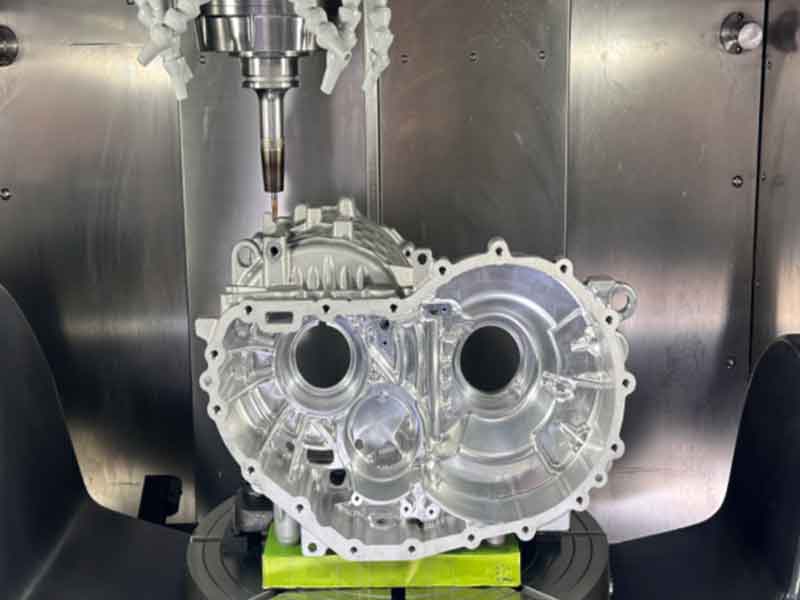
Precision transmission housings for agricultural, automotive, EV, wind, industrial, and automation gear drives. MAZAK mill-turn and Swiss CNC capacity supports bearing bores to ±0.005mm and centre distances to ±0.010mm, from prototype through production.
What Is
Gearbox Housing Machining?
Gearbox housing machining turns cast or billet stock into the enclosure that locates gear sets, shafts, bearings, seals, and lubrication hardware. Facing, milling, boring, drilling, reaming, and threading create a ready-to-assemble transmission component.
A housing may combine 4–12 bearing bores, shaft openings, seal grooves, flanges, ports, bolt arrays, and mounting faces. These features must hold their relationship in controlled setups to preserve gear mesh, seal performance, and coupling alignment.
-
Single-source mill-turn production Roughing, finish boring, finishing, and inspection are coordinated for bearing-bore arrays, flanges, pads, and ports in controlled setups that protect concentricity.
-
Aluminium housing expertise PCD-tooling strategies for A380, A360, 6061-T6, and 7075-T6 support ±0.005mm bearing bores, 0.01mm flange flatness, and Ra 0.8µm sealing surfaces.
-
Competitive agricultural supply Qualified production can reduce agricultural-housing cost by 40–60% versus comparable Western sources while retaining the required dimensions and IATF documentation.
-
IATF 16949 quality controls APQP, FMEA, PPAP, SPC, and MSA support automotive supply, with CCD sorting, Cpk ≥ 1.67 targets, and Level 3 PPAP for critical bearing bores.

Why CNCPioneer for
Gearbox Housing Machining?
Multi-axis machining, material selection, inspection, and documentation are aligned for transmission, agricultural, automotive, wind, and industrial programmes.
IATF 16949 Quality Planning
IATF 16949 applies the APQP, FMEA, PPAP, SPC, and MSA framework needed for automotive supply. Critical bores can use 100% CCD sorting, Cpk ≥ 1.67 targets, and Level 3 PPAP records.
One-Source Manufacturing Process
Material verification, roughing, semi-finishing, finish boring, surface treatment, and dimensional inspection run under one production plan to simplify sourcing and preserve critical geometry.
Single-Setup Bearing-Bore Alignment
MAZAK mill-turn machining protects bearing-bore concentricity while forming bore arrays, flanges, mounting pads, and ports in controlled setups.
Aluminium Machining Expertise
Dedicated strategies address built-up edge, thin-wall distortion, and silicon-particle tool wear. PCD boring can provide 20–50x carbide tool life in silicon-aluminium alloys.
Agricultural Gearbox Housing Specialist
Agricultural programmes can achieve 40–60% cost reduction versus comparable Western sources for PTO, tiller, harvester, and sprayer drives, with IATF 16949 documentation available.
24-Hour DFM Review
Every new design can receive a Design for Manufacturability review within 24 hours, covering bearing-bore feasibility, wall thickness, tool access, datums, and machining sequence.
Types of Gearbox Housings
We Machine
Machining covers compact helical housings, wind-turbine main cases, automotive and EV reducers, agricultural drives, and automation gearboxes, with CMM and PPAP documentation as required.

Industrial Gearbox Housing Machining
Parallel-shaft, bevel, worm, planetary, and multi-stage reducer housings for conveyors, pumps, and mixers. Typical targets include ±0.020mm centre distance, 0.010mm/100mm parallel axes, and ±0.005mm ring-gear bores.

Automotive Transmission Gearbox Housing
Manual and automatic cases, valve and torque-converter housings, transfer cases, and EV reducers. Automotive programmes can use IATF 16949 and PPAP Level 3; high-speed EV reducers support ±0.003mm bearing bores.

China Custom Agricultural Gearbox Housing
Cast- or ductile-iron PTO, rotary-tiller, harvester, sprayer, mower-conditioner, auger, and baler housings. Tiller cases can use 8mm minimum walls; sealed designs protect against dust and moisture.

Wind Energy Gearbox Housing Machining
Ductile-iron or forged-steel main cases for 1–10 MW turbines, with ±0.005mm bearing bores for planetary preload. Yaw and pitch drives use controlled output-flange geometry for ring-gear engagement.

Construction, Mining & Marine Gearbox Housing
Final-drive, axle, travel, swing, and slewing housings for construction and mining equipment, plus stainless or marine-grade aluminium propulsion, winch, and offshore cases for seawater service.

Robotics, Automation & Aerospace Gearbox Housing
Robot-joint, servo, and indexing-drive housings, plus zero-porosity 6061-T6 aerospace actuators and 503 MPa 7075-T6 performance cases. Aluminium first articles can arrive in 5–7 business days; AS9100D and AS9102 FAIR support is available.
Applications
Gearbox-housing programmes support agricultural, automotive, industrial, wind, construction, mining, automation, and marine equipment with scalable production and application-specific documentation.
Agricultural Equipment
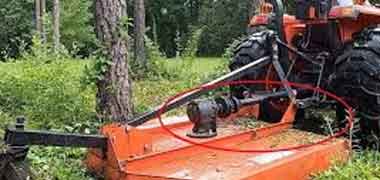
PTO, rotary-tiller, harvester, sprayer, forage, and grain-auger housings for agricultural OEMs and supply chains, with materials and sealing selected for field conditions.
Automotive Transmission
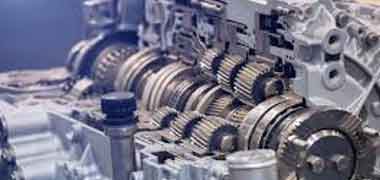
Manual and automatic cases, high-speed EV reducers, transfer cases, and commercial transmission housings. Automotive programmes can include IATF 16949 and PPAP Level 3; EV bores can hold ±0.003mm.

Industrial Machinery
Helical, bevel, worm, and multi-stage housings for conveyors, pumps, mixers, and other speed-reduction applications, from prototypes through production with required quality documentation.
Wind Energy
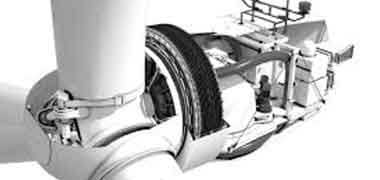
Main 1–10 MW turbine cases, yaw drives, and pitch drives in ductile iron or forged steel. ±0.005mm bearing bores support correct planetary preload at rated torque.

Construction & Mining Equipment
Planetary final-drive, axle, slewing, and mining housings in ductile iron, forged steel, or high-strength steel for severe-duty construction equipment.

Robotics, Automation & Marine
Robot-joint, servo, and indexing housings for automation, plus corrosion-resistant marine propulsion, winch, and offshore cases in stainless or marine-grade aluminium.
Gearbox Housing Manufacturing
Process & Capabilities
A controlled process moves cast or forged blanks through material inspection, roughing, semi-finishing, finish boring, surface treatment, and final verification, with PPAP or FAIR records as required.
Incoming Material Inspection
XRF confirms alloy grade; hardness targets include AlSi9Cu3 at 85–95 HBW and GGG-40 at 140–200 HBW. Casting surfaces and a 2.5mm minimum finish-machining allowance are checked before release.
Rough & Semi-Finish Machining
Roughing establishes the split-face or base datum, mills external faces and pockets, and opens bearing bores. Semi-finishing leaves 0.1–0.2mm on critical surfaces for stability checks before final cuts.
Finish Boring & Final Machining
Finish boring supports H7 ±0.015mm standard or ±0.005mm precision bores, ±0.003mm roundness, Ra 0.8µm finishes, and ±0.020mm centre distance. Split faces, oil-seal bores, and NPT, BSP, or metric ports are finished and gauged to drawing requirements.
Surface Treatment
Aluminium can use conductive chemical film or HV 400+ Type III hard anodise at 25–50µm. Cast iron and steel use shot blasting, primer, and topcoat with bearing and sealing surfaces masked; agricultural housings can use epoxy-polyurethane paint for UV and chemical resistance.
Gearbox Housing Materials
Materials include AlSi9Cu3, AlSi10Mg, AlSi7Mg, 6061-T6, 7075-T6, GG-25 gray iron, and GGG-40 ductile iron. Selection balances casting method, load, porosity risk, corrosion, weight, and production volume.
IATF 16949 / AS9100D Quality Documentation
Automotive programmes can include PPAP Level 3, APQP, FMEA, MSA Gage R&R, Cpk ≥ 1.67 studies, and control plans. Aerospace work can include AS9102 FAIR; critical bores receive CMM records and material traceability. Quality records are retained for at least 15 years.
Materials for Gearbox Housing
Machining
Select materials for strength, bearing support, machining response, casting quality, weight, and operating environment. Aluminium suits automotive and lightweight cases; ductile iron suits agricultural and wind shock loads.
AlSi9Cu3 / ASTM A380
The standard high-volume die-cast aluminium for automotive, industrial, and agricultural cases. It combines thin-wall fluidity, dimensional stability, 320 MPa tensile strength, and 85–95 HBW hardness.
AlSi10Mg / ASTM A360
A weldable, corrosion-resistant sand or permanent-mould option where die-cast tooling is not justified. In T6 condition it provides 310 MPa tensile strength and 90–100 HBW hardness for low-volume industrial, agricultural, or marine cases.
AlSi7Mg / ASTM A356 T6
A low-porosity cast alloy for aerospace, racing, and high-performance industrial housings. T6 condition provides 280 MPa tensile strength and 8–10% elongation for dynamic loading.
6061-T6
A zero-porosity billet material for precision instruments, aerospace actuators, and rapid prototypes where casting-tooling lead time is not available. Typical first articles take 5–7 business days.
7075-T6
At 503 MPa tensile strength, this is the high-strength option for weight-critical aerospace and racing housings. It enables thinner walls where 6061-T6 would require additional mass.
2024-T351
A fatigue-resistant aluminium for precision indexing, high-cycle industrial, and performance transmission housings exposed to repeated loading.
GG-25 / ASTM A48 Class 30
A 180–230 HBW industrial casting with good machinability and vibration damping 4–6x higher than steel. It suits parallel-shaft, bevel, and worm housings where mass is secondary to sand-casting economics.
GGG-40 / ASTM A536 Grade 65-45-12
A 140–200 HBW, 12 J minimum Charpy-impact material for rotary-tiller, subsoiler, and harrow shocks, as well as 1–10 MW wind-turbine main cases where strength and toughness are essential.
4140 / 4340 Alloy Steel
Heat-treated strength of 900–1,200 MPa supports extremely loaded construction final drives, mining gearboxes, and wind-turbine cases beyond ductile-iron capability.
316L Stainless
A non-magnetic, corrosion-resistant option for marine propulsion, winch, offshore, and hygienic food-processing gearboxes where aluminium or iron service life is insufficient.
AZ91D Magnesium
At 1.81 g/cm³, this alloy is about 35% lighter than aluminium for aerospace-actuator and motorsport housings where minimum mass justifies added corrosion protection.
PEEK / PA66-GF30
PEEK and glass-filled nylon are lightweight choices for low-load instrument, medical-actuator, and small-automation housings where metal mass, conductivity, or corrosion behaviour is unsuitable.
Surface Treatments for
Gearbox Housing Components
Select finishes for corrosion exposure, wear at bearing and contact surfaces, lubricant and seal compatibility, UV exposure, and coating impact on critical bores and sealing faces.
Hard Anodizing — MIL-A-8625 Type III
Hard anodise provides HV 400+ surface hardness for aluminium bearing bosses and exterior wear surfaces. A 25–50µm coating protects against abrasion, corrosion, agricultural chemicals, and industrial fluids; black finish supports low visibility or heat dissipation.
Chemical Film — MIL-DTL-5541 (Alodine)
Chemical film protects aluminium interiors in gear-oil environments while retaining electrical conductivity. It has negligible effect on H7 bores and sealing faces; Class 3 supports low-resistance bonding and Class 1A favours corrosion protection.
Epoxy Primer + Polyurethane Topcoat (Agricultural)
A 60µm epoxy primer plus 60µm polyurethane topcoat resists UV, herbicides, fertilisers, and crop-processing chemicals in agricultural service. Bearing bores and sealing faces remain masked to preserve dimensions and finish.
Shot Blasting + Primer Paint (Cast Iron & Steel)
Shot blasting removes scale and prepares cast iron or steel for rust-inhibiting primer and topcoat. Bores and sealing faces are masked to retain Ra 0.8µm and H7 control; epoxy finishes suit outdoor and marine-adjacent steel work.
Electroless Nickel — MIL-C-26074
Electroless nickel gives uniform corrosion and wear protection on oil-port threads, seal bores, and bearing bosses, including internal geometry that electroplating coats unevenly. It is suited to marine and high-humidity industrial service.
Passivation & Hard Chrome (Stainless & High-Wear)
ASTM A967 passivation removes free iron and strengthens the passive layer on stainless housings for marine and food environments. AMS 2406 hard chrome protects high-wear bores and bearing journals in construction and mining equipment.
Coating allowance is built into machining drawings where needed. Finish certificates and finish selection are available in the DFM review and shipment documentation.
IATF 16949 Quality Assurance for
Gearbox Housing Manufacturing
IATF 16949 controls automotive programmes and AS9100D supports aerospace and precision industrial work, with inspection focused on bearing bores, housing geometry, and surface finish.
Contract & Drawing Review
Engineering confirms drawing requirements, gear and bearing standards, seal features, finishing, and PPAP or FAIR scope before release.
Material Incoming Inspection
XRF, hardness, casting allowance, and visual quality checks confirm material before release. Lots remain traceable from casting heat through shipment.
PPAP Level 3 & FAIR per AS9102
Automotive PPAP Level 3 can include ballooned CMM results, MSA Gage R&R, FMEA, Cpk ≥ 1.67 studies, and control plans. Aerospace programmes can include AS9102 FAIR for bores, centre distance, faces, seals, and threads.
In-Process Statistical Control
Air-gauge monitoring, CCD sorting, SPC charts, and operation sign-offs control bearing bores, centre distance, and face flatness on designated special characteristics.
Final Inspection
A Mitutoyo CMM (±0.001mm), air gauges, Ra checks, thread gauges, and visual inspection verify bore diameter, roundness, cylindricity, centre distance, faces, seals, ports, and burr-free surfaces.
Shipment Documentation Package
Shipments can include CoC, CMM reports, material traceability, PPAP or FAIR, finish certificates, and programme-specific documentation. Quality records are retained for at least 15 years.
IATF 16949 & AS9100D Quality System for
Gearbox Housing Manufacturing
IATF 16949:2016 and AS9100D provide independently audited quality frameworks for automotive transmission, aerospace actuator, and precision industrial gearbox programmes.
PPAP Level 3 (Automotive Gearbox Housing)
New automotive part numbers can receive PPAP Level 3 with APQP, FMEA, MSA Gage R&R, Cpk ≥ 1.67 studies, control plans, and ballooned dimensional verification. Customer approval precedes volume release.
- PPAP Level 3 for every new automotive P/N
- Cpk ≥ 1.67 on all special characteristics
- Records retained minimum 15 years
Bearing Bore Dimensional Control
Air gauges and SPC charts monitor bearing bores, with 100% CCD sorting on defined high-volume parts. CMM reports can verify ±0.003mm roundness, ±0.005mm cylindricity, ±0.020mm centre distance, and 0.015mm/100mm parallel axes.
- Air gauge 100% bearing bore monitoring
- CMM: roundness, cylindricity, center distance
- SPC control charts, Cpk ≥ 1.67
Material Traceability & Casting Inspection
Traceability follows casting heat and lot through shipment. Incoming aluminium and iron blanks receive XRF, hardness, and casting-defect checks before machining, supported by approved-supplier controls.
- XRF composition every material lot
- Casting hardness & defect inspection
- Heat/lot traced to finished housing
Gear Center Distance & Geometry Verification
CMM verifies ±0.020mm standard or ±0.010mm precision gear centre distance. First articles also check 0.010mm split-face flatness, Ra 1.6µm seal bores, thread pitch, and ±0.050mm mounting patterns for PPAP or FAIR records.
- Gear center distance: ±0.020mm CMM verified
- Split face flatness: 0.010mm confirmed
- Oil seal bore: Ra 1.6μm profilometry
Gearbox Housing Machining FAQ
Common questions from transmission OEMs, agricultural equipment manufacturers, automotive suppliers, and industrial machinery producers about CNCPioneer's gearbox housing machining capabilities, bearing bore tolerances, aluminum alloy selection, and China custom agricultural gearbox housing programs.
Bearing bore center distance — the distance between adjacent shaft bearing bore position centers — is the most critical dimension in gearbox housing machining because it directly governs gear mesh center distance, which determines tooth contact ratio, transmission error, gear noise, and service life across the entire gearbox operational lifetime. A 0.05mm center distance error in gearbox housing machining produces approximately 0.05mm change in gear operating center distance that shifts the gear mesh operating pressure angle, reduces or increases backlash from design specification, and changes the gear tooth contact pattern from the designed optimum — effects that manifest as increased gear noise, reduced load capacity, and potentially premature gear tooth fatigue failure in high-load gearbox applications. CNCPioneer's gearbox housing machining achieves bearing bore center distance accuracy of ±0.020mm standard and ±0.010mm high-precision, verified by Mitutoyo CMM on every first article and at defined production intervals throughout the gearbox housing manufacturing process.
For most industrial gearbox housing applications with standard deep groove ball bearings and cylindrical roller bearings, H7 bore tolerance is the standard bearing bore specification — providing a clearance fit between the bearing outer ring and housing bore that allows thermal expansion without inducing excessive ring stress while maintaining adequate housing bore stiffness for bearing radial load support. H7 produces bore-to-bearing outer ring clearances of 0–0.030mm for standard bearing outer diameter tolerances. For gearbox housing applications requiring interference fit of the bearing outer ring to prevent outer ring creep rotation under heavy radial load — typical in agricultural PTO gearboxes and industrial gearboxes with severe shock loading — K7 or M7 bore tolerance is recommended. For floating bearing positions in multi-shaft gearbox housing designs requiring axial freedom for thermal expansion, J7 tolerance provides adequate radial stiffness with controlled axial sliding resistance.
For China custom agricultural gearbox housing production at moderate-to-high production volumes justifying die casting tooling investment, AlSi9Cu3 (equivalent to ASTM A380 and EN AC-46000) is the recommended aluminum gearbox housing alloy — providing the optimal combination of die casting characteristics, mechanical properties (tensile strength 320 MPa, hardness 85–95 HBW) adequate for agricultural implement gearbox loads, and production cost efficiency for high-volume die casting. For China custom agricultural gearbox housing applications subject to severe shock loading from soil engagement — rotary tillers, subsoilers, and disc harrow drives — we recommend upgrading to ductile iron GGG-40, accepting the weight penalty of cast iron over aluminum in exchange for the impact toughness (Charpy impact energy 12 J minimum) that agricultural soil engagement shock loads require. For low-volume China custom agricultural gearbox housing prototype and small series production where casting tooling investment is not justified, wrought aluminum 6061-T6 billet machining provides the fastest delivery timeline with zero tooling lead time.
Gearbox housing design decisions have a larger effect on machining cost than any factor within the machining factory itself. Four design decisions dominate machining cost: datum structure design, which determines whether critical features can be machined in a single setup or require multiple setups with re-fixturing; bearing bore accessibility, which determines whether all bearing bores can be reached from a single tool approach direction or require multiple machine indexing operations; wall thickness, where walls below 3mm in aluminum gearbox housing design require reduced cutting parameters that increase cycle time; and feature complexity, where internal undercuts, cross-drilled oil passages, and non-standard thread forms require specialty tooling and extended programming. CNCPioneer's 24-hour DFM review service evaluates all four cost drivers in every gearbox housing design submission, providing specific design modification recommendations that reduce gearbox housing machining cost without compromising functional performance.
For wrought aluminum 6061-T6 billet-machined gearbox housing prototypes: 5–7 business days. For aluminum die cast or sand cast gearbox housing prototypes with supplied casting blanks: 7–10 business days machining lead time after blank receipt. For cast iron gearbox housing prototypes with supplied casting blanks: 7–10 business days machining. For programs requiring new casting tooling: 4–6 weeks casting tooling production plus 1–2 weeks first article gearbox housing machining. Production quantities for standard gearbox housing machining configurations: 4–6 weeks from blank receipt. China custom agricultural gearbox housing production with established casting supply and machining process: 3–4 weeks for reorder production quantities under blanket order programs.
CNCPioneer accepts China custom agricultural gearbox housing orders from prototype quantities of 1–10 pieces for design verification and field testing programs through annual production volumes of 50,000+ pieces for agricultural equipment OEM supply chain programs. For new China custom agricultural gearbox housing programs requiring new casting tooling, minimum order quantity is typically 50–100 pieces to amortize casting tooling cost over a commercially viable production run. For China custom agricultural gearbox housing programs using existing casting tooling or wrought aluminum billet machining, no minimum order quantity restriction applies — we accept single-piece prototype orders for agricultural equipment development programs. Blanket order scheduling programs with monthly delivery releases are available for China custom agricultural gearbox housing OEM supply chain customers requiring supply chain stability across annual production volume agreements.
Get a Quote for Gearbox Housing Machining
Upload your gearbox housing drawing or CAD file and receive a free DFM review and competitive gearbox housing manufacturer quotation within 24 hours. CNCPioneer's engineering team will review your gearbox housing design for machining feasibility, confirm bearing bore tolerance specifications, assess aluminum gearbox housing or cast iron material selection for your application requirements, identify critical gearbox housing manufacturing process dimensions requiring special inspection controls, and provide a complete gearbox housing machining quotation including PPAP documentation for automotive programs or FAIR documentation for aerospace programs.